Key takeaways
- PTFE nonstick: the typical electric crepe surface. Use silicone or wooden tools and avoid overheating empty pans, as the maker’s manual advises.
- Ceramic nonstick: some makers offer ceramic-coated pans; the coating’s longevity varies.
- Carbon steel or cast iron: traditional crepe materials. They hold high heat, but must be seasoned and cared for. Not nonstick out of the box.
- Aluminum with nonstick: lightweight and heats evenly on stovetops; check that it is compatible with induction if you need that.
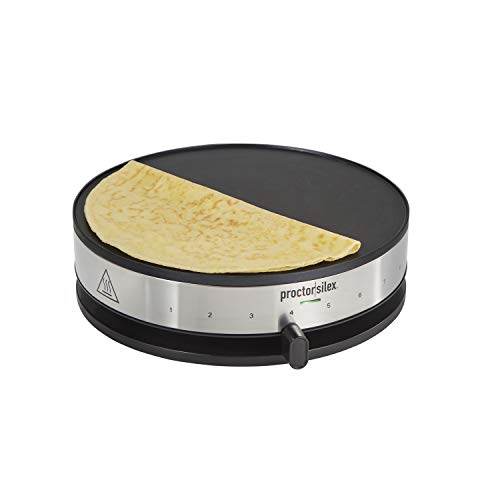
For most home cooks, an electric crepe maker with a flat nonstick plate and a batter spreader, such as the Cuisinart or Presto electric crepe pans, is the easiest way to get even crepes at breakfast; a stovetop crepe pan from a maker such as Lodge, Calphalon or Nordic Ware suits people who already have a burner and want more control; and a larger commercial-style plate suits those who make crepes for crowds. This guide breaks down the choices by cooking style and kitchen.
Our top picks


As an Amazon Associate we earn from qualifying purchases at no extra cost to you.
At a Glance: Crepe Maker Types
| Type | Best for | Maker examples | Limits |
|---|---|---|---|
| Electric crepe maker with dipping plate | Fast, uniform thin crepes with minimal skill | Presto, Cuisinart, Brentwood, Nostalgia | Fixed plate size; only makes crepes and similar items |
| Electric crepe pan with spreader | Classic French-style crepes, shallow rim | Cuisinart, Chef’sChoice, VonShef | Takes practice with the spreader; counter space |
| Stovetop crepe pan | Cooks who like control and use a burner | Lodge, Calphalon, Nordic Ware, Tramontina | Needs a flat burner; uneven if heat is unbalanced |
| Cast iron crepe pan | Durable, high heat, dosa and pancakes too | Lodge, Le Creuset | Heavy; needs seasoning and care |
| Multi-purpose griddle | Crepes, pancakes, eggs | Presto, Hamilton Beach, Black+Decker | Less precise edges; thicker crepes |
Model names change, so use the makers above as direction for browsing the current range, and confirm plate size and wattage on each maker’s page.
Electric vs Stovetop
Electric crepe makers provide steady heat and built-in thermostats, and many include a batter spreader. Reviewers who cover small kitchen appliances generally find these the most forgiving for beginners. Stovetop pans cost less and take up less space, but heat varies by burner, and you will need to learn to swirl the batter and flip. If you already own a good nonstick skillet, a dedicated pan can be an optional upgrade.
Plate Size and Capacity
Plate diameters commonly range from about 8 inches for small pans to 12 or 13 inches for family-size electric units. Larger plates make larger crepes, which are easier to fill but harder to flip. Some electric units use a dipping method, where the hot plate is dipped into a batter tray; makers list plate diameter and sometimes wattage. Consider how many people you serve and how quickly you want to cook.
Nonstick Surface and Materials
- PTFE nonstick: the typical electric crepe surface. Use silicone or wooden tools and avoid overheating empty pans, as the maker’s manual advises.
- Ceramic nonstick: some makers offer ceramic-coated pans; the coating’s longevity varies.
- Carbon steel or cast iron: traditional crepe materials. They hold high heat, but must be seasoned and cared for. Not nonstick out of the box.
- Aluminum with nonstick: lightweight and heats evenly on stovetops; check that it is compatible with induction if you need that.
Induction note: aluminum and some nonstick pans do not work on induction cooktops unless the base is magnetic. Check the maker’s compatibility notes.
Features Worth Having
- Adjustable temperature: a dial or dial plus indicator light helps manage batter browning.
- Cool-touch handle or base: reduces burn risk.
- Batter spreader and spatula: a wooden or silicone spreader is usually included.
- Edge or rim design: a low rim makes flipping easier; a raised rim helps contain batter.
- Cord storage and stable feet: useful in small kitchens.
Batter and Technique Notes
Let the batter rest briefly so bubbles settle and gluten relaxes, as many recipes suggest. Use a thin batter that spreads quickly. If crepes stick, the pan may be too cool or too hot, or the surface worn. Wipe the pan lightly with oil on the first crepe only, as many makers advise. Buckwheat, gluten-free and dessert batters work, but results depend on the recipe.
Safety and Care
- Follow the manual for outlet use, cords and clearance; keep cords out of reach of children and away from the hot plate.
- Hot surfaces cause burns. Allow the unit to cool fully before cleaning and keep children away during use.
- Do not immerse electrical bases in water. Wipe nonstick plates with a damp cloth.
- Use silicone or wooden tools on nonstick surfaces to avoid scratching.
- If a nonstick coating is flaking, stop using the pan and follow the maker’s guidance.
- Allergen caution: shared pans can transfer allergens, so clean thoroughly if cooking for someone with an allergy.
Budget Tiers
| Tier | What to expect | Trade-off |
|---|---|---|
| Budget | Basic stovetop nonstick pans, simple electric units from Presto or Brentwood | Thin surface; may warp or wear sooner |
| Mid-range | Cuisinart electric crepe makers, Calphalon and Tramontina pans | Good heat control but limited versatility |
| Premium | Cast iron or carbon steel pans, restaurant-style crepe plates | Heavier and more care; higher outlay |
Pick X If… Decision Table
| Pick this | If you… |
|---|---|
| Electric dipping crepe maker | Want quick, even crepes with minimal technique |
| Cuisinart-style electric crepe pan | Want a traditional spread-and-flip experience with thermostat control |
| Stovetop nonstick pan (Calphalon, Tramontina) | Already have a gas or electric range and want a simple tool |
| Cast iron or carbon steel pan (Lodge, Le Creuset) | Want a long-lasting tool and are comfortable seasoning it |
| Multi-purpose griddle | Want crepes plus pancakes and eggs with a single appliance |
Alternatives
- Non-stick skillet: a good 10- to 12-inch skillet works well for occasional crepes.
- Waffle or pancake griddle: a large flat griddle can handle crepes with a thin batter.
- Dosa or flat tawa pans: traditional pans for thin batter breads that overlap with crepe cooking.
Frequently Asked Questions
Is an electric crepe maker better than a pan?
For beginners and for cooking in volume, electric makers give steadier heat and are easier to use. Cooks who like control and already own a good pan can do without a dedicated appliance.
What size crepe maker should I buy?
For one or two people, an 8- to 10-inch plate is fine, while families may want 12 inches or more. Larger crepes are harder to flip, so choose the size you can manage.
Can I use a crepe maker for pancakes?
Some can, but thin plates and low rims can make thick pancakes spread. Check the maker’s guidance and use a thicker batter only if the manufacturer says it is suitable.
Why do my crepes stick or tear?
Common causes include a pan that is too cool, a worn nonstick surface, or batter that is too thick. Let the pan reach temperature, rest the batter, and use a thin even layer.
Can I use these on induction?
Electric crepe makers use their own heating element. Stovetop pans must have an induction-compatible base, so check the maker’s stated compatibility.
How do I clean a crepe maker safely?
Let it cool, unplug it, and wipe the plate with a damp cloth. Do not immerse electrical parts in water, and follow the maker’s instructions for any removable parts.
FAQ
Is an electric crepe maker better than a pan?
What size crepe maker should I buy?
Can I use a crepe maker for pancakes?
Why do my crepes stick or tear?
Can I use these on induction?
How do I clean a crepe maker safely?
More from Amazon
Programs that pair well with the guide above. Offers and eligibility are set by Amazon and may change.
Free shipping on eligible items, Prime Video and more. Eligible new members can start with a free trial.
Start a Prime free trialAudiobooks and podcasts to listen to on the go. Eligible new members can start with a free trial.
Try Audible freeAd-free music streaming. Eligible new subscribers can start with a free trial.
Try Music Unlimited freeA free business account with business pricing and bulk-buying tools for work, shop or home office.
Create a business accountAs an Amazon Associate we earn from qualifying purchases.