Key takeaways
- Klipsch R-610F (94 dB): loses about 5 dB at 3 m in a typical room, so 89 dB from 1 W. Reaching 100 dB needs about 11 dB more, roughly 12-15 W per channel.
- Polk XT60 (86 dB): 81 dB from 1 W at 3 m. Needs 19 dB more, roughly 80 W per channel.
- Sony SS-CS3 (88 dB): 83 dB from 1 W at 3 m. Needs 17 dB more, roughly 50 W per channel.
The best floor standing speakers under $500 a pair in 2026 are the Polk Monitor XT60 for balanced home theater and music use, the Klipsch R-610F if you want high efficiency and punchy dynamics from a modest amplifier, and the Sony SS-CS3 for a smoother three-way sound; tighter budgets are well served by the Polk T50 and the Dayton Audio T652. One detail trips up many shoppers: most of these towers are sold individually, so the price you see is often half the cost of a pair.
Pair pricing: the first thing to check
Under $500 for a pair means about $250 per tower or less. Some popular models sit right at that line and only fit the budget during regular discounts.
| Model | Sold as | Typical price range per pair | Fits $500 budget? |
|---|---|---|---|
| Polk Monitor XT60 | Single | $400-$560 | Usually, on sale |
| Klipsch R-610F | Single | $340-$500 | Yes |
| Sony SS-CS3 | Single | $300-$480 | Yes |
| Polk T50 | Single | $200-$320 | Yes, with room for an amp |
| Dayton Audio T652 | Pair | $150-$230 | Yes, with room for an amp |
Specs that matter
| Model | Design | Drivers | Approx. sensitivity | Nominal impedance | Approx. height |
|---|---|---|---|---|---|
| Polk Monitor XT60 | 2-way with passive radiators | 1″ tweeter, 6.5″ woofer, two 6.5″ passive radiators | About 86 dB | 4-8 ohm compatible | About 36.4 in |
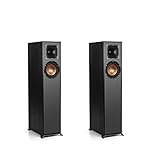
| Klipsch R-610F | 2-way, horn tweeter | 1″ aluminum Tractrix horn tweeter, single 6.5″ spun-copper woofer | About 94 dB | 8 ohm | About 37 in |
| Sony SS-CS3 | 3-way, 4 drivers | Super tweeter, 1″ tweeter, two 5.1″ woofers | About 88 dB | 6 ohm | About 36 in |
| Polk T50 | 2-way with passive radiators | 1″ tweeter, 6.5″ woofer, two 6.5″ passive radiators | About 90 dB | 8 ohm compatible | About 36 in |
| Dayton Audio T652 | 2-way | 1″ tweeter, two 6.5″ woofers | About 87 dB | 6 ohm | About 37 in |
Picks by listener
Movies and music in a living room: Polk Monitor XT60
The XT60 is the most frequently recommended budget tower for a reason. Its passive radiators extend bass without a port that can chuff, it is designed to work with Polk’s matching XT center and height speakers, but its modest 86 dB sensitivity means it wants an AV receiver with real power behind it rather than a tiny amplifier. It is the best foundation for a future 5.1 or Atmos system.
Low-power amps and lively sound: Klipsch R-610F
Klipsch’s horn-loaded tweeter gives the R-610F high efficiency, so it plays loud from very little power. That makes it a strong match for a vintage stereo receiver or a small class-D amplifier. The sound is bright and energetic; in a room with hard floors and bare walls, some listeners find it too forward, so a rug helps.
Smoother, more detailed stereo: Sony SS-CS3
The three-way design gives the midrange its own drivers, which helps vocals sound less congested. Lower sensitivity means it benefits from a receiver with real headroom.
Tightest budgets: Polk T50 or Dayton Audio T652
The T50 delivers much of Polk’s house sound at a lower price; the Dayton T652 is sold as a pair, making it the cheapest route into full-range towers, and leaves enough budget for an amplifier.
Worked example: how much amplifier do you need?
Sensitivity tells you how loud a speaker plays from 1 watt at 1 meter. Each doubling of power adds about 3 dB, and every doubling of distance loses about 6 dB in free space (less in a real room, roughly 3-4 dB). For an 85 dB average listening level at 3 meters with 15 dB of headroom for movie peaks, the target at the speaker is about 100 dB at 3 m:
- Klipsch R-610F (94 dB): loses about 5 dB at 3 m in a typical room, so 89 dB from 1 W. Reaching 100 dB needs about 11 dB more, roughly 12-15 W per channel.
- Polk XT60 (86 dB): 81 dB from 1 W at 3 m. Needs 19 dB more, roughly 80 W per channel.
- Sony SS-CS3 (88 dB): 83 dB from 1 W at 3 m. Needs 17 dB more, roughly 50 W per channel.
That 8 dB sensitivity gap means the Polk needs about six times the amplifier power of the Klipsch to play equally loud. A receiver rated around 80-100 W per channel covers all of these for normal listening; very small desktop amplifiers suit the Klipsch best.
Decision matrix
| Your setup | Room | Best match |
|---|---|---|
| AV receiver, building toward surround | Medium to large | Polk Monitor XT60 |
| Vintage or low-power stereo amp | Small to medium | Klipsch R-610F |
| Mostly music, vocals and acoustic | Medium | Sony SS-CS3 |
| Under $300 including speakers | Small | Dayton T652 or Polk T50 |
Placement and ownership tips
- Keep towers 1-3 feet from the front wall. Closer adds boomy bass; rear-ported designs are the most sensitive to this.
- Form an equilateral triangle with your listening seat and angle the tweeters slightly toward you.
- Use spikes or pads on carpet to stop wobble, which blurs bass.
- Run room correction on your receiver after placement, not before.
- Use 16-gauge speaker wire or thicker for runs under about 50 feet.
Budget towers are mechanically simple and tend to last; the most common failures are blown tweeters from clipping a weak amplifier at high volume, which is another reason not to under-buy amplifier power.