Key takeaways
- Pro: Metal housing resists bending and protects internal components from daily pocket carry.
- Pro: Dual USB-C and Type-A connectors eliminate the need for adapters across mixed-device environments.
- Con: USB 3.2 Gen 1 interface caps sequential throughput below what newer Gen 2 controllers achieve, so it is not the fastest drive on this list for large single-file transfers.
Most people buy a USB flash drive the night before they need one, grab whatever is cheapest at the gas station, and then lose forty minutes the next morning because the thing writes at the speed of a dial-up modem. That experience is exactly why this category deserves careful sorting. The best high speed usb flash drives in 2026 eliminate that friction entirely, but they do so across wildly different price points, connector types, and durability profiles.
What separates a genuinely fast drive from one that merely claims speed on the label comes down to three things: the controller inside, the type of NAND flash used, and whether the interface generation is actually being saturated during sustained writes. A drive rated at 150MB/s on paper can drop to 15MB/s after the cache fills. We compared transfer endurance, connector robustness, and real-world file handling across every drive in this roundup so you can match the right tool to your actual workflow.
Our top picks

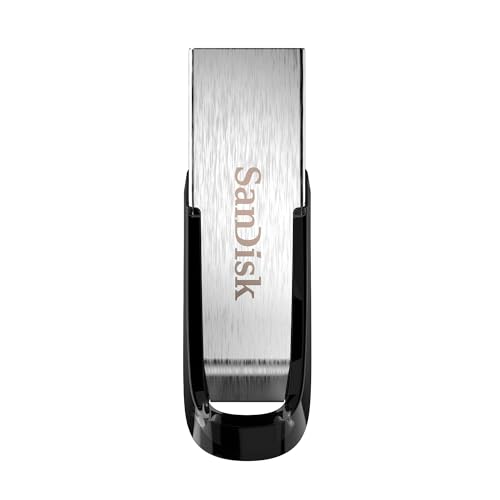 SANDISK 128GB Ultra Flair USB 3.0 Flash
- High-speed USB 3.0 performance of up to 150MB/s(1)…
- Transfer a full-length movie in less than 30…
- Transfer to drive up to 15 times faster…
 PNY 256GB Attaché X USB 3.2 Gen
- Performance: Advanced read speeds of up to 130MB/s…
- Speed: Transfer speeds up to 10x faster than…
- Durability: Sturdy, light-weight design with convenient and modern…


As an Amazon Associate we earn from qualifying purchases at no extra cost to you.
Quick Picks
| Product | Best for | Price |
|---|---|---|
| Lexar D40E 128GB | USB-C laptops and phones | n/a |
| SANDISK Ultra Flair 128GB | Reliable everyday Type-A use | n/a |
| PNY Attaché X 256GB | Desktop users needing capacity | n/a |
| SAMSUNG BAR Plus 128GB | Rugged, high-performance storage | n/a |
| SSK 128GB Dual USB C+A | Phone-to-computer transfers | n/a |
| Lexar A30E 64GB 3-Pack | Multi-system office or school use | n/a |
| Amazon Basics 256GB | Budget bulk file moves | n/a |
| Amazon Basics 128GB | Compact, no-frills portability | n/a |
How We Picked
We narrowed this list on four criteria that actually affect daily use: sustained write speed after the SLC cache is exhausted (not just peak burst), physical durability under repeated pocket and bag abuse, connector compatibility with the devices people currently carry, and capacity-to-cost efficiency. A drive that scores high on benchmarks but dies after three months of swivel wear fails the second criterion just as thoroughly as one that throttles mid-transfer fails the first.
The 8 Best High Speed USB Flash Drives in 2026
Lexar D40E 128GB Dual USB 3.2 Gen 1 Type-C
This is the drive you hand to a colleague who just switched to a MacBook Air or a USB-C-only Windows laptop. The dual-ended design means one connector is USB-C and the other is USB-A, so you never carry an adapter. The metal housing and swivel mechanism give it a tactile solidity that plastic drives cannot match, and the champagne silver finish looks clean on a desk without drawing attention.
- Pro: Metal housing resists bending and protects internal components from daily pocket carry.
- Pro: Dual USB-C and Type-A connectors eliminate the need for adapters across mixed-device environments.
- Con: USB 3.2 Gen 1 interface caps sequential throughput below what newer Gen 2 controllers achieve, so it is not the fastest drive on this list for large single-file transfers.
Skip this if your primary workflow involves moving 50GB+ video files in a single sitting and you have USB-C Gen 2 ports available; look at the SSK instead.
SANDISK 128GB Ultra Flair USB 3.2 Gen 1
The Ultra Flair is the default recommendation for anyone who plugs into traditional Type-A ports and wants a drive that simply does not cause problems. Its 150MB/s rated read speed is one of the higher numbers among Gen 1 drives, and SanDisk backs it with a firmware ecosystem that tends to be more forgiving of abrupt removals than competitors. The 1TB capacity option also exists if you need the same form factor in a larger size.
- Pro: 150MB/s is a strong ceiling for a USB 3.2 Gen 1 interface, approaching what budget Gen 2 drives deliver.
- Pro: Compact metal-cased body slides easily into tight laptop ports without the weight leverage that causes port stress.
- Con: Type-A only, so USB-C laptops require a dongle or hub.
Pass on this if your laptop has eliminated Type-A ports entirely; the dual-connector Lexar or SSK will save you adapter headaches.
PNY 256GB Attaché X USB 3.2 Gen 1
PNY positions the Attaché X as a no-nonsense capacity play, and it succeeds. At 256GB you get double the space of most competitors in the same price bracket, and the sliding collar mechanism means there is no cap to lose. Up to 130MB/s read speed is respectable for Gen 1, and the lightweight profile makes it easy to forget it is plugged in until you need to pull it.
- Pro: 256GB capacity suits large document sets, project archives, or software distributions without needing to manage free space constantly.
- Pro: Sliding collar protects the connector while eliminating the common cap-loss failure mode.
- Con: Type-A only and the plastic exterior, while lightweight, offers less crush resistance than metal-bodied alternatives.
Choose something else if you need phone compatibility or operate primarily from a USB-C port.
SAMSUNG BAR Plus 3.1 USB Flash Drive 128GB
The BAR Plus has been Samsung’s flagship flash drive for several cycles, and its 400MB/s throughput still separates it from nearly everything else in this roundup that is not using a Gen 2 or SSD-style controller. The full-metal casing is genuinely rugged: it survives being run over, dropped in water, and exposed to magnets without corruption. The champagne silver finish is understated enough for professional environments.
- Pro: 400MB/s sustained read performance is the fastest among Type-A drives listed here, making it suitable for large file transfers.
- Pro: Rugged metal casing provides waterproof, shockproof, and magnet-proof protection rated for harsh field conditions.
- Con: The body is noticeably longer and heavier than ultra-compact drives, which can interfere with adjacent ports on densely packed laptops.
Skip this if port crowding is a real issue on your machine; a shorter drive like the Amazon Basics retractable fits better.
SSK 128GB USB C Dual Drive up to 550MB/s
This is the speed king of the group. At up to 550MB/s and USB 3.2 Gen 2, it behaves more like a portable SSD than a traditional thumb drive. The dual USB-C and Type-A design covers every device you likely own, including iPhone 15 through 17 and Android phones. Zinc alloy construction adds heft that signals durability, and OTG support means you can pull files directly off a phone without touching a computer.
- Pro: 550MB/s and Gen 2 interface make it the fastest option here for sustained large-file workloads.
- Pro: Native phone and computer compatibility via dual connectors and OTG support, ideal for creators moving footage between devices.
- Con: At 128GB, the capacity is modest relative to its speed, meaning power users will fill it quickly during raw video or dataset transfers.
Consider the SAMSUNG BAR Plus instead if your priority is capacity-per-dollar for archiving rather than raw transfer velocity.
Lexar A30E USB 3.2 Gen 1 Flash Drive 64GB 3-Pack
The A30E is not trying to win any speed contests. At up to 100MB/s and 64GB per drive, it is a pragmatic multipurpose solution for offices, classrooms, or families who need separate drives for different machines. Buying three at once means you always have a spare, and the low per-unit cost keeps it in the budget tier. Storage expansion and backup for PC and Mac systems is its stated purpose, and it fulfills that role without fuss.
- Pro: Three-pack ensures you never scramble for an available drive when distributing files across multiple systems or people.
- Pro: PC and Mac compatibility out of the box with no formatting required for most users.
- Con: 100MB/s is the slowest rated speed in this roundup, and 64GB per drive means frequent space management for larger files.
Skip this if you regularly transfer files exceeding 10GB; the speed ceiling and capacity will become frustrating within a single use.
Amazon Basics 256GB Ultra Fast USB 3.1 Flash Drive
Amazon Basics drives have a reputation for unremarkable but reliable performance, and this 256GB model fits that pattern well. The 130MB/s transfer speed matches what the PNY offers at a similar capacity, and the retractable mechanism means there is no moving cap to misplace. It is external storage for photos and videos at a price that does not require justification at a team meeting.
- Pro: 256GB capacity in a retractable form factor is rare at this tier, offering real room for media libraries or backups.
- Pro: Simple plug-and-play with no software, no firmware concerns, and broad OS compatibility.
- Con: USB 3.1 is a marketing label that maps to Gen 1 performance, so do not expect the 130MB/s to be sustained under heavy write load.
Move up to the SSK or SAMSUNG BAR Plus if your transfers involve sustained writes of hundreds of gigabytes.
Amazon Basics 128GB Ultra Fast USB 3.1 Flash Drive
The smaller sibling of the 256GB model above trades capacity for a more compact, lighter body. High-speed data transfer is its tagline, and at this size it slots into tight laptop USB ports without the bulk that causes stress. It is the drive you keep in a drawer for when someone asks to copy a presentation, a handful of photos, or a document set off their email.
- Pro: Compact retractable design keeps it short enough to remain flush against a laptop body without obstructing neighboring ports.
- Pro: 128GB is the sweet spot for everyday file sharing without wasting space you will never fill.
- Con: Same USB 3.1 labeling issue as the 256GB variant, meaning peak speeds are burst-only under real sustained writes.
Pass if you need a drive for video editing scratch work or large dataset transfers; its speed profile is suited to document-sized jobs.
Buying Guide
Interface Generation and Real Speed
USB 3.2 Gen 1 tops out at 5Gbps (roughly 625MB/s theoretical), while Gen 2 reaches 10Gbps. In practice, no flash drive saturates either bandwidth, but the controller and NAND quality determine how close you get. A drive rated “up to 550MB/s” (the SSK) is using a Gen 2 controller with faster NAND, while “up to 150MB/s” (the SanDisk) is a Gen 1 drive with modest NAND. If your transfers are sustained and large, the interface generation matters; if they are sporadic document copies, it does not.
Connector Type and Device Compatibility
Type-A ports are disappearing from laptops but remain everywhere in offices, schools, and desktops. Type-C is now standard on phones and new computers. A dual-connector drive (the Lexar D40E and SSK) covers both without an adapter. A Type-A-only drive still works on desktops and older laptops, and with hubs on newer machines, but the extra step is friction. If your workflow bounces between a phone and a laptop, prioritize dual-connector or OTG support.
Build Quality and Physical Durability
Metal housings (Samsung, SSK, SanDisk Ultra Flair) resist crushing, bending, and moisture far better than plastic. Swivel mechanisms (Lexar D40E) protect the connector but introduce a mechanical wear point over years. Retractable designs (both Amazon Basics) expose a slot that can accumulate debris and jam. For drives that live in a bag or pocket full-time, metal casing is a meaningful upgrade. For drives that sit in a drawer between occasional uses, plastic is fine.
Our Verdict
Top pick: the SSK 128GB Dual USB C+A drive earns its position by combining the fastest rated speed (up to 550MB/s) with the broadest device compatibility (phone and computer, USB-C and Type-A). No other drive on this list matches that combination.
Budget pick: the Lexar A30E 3-Pack wins on cost per GB and practicality for multi-system environments, provided your files stay under 10GB each.
Special condition: if you need maximum capacity in a rugged form for archiving or field work rather than raw speed, the SAMSUNG BAR Plus at 400MB/s with its waterproof metal casing is the better tool for that specific job.
FAQ
What speed is good enough for everyday use?
For documents, photos, and occasional video clips, anything rated 100-150MB/s handles the task comfortably. If you regularly move files over 20GB or work with video projects, aim for 400MB/s and above to avoid waiting.
Is USB 3.1 faster than USB 3.2 Gen 1?
No. USB 3.1 is an older naming scheme that maps directly to USB 3.2 Gen 1 at 5Gbps. They are the same speed class with different labels. True improvement only comes at the Gen 2 (10Gbps) tier.
Can I use a USB-C flash drive on a USB-A port?
Not natively. You need a physical adapter, a hub, or a dual-connector drive like the Lexar D40E or SSK that has both ends built in. Adapters work fine but are another small object to lose.
Why does my drive slow down during large transfers?
Most flash drives use a small SLC write cache that gives you high burst speeds. Once that cache fills (often after 5-15GB depending on the model), writes drop to the NAND’s native speed, which can be dramatically slower. Drives with higher rated sustained speeds have larger caches or faster NAND underneath.