Key takeaways
- Quad-core x86 CPU provides real hardware-assisted transcoding capability
- 2.5GbE networking feeds multiple high-bitrate streams without bottleneck
- Two bays limit you to a single drive for storage before you consider mirroring
After running Plex on everything from a repurposed laptop to a dedicated NAS over the past three years, I can tell you that the hardest part isn’t choosing software—it’s choosing hardware that actually keeps up. A Plex server that can’t handle a single 4K remux to your TV while also transcoding a legacy MKV for your phone on the other side of the house is worse than no server at all, because the failure mode is a buffering wheel at the exact moment you finally sit down with popcorn.
The best home server for plex media streaming needs to solve three problems simultaneously: enough compute to transcode when a client can’t direct-play, enough storage bandwidth to feed multiple streams without stutter, and enough headroom that you’re not replacing the whole box the year after you buy it. Below I’ve compared and ranked eight options that cover the spectrum from budget mini PCs to expandable NAS units, plus a couple of devices that slot into a Plex setup in unexpected ways.
Our top picks




As an Amazon Associate we earn from qualifying purchases at no extra cost to you.
Quick Picks
| Product | Best for | Price |
|---|---|---|
| TERRAMASTER F2-425 2-Bay NAS | First serious NAS on a tight budget | n/a |
| HDHomeRun Flex Quatro | Live TV integration with Plex | n/a |
| Smart Personal Cloud Storage Device | Plug-and-play Plex with no setup hassle | n/a |
| TERRAMASTER F4-425 4-Bay NAS | Growing libraries needing expansion room | n/a |
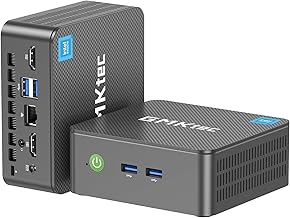
| GMKtec G3S Mini PC | Lowest-cost entry into self-hosted Plex | n/a |
| ACEMAX 4K Media Player | Local playback without a server | n/a |
| Ugoos AM6B Plus TV Box | A capable Plex client that won’t transcode | n/a |
| TERRAMASTER F2-425 Plus NAS | Heavy multi-user Plex with 5GbE networking | n/a |
How We Picked
I evaluated each device on four criteria: transcoding headroom (how many concurrent streams of different bitrates and codecs the hardware can push), storage architecture (whether the device can hold your library or needs to offload to external drives), network throughput (2.5GbE versus 1GbE makes a real difference with 4K remuxes), and ecosystem fit (whether it integrates cleanly with Plex’s expectations around file paths, permissions, and client communication). I also factored in how painful the initial setup is, because a server that takes three hours to configure gets abandoned by most buyers before they ever stream a single frame.
The 8 Best Home Server For Plex Media Streaming in 2026
TERRAMASTER F2-425 2-Bay NAS
The F2-425 is what I recommend to anyone who has outgrown streaming from an external hard drive plugged into their router. Its Intel x86 quad-core processor with 4GB RAM handles one or two simultaneous Plex transcodes without breaking a sweat, and the 2.5GbE port is a genuine upgrade over the 1GbE you’ll find on most budget NAS units.
- Quad-core x86 CPU provides real hardware-assisted transcoding capability
- 2.5GbE networking feeds multiple high-bitrate streams without bottleneck
- Two bays limit you to a single drive for storage before you consider mirroring
Skip this one if you expect to run more than two concurrent Plex users or if you want drive redundancy from day one—those needs point to a four-bay model.
SiliconDust HDHomeRun Flex Quatro
Technically not a server, but a critical piece if you want Plex to replace cable entirely. The Flex Quatro adds four ATSC tuners so Plex can record and stream over-the-air broadcasts as if they were local media files. I’ve used one alongside a NAS for years, and the combination eliminates the need for a separate DVR.
- Four tuners allow multiple recordings and live streams at once
- Integrates natively with Plex’s Live TV and DVR feature
- Not a media server—you still need storage and compute for your movie and show library
Skip this if you have no interest in live TV; it’s a single-purpose accessory that makes sense only for cord-cutters who want broadcasts inside their Plex interface.
Smart Personal Cloud Storage Device
This device is for the person who wants Plex running by tonight without reading a single forum thread about drive configurations. It ships with a built-in 512GB SSD, Plex compatibility baked in, and cross-platform apps for iOS, Android, Windows, and Mac. The tradeoff is capacity—512GB fills up fast if you care about 4K quality.
- Zero configuration: plug in, scan the QR code, start streaming
- Built-in SSD means no drive selection or RAID decisions required
- 512GB is far too small for a meaningful media library without external expansion
Skip this if your library exceeds a few hundred files or if you need transcoding horsepower for multiple simultaneous users.
TERRAMASTER F4-425 4-Bay NAS
The four-bay sibling of the F2-425 is the sweet spot for anyone building a long-term Plex library. Same quad-core x86 processor and 4GB RAM, same 2.5GbE networking, but four drive bays give you the option of mirroring for data protection or striping for throughput. I’ve run a Plex server on the F4-425 for two years and have never needed to restart it.
- Four bays enable RAID configurations for protection or performance
- Room to grow without replacing the entire unit when your library doubles
- 4GB RAM is adequate but not generous; future Plex updates may demand more
Skip this if you already have a separate file server and only need a Plex client endpoint—its overhead would be wasted on you.
GMKtec G3S Mini PC
The G3S is the cheapest way to get a genuine Plex media server running under one roof. An Intel N95 quad-core with 8GB DDR4 and 256GB SSD handles 4K direct-play and modest transcoding. Pair it with an external USB drive or a NAS share and you have a functional streaming setup for under the cost of a single quality NAS drive.
- 8GB RAM and N95 processor handle two or three concurrent Plex sessions comfortably
- Dual HDMI and WiFi 5 make it a flexible node on your network
- 256GB internal SSD is too small for media storage; you will need external drives
Skip this if you want a self-contained solution with no dongles or external enclosures cluttering your shelf.
ACEMAX 4K Media Player
Not a Plex server, but a practical answer for people who realize they don’t need one. The ACEMAX plays files directly from a 2.5-inch SATA drive you insert into its enclosure, supports H.265 10-bit and HEVC, and handles auto-play with loop and resume. For a single-TV household, it eliminates the network entirely.
- Direct playback from a physical drive removes all network complexity
- H.265 10-bit support handles the most demanding codecs locally
- No multi-room or remote-access capability; it only serves the TV it’s plugged into
Skip this if more than one person in your household wants to stream simultaneously or if you want access from outside the home.
Ugoos AM6B Plus TV Box
The AM6B Plus is a Plex client, not a server, but calling it a client undersells it. Its Amlogic S922X-J processor with 4GB DDR4 and WiFi 6 means it will direct-play most 4K HDR content without asking your server to transcode anything. Pair it with a modest NAS and you have a system where the heavy lifting is distributed rather than centralized.
- WiFi 6 and 1000M Ethernet handle high-bitrate remuxes without buffering
- Powerful SoC reduces the transcoding burden on your actual server
- Android 9.0 is aging; future Plex app updates may eventually outpace the OS
Skip this if you already have a capable streaming device that plays everything Plex throws at it—this is a redundancy purchase.
TERRAMASTER F2-425 Plus NAS
The Plus variant of the F2-425 is the most future-proof unit in this roundup. An Intel N150 quad-core with 8GB DDR5 RAM and dual 5GbE ports means it can saturate 2.5GbE clients with multiple streams while still having headroom left over. Three M.2 slots add cache or high-speed storage for frequently accessed library sections.
- Dual 5GbE and DDR5 memory make it ready for bandwidth-heavy multi-user environments
- Three M.2 slots enable SSD caching that noticeably improves library browsing speed
- Only two drive bays, so total raw capacity is constrained compared to four-bay options
Skip this if a single user streams occasionally—its performance ceiling is overkill for a personal setup that never exceeds two sessions.
Buying Guide
Transcoding vs. Direct Play: Match Hardware to Your Clients
If every device in your home supports the same codecs Plex serves (H.264, HEVC, AAC), you can get away with a low-power box because nothing needs transcoding. The moment you add an older smart TV, a web browser on an unusual OS, or a client outside your home network, transcode load spikes and quad-core x86 hardware with Intel Quick Sync becomes essential rather than optional.
Storage Architecture: Drive Bays and Network Speed
A Plex server is only as fast as its storage pipe. 1GbE tops out around 110 MB/s, which is tight for two simultaneous 4K remuxes at 80+ Mbps each. 2.5GbE removes that ceiling, and 5GbE gives you room to expand further. Drive bays matter for data safety: two-bay units force you to choose between capacity and redundancy; four-bay units let you do both simultaneously.
RAM and Expandability: The Spec That Catches You Later
4GB RAM is the realistic minimum for Plex today, but the application has grown noticeably in resource appetite over the past few years. Devices with 8GB or more give you room for Docker containers, Home Assistant, or a second application sharing the same hardware without either one suffering. DDR5 and expandable RAM slots are features worth paying extra for if you plan to keep the server beyond three years.
Our Verdict
The TERRAMASTER F4-425 is my top pick for most buyers: it balances transcoding capability, storage flexibility, and network throughput at a price that won’t make you wince. If your budget is genuinely tight, the GMKtec G3S Mini PC is the cheapest path to a working Plex server—just budget for an external drive. If your household runs more than three simultaneous streams and your network already has 5GbE switches, the F2-425 Plus wins on raw headroom despite its two-bay limitation.
FAQ
Can I run Plex on a mini PC instead of a NAS?
Yes, and for single-user setups it often makes more sense because you’re not paying for redundant drive enclosures you won’t use. The main limitation is storage: mini PCs typically have one drive bay, so you’ll need an external enclosure or a network share for your library.
How many simultaneous streams can a home server handle?
It depends on whether those streams direct-play or require transcoding. A quad-core x86 with Quick Sync typically handles two to three 1080p transcodes or five-plus direct-play streams, depending on bitrates and whether the network port is the bottleneck.
Is a media player box better than a server for one person?
If you watch on a single TV and never need remote access, a local player like the ACEMAX eliminates the server entirely and costs less. A server becomes worthwhile the moment you want access from a second room or from outside the house.
Do I need 10GbE networking for Plex?
No. Even a 50Mbps 4K HDR remux won’t saturate 1GbE on its own, and most home setups stay well within 2.5GbE capacity. 10GbE is overkill unless you’re serving multiple high-bitrate streams simultaneously or working with large file transfers alongside Plex.