
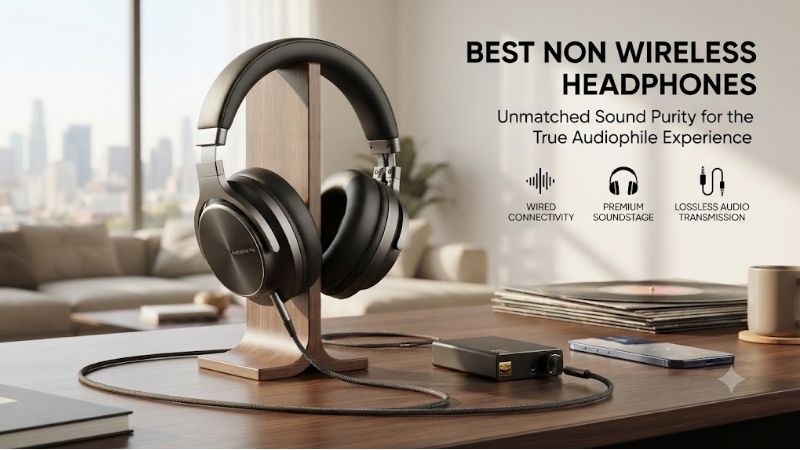
Best non wireless headphones offer uncompromising acoustic detail, zero signal compression, and immediate plug-and-play simplicity for dedicated music lovers. By removing internal batteries and wireless receivers, these reliable models focus entirely on pure sound fidelity. Selecting top wired gear ensures long-lasting everyday enjoyment.
Our top picks


 OneOdio Wired DJ Hi-Res Over-Ear Headphones for
- Bass Sound: Enjoy clear sound and superior comfort…
- Built for Comfort: The soft, padded ear cushions…
- Single-side Monitoring: The 90° swiveling ear cups allow…


As an Amazon Associate we earn from qualifying purchases at no extra cost to you.
By: Daniel Foster
🛒 Best Price Today on Amazon
Prime members get fast, free shipping on everything above, plus member-only deals. New members get a 30-day free trial — cancel anytime.
How to Choose the Right best non wireless headphones
Selecting the right best non wireless headphones requires evaluating acoustic housing styles, driver efficiency, and ear padding materials for daily use. Dedicated music listeners should analyze their primary listening environment to pick between open and closed designs. Finding durable models avoids frequent replacements.
Acoustic Design and Soundstage
Choosing an open-back design creates an expansive three-dimensional soundstage that mirrors live speaker setups in quiet listening spaces. Open earcups allow air and sound waves to pass freely, delivering exceptional clarity across delicate midranges and high frequencies. This natural presentation elevates complex acoustic tracks.
However, open acoustic housings leak audio outward while letting ambient background noise enter your ear canal during active listening. If you plan to stream audio inside noisy office spaces or during daily commutes, closed acoustic backs offer superior passive isolation. Balancing isolation against width determines overall satisfaction.
Passive Noise Isolation and Seal
Solid closed-back noise isolation physically blocks external environmental chatter without requiring active digital noise cancellation circuits or battery power. High-density foam cushions form a tight acoustic seal around your ears, preserving deep bass response and subtle vocal textures. This physical barrier ensures pure sound focus.
A firm seal also prevents sound leakage into surrounding quiet environments like libraries or shared work desks during study sessions. Selecting breathable ear cushion fabrics prevents heat buildup while maintaining proper low-frequency impact during extended listening sessions. Evaluating foam density guarantees comfortable isolation.
Impedance and Source Power
Checking the impedance rating dictates whether your new equipment functions directly with laptops or demands a dedicated headphone amplifier. Low-impedance models under fifty ohms draw sufficient driving power directly from standard mobile devices and desktop computers. Higher impedance gear needs clean amplification for full dynamics.
Pairing high-impedance equipment with weak source devices results in quiet audio output and flat dynamic range during playback. Evaluating your current audio interfaces or external digital-to-analog converters ensures smooth system synergy. Matching power requirements guarantees peak acoustic performance without distortion.
Top Picks
Selecting top-rated best non wireless headphones depends on your listening preferences, daily budget limits, and environmental sound isolation requirements. Below, we review acclaimed real-world models available on Amazon to help you discover ideal acoustic setups. Evaluating these options ensures long-term listening satisfaction.
| Product Model | Acoustic Style | Driver Type | Key Feature | Target User |
|---|---|---|---|---|
| Sennheiser HD 560S | Open-Back | 38mm Dynamic | Analytical Tuning | Critical listeners |
| Audio-Technica ATH-M50x | Closed-Back | 45mm Neodymium | Swiveling Earcups | Studio tracking & DJs |
| Sony MDR-7506 | Closed-Back | 40mm Neodymium | Coiled Cable Build | Broadcast & audio pros |
| Beyerdynamic DT 770 PRO | Closed-Back | Dynamic | Velour Ear Pads | Mixing & long sessions |
| Philips Fidelio X2HR | Open-Back | 50mm LMC | Multi-Layer Drivers | Casual home audiophiles |
| Koss Porta Pro On-Ear | On-Ear Open | Dynamic | Retro Folding Frame | Portable everyday use |
Sennheiser HD 560S
Ideal for critical listeners seeking pure accuracy, these best non wireless headphones deliver exceptional clarity through custom neodymium audio drivers. The lightweight open-back chassis distributes weight evenly across your head to eliminate pressure points. Its analytical sound balance reproduces subtle instrumental details cleanly.
On the downside, the open acoustic housing leaks sound into quiet rooms and provides zero passive background noise isolation. The included long cable also terminates in a quarter-inch plug that requires an adapter for mobile jacks, yet its linear frequency accuracy makes it an astounding entry point for home audiophiles.
Audio-Technica ATH-M50x
Designed for audio producers and studio creators, this versatile model features ninety-degree swiveling earcups alongside a detachable 3.5mm cable for flexible storage. Powerful 45mm aperture drivers produce punchy low-end response and clear vocal separation. Robust construction withstands daily abuse in studio environments.
However, the tight clamping pressure can cause noticeable ear fatigue during multi-hour mixing sessions for users wearing glasses. Synthetic leather ear pads also retain heat during warm studio tracking, but its legendary durability and engaging acoustic profile make it a reliable choice for professional music creators.
Sony MDR-7506
Engineered for broadcast specialists and sound engineers, these time-tested best non wireless headphones set industry standards for studio monitoring headphones. Their closed design blocks external background sounds while delivering pristine midrange resolution for vocal tracking. A folding frame simplifies compact storage.
The trade-off is the heavy coiled cable, which can pull downward uncomfortably when standing or walking around your desk setup. The thin ear pad coating also flakes after several years of regular usage, yet its unmatched vocal clarity and accessible price point keep it indispensable across professional recording spaces.
Beyerdynamic DT 770 PRO
Built for music producers desiring maximum comfort, these closed-back cans feature iconic over-ear comfortable cushions wrapped in soft silver velour fabric. The spacious closed earcups deliver deep sub-bass reproduction without muddying upper frequencies. Robust steel headband construction ensures multi-year durability.
The primary limitation is the fixed non-detachable audio cable, which complicates quick cord replacement if damage occurs down the road. The bright treble response can also sound slightly sharp on poorly mastered audio tracks, but its luxurious comfort and tight bass control justify its position in studio setups.
Philips Fidelio X2HR
Great for home entertainment enthusiasts, these expansive open-back cans connect effortlessly to any analogue headphone jack without requiring expensive external amplifiers. Large 50mm neodymium drivers offer warm bass impact paired with clear midranges. A self-adjusting hammock headband ensures custom weight distribution.
On the downside, the bulky metal frame feels heavy during extended listening sessions and lacks folding mechanisms for travel portability. Ambient sound also passes freely through the open mesh, yet its fun acoustic signature and plush memory foam padding offer fantastic value for casual home music listening.
Koss Porta Pro On-Ear
Perfect for budget-conscious music lovers wanting retro styling, this ultralight on-ear model provides zero audio latency for immediate plug-and-play enjoyment. The flexible headband features adjustable comfort zone temporal pads to reduce side pressure. Its open dynamic drivers deliver surprisingly deep bass response.
The main drawback is the thin metal headband construction, which can occasionally snag long hair during quick fitting adjustments. Sound isolation is practically non-existent due to the open-ear foam design, but its iconic lightweight collapsible frame and warm sound balance make it an unbeatable budget classic.
Frequently Asked Questions
Questions frequently arise when selecting best non wireless headphones regarding impedance requirements, cable durability, and soundstage differences. Below, we answer four common user questions to clarify technical specifications, system compatibility, and physical features before you make a purchase decision.
Why choose wired models over wireless bluetooth gear?
Opting for wired audiophile headphones eliminates lossy Bluetooth audio compression, ensuring you receive pure uncompressed audio streams directly from your hardware source. Wired connections eliminate battery degradation, charging cables, and pairing headaches while delivering instantaneous audio synchronization.
Furthermore, removing battery components reduces overall hardware weight, allowing manufacturers to invest budget resources into higher-quality audio drivers and comfortable ear cushion materials. Wired equipment guarantees long-term product longevity without obsolete software apps or battery failure.
Do I need a dedicated amplifier for wired gear?
Needing an external amplifier depends entirely on your gear’s impedance rating and sensitivity specs. Low-impedance gear rated below eighty ohms operates efficiently when plugged straight into standard laptop ports, smartphones, or an analogue headphone jack without requiring additional hardware components.
However, high-impedance headphones rated at 250 ohms or higher require clean voltage amplification to reach full volume and proper dynamic range. Adding a portable or desktop amplifier unlocks fuller bass response and clearer transient response for high-resistance audiophile equipment during listening sessions.
How do open and closed headphone designs differ?
Open acoustic designs feature porous earcups that let air and sound pass through freely, creating an expansive natural soundstage similar to listening to room speakers. Conversely, closed models feature solid ear cup shells that trap acoustic energy inside, offering deep bass and strong passive noise blocking.
Choosing between open and closed best non wireless headphones depends on your environment and isolation requirements. Open models sound more open and airy in quiet private rooms, whereas closed designs protect surrounding people from audio leakage inside offices, public spaces, or recording studios.
Can I replace broken audio cables on wired gear?
Many modern wired models feature detachable cable connections that allow quick replacement if cords wear out or get damaged over time. Standard 3.5mm or proprietary locking connectors let users swap damaged cords without purchasing brand-new hardware, extending total equipment lifespan significantly.
If your equipment utilizes a fixed non-detachable cord, damage to the wire requires manual soldering or complete unit replacement. Choosing models with detachable cable designs provides extra peace of mind and flexibility to upgrade cord length or add inline microphones for daily voice communication.
Final Thoughts
Selecting the best non wireless headphones comes down to balancing acoustic housing styles, driver efficiency, and ear padding comfort for your environment. Whether you prioritize open-back critical accuracy or closed-back isolation, investing in high-quality wired gear with a detachable 3.5mm cable guarantees pure audio enjoyment.
Write Your Review
No reviews yet. Be the first to share your experience!