Key takeaways
- Clean first: wipe grease behind stove, empty toaster crumbs, fix sink leaks. Bait competes with food — less competition means faster uptake.
- Place pea-sized dots (about 0.25 gram, 5mm across) every 10 to 12 inches where you see droppings: upper cabinet corners, hinge voids, under-sink pipe escutcheons, refrigerator motor housing edge, microwave cart underside, trash-can cabinet back.
- Keep gel off food-contact surfaces, stove burners, and inside toasters. Put it on the underside or back panel, never where food touches.
- Do not spray cleaner, bleach, or insecticide directly on gel. Contamination makes them ignore it. If you must clean, wipe first, let dry, then bait.
- Check at 7 days. If dots are gone, add more. If dots are dried, hard, or moldy, scrape off and replace. Re-bait at 14 and 30 days even if you see fewer roaches — egg cases hatch on that timeline.
- Vacuum dead roaches, droppings, and egg capsules with a crevice tool, then empty the vacuum outside. This removes allergens and lets you tell if activity is new.
The best roach killer for home use for most kitchens and apartments is a fipronil or indoxacarb gel bait like Advion Cockroach Gel Bait or Combat Max Roach Killing Gel, applied in pea-sized dots in cracks and crevices, plus child-resistant bait stations under appliances for ongoing control.
Sprays kill the roaches you see in minutes, but gels and bait stations kill the colony you don’t see over 5 to 14 days. If you want long-term results, that distinction matters more than brand name. The best way to kill roaches and the best way to kill cockroaches are the same: stop spraying repellents everywhere, place non-repellent bait where they feed at night, and remove food and water access.
Our top picks
 Advion Cockroach Gel Bait
- Advion Cockroach gel bait from Syngenta is a…
- Advion Cockroach Gel Bait is suitable for indoor…
- Advion Cockroach has a high-consumption bait matrix with…
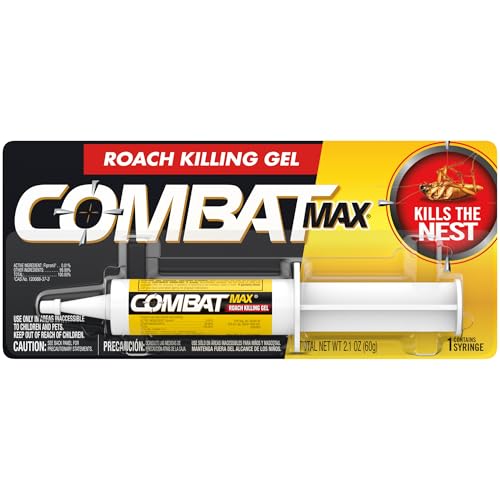 Combat Max Roach Killing Gel
- Kills The Nest: Control infestations and defend your…
- Long Residual Action: Designed for sustained efficacy, this…
- Quick, Lasting Results: Formulated with Fipronil, a powerful…
 TERRO Roach Killer Gel Bait Stations
- These powerful roach killer bait stations attract and…
- 1
- Ready-to-use roach bait stations provide comprehensive cockroach killer…
| Product | Key specs | |
|---|---|---|
| Advion Cockroach Gel Bait | Advion Cockroach gel bait from Syngenta is a… Advion Cockroach Gel Bait is suitable for indoor… Advion Cockroach has a high-consumption bait matrix with… | Check price |
| Combat Max Roach Killing Gel | Kills The Nest: Control infestations and defend your… Long Residual Action: Designed for sustained efficacy, this… Quick, Lasting Results: Formulated with Fipronil, a powerful… | Check price |
| TERRO Roach Killer Gel Bait Stations | These powerful roach killer bait stations attract and… 1 Ready-to-use roach bait stations provide comprehensive cockroach killer… | Check price |
 Combat Max 12 Month Roach Killing Bait Combat Max 12 Month Roach Killing Bait | Kills The Nest: Control infestations and defend your… Long Residual Action: Designed for sustained efficacy, these… Quick, Lasting Results: Formulated with Fipronil, a powerful… | Check price |
As an Amazon Associate we earn from qualifying purchases at no extra cost to you.
Gel bait vs. bait stations vs. spray: which actually works?
All three categories kill roaches, but they work in completely different ways. Understanding that prevents the most common mistake: spraying a repellent insecticide right on top of bait, which makes roaches avoid the bait.
Gel baits: best for colony control
Gel baits such as Advion Cockroach Gel Bait (0.6% indoxacarb) and Combat Roach Killing Bait Gel (0.05% fipronil) use food attractants plus a slow-acting active ingredient. A foraging roach eats it, returns to the harborage, and is poisoned hours later. Other roaches then feed on its feces and carcass — what entomologists call secondary transfer.
Expect visible reduction in 3 to 5 days and major control in 2 to 3 weeks. One 30-gram syringe typically makes 90 to 150 placements. Gels are ideal for German cockroaches in kitchens because you can place them inside cabinet hinge voids, under sink rims, behind refrigerator gaskets, and along dishwasher edges where stations won’t fit.
Bait stations: best for easy, kitchen-safe maintenance
Pre-filled stations like Combat Max 12-Month Roach Killing Bait (0.05% fipronil) and Raid Double Control Small Roach Baits (0.5% indoxacarb) keep pesticide enclosed in plastic. You just place them under the fridge, stove, trash can, and sink.
They are slower than fresh gel but last longer — typically 3 to 12 months depending on brand — and are better if you have curious pets, toddlers, or renters who don’t want to handle syringes. For large American or Oriental cockroaches coming from basements or sewers, large roach bait stations work better than small ant-sized stations.
Contact and residual sprays: best for immediate knockdown only
Products like Bengal Gold Roach Spray (0.2% deltamethrin + 1% nylar IGR), Raid Ant and Roach Killer (0.25% permethrin + imiprothrin), Hot Shot Ant, Roach and Spider Killer, and Ortho Home Defense Insect Killer are pyrethroid-based. They kill on contact within minutes to an hour.
The problem: most are repellent to roaches. Sprayed as a barrier around baseboards, they can scatter German cockroaches deeper into walls and ruin bait acceptance nearby. Use sprays for spot treatment of a nest behind a stove you are about to clean out, or as an outdoor perimeter barrier, not as your main indoor strategy for German roaches.
The bottom line on best pest control for roaches: gel for speed + colony elimination, stations for safe maintenance, spray for visible bugs and exterior entry points. Professionals usually use gel + insect growth regulator + stations together, not spray alone.
Top picks by home situation
Best overall for kitchens and apartments: Indoxacarb or fipronil gel bait in a 30-gram syringe. You can treat an entire 1-bedroom kitchen with about 10 to 15 grams, leaving reserve for re-baiting at day 14 and day 30.
Best if you don’t want to handle gel: 12-pack or 18-pack of Combat Max bait stations. Place 6 to 10 stations in a standard kitchen: 2 under sink, 2 behind trash can, 2 under fridge, 2 behind stove sides, 1-2 under dishwasher edge.
Best for heavy infestations: Gel bait plus an insect growth regulator such as Gentrol Point Source or Tekko Pro. IGRs don’t kill adults but prevent nymphs from reproducing for up to 120 days, which breaks the cycle.
Best for large palmetto bugs / waterbugs: Outdoor-focused approach with Ortho Home Defense or Harris Boric Acid Roach Powder in dry voids, plus sealing around pipes and door sweeps. Large roaches often live outside and wander in, so indoor gel alone rarely solves it.
Best low-toxicity support option: Boric acid dust (99% orthoboric acid, e.g., Harris Famous Roach Tablets or 20 Mule Team Borax-based powders) puffed lightly in dry wall voids and under appliances. It lasts as long as it stays dry but loses effectiveness if caked or wet, and must be kept away from food-contact surfaces.
Comparison table: what you actually get
| Product type / example | Active ingredient | Size in package | Typical coverage | Speed | Lasts |
|---|---|---|---|---|---|
| Advion Cockroach Gel Bait (4 x 30g syringes) | 0.6% indoxacarb | 120g total gel | 8-12 kitchens at 10-15g each | 1-5 days to reduction | 2-4 weeks per placement before drying |
| Combat Max Roach Killing Gel (1 x 60g syringe) | 0.05% fipronil | 60g gel | 4-6 kitchens | 3-7 days | 3 months if not contaminated |
| Combat Max 12-Month Bait Stations (12-pack) | 0.05% fipronil | 12 x ~1.5g bait | 1-2 kitchens / apartment | 5-14 days | Up to 12 months |
| Raid Double Control Small Baits (8-pack) | 0.5% indoxacarb | 8 stations | 1 small kitchen | 7-14 days | Up to 3 months |
| Bengal Gold Roach Spray (11 oz can) | 0.2% deltamethrin | 311g aerosol | Spot treatment, ~150-200 sq ft crack treatment | Minutes to hours | Residual 4-6 weeks on non-porous surfaces |
| Ortho Home Defense (1.33 gal with wand) | 0.05% bifenthrin | 5 liters ready-to-use | Perimeter of 2,000 sq ft home exterior | Hours | Up to 12 months outdoors on protected surfaces |
Decision matrix: pick by your situation
| Your situation | Start with | Why |
|---|---|---|
| See 5+ small light-brown roaches at night in kitchen, apartment living | Gel bait + 6 bait stations | Likely German roaches; need crack-and-crevice placement plus secondary kill |
| Kids or pets, can’t do detailed applications | Enclosed bait stations only, plus sanitation | No loose gel or dust exposure; place where paws / hands can’t reach |
| Occasional 2-inch dark roaches in bathroom / basement | Seal entry points + outdoor residual spray + 2-3 large stations | Likely American / Oriental roaches migrating in; indoor bait alone won’t stop source |
| Landlord won’t treat, tight budget | Single 30g gel syringe + boric acid for dry voids | Lowest cost per kitchen; reapply small dots rather than buying sprays repeatedly |
| Sprayed Raid for months and they keep coming back | Stop repellent sprays for 7 days, switch to gel + IGR | Repellents cause bait avoidance and scatter; non-repellent bait restores feeding |
How much it costs per use: a worked example
Gel looks expensive until you calculate cost per placement. A general market range for a 30-gram gel syringe is 18 to 32 dollars, and a 60-gram syringe is 25 to 45 dollars. Bait station multipacks generally run 8 to 18 dollars.
Take a standard kitchen needing 12 grams for initial treatment: 0.25-gram dots x 48 dots = 12 grams. That is about 40% of a 30-gram syringe. If the syringe cost 24 dollars, initial treatment costs about 9.60 dollars in bait. Follow-ups at day 14 and 30 typically use 3 to 5 grams each, adding 2.40 to 4.00 dollars each.
Total bait cost for a full 30-day program: roughly 15 to 18 dollars, plus 8 to 12 dollars if you add 6 to 8 stations for maintenance. One aerosol spray can in the 6 to 12 dollar range may only last 2 to 3 spot treatments and does not provide colony transfer, so repeated cans often cost more over three months.
How to apply gel correctly in cracks and crevices
Correct placement matters more than quantity. Roaches feed at night along edges, not in the middle of floors.
- Clean first: wipe grease behind stove, empty toaster crumbs, fix sink leaks. Bait competes with food — less competition means faster uptake.
- Place pea-sized dots (about 0.25 gram, 5mm across) every 10 to 12 inches where you see droppings: upper cabinet corners, hinge voids, under-sink pipe escutcheons, refrigerator motor housing edge, microwave cart underside, trash-can cabinet back.
- Keep gel off food-contact surfaces, stove burners, and inside toasters. Put it on the underside or back panel, never where food touches.
- Do not spray cleaner, bleach, or insecticide directly on gel. Contamination makes them ignore it. If you must clean, wipe first, let dry, then bait.
- Check at 7 days. If dots are gone, add more. If dots are dried, hard, or moldy, scrape off and replace. Re-bait at 14 and 30 days even if you see fewer roaches — egg cases hatch on that timeline.
- Vacuum dead roaches, droppings, and egg capsules with a crevice tool, then empty the vacuum outside. This removes allergens and lets you tell if activity is new.
This information is for household pest control only and is not medical advice. Cockroach allergens can aggravate asthma and allergies — if anyone in the home has respiratory issues, or if infestation is severe, consider consulting a licensed pest management professional and a healthcare professional.
Durability and ownership realities
Gel dries out first. In hot kitchens above ovens or dishwashers, thin smears can skin over in 7 to 10 days. Dots in cool, dark voids last 3 to 4 weeks. If gel turns dark, crusty, or dusty, it is no longer palatable — remove and replace, don’t just pile new gel on top.
Bait stations wear by getting greasy, flooded, or vacuumed up. Grease film blocks entry holes. Check quarterly, wipe exteriors, and replace if the bait inside looks empty or if the label date has passed. Don’t move stations after roaches start feeding — you will break the pheromone trail.
Sprays lose residual fastest on concrete, sunlight, and mopped floors. Outdoor barrier sprays often need reapplication every 60 to 90 days in rainy climates despite 12-month label claims for protected areas. Indoor crack sprays break down faster around stoves and steam.
Common mistakes that cause failure: using ant bait for roaches (different food preferences), placing large blobs instead of many small dots, baiting right after spraying repellent, and stopping after one week because adults disappeared while egg cases remain. German cockroach oothecae hatch in about 28 days, so a one-time treatment almost always looks like a rebound.
What about other pests? Roach products don’t cover everything
Readers searching for the best way to kill ants often try roach gel, but ant colonies respond better to sweet liquid ant baits like Terro Liquid Ant Baits or protein-based ant gels placed on foraging trails, not cockroach stations. The best way to kill rats is completely different — snap traps and exclusion with steel wool and hardware cloth, plus securing garbage, since poison baits pose serious risks to pets, wildlife, and children and are best left to professionals.
The best way to kill mosquitoes is source reduction first: dump standing water in saucers and gutters, use window screens, and add a fan on patios, with EPA-registered skin repellents and larvicides for ponds if needed. The best way to kill flies indoors is sanitation plus sticky window traps and a vacuum for cluster flies, with outdoor trash management doing most of the work. The best way to kill fleas usually requires washing pet bedding on hot, thorough vacuuming with immediate bag disposal, and a veterinarian-recommended flea treatment for pets — household sprays alone rarely break the pupal cycle.
In short, don’t repurpose roach killer for those pests. Use roach gel and stations for roaches, ant-specific bait for ants, traps and exclusion for rats and mice, and sanitation plus targeted traps for flying insects and fleas.
When to call a professional
Call a licensed exterminator if you see roaches during the day (sign of crowding), find multiple egg cases per week, live in multi-unit housing where neighbors are infested, or have tried correct gel + stations for 4 weeks with no drop. Professionals can rotate active ingredients to manage bait aversion, apply commercial IGRs, and treat shared wall voids you cannot legally access.