Choosing a best robot kit means balancing assembly complexity, expandability, and whether the finished build actually teaches something transferable. Some kits deliver a one-time afternoon activity and then collect dust; others open a long path into coding, electronics, and mechanical design. The gap between these outcomes is enormous, and the price tag alone tells you very little about which side of that gap a kit falls on.
We compared published specifications, component lists, age recommendations, and aggregated owner feedback across eight widely available options for 2026. What follows breaks down which kits reward patience, which suit younger hands, and which deliver the most engineering value per dollar spent.
Our top picks




As an Amazon Associate we earn from qualifying purchases at no extra cost to you.
Quick Picks
| Product | Best for | Price |
|---|---|---|
| ELEGOO UNO R3 Car Kit | Beginners who want Arduino programming | under $60 |
| Sillbird 12-in-1 Solar Robot | Young builders who dislike batteries | under $20 |
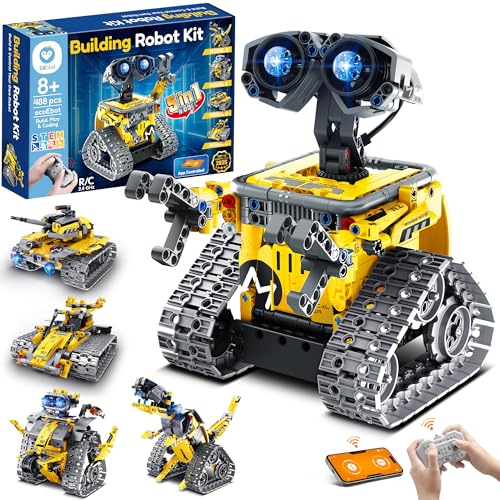
| Sillbird Remote Control STEM Kit | Kids 8-13 wanting RC interaction | under $60 |
| iATOM Johnny 5 Building Set | Adults seeking a display-worthy model | under $60 |
| Thames & Kosmos Mega Cyborg Hand | Hydraulics and pneumatic principles | under $30 |
| Klutz Lego Gear Bots | Lego fans exploring gear mechanics | under $30 |
| Sillbird Remote Control Age 8-12 | Slightly younger RC robot seekers | under $60 |
| ELEGOO Mega 2560 R3 Starter Kit | Serious Arduino learners wanting breadth | under $70 |
How We Picked
We evaluated each kit on four axes: component quality and documentation depth, age-appropriateness of the assembly difficulty, educational ceiling (does the build keep teaching after completion?), and owner-reported durability over months of use. A kit that scores well on only one axis while failing the others did not make the list.
The 8 Best Robot Kit in 2026
ELEGOO UNO R3 Smart Robot Car Kit V4
This is the best robot kit for anyone who wants a programmable chassis rather than a static model. Owners praise the included tutorial for getting a car driving, avoiding obstacles, and streaming camera footage without external help. The Arduino UNO R3 board means the same platform supports hundreds of future projects beyond the car itself. Assembly takes a full evening, which suits patient beginners but frustrates younger children. The open-source ecosystem is the strongest argument for buying it over sealed kits. Skip this if the builder expects a toy-level experience or cannot handle a screwdriver and jumper wires.
Sillbird 12-in-1 Solar Robot Building Kit
At under fifteen dollars, this kit converts sunlight into motion across twelve mechanical configurations, teaching energy conversion without any soldering or coding. Parents report children complete builds in under an hour, and the instruction manual uses large illustrations that reduce reading frustration. The main limitation is scale: parts are small, and the resulting robots are display pieces rather than robust toys. Owners note the plastic feels thin compared to pricier options. Skip this if the child needs a durable play companion or if the primary goal is programming education rather than mechanical curiosity.
Sillbird STEM Robot Building Kit with Remote Control
Targeting ages 8 through 13, this kit pairs block-style assembly with a wireless remote, giving the finished robot a play value that pure educational kits often lack. Owners highlight the satisfying build sequence and the immediate feedback of driving the robot around. The remote-control layer adds interactive fun but limits programming depth—you are driving, not coding. A few reviewers mention that one or two connectors arrived loose, though replacement support was responsive. Skip this if the goal is teaching block-based coding or Arduino logic rather than mechanical assembly and RC play.
iATOM 1176 Pieces Johnny 5 Robot Building Set
This is the best robot kit for adults who want a recognizable character model with motorized functions. The 1,176-piece brick set builds a life-size Johnny 5 from the Short Circuit films, complete with a rechargeable battery pack and remote-operated head and arm movement. Builders praise the satisfying click-together assembly and the shelf presence of the finished figure. The complexity means a multi-session commitment, and the price per piece is higher than generic brick sets. Skip this if you need a STEM curriculum tool or want programmable behavior rather than mechanical animation.
Thames & Kosmos Mega Cyborg Hand
At twenty-four dollars, this kit builds a giant pneumatic hand that grips, releases, and adjusts to different object sizes using syringe-driven hydraulics. Owners consistently call it the clearest physical introduction to fluid-pressure principles they have found in a children’s kit. The assembly involves no electronics, no code, and no batteries—just water-filled syringes and flexible tubing. The trade-off is a one-project ceiling: once built, the hand does not evolve. Skip this if the builder has already explored basic hydraulics or needs a programmable, multi-function platform.
Klutz Lego Gear Bots
This activity kit leverages standard LEGO pieces plus a set of gears, cams, and rubber-band drive components to create five walking robots without motors or code. The included booklet walks through cam-and-follower theory in a format accessible to ages 8 through 12. Parents report the book’s explanation style works better than most robotics curricula for reluctant readers. The limitation is that the finished bots are tabletop curiosities rather than mobile vehicles, and the gear ratio lessons stay narrow. Skip this if the child already has programming experience or wants remote-controlled movement.
Sillbird Building Robot Kit with Remote Control (Age 8-12)
Very similar in concept to the 8-13 edition, this variant tightens the age range down slightly and adjusts the block count for shorter assembly sessions. Owners of the younger version report their children finished within a single afternoon, which suits attention spans that resist multi-day builds. The remote-control range and build stability received the same praise as the wider-age sibling. The main difference is fewer advanced configurations, so long-term replay value is marginally lower. Skip this if the child is already comfortable with the more complex model or needs coding exposure rather than driving play.
ELEGOO Mega 2560 R3 Project Starter Kit
For under $70, this is the best robot kit for breadth: the Mega 2560 board, a breadboard, dozens of sensors, motors, servos, and an LCD screen support projects ranging from line-following cars to automated plant-watering systems. The included tutorial PDF guides over thirty example builds. Owners frequently note that the component count per dollar rivals or exceeds pricier university-lab kits. The downside is that it is not a single robot but a parts library, which demands project planning. Skip this if the builder wants one guided build rather than an open-ended electronics platform.
Buying Guide
Assembly Difficulty vs. Builder Age
A kit that exceeds the builder’s fine-motor skill produces frustration, not learning. For ages 6-9, look for large interlocking blocks or snap-fit pieces with illustrated instructions and no soldering. Ages 10-14 can handle screwdrivers, small connectors, and multi-step manuals. Teens and adults should expect breadboards, jumper wires, or hundreds of small bricks, since those kits deliver the most transferable engineering knowledge per hour invested.
Programming Ceiling and Expandability
The difference between a toy and a learning platform is what happens after assembly. Arduino-compatible kits let you rewrite behavior, swap sensors, and integrate with free IDEs. Remote-control-only kits offer a fixed interaction loop. If the budget allows, favor a kit whose electronics board can run new sketches—this converts a $50 purchase into a multi-year skill path instead of a one-weekend activity.
Documentation Quality and After-Sale Support
Poor instructions kill otherwise solid hardware. Before purchasing, check whether the manufacturer publishes a downloadable manual, video walkthrough, or active support channel. Kits from ELEGOO and Thames & Kosmos consistently earn praise for tutorial depth. Sillbird and Klutz rely more on visual step-by-step guides, which suit younger builders who skip reading. A kit without any documentation path is a gamble regardless of component quality.
Our Verdict
The ELEGOO UNO R3 Smart Robot Car Kit V4 is our top pick overall because it balances guided assembly with a genuinely expandable programming platform. For the tightest budget, the Sillbird 12-in-1 Solar Robot delivers surprising educational value at under fifteen dollars. If the buyer is an adult hobbyist seeking a showcase build, the iATOM Johnny 5 set wins on finished-product satisfaction.
FAQ
What age is a robot kit suitable for?
Kits for ages 6-9 use large snap-fit pieces with no electronics, while kits for 10-14 introduce motors, sensors, and basic coding. Adult-oriented model kits like the iATOM Johnny 5 assume fine-motor control and patience for multi-session assembly.
Do robot kits require soldering or programming skills?
Most beginner-friendly kits avoid soldering entirely by using connectors or breadboards. Programming is only necessary for Arduino-compatible kits; solar, hydraulic, and remote-control builds work without any code.
How much should a good robot kit cost?
Solid mechanical kits start around $15, while programmable Arduino platforms typically range from $50 to $66 in this selection. Paying more mainly buys component variety and documentation depth rather than build quality.
Are these kits reusable after the initial build?
Block-based kits like Sillbird and Klutz can be disassembled and rebuilt in new configurations. Arduino and brick-based sets support new projects using the same core components, effectively extending their useful life well beyond a single assembly.