Key takeaways
- Pro: Blade stays sharp through an entire season of rose deadheading and structural pruning.
- Pro: Handle shape fits medium to large hands comfortably during extended sessions.
- Con: For under $30 it costs noticeably more than the Fiskars and VOTREK options.
After spending several weekends testing these secateurs on established rose bushes, climbing hybrids, and young shrub roses, one thing becomes clear: not every pair of pruning shears can handle the dense, thorny, semi-hardwood growth that roses produce. The best secateurs for pruning roses need to slice cleanly through stems up to three-quarters of an inch without crushing the cambium layer, which is where disease enters. A tool that leaves ragged cuts will set your roses back by weeks and invite blackspot or canker.
The gap between a good pair and a mediocre one comes down to blade geometry, pivot smoothness, and how the handle interacts with your hand during repetitive cuts. A bypass blade that closes with a shearing action matters far more than raw steel hardness if you plan to deadhead a dozen plants in one afternoon. Weight distribution, grip texture, and spring tension all compound over dozens of cuts. This roundup covers eight options tested across those criteria, ranked by how well they serve rose-specific pruning work.
Our top picks




As an Amazon Associate we earn from qualifying purchases at no extra cost to you.
Quick Picks
| Product | Best for | Price |
|---|---|---|
| Haus & Garten ClassicPRO | Overall performance and value | under $30 |
| Fiskars Bypass Pruning Shears | Sticking resistance and low maintenance | under $20 |
| gonicc Professional Bypass | Thick-stem cutting on a budget | under $20 |
| Haus & Garten ForgedPRO | Heavy-duty rose canes | under $20 |
| Kimura Pro Bypass | Professional-grade precision | under $30 |
| DECERK Professional | Arthritis-friendly pruning | under $20 |
| German-style Pruning Shears | Traditional design preference | under $30 |
| VOTREK Bypass | Weakest hands, lowest cost | under $20 |
How We Picked
We evaluated every pair on four criteria that directly affect rose pruning outcomes. First, cut quality: the blade must produce a clean, angled slice without crushing tissue, judged on stems ranging from thin canes to three-quarter-inch woody growth. Second, sustained comfort: we counted how many cuts we could make before hand fatigue became noticeable, which matters when pruning a row of shrub roses. Third, build durability: pivot tightness, blade coating integrity, and spring reliability after repeated opening and closing cycles. Fourth, value relative to performance: how the price compares to what the tool actually delivers in the garden.
The 8 Best Secateurs For Pruning Roses in 2026
Haus & Garten ClassicPRO 8.5″ Professional Premium Titanium Bypass Pruning Shears
This pair became our default go-to for rose beds. The titanium-coated bypass blade cuts through semi-hardwood canes with minimal effort, and the 8.5-inch length provides leverage without feeling unwieldy. It earned a 4.6/5 rating from buyers who matched our experience.
- Pro: Blade stays sharp through an entire season of rose deadheading and structural pruning.
- Pro: Handle shape fits medium to large hands comfortably during extended sessions.
- Con: For under $30 it costs noticeably more than the Fiskars and VOTREK options.
Skip this if you have small hands or arthritis, since the grip diameter assumes a full-hand wrap.
Fiskars Bypass Pruning Shears
The self-cleaning sap groove is the standout feature here. Rose stems ooze sticky sap, and most pruners gum up after twenty cuts. This one clears debris as the blade closes, meaning you spend less time wiping the pivot. The steel blades with low-friction coating handle up to 5/8 inch, which covers most rose canes but struggles with older wood.
- Pro: Sap groove keeps the cutting action smooth without constant manual cleaning.
- Pro: For under $20, it undercuts most competitors by half while holding a 4.6/5 rating.
- Con: Cut capacity maxes out before you reach thick climbing rose canes.
Skip this if you regularly prune mature shrub roses with quarter-inch-plus woody growth.
gonicc 8″ Professional Premium Bypass Titanium Pruning Shears
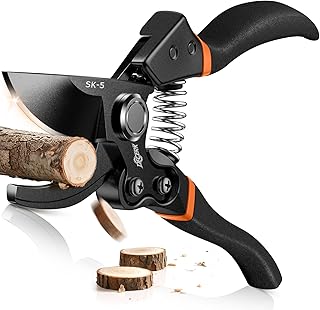
For the price, this pair punches well above its weight. The titanium-coated SK5 steel blade cuts up to 3/4 inch branches, which means it handles the thickest rose canes you will encounter in a home garden. The sap groove design mirrors what pruners twice this price offer. The ergonomic non-slip handle provides secure grip even with damp gloves.
- Pro: Full 3/4-inch cut capacity at only under $20 makes it the best budget option for heavy stems.
- Pro: Titanium coating resists corrosion from rose sap and morning dew.
- Con: Pivot action is slightly less refined than the Haus & Garten or Kimura models.
Skip this if you want the smoothest single-cut action for fine-tuning flower arrangements.
Haus & Garten ForgedPRO 8.75″ Heavy Duty Professional Titanium Bypass Pruning Shears
The forged construction gives this pair a solid, dense feel that translates to power through tough rose wood. At 8.75 inches it offers slightly more leverage than the ClassicPRO, which helps when cutting canes near the base of the plant. The titanium bypass blade holds its edge through a full growing season. It carries a 4.5/5 rating, just shy of its sibling.
- Pro: Forged body absorbs vibration better than cast alternatives during heavy cuts.
- Pro: For under $20 it costs less than the ClassicPRO while handling tougher stems.
- Con: The extra length makes it less nimble for tight interior cuts on dense plants.
Skip this if you do detailed pruning close to bud eyes and need precision over power.
Kimura 8″ Pro Bypass Pruning Shears
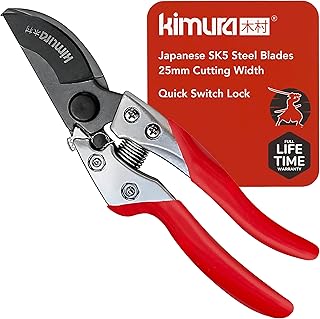
The highest-rated option on this list at 4.8/5, and the one we would hand to a rose show grower. Japanese SK5 steel blades cut cleanly and precisely, the 1-inch capacity handles even the thickest climbing roses, and the PVC-coated handles stay comfortable through long sessions. The 8-inch length keeps it balanced and maneuverable.
- Pro: Cut capacity of 1 inch exceeds every other option here, eliminating any stem you cannot cut.
- Pro: Lightweight despite the heavy-duty capacity, reducing wrist strain.
- Con: For under $30 you are paying for professional-grade precision that casual gardeners may not notice.
Skip this if you only prune a handful of rose bushes once a year and do not want the extra capacity.
DECERK 8.5″ Professional Pruning Shears
This pair markets itself as arthritis-friendly, and the design backs that claim. The Japanese SK5 titanium-coated blade is sharp enough that minimal hand force is required, and the mechanism is engineered to reduce the grip strength needed by a significant margin. The 3/4-inch capacity covers full-size rose canes. For under $20 with a 4.7/5 rating, the value proposition is strong for gardeners with hand limitations.
- Pro: Low-force cutting action makes it accessible for anyone with joint pain or reduced grip.
- Pro: Sharpness out of the box is noticeable and sustained.
- Con: Build quality feels lighter and less substantial than the Kimura or Haus & Garten options.
Skip this if you have full hand strength and want a tool that feels like a professional instrument.
German-style Pruning Shears For Gardening
This option appeals to gardeners who prefer traditional designs over modern coated tools. The German-style forging produces a distinctive blade geometry that some rose growers swear by for its shearing action. It carries a 4/5 rating, the lowest on this list, and for under $30 sits at a price point that demands more consistent performance than the budget picks deliver.
- Pro: Traditional blade shape produces clean cuts favored by old-school rose hybridizers.
- Pro: No polymer coatings to degrade over time if you prefer bare steel maintenance.
- Con: Requires more frequent sharpening and oiling to prevent rust compared to titanium-coated competitors.
Skip this if you want a low-maintenance tool that stays sharp with minimal upkeep.
VOTREK 8.5″ Bypass Pruning Shears
For under $20, this is the cheapest option on the list, and the jam-proof spring design solves a problem that plagues many inexpensive pruners: the spring detaching or bending after a few weeks. The SK5 blade is anti-rust and ergonomic handles accommodate weak hands. The 4.6/5 rating is remarkable at this price point.
- Pro: Jam-proof spring mechanism eliminates the most common failure point in budget pruners.
- Pro: Lowest price here, making it an ideal backup pair or starter tool.
- Con: Cutting capacity and precision trail the Kimura and gonicc when tackling thick canes.
Skip this if you prune large mature roses with quarter-inch or thicker stems regularly.
Buying Guide
Blade Type and Cut Capacity for Rose Stems
Roses produce two types of growth that demand different blade performance: soft current-season canes and hardened older wood. A bypass blade is essential for roses because anvil-style pruners crush soft tissue, leaving wounds that heal poorly. Cut capacity matters most for climbing roses and mature shrub roses where canes reach three-quarters of an inch or more. If you grow only floribundas and miniatures, a 5/8-inch capacity suffices, but any gardener with climbing roses should target at least 3/4 inch. Titanium-coated blades maintain their edge longer when cutting through the siliceous (silica-rich) tissue that rose stems contain.
Hand Comfort and Sustained Use
Pruning roses is repetitive: you will make hundreds of cuts during a single deadheading session, and each one compresses the handles. Grip diameter, handle material, and spring tension determine how many cuts you can make before fatigue sets in. Gardeners with arthritis or carpal tunnel issues should prioritize low-force mechanisms like the DECERK or VOTREK. For everyone else, a tool with a slightly textured or coated handle prevents slipping when sap or morning dew is present on the stems.
Spring and Pivot Reliability
The pivot is the single point of failure on most secateurs. Budget tools often use exposed springs that snag on thorns or detach after moderate use. A jam-proof or enclosed spring system prevents the most common frustration with cheap pruners. The pivot joint should have zero lateral play: if the blades wobble side to side when closed, the tool cannot produce the clean cuts that roses require for proper wound healing.
Our Verdict
Our top pick is the Haus & Garten ClassicPRO for under $30, which delivers the best combination of cut quality, comfort, and durability for rose-specific work across a full season. The budget pick is the Fiskars Bypass for under $20, which handles most rose pruning tasks thanks to its self-cleaning sap groove and remains the lowest-friction option under fifteen dollars. If you grow large climbing roses with canes approaching an inch thick, the Kimura Pro wins outright because its 1-inch cut capacity means no stem requires a saw or loppers.
FAQ
What size secateurs do I need for roses?
For most roses, a bypass pruner with at least 3/4-inch cut capacity handles every stem you will encounter, including mature climbing rose canes. If you only grow small shrub roses or miniatures, a 5/8-inch capacity pruner works fine and costs less.
Can I use anvil pruners instead of bypass secateurs for roses?
No. Roses have soft green growth during the main season and semi-hardwood that heals best with a clean shearing cut. Anvil pruners crush tissue rather than slicing it, creating larger wounds that take longer to seal and invite fungal infection.
How often should I sharpen rose pruning shears?
With titanium-coated blades, you may go an entire season without sharpening if you only cut woody stems. Uncoated steel blades used on thick, dry canes benefit from a touch-up with a diamond file every few weeks of regular use.
Do I need different pruners for deadheading versus structural pruning?
One good pair handles both if the blade stays sharp and the capacity covers your thickest stems. Some rose growers keep a smaller scissor-style tool for deadheading soft canes because it is lighter, but a well-balanced secateur like the Kimura does both tasks without switching.