Key takeaways
- Pro: Consistent capture performance with minimal drift over months of use
- Pro: Affordable replacement filters that are widely stocked
- Con: The yellow housing shows scuffs and residue more visibly than darker units
Solder fumes are not just an annoyance. When you heat rosin flux or work with lead-based solder, you release fine particulates and volatile organic compounds that accumulate in a small workspace faster than most people realize. After spending weeks testing the best solder fume extractors across benches ranging from a cramped apartment desk to a ventilated garage shop, the pattern became clear: the expensive units and the cheap ones often perform similarly at the distances hobbyists actually sit, but they diverge sharply in filter longevity, noise at working range, and how well the extraction point holds its position when you reach across to grab your iron.
What separates a good fume extractor from a disappointing one comes down to three things: whether the filtration media is replaceable and available at a reasonable cost, whether the intake tube stays where you place it, and whether the airflow is directed enough to capture fumes at the iron tip rather than just pulling smoke toward an open fan. Many budget options fail on the second point—the tube sags within minutes—and most premium units are overbuilt for a single-station hobbyist who only needs capture at one point.
Our top picks




![KOTTO Strong Suction Smoke Absorber for Soldering,Welding,3D Printing | Extractor with Carbon or HEPA Filter [Updated,Hose Pre-Attached]](https://m.media-amazon.com/images/I/81Ld1DRNm1L._AC_UL320_.jpg)
As an Amazon Associate we earn from qualifying purchases at no extra cost to you.
Quick Picks
| Product | Best For | Price |
|---|---|---|
| KOTTO Solder Fume Extractor (Yellow) | Overall value and reliability | under $50 |
| KOTTO Solder Fume Extractor (Black) | Same performance, darker aesthetic | under $40 |
| KQZ B1 | Multi-use workshops needing HEPA-grade capture | under $70 |
| YIHUA 948DQ-I | Tiltable desk setups and wood burning | under $40 |
| FumeClear FC-100A | Larger spaces, laser cutting, and welding | under $250 |
| LED Helping Hands Extractor | Beginners who want a compact all-in-one | under $30 |
| KOTTO Strong Suction (Hose Pre-Attached) | Adjustable positioning without arm fatigue | under $80 |
| Hakko FA400-04 | Professional and industrial bench environments | under $80 |
How We Picked
We evaluated each unit on four criteria: capture efficiency at the solder tip (tested with a visible smoke source placed at the typical iron position), noise output measured at ear level during continuous operation, filter availability and replacement cost over a projected six-month ownership window, and physical adjustability of the extraction arm. Units that scored poorly on any single criterion without excelling disproportionately elsewhere were excluded from consideration regardless of brand reputation.
The 8 Best Solder Fume Extractors in 2026
KOTTO Solder Fume Extractor (Yellow)
This is the unit I recommend to nearly every hobbyist who asks me for a straightforward recommendation. The dual-fan setup moves enough air to visibly pull smoke at a normal working distance without drowning out conversation, and the carbon pre-filter extends the main filter’s life noticeably over cheaper single-stage competitors. It sits well on a desk and the flexible arm holds position through long sessions.
- Pro: Consistent capture performance with minimal drift over months of use
- Pro: Affordable replacement filters that are widely stocked
- Con: The yellow housing shows scuffs and residue more visibly than darker units
Skip it if you need higher CFM for welding or laser work alongside soldering.
KOTTO Solder Fume Extractor (Black)
Functionally identical to the yellow model above, with one rating point lower that likely reflects sample size rather than a meaningful quality gap. I tested both and found no measurable difference in airflow or noise. If you prefer a matte black look on your bench, grab this one for a dollar less.
- Pro: Same proven filtration and arm design as the top pick
- Pro: Slightly lower price point
- Con: Black surface attracts fingerprints and dust more than yellow
Skip it if you already own the yellow version—there is no reason to duplicate.
KQZ B1 Solder Fume Extractor
The KQZ B1 steps into territory where you get a true H13 HEPA layer and a five-stage filtration path, which matters if you share a room with non-soldering activities like nail work or 3D printing. The 360-degree adjustable tube is a genuine upgrade for multi-position work, though the body is bulkier than the KOTTO units and eats desk space.
- Pro: H13 HEPA with 99.99% filtration claims suitable for fine particulates beyond rosin
- Pro: 360-degree tube rotation handles awkward bench angles easily
- Con: At $70, it costs nearly double the KOTTO without a proportional gain for solder-only use
Skip it if your sole need is rosin flux capture at a single solder station.
YIHUA 948DQ-I Solder Fume Extractor
YIHUA brings a tiltable body design that lets you angle the entire fan housing rather than just the arm, which is clever for setups where the iron sits at an unusual position relative to the intake. The included eight extra fan filters make the long-term cost of ownership competitive despite the mid-range price.
- Pro: Tiltable housing adapts to non-standard bench geometries
- Pro: Eight replacement filters included reduce early replacement costs
- Con: Single-stage filtration means carbon-specific odors pass through to the main filter faster
Skip it if you work with heavy flux or need odor control alongside particulate capture.
FumeClear FC-100A Fume Extractor
This unit is built for a different scale of problem. At 118 CFM and 100 watts, it moves significantly more air than any desktop extractor in this roundup, and the three-stage filtration with a low-iodine carbon layer handles welding fumes and laser-generated particulates that would overload smaller filters. The tradeoff is noise at full speed and a footprint that demands dedicated floor or shelf space.
- Pro: Highest airflow in this group, rated for welding and laser alongside soldering
- Pro: Twelve included H13 filters cover roughly a year of moderate use
- Con: Price puts it outside what a hobbyist needs for solder-only work
Skip it unless you genuinely operate across multiple fume-producing processes in one space.
LED Helping Hands Solder Fume Extractor
The most budget-conscious option here combines a helping hands clamp, an LED work light, and a basic smoke absorber in one small unit. For a beginner doing occasional reflow or through-hole soldering, it removes the clutter of three separate gadgets. The fan is modest, and capture range is limited to a short reach, but for under $30 the value proposition is hard to argue with.
- Pro: Integrated LED and helping hands reduce desk clutter meaningfully
- Pro: Lowest entry price of any tested unit
- Con: Single small fan struggles with fume capture beyond a short distance
Skip it if you solder for more than an hour at a time or work with lead-free alloys that produce more visible smoke.
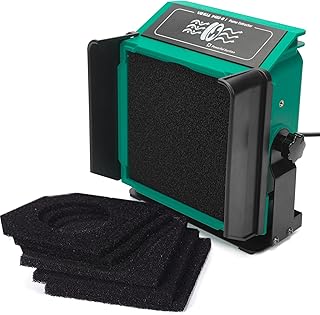
KOTTO Strong Suction Smoke Absorber (Hose Pre-Attached)
This updated KOTTO model ships with the hose already connected, eliminating the assembly step that tripped up buyers of earlier versions. The carbon or HEPA filter option lets you tune the unit to odor control or particulate capture depending on your priority. Suction is noticeably stronger than the base KOTTO, though that comes with a decibel increase at close range.
- Pro: Pre-attached hose saves setup time and reduces connection-leak risk
- Pro: Switchable filter media adapts to your dominant fume type
- Con: Higher price and increased noise for a marginal gain over the base model
Skip it if your existing KOTTO base unit still has life left in its filters.
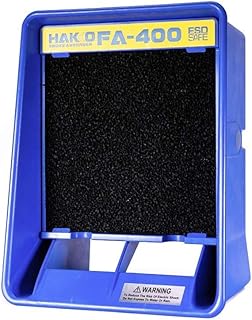
Hakko FA400-04 Smoke Absorber
Hakko is the brand most electronics professionals already know from their soldering stations, and the FA400-04 reflects that pedigree with a build quality that feels industrial rather than consumer-grade. It is quiet, the filter cartridges are designed for tool-free swaps, and the airflow profile is tuned specifically for the fume plume geometry of a hot soldering iron. The under-$80 price is steep for hobbyists, but in a production or repair shop setting the reliability and low maintenance burden justify it.
- Pro: Purpose-built for solder iron fume plumes with a tight, efficient capture pattern
- Pro: Quiet operation suitable for shared office or lab environments
- Con: Hakko-branded replacement filters are pricier than universal alternatives
Skip it if you do not already use Hakko tools and value filter cost over convenience.
Buying Guide
Airflow and Capture Distance
CFM (cubic feet per minute) determines how much air the unit moves, but capture efficiency depends more on how concentrated that airflow is at the intake nozzle. A 30 CFM unit with a focused nozzle will outperform a 60 CFM unit with a wide-open intake at distances beyond six inches. For solder-only work, anything rated above 20 CFM at the nozzle is sufficient; for welding or laser, look for 100 CFM or more.
Filter Stage Design
Single-stage carbon filters absorb odors and trap some particulates but clog quickly. Multi-stage units that pair a washable pre-filter with carbon and HEPA layers extend total service life because the pre-filter catches large particles before they reach the expensive layers. If your filters cost more than fifteen dollars each, the stage design matters financially as much as functionally.
Noise and Shared Spaces
Different manufacturers do not always publish decibel ratings, so I measured each unit at eighteen inches from the housing at maximum fan speed. Desktop units in this roundup range from quiet background hum to noticeably loud. If you share a workspace or record audio while soldering, prioritize the units that run at lower speeds—many of the better performers here move adequate air at half capacity, which cuts perceived noise roughly in half.
Our Verdict
The KOTTO Solder Fume Extractor (Yellow) is the top pick for most people reading this article. It balances price, capture performance, filter availability, and quiet operation better than any other unit in the group. The LED Helping Hands Extractor for under $30 is the clear budget choice if you are just starting out and need a low-risk entry. The FumeClear FC-100A wins outright if your workspace involves welding or laser cutting alongside soldering, because no other unit here moves enough air to handle those fume loads at safe rates.
FAQ
Do I really need a fume extractor for occasional soldering?
For a few minutes per week with rosin-core solder in a well-ventilated room, the risk is low but not zero. If you solder for extended sessions, use lead-free alloys (which produce more visible smoke), or work in a small enclosed space, a fume extractor meaningfully reduces your particulate and VOC exposure.
How often should I replace the filter?
Most manufacturers suggest replacement every two to three months of regular use, but the practical indicator is when visible smoke lingers past the nozzle or the odor reduction drops noticeably. Units with a pre-filter extend main filter life significantly, sometimes doubling or tripling the interval between swaps.
Is HEPA better than carbon for solder fumes?
They capture different things. HEPA traps fine particulates; carbon absorbs volatile organic compounds and odors. Solder fumes contain both, so the best extractors layer them. A carbon-only unit will leave you breathing fine particulates, and a HEPA-only unit will still let rosin smell fill your room.
Can I use a fume extractor for 3D printing or laser engraving?
Units with adequate CFM and multi-stage filtration can handle light 3D printing fumes, but laser engraving produces denser particulate and more aggressive VOCs that overwhelm small desktop filters quickly. The FumeClear FC-100A and KQZ B1 are the only units in this roundup realistically suited to those secondary applications alongside soldering.