
Key takeaways
- Clean regularly. Wipe the vinyl with a mild soap and water solution and rinse. Avoid harsh solvents.
- Use a vinyl protectant. Products designed for spa covers help limit UV damage.
- Remove snow promptly. Heavy snow and ice can overload even a good cover. Do not stand or sit on the lid.
- Air the cover. Open the lid periodically for ventilation, especially after chemical treatment, so trapped fumes do not degrade the underside.
- Keep chemicals balanced. Over-sanitised water and strong fumes can shorten vinyl life.
- Replace a heavy cover. If the cover feels noticeably heavier than it used to, the foam is probably waterlogged. Replace it.
The best spa cover for most owners is a custom-fit, tapered foam cover with a high-density core, a sealed vapor barrier and locking straps from the spa maker or a reputable cover specialist such as Cover Valet, while budget buyers can consider a standard-size replacement and owners who struggle with weight should add a cover lifter. The right choice depends on your spa dimensions, your climate and how often you open the lid.
Our top picks
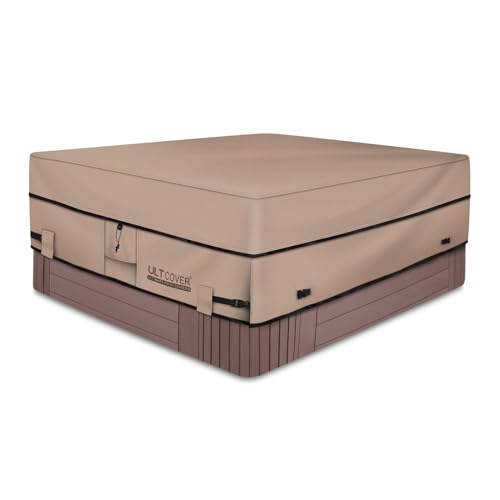


As an Amazon Associate we earn from qualifying purchases at no extra cost to you.
What a Spa Cover Does
A hot tub cover keeps heat in, keeps debris out and stops children and pets from accessing the water. A well-fitted cover reduces the energy needed to hold temperature. A poor one lets steam escape, absorbs water, gets heavy and eventually fails. A cover is a safety item as well as an efficiency one, so a damaged or waterlogged lid should be replaced rather than tolerated.
At a Glance: Spa Cover Types Compared
| Type | Best for | Typical stated features | Limits |
|---|---|---|---|
| Custom-fit tapered foam cover (e.g., Cover Valet, Dynasty Spas, Leisure Concepts) | Most owners wanting long life and a snug fit | Tapered foam core, wrapped vapor barrier, marine-grade vinyl, hinge seal, locking straps (per the makers) | Made to order; mid to premium tier |
| OEM replacement cover from the spa brand | Owners wanting an exact match to the shell and colour | Built to the spa model dimensions | Often the most expensive route |
| Standard-size generic cover | Standard square or round spas on a budget | Common sizes, simple fold design | Fit can be loose on spas with rounded corners or lips |
| Flat (non-tapered) foam cover | Mild climates, light snow | Uniform thickness foam core | Water and snow may pool on top |
| Thermal floating blanket | Extra heat retention under any cover | Bubble or foam sheet laid on the water | Not a safety cover and does not replace a locking lid |
| Cover lifter or cradle (e.g., CoverMate, Cover Valet lifters) | Owners who find the lid heavy or awkward | Frame that holds the cover open and off the ground | Needs clearance on the side of the spa |
Cover specifications vary by maker and order. Confirm details with the seller before purchase and follow the spa manual.
Key Features to Understand
Taper
Taper describes how the foam thickness changes from the centre to the edge. A common listing is four inches at the middle tapering to two inches at the edge, often written as 4-to-2. The slope sheds rain and snow. Flat covers can pool water, which adds weight and accelerates wear. Some makers offer 5-to-3 for cold climates, though thicker is not always better because the lid becomes heavier to lift.
Foam density
Densities are usually expressed in pounds per cubic foot. Higher density generally means better insulation and better resistance to compression, but also more weight. Many mainstream covers list roughly 1.5 lb foam, while premium options list 2 lb or higher. Ask the seller for the stated density and the thickness together, since they interact.
Vapor barrier
Foam cores should be sealed in a plastic vapor barrier. If moisture gets in, the foam absorbs water and the lid becomes heavy and loses insulation value. Look for a welded or sealed wrap rather than a loosely stapled bag. A waterlogged cover is a common reason owners replace their lids after only a few years.
Vinyl and stitching
Marine-grade vinyl with UV inhibitors resists fading and cracking. Makers often list vinyl weight in ounces. Double-stitched seams and reinforced hinges help the cover survive repeated folding. In hot, sunny places, UV resistance matters more; in cold climates, vinyl that stays flexible is useful.
Hinge and fold
Most covers fold in half along a hinge. The hinge seal prevents heat escaping along the fold. A hinge that is reinforced with tape or a hinge wrapped in a gusset lasts longer. Some owners prefer four-fold designs for tight spaces.
Locks and straps
Child-safety is important. Most spa covers have tie-down straps and locking clips that attach to the spa skirt. The locks add resistance to unauthorized opening. They do not replace supervision or any fencing and gate requirements in your area. Check local code and the spa maker’s guidance.
How to Measure
- Measure the longest and widest dimension of the spa top rim, outer edge to outer edge.
- Check each corner radius, since rounded corners differ from square ones.
- Measure the skirt overhang you want: usually two to three inches beyond the shell.
- Note whether the spa has a raised lip or a flat top, and where the plumbing and control panel sit.
- Measure twice and confirm with the maker before ordering a custom cover.
Many cover specialists ask for the spa brand and model so they can look up the shell shape. If you have an older or unusual tub, send photos and measurements.
Budget Tiers
Budget tier
Standard-size generic covers cost the least and suit square or round spas that match common dimensions. Expect thinner foam, lighter vinyl and a shorter life. They may fit poorly at the corners, which lets heat out.
Mid-range tier
Custom-fit covers from specialist makers sit here. You get a better fit, thicker foam and a longer life. This tier is the best value for most owners.
Premium tier
OEM replacements and higher-density cores with heavier vinyl cost more, but they are worth it in harsh climates or where the spa is used year-round.
Pick X If… Decision Table
| Pick this | If you… |
|---|---|
| Custom tapered cover from a specialist (Cover Valet, for example) | Want the best fit and a long service life |
| OEM cover from the spa maker | Want an exact match and warranty alignment with your spa |
| Standard generic cover | Own a common-size spa and need a temporary or budget replacement |
| High-density 5-to-3 core | Live in a cold, snowy region |
| Lifter or cradle add-on | Find lifting the lid difficult or want to keep it off wet ground |
| Thermal blanket under the lid | Want extra heat retention without changing the cover |
Care and Maintenance
- Clean regularly. Wipe the vinyl with a mild soap and water solution and rinse. Avoid harsh solvents.
- Use a vinyl protectant. Products designed for spa covers help limit UV damage.
- Remove snow promptly. Heavy snow and ice can overload even a good cover. Do not stand or sit on the lid.
- Air the cover. Open the lid periodically for ventilation, especially after chemical treatment, so trapped fumes do not degrade the underside.
- Keep chemicals balanced. Over-sanitised water and strong fumes can shorten vinyl life.
- Replace a heavy cover. If the cover feels noticeably heavier than it used to, the foam is probably waterlogged. Replace it.
Safety Notes
Always lock the cover when the spa is not in use if children or pets are nearby. A cover is not a substitute for adult supervision, fencing or an approved barrier where required by local rules. Never allow children to walk or sit on the lid. If the spa has electrical components or the cover interacts with heating or control equipment, follow the manufacturer’s manual and ask a licensed electrician for any wiring question.
Alternatives Worth Considering
Cover lifters
Lifters hold the cover upright or alongside the spa. They are useful if the lid is awkward to lift, though they need clearance on one side.
Thermal blankets
Floating blankets reduce evaporation. They work alongside a proper cover but do not replace it.
Hard-top or gazebo enclosures
A gazebo or pergola can shelter the spa from rain and sun, which may extend the life of your cover. Check local rules and ensure safe clearance around electrical supply.
Climate and Placement Considerations
Hot and sunny regions put the most stress on vinyl, so UV-resistant material and light colours that reflect heat are a sensible match. In cold, snowy regions the priority shifts to thicker foam, a steep taper and straps that hold the lid down in wind. Spas placed under a roof or gazebo see less weather, which can extend cover life. If your spa sits near trees, expect leaves, sap and bird droppings, which call for more frequent cleaning of the vinyl. Windy sites benefit from locking straps that are kept fastened whenever the spa is not in use, since a lifted lid can be damaged or blown off.
Ask the seller about the warranty term and what it covers. Many warranties exclude waterlogged foam from neglect or damage from snow loads, so read the conditions. Delivery time for custom covers can run several weeks, so plan ahead, and keep the old cover in use until the new one arrives rather than leaving the spa open.
Handling and storage
Lifting a wet, full-size cover alone can strain the back. Two people, or a lifter, make the job safer. Never drag the cover across rough ground, and avoid folding it against the hinge in cold weather when the vinyl is stiff. A cover stored off the ground, on a lifter, stays cleaner and lasts longer.
Frequently Asked Questions
How long does a spa cover last?
Many owners replace covers after several years, depending on climate, sun exposure and care. A heavy cover that has taken on water is a clear sign it needs replacing.
What does 4-to-2 taper mean?
It means the foam is about four inches thick at the centre and tapers to two inches at the outer edges. The slope helps water and snow run off the lid.
Is higher foam density always better?
Higher density usually insulates better and resists crushing, but it also adds weight. Pick a density that suits your climate and your ability to lift the lid.
Can I order a cover without knowing my spa model?
Yes. Measure the spa carefully, note corner radius, and send photos to a specialist. Confirm the final dimensions before production begins.
Do spa cover locks keep children safe?
Locks add a barrier, but they are not a substitute for supervision or required fencing. Follow local safety rules and the spa maker’s guidance.
Does a thermal blanket replace a cover?
No. A blanket floats on the water to reduce heat loss, but it is not a safety cover and cannot bear weight.
FAQ
How long does a spa cover last?
What does 4-to-2 taper mean?
Is higher foam density always better?
Can I order a cover without knowing my spa model?
Do spa cover locks keep children safe?
Does a thermal blanket replace a cover?
More from Amazon
Programs that pair well with the guide above. Offers and eligibility are set by Amazon and may change.
Free shipping on eligible items, Prime Video and more. Eligible new members can start with a free trial.
Start a Prime free trialAudiobooks and podcasts to listen to on the go. Eligible new members can start with a free trial.
Try Audible freeAd-free music streaming. Eligible new subscribers can start with a free trial.
Try Music Unlimited freeA free business account with business pricing and bulk-buying tools for work, shop or home office.
Create a business accountAs an Amazon Associate we earn from qualifying purchases.







