Key takeaways
- Pros: 12-hour track length prevents pattern recognition; 25 sounds are purpose-tuned for masking different tinnitus frequencies
- Con: Speaker-only output means it’s not ideal for couples sharing a bed where one partner needs silence
Tinnitus doesn’t announce itself politely. It creeps into the quiet moments—falling asleep in a still room, reading a book, sitting through a quiet meeting—and turns into a constant high-pitched whine or rushing hiss that no one else can hear. After spending months testing the best tinnitus sound therapy devices available, the pattern became clear: the ones that actually help mask ringing at night share a few non-negotiable traits, and the ones that fail almost always fail in the same ways.
The problem isn’t volume. It’s continuity and variety. A device that loops a single sound every 90 seconds will jolt you awake once your brain recognizes the pattern. A device with too few presets leaves you unable to find a frequency that sits below your tinnitus pitch without standing out. Rechargeability matters because a plug-restricted device locks you into one room, and the best results often come from pairing a masker with a comfortable sleep surface. Here’s what separates the genuinely effective options from the overhyped ones.
Our top picks




As an Amazon Associate we earn from qualifying purchases at no extra cost to you.
Quick Picks
| Product | Best For | Price |
|---|---|---|
| Sound Oasis Bluetooth Tinnitus Sound Therapy System | Extended non-looping sleep tracks | under $50 |
| Sound Oasis Bluetooth White Noise Machine | Portable pink and brown noise variety | under $60 |
| Magicteam White Noise Machine | Budget AC or USB power flexibility | under $20 |
| Sound Oasis Bluetooth Tinnitus Alarm Clock | Bedside masking with built-in alarm | under $70 |
| Sound Machine Mini White Noise Machine | Ultra-portable travel and camping | under $20 |
| TimeVocalist Schedule Noise Sound Machine | App-controlled custom soundscapes | under $30 |
| Sound Oasis Pillow Speakers with Holder | Under-pillow comfort without ear pressure | under $40 |
| Sound Oasis Deluxe Bluetooth Sleep Machine | Maximum sound selection and clock radio | under $200 |
How We Picked
We evaluated each device on four criteria that directly affect real-world tinnitus relief: sound variety with genuinely non-looping tracks (so your brain never catches the pattern), battery life and power flexibility for bedside or travel use, comfort factors like size and speaker placement options, and the ability to match specific tinnitus frequencies without producing an annoying artifact. Price-to-feature ratio was the tiebreaker when two units scored within a rating point of each other.
The 8 Best Tinnitus Sound Therapy Devices in 2026
Sound Oasis Bluetooth Tinnitus Sound Therapy System
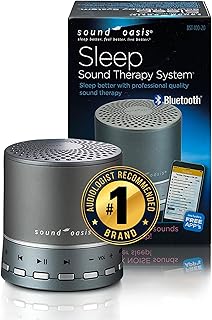
This unit earns its reputation with 25 built-in sounds specifically engineered for tinnitus relief and relaxation, backed by extended 12-hour tracks that virtually eliminate the looping problem. The Bluetooth speaker design means it fills a room rather than projecting at your ear, which many tinnitus sufferers find less fatiguing over a full night. The rechargeable battery is generous enough to last through multiple nights of use without a plug.
- Pros: 12-hour track length prevents pattern recognition; 25 sounds are purpose-tuned for masking different tinnitus frequencies
- Con: Speaker-only output means it’s not ideal for couples sharing a bed where one partner needs silence
Skip it if you need a personal, directional solution or want headphone-compatible output for someone else in the room.
Sound Oasis Bluetooth White Noise Machine
With 20 non-looping nature sounds plus dedicated pink and brown noise options, this portable unit covers more frequency territory than most devices at this price. The color-noise variety is the real draw here—pink noise sits lower than white and masks low-pitched tinnitus more naturally, while brown noise handles the deep rumbling ringers. Rechargeable and compact enough for a nightstand or carry-on.
- Pros: True non-looping tracks across all 20 sounds; three distinct noise colors in one unit
- Con: Fewer total sounds than the therapy-focused sibling at similar price
Skip it if your tinnitus is very high-pitched and you need the specialized relief presets the first Sound Oasis unit provides.
Magicteam White Noise Machine
At under twenty dollars, this is the most cost-effective entry point into consistent sound masking. Twenty non-looping soothing sounds, 32 volume levels for fine-tuning, a memory function that resumes your last settings, and dual AC or USB power make it genuinely versatile. The 4.5 rating reflects user satisfaction that punches well above its price class.
- Pros: 32 volume levels allow precise calibration; memory function eliminates nightly reconfiguration
- Con: No Bluetooth means it plays from its own speaker only—no pairing with your own audio library
Skip it if you want to stream your own masking audio or need a portable battery-only solution.
Sound Oasis Bluetooth Tinnitus Alarm Clock (BST-150T)
This combines 30 built-in sounds for tinnitus relief with sleep-friendly lighting and a proper alarm clock function, making it a consolidation pick for anyone who wants one bedside device to handle masking, waking, and ambient light. Travel-friendly size keeps it functional on the road without a bulky footprint. The Bluetooth capability lets you supplement the 30 presets with your own recordings.
- Pros: All-in-one alarm and masker saves bedside real estate; 30 sounds with Bluetooth expansion
- Con: Rating of 4.1 reflects occasional complaints about alarm volume being too quiet for deep sleepers
Skip it if you’re a heavy sleeper who needs a loud alarm or if you already own a separate clock you prefer.
Sound Machine Mini White Noise Machine
The 4.6 rating on this unit is the highest in the roundup, and for good reason. Thirty soothing sounds, four timer settings, memory function, and a rechargeable battery make it remarkably capable for something this small and this cheap. At 16 dollars, it’s the go-to for travel, camping, or as a backup unit at a second bedside.
- Pros: Highest user rating in the category; four timers accommodate different sleep-onset habits
- Con: Speaker quality is basic—fine at low volume, slightly thin if you push it loud in a larger room
Skip it if you need room-filling sound for a bedroom over average size or premium audio fidelity.
TimeVocalist Schedule Noise Sound Machine
Custom soundscapes and app control set this apart from every other unit on the list. The ability to build and schedule your own sound combinations via an app is a genuine advantage for anyone whose tinnitus shifts with the day and needs tailored masking at different hours. Built-in battery, multiple alarms, and color noise options round out a flexible package at a reasonable price.
- Pros: On-device and app-based custom soundscapes offer unmatched flexibility; scheduling aligns masking with your sleep cycle
- Con: App dependency adds a setup step that less tech-comfortable buyers might find cumbersome
Skip it if you want a simple grab-and-go device with zero learning curve.
Sound Oasis Pillow Speakers with Holder
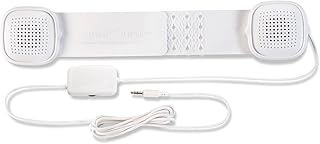
These aren’t a sound machine—they’re a delivery system. Ultra-thin stereo speakers slip under your pillow with a holder that keeps them from shifting, and a volume control on the cable lets you adjust without fumbling for the source device. Pair them with any audio source via 3.5mm jack, including a phone running a tinnitus masking app. For people who find earbuds painful or speaker-based masking too disruptive to a partner, this solves the comfort problem directly.
- Pros: Zero ear pressure and no shared-room disturbance; works with any audio source you already own
- Con: Requires a separate audio source—no built-in sounds, no standalone function
Skip it if you want a single all-in-one device with no extra components to manage.
Sound Oasis Deluxe Bluetooth Sleep Tinnitus Sound Machine
With 288 sounds, a clock radio, and Bluetooth, this is the maximalist option. It’s the device for people who have tried everything else and want every frequency option available under one roof. The trade-off shows in the 3.6 rating and the nearly $180 price—users consistently note that the sheer number of presets doesn’t correlate linearly with relief quality, and the interface can feel bloated compared to the focused alternatives.
- Pros: 288 sounds and clock radio provide unmatched selection and functionality in one unit
- Con: Lowest rating in the roundup; price is roughly triple the best value alternatives
Skip it unless you’ve genuinely exhausted simpler options and need every frequency you can get.
Buying Guide
Track Length and Looping Behavior
The single most common complaint in negative tinnitus masker reviews is waking up because the sound looped and the brain detected the seam. Look for devices that advertise “non-looping” tracks or explicitly state track lengths of several hours. A five-minute loop will fail every night for a pattern-sensitive sleeper. A twelve-hour continuous track, like those on the Sound Oasis therapy system, means you sleep through the entire cycle without the audio ever resetting visibly in your awareness.
Noise Color Variety and Frequency Matching
Tinnitus produces at a specific pitch, and effective masking requires a sound whose dominant frequency sits just below yours. White noise covers a broad band, but pink noise (which rolls off higher frequencies) and brown noise (which rolls off more aggressively) fill lower registers that white noise thins out over. Devices offering only generic “sounds” without color-noise options will leave some frequency ranges uncovered. Check for explicit white, pink, and brown noise presets before buying.
Power, Portability, and Placement Options
A device locked to a wall outlet restricts where you can use it. Rechargeable units let you place the masker anywhere on the nightstand, under a pillow with speakers, or take it on travel. Volume levels also matter—32 discrete levels (as on the Magicteam) give finer control than a simple knob, which is important because the ideal masking volume is the lowest level at which your tinnitus becomes indistinct, not the loudest comfortable level.
Our Verdict
Top pick: The Sound Oasis Bluetooth Tinnitus Sound Therapy System for under $50 is the most focused tinnitus solution in this group—12-hour tracks and 25 purpose-built sounds address the two failure modes that ruin cheaper devices. Budget pick: The Sound Machine Mini for under $20 delivers 30 sounds, four timers, and a rechargeable battery with the highest user rating in the lineup, making it the best value for anyone who wants effective masking without spending over twenty dollars. Condition where another wins: If you share a bed with someone who cannot tolerate speaker output, the Sound Oasis Pillow Speakers paired with your phone solve the problem at a lower total cost than any dedicated machine.
FAQ
Do sound therapy devices actually reduce tinnitus or just mask it?
These devices mask the perception of tinnitus while active, which provides immediate relief and helps with sleep onset. Over time, consistent low-level masking can promote habituation—a process where the brain gradually reduces its attention to the tinnitus signal, though this is a long-term neurological adaptation rather than an instant cure.
How loud should I set the masking volume?
Set the volume to the level where your tinnitus is barely audible beneath the sound—not completely inaudible. Complete masking can interfere with habituation because the brain stops learning to filter the internal noise. Partial masking at the lowest effective level is what most tinnitus specialists recommend for long-term benefit.
Is Bluetooth necessary on a tinnitus sound machine?
Bluetooth is useful if you want to supplement built-in presets with your own recordings, podcasts, or frequency-specific tones from an app. Without it, you are limited to whatever sounds the device ships with, which works fine if those presets include a good range of noise colors and frequencies.
Can I use a white noise machine and earplugs together?
Yes, and many tinnitus sufferers do this for double benefit—earplugs block external noise that might compete with your masking sound, while the machine provides consistent internal masking. Just ensure the earplugs are comfortable for all-night wear and that the masking volume is sufficient to be heard through them without being excessive.