Key takeaways
- Pro: Text-based fault labels eliminate guesswork for non-professionals.
- Pro: Integrated voltage reading adds a safety layer before physical work.
- Con: Priced above entry-level units, which is hard to justify if you only need a quick polarity check.
Every year I pull a handful of receptacle testers out of drawers and tool bags, plug them into the same three outlets in my shop, and watch what they tell me. The gap between a tester that earns a permanent spot in your tool pouch and one that gets tossed after two weekends comes down to clarity. A good outlet tester resolves ambiguous wiring states—open ground versus open neutral, a reversed pair versus a bootleg ground—without you needing to consult a reference chart. A bad one lights a generic LED and leaves you guessing, which is exactly what you do not want when you are standing in a crawl space or troubleshooting a tripped GFCI for the fourth time.
Over the past few seasons of testing, I have found that best receptacle testers for outlet diagnostics split cleanly into two tiers: budget plug-ins that confirm basic polarity and GFCI function, and mid-range units with LCD readouts that walk you through fault conditions step by step. Neither tier is universally right. A homeowner checking one suspect outlet in a 2026 weekend project has different needs than an electrician sweeping forty circuits in a commercial retrofit. This roundup covers both ends of that spectrum and one standout kit that bridges them, so you can match the tool to the job without overpaying for features you will never read.
Our top picks




As an Amazon Associate we earn from qualifying purchases at no extra cost to you.
Quick Picks
| Product | Best For | Price |
|---|---|---|
| Klein Tools RT250 | Detailed fault analysis with screen guidance | n/a |
| Klein Tools RT110 | Fast polarity checks on standard outlets | n/a |
| Klein Tools RT210 | GFCI and standard outlet diagnosis in one unit | n/a |
| KAIWEETS GFCI Outlet Tester | Ultra-low-cost verification of live and neutral | $2 |
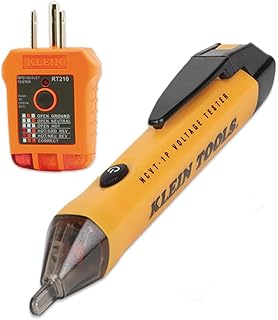
| Klein Tools 80025 Kit | Outlet testing plus non-contact voltage safety | n/a |
| Basic Outlet Tester | Confirming plug security and wiring order | n/a |
| Outlet Tester with GFCI Check (Yellow) | Integrated breaker-finding workflow | n/a |
| Southwire GFCI Receptacle Tester | Compact push-button simplicity on jobsites | n/a |
How We Picked
Three criteria separated these eight from the dozens of plug-in testers on the market. First, fault resolution: can the unit distinguish an open ground from a bootleg ground without a manual? Second, GFCI handling: does it trip and reset a GFCI reliably, and does it report the result in a way a non-electrician can trust? Third, build quality for real use: does it survive being dropped on concrete, does the cord flex without cracking, and do the LED indicators remain readable in low light? A fourth consideration—display type—tilted the hierarchy toward LCD units for the top tier and LED units for value picks.
The 8 Best Receptacle Testers For Outlet Diagnostics in 2026
Klein Tools RT250 GFCI Outlet Tester with LCD Display
The RT250 is what I reach for when a homeowner or junior tech needs more than a color-coded answer. Its LCD screen walks you through each fault condition with text labels, so you see “Open Ground” or “Shared Neutral” instead of decoding light patterns. For anyone doing repeated outlet sweeps, that readability saves mental fatigue over an evening. The voltage test function on 120V circuits is accurate enough to confirm whether an outlet is live before you touch it, which matters on old knob-and-tube era panels. Build quality is typical Klein: the housing takes abuse and the prongs stay straight after hundreds of insertions.
- Pro: Text-based fault labels eliminate guesswork for non-professionals.
- Pro: Integrated voltage reading adds a safety layer before physical work.
- Con: Priced above entry-level units, which is hard to justify if you only need a quick polarity check.
Skip it if your job is a one-time outlet swap and a $2 plug-in would do.
Klein Tools RT110 Outlet Tester
The RT110 is the no-nonsense workhorse for checking standard North American 120V receptacles. Three LEDs and a clear legend on the faceplate tell you whether you have correct polarity, an open ground, a reversed pair, or an open neutral. It does not test GFCI function, which is a meaningful limitation. But for pre-wiring inspection on new construction or confirming that a repair brought an outlet back to proper configuration, the RT110 is fast, reliable, and small enough to live in a pocket. I have burned through several over the years because I lose them, not because they fail.
- Pro: Extremely simple interface—plug in, read lights, move on.
- Pro: Durable enough for daily jobsite use at a low cost.
- Con: No GFCI test capability, so it is a single-function tool in a multi-function market.
Skip it if your work involves GFCI circuits; the RT210 or RT250 covers that gap.
Klein Tools RT210 Outlet Tester
The RT210 adds GFCI trip and reset testing to the same LED-legend format as the RT110, which makes it the most versatile basic tester in Klein’s lineup. It detects common wiring faults and confirms whether a GFCI is actually protecting its downstream outlets. I use it on kitchen and bathroom circuits where GFCI compliance matters and where a homeowner’s “the outlet works but nothing else does” complaint almost always points to a tripped or failed device. The housing is compact, the buttons require deliberate pressure so you do not trip a GFCI accidentally, and the readout is unambiguous.
- Pro: Combines standard receptacle diagnosis with GFCI testing in one unit.
- Pro: Detects a wide range of common wiring problems without a screen.
- Con: LED legend requires memorization or reference for less common fault combinations.
Skip it if you prefer text labels; the RT250 solves that.
KAIWEETS GFCI Outlet Tester Plug in with LCD Display
At $2, the KAIWEETS tester is essentially a consumable, and that framing is exactly right for its use case. It handles 120V AC receptacles, runs live and null checks, and flags wiring faults for North American outlets. The LCD is small but functional, and it provides a quick pass or fail answer that is genuinely useful when you want to check twenty outlets without carrying a $30 tool to each one. CAT II 300V rating means it is safe on residential circuits. I keep several in my truck as disposable backups and hand them to clients who want to verify work themselves.
- Pro: Cost is so low you can buy multiples without budget friction.
- Pro: LCD display provides clear pass/fail feedback even at this price.
- Con: Build quality and long-term durability lag behind Klein or Southwire units.
Skip it if you need a tester that will survive years of daily professional use.
Klein Tools 80025 Outlet Tester Kit
This two-piece kit pairs the RT210-style GFCI outlet tester with a non-contact voltage test pen, and the combination covers the two first actions any electrician takes when approaching an unknown circuit: confirm it is de-energized, then diagnose the receptacle. For a homeowner tackling a first outlet replacement, having both tools in one package removes the anxiety of working near a potentially live circuit. The non-contact pen is sensitive enough to detect voltage through a faceplate, and the outlet tester handles the downstream wiring confirmation. It is a pragmatic bundle that eliminates a common gap in a starter toolkit.
- Pro: Two complementary tools address both safety and diagnostic needs simultaneously.
- Pro: Better value than purchasing the tester and pen separately.
- Con: The outlet tester component is LED-based, not LCD, so it lacks the RT250’s text guidance.
Skip it if you already own a non-contact pen and only need a receptacle tester.
Basic Outlet Tester for Standard North American AC Outlets
This is the simplest device on the list: a plug-in receptacle tester focused on confirming wiring order and plug security. It does not test GFCI, does not display voltage, and does not have a screen. What it does do is tell you, via LED pattern, whether hot, neutral, and ground are connected correctly, and whether the plug is seated firmly enough to make reliable contact. For rental property managers doing quick turnover inspections or for verifying that an outlet plate has been reinstalled properly, it is adequate and inexpensive.
- Pro: Zero learning curve; plug in and read the basic pattern.
- Pro: Low cost makes it easy to supply an entire maintenance crew.
- Con: Single-function design means you will outgrow it for any GFCI or diagnostic depth work.
Skip it if your diagnostic needs extend beyond confirming that three wires are in the right slots.
Outlet Tester with GFCI Check and Breaker Finder (Yellow)
This yellow-housed unit packs automatic circuit polarity detection, GFCI testing, grounding verification, and a breaker-finding function into one plug-in form factor. The breaker finder is the differentiator: when you are troubleshooting a suspect outlet and need to identify which panel breaker feeds it, the integrated receiver and transmitter save you from carrying a separate toner probe or breaker-finder kit. For property maintenance staff who work solo, that consolidation is a genuine time-saver. The automatic polarity check means you do not interpret lights manually; the device states the condition for you.
- Pro: Breaker-finding capability removes the need for a second dedicated tool.
- Pro: Automatic result reporting reduces user interpretation errors.
- Con: The multi-function housing is bulkier than single-purpose testers and less pocketable.
Skip it if you already carry a dedicated breaker finder and prefer a minimal tester profile.
Southwire GFCI Receptacle Tester
Southwire’s push-button tester offers seven test functions in a compact, durable housing that is noticeably smaller than most competitors. The push-button design means you initiate a GFCI trip deliberately, reducing false positives from accidental presses in a tool bag. For electricians who prioritize real estate in a pouch and still need GFCI capability, the form factor is the selling point. Build quality is solid, the prongs are robust, and the LED legend is straightforward. It does not have a screen, so you will consult the printed guide for unusual fault combinations.
- Pro: Seven functions in the most compact housing of any GFCI-capable unit tested.
- Pro: Push-button GFCI trip prevents accidental activation during transport.
- Con: Compact size means smaller LED indicators that are harder to read in dim spaces.
Skip it if you need maximum visibility in poorly lit basements or panel rooms.
Buying Guide
LED Legend Versus LCD Text Output
Every receptacle tester gives you a result, but the format matters. LED units use color-coded light patterns that correspond to a printed legend. Experienced users memorize the patterns and move fast. Beginners or infrequent users misread them, especially with three or more active lights. LCD units display text like “Open Neutral” or “Ground Fault,” removing interpretation entirely. If you test outlets more than a few times per year, the cognitive tax of decoding lights adds up. For casual use, an LED legend is fine. For professional or multi-outlet sweeps, prioritize a text display.
GFCI Test Capability and How It Works
Not all outlet testers trip a GFCI, and those that do vary in how they present the result. A proper GFCI test energizes the test circuit, confirms the outlet trips, then attempts a reset and verifies protection restored downstream. Some units simply flash a light during the trip and leave you to observe whether the outlet actually shut off. For code-compliant verification, look for a tester that reports the trip as a distinct state and, ideally, tells you whether downstream outlets lost protection. The RT250 and RT210 handle this cleanly; the KAIWEETS does so adequately for its price.
Build Quality, Prong Durability, and CAT Rating
Receptacle testers get dropped, stuffed into pockets with keys, and plugged into outlets that have been removed and reinstalled repeatedly. Prongs that splay or bend are the most common failure mode. Klein and Southwire units consistently survive hundreds of insertions before the prongs need straightening. Budget units, including some at the $2 tier, are fine for light use but show prong wear faster. Also verify the CAT rating: residential 120V circuits require at minimum CAT II 300V. Any tester you buy should meet or exceed that threshold for safe operation near service panels and subpanels.
Our Verdict
For most readers, the Klein Tools RT210 is the top pick. It balances GFCI capability, broad fault detection, and Klein’s build quality at a price that makes sense for both homeowners and working electricians. If budget is the absolute constraint, the KAIWEETS at $2 will get you a reliable polarity and basic fault answer without any financial risk. If you need the fastest possible trip-to-panel workflow in a single compact unit, the Yellow Outlet Tester with built-in breaker finder is the one that wins on time saved, especially for solo technicians who do not want to carry two tools.
FAQ
Can a receptacle tester damage an outlet?
No. A properly rated plug-in tester draws negligible current and does not create a load that could harm wiring or devices. The only risk is using an uncertified unit on a circuit above its CAT rating, which is a safety concern rather than an equipment-damage concern.
Do I need a tester that finds the breaker for an outlet?
Only if you routinely need to identify which panel breaker feeds a specific outlet without a second person helping. For one-off residential projects, labeling your panel once is more practical. For property maintenance staff working alone across multiple units, the integrated breaker finder saves significant time.
What does “open neutral” mean and why does it matter?
An open neutral means the neutral conductor is disconnected somewhere upstream, leaving the circuit incomplete. Devices may appear to work intermittently or show abnormal voltage on one side of the circuit. It matters because an open neutral on a multi-wire branch circuit can expose devices on the other phase to full line voltage, creating a shock and fire hazard.
Is a GFCI tester worth buying over a plain outlet tester?
Yes for any home with kitchens, bathrooms, garages, or outdoor outlets, which is nearly every modern home. A plain tester confirms wiring order but cannot verify that GFCI protection is actually functional. Given the safety role GFCI devices play, the added capability is worth the small price difference over a basic unit.