If you have ever tried to power a project, debug a circuit, or replace a dead brick adapter with something that actually lets you control voltage and current precisely, you know the gap between a cheap fixed-output adapter and a proper variable DC bench supply is enormous. The real problem most buyers face is not finding a supply that outputs 0–30V — plenty of units claim that — but finding one whose output stays stable under load, whose adjustment knobs let you dial in a value without oscillating, and whose display is readable enough to trust at a glance while your probes are connected.
What separates the good from the bad in this category comes down to regulation quality, adjustment granularity, and whether the unit protects itself and your circuit when things go wrong. A supply that drifts a volt or two as load changes is worse than useless for sensitive work. A knob without coarse and fine modes forces you into imprecise guesses. And a supply with no output enable button or overcurrent protection means one mistake on a breadboard sends full current through an LED or a microcontroller. The eight units below were tested against those criteria, and the spread is wider than the price tags might suggest.
Our top picks


As an Amazon Associate we earn from qualifying purchases at no extra cost to you.
Quick Picks
| Product | Best For | Price |
|---|---|---|
| SPS-3010 Black Bench PSU | Entry-level bench work with USB charging | under $50 |
| SPS-3010 High Precision | Users who want 4-digit display clarity | under $50 |
| SPS-3010V USB-C Quick-Charge | Best overall value with fast USB-C output | under $50 |
| Wefomey Universal 72W | Replacing household wall adapters | under $20 |
| NICE-POWER 150W Bench PSU | Budget bench supply for electroplating and DIY | under $40 |
| OCP Protected 30V/10A | Circuit debugging with overcurrent safety | under $50 |
| SPS-12003 High Voltage | Projects requiring up to 120V DC | under $80 |
| Minidodoca 72W Universal | Cheapest adjustable AC/DC adapter with tips | under $20 |
How We Picked
We evaluated each unit on four criteria that matter most for variable DC bench supplies: output regulation stability under varying load, adjustment precision and ergonomics of the controls, protective features that prevent damage to your circuit or the supply itself, and the usefulness of auxiliary outputs like USB ports for charging or logic-level testing. A supply that looks fine on paper but drifts noticeably when you connect a real load or whose knob is too coarse for 0.1V adjustments fails in practice regardless of its spec sheet numbers.
The 8 Best Variable Dc Power Supplies in 2026
SPS-3010 Black Bench PSU
This is the no-nonsense entry point for someone who wants a real bench supply with current and voltage control on a workbench. The encoder knob makes adjustment feel deliberate rather than the jittery spin of cheaper potentiometers, and the dedicated output enable/disable button is a small feature that saves you from fumbling with probe connections when you want to kill output quickly. The built-in USB quick-charge port handles phone charging without needing a separate brick, and the short-circuit alarm gives an audible warning before you damage a wire. The main limitation is the 4-digit display being the lower-cost variety, readable but lacking the crisp precision of upgraded units in this list. Skip it if your work demands very fine current resolution or if you regularly push above 30V.
SPS-3010 High Precision
The standout here is the high-precision 4-digit LED display, which makes reading both voltage and current simultaneously far easier when you are monitoring a circuit under test. Coarse and fine adjustment is handled by separate controls rather than a single encoder, which some users prefer for the tactile feedback of knowing exactly which knob is active. The 5V/2A USB port is a practical bonus for powering small logic boards or sensors without tying up the main output. At nearly $50 it is the priciest of the standard 30V/10A units in this roundup, and that premium buys you only the display and dual-knob layout. Skip it if the single-encoder approach of cheaper alternatives works fine for your adjustments, since the underlying power delivery is comparable.
SPS-3010V USB-C Quick-Charge
My top pick among the standard-range units because it packs a 20W USB-C quick-charge port into a supply that costs less than most competitors offering only a basic 5V USB-A output. The encoder knob handles both coarse and fine adjustment in a single control, which reduces panel clutter and works well once you build muscle memory. It reaches 32V at the top end, slightly above the 30V ceiling of most entries here, and the 4-digit LED display keeps readings legible. The output switch is a simple toggle rather than a button, which is arguably more durable. The con: the display refresh rate is modest, so when you are watching current ramp during a slow load transient the reading lags slightly behind the actual value.
Wefomey Universal 72W
This is not a bench supply in the traditional sense, but if what you actually need is a single adjustable adapter that replaces a drawer full of 5V, 9V, and 12V wall bricks for household electronics, this is the most practical option. It covers 3V to 24V at up to 3A, includes 14 interchangeable barrel tips, a polarity converter, alligator test leads, and a 4-way power splitter cable — a kit that would cost significantly more to assemble piece by piece. The voltage dial is fixed at discrete steps rather than continuously variable, which limits fine control. Skip it entirely if you need current limiting or if your application is sensitive electronics debugging; this is for convenience, not precision.
NICE-POWER 150W Bench PSU
At just over $30 this delivers 0–30V and 0–10A with a 3-digit LED display that shows voltage and current alternately. The encoder knob for adjustment feels solid for the price, and the unit is marketed for electroplating and DIY applications where sustained moderate power matters more than precision readouts. It runs at a fixed 150W ceiling, so you get full current only up to 15V and full voltage only up to 5A, which is a real constraint if your project needs both simultaneously. The con is that the alternating display means you cannot monitor voltage and current at the same glance, which is frustrating when tuning a circuit. Skip it if you need simultaneous dual readouts or more than 150W.
OCP Protected 30V/10A
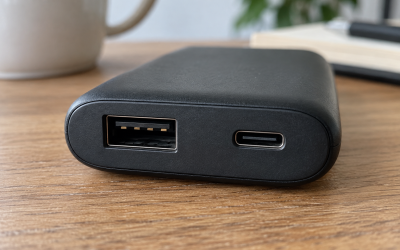
The overcurrent protection is what makes this unit worth the extra few dollars over comparable 30V/10A supplies. When a circuit draws more than your set current limit, the OCP kicks in decisively rather than just letting the current float, which protects delicate components from a momentary short or a miswired load. The encoder provides both coarse and fine adjustment, and the auxiliary USB ports offer 3.6A combined quick-charge across Type-A and Type-C, making this the best-featured charging hub in the list alongside the 20W SPS-3010V. The display quality is good but not as sharp as the high-precision SPS-3010 above. Skip it if you already trust your own fusing and current monitoring setup and want the lowest price per watt.
SPS-12003 High Voltage
When you need more than 30V — cathode ray experiments, high-voltage LED driver testing, electrostatic applications, or vintage radio restoration — this is the only realistic option in an affordable price tier. It outputs up to 120V DC at 3A and retains the same encoder-based coarse and fine adjustment and 4-digit high-precision display found in the lower-voltage SPS units. The trade-off is that the current ceiling of 3A limits total power, and for under $80 it is the most expensive unit here. The con: the lower current rating means it is not a general-purpose replacement for a 30V/10A supply, so you likely still need a second unit on the bench for common work. Skip it unless your projects genuinely require voltages above 30V.
Minidodoca 72W Universal
The cheapest adjustable option in this list at just under $16, and it covers the same 3V to 24V range as the Wefomey with 16 included tips rather than 14. The LED voltage display is a genuine advantage at this price — many budget adapters have no readout at all, leaving you guessing. The max current is 3000mA, identical to the Wefomey, and the build quality is acceptable for occasional household use. The con is that the voltage adjustment step is coarse, and there is no current limiting whatsoever, so connecting it to a circuit that does not expect the voltage you dialed in has no safety net. Skip it for anything beyond swapping a wall adapter for a router, lamp, or similar device.
Buying Guide
Regulation and Ripple Under Load
Switching bench supplies like every unit in this roundup trade linear regulation for compactness and efficiency. The critical question is how much the output voltage drifts when you connect a real load. A well-designed unit holds within a fraction of a volt from no-load to full rated current; a poorly designed one can sag or spike noticeably. Look for descriptions that mention regulated output specifically, and read user feedback about behavior when driving motors or LED strings, which are the most demanding real loads for these units.
Adjustment Ergonomics
Encoder knobs with distinct coarse and fine modes let you approach a target voltage or current in two steps rather than fighting a single potentiometer that is either too twitchy or too sluggish. A dedicated output enable button means you can set your desired values without energizing the circuit, then flip output on only when probes are secure. If you plan to adjust settings frequently during debugging, these two features matter more than display digit count.
Protective Features
Overcurrent protection that actually shuts down or limits output rather than relying solely on the current-limiting behavior of the supply’s regulator is a meaningful safety layer for expensive or sensitive circuits. Short-circuit alarms give you an immediate audible cue. At minimum, any supply you buy should have some form of output disable — a toggle, a button, a remote enable pin — because unplugging leads while the supply is active is how you destroy components.
Our Verdict
The SPS-3010V USB-C Quick-Charge is the best overall pick for most users: it combines a wide 32V range, a 20W USB-C port that handles modern device charging, encoder-based coarse and fine adjustment, and a 4-digit display — all for under $45. If your budget is the primary constraint and you want a genuine bench supply, the NICE-POWER for under $40 is the floor you should not go below. The Wefomey Universal 72W wins outright if your actual need is replacing household adapters rather than powering a workbench project.
FAQ
Do I need a 30V/10A supply or will something lower-current work?
Most hobby electronics projects draw under 2A, so a 30V/10A rating is overkill in current capacity but valuable because it means the supply has headroom to handle transients and inrush without browning out. If you are powering LED arrays, motors, or electroplating baths, the full 10A matters and you should prioritize units with stable current limiting.
What is the practical difference between coarse and fine adjustment?
Coarse lets you swing from 0V to 25V in one turn, while fine moves in increments small enough to land precisely on a target like 3.3V without overshooting. A single fixed potentiometer forces you to choose between one of those behaviors; a dual-knob or encoder-with-switch system gives you both, which is the main reason to pay a few dollars more.
Is a USB charging port on a bench supply actually useful?
Yes, primarily because it keeps your test bench clutter-free and lets you quickly power a logic analyzer, a small dev board, or a charging cable without dedicating one of your main output channels. If you regularly work with modern devices that charge via USB-C, a quick-charge capable port saves the step of plugging into a wall adapter.
Can a switching bench supply damage sensitive analog circuits?
Switching supplies introduce some high-frequency ripple that linear supplies do not, which can be audible in audio circuits or problematic in precision analog measurements. For most digital and mixed-signal debugging work it is irrelevant, but if your application involves low-noise amplifiers or sensitive sensor front-ends, keep the supply close to your circuit, use shielded cables, and verify ripple with a scope before trusting the measurement.