Our Top Picks
 GreenPan x Bobby Flay 13 Piece Ceramic Nonstick13 Piece Cookware Set22.7 x 15.1 x 11.2 inchesCheck on Amazon
GreenPan is a brand of ceramic nonstick cookware, and the two GreenPan listings in this set show the two ways most people meet it: a 13-piece set from the Bobby Flay line and a single 8-inch Swift skillet. The keyword “greenpan reviews” names a brand rather than one model, so this page does not pretend there is a single GreenPan product to rate. Instead it takes the 13-piece set as the main subject, because it is the broader purchase, and treats the Swift skillet as the alternative. Everything here comes from published specifications, manufacturer documentation and buyer reviews. Nobody on the team used or measured these units, so you will not find claims about how evenly they heat or how long the coating lasts, only what the titles state, what is worth checking, and how to decide.
At a glance
GreenPan x Bobby Flay 13 Piece Ceramic Nonstick Cookware Set, Cream White | PFAS-Free Diamond Ceramic Nonstick Pots & Pans, Silicone Stay Cool Handles, Induction Ready, Dishwasher Safe, Glass Lids


As an Amazon Associate we earn from qualifying purchases. Product prices and availability are accurate as of the date/time indicated.

GreenPan Swift Healthy Ceramic Nonstick, 8" Frying Pan Skillet, Stainless Steel Handle, PFAS-Free, Dishwasher Safe, Oven Safe, Black


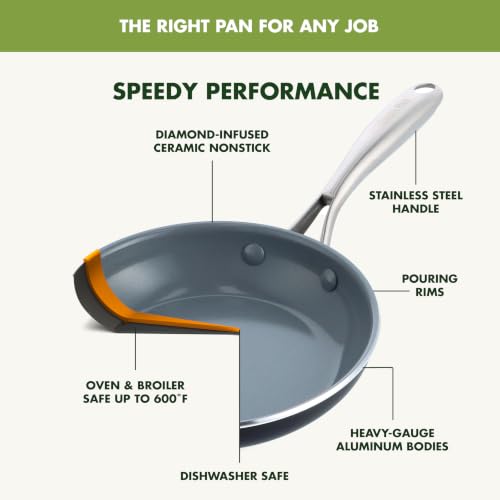


As an Amazon Associate we earn from qualifying purchases. Product prices and availability are accurate as of the date/time indicated.
| Detail | 13-piece set | 8-inch Swift skillet |
|---|---|---|
| Line | GreenPan x Bobby Flay | GreenPan Swift Healthy Ceramic Nonstick |
| Contents | 13 pieces of pots and pans (the title does not list them) | One frying pan, 8″ across |
| Coating wording | Ceramic nonstick, “Diamond Ceramic”, PFAS-free | Ceramic nonstick, PFAS-free |
| Handles | Silicone stay-cool handles | Stainless steel handle |
| Lids | Glass lids | None mentioned |
| Induction | “Induction ready” | Not stated in the title |
| Dishwasher | “Dishwasher safe” | “Dishwasher safe” |
| Oven | Not stated in the title | “Oven safe” (no temperature given) |
| Color | Cream White | Black |
| Price tier | Premium, within this pair | Budget, within this pair |
The listing under review
GreenPan x Bobby Flay 13-piece ceramic nonstick set
This is the main subject because it is the broader purchase and the closest thing to a flagship in this pair. The title packs in features, but not the contents list, which is the first thing to check.
- Pros: a complete matched set; glass lids and silicone stay-cool handles named in the title; induction readiness and dishwasher safety stated.
- Cons: the contents and sizes are not listed; no oven temperature limit; a ceramic coating that will wear over time; the highest price tier in the pair.
Who GreenPan-style cookware suits, and who should skip it
Ceramic nonstick is popular with people who want a slick cooking surface for eggs, pancakes and fish without choosing a traditional fluoropolymer coating. The titles lean on that appeal with the “PFAS-free” phrase, which is a seller claim and a marketing position rather than an independent certification you can verify from the title. If that wording matters to you, look for the manufacturer’s own documentation on what the coating is and is not made of.
The set is a reasonable fit if you:
- are furnishing a first kitchen or replacing a worn mixed bag of pans and want matching pieces in one box;
- cook mostly on gas, electric or induction at low to medium heat, which is what nonstick coatings of any kind generally prefer;
- like the idea of glass lids so you can see food without lifting them;
- value an easy-clean surface more than the ability to sear at the highest heat.
You may want to skip it, or choose something else, if you:
- often sear steaks at very high heat or use metal tools on the pan, since nonstick surfaces of every kind are generally gentler than stainless steel or cast iron;
- want cookware you expect to keep for decades, because coated pans are widely regarded as having a limited lifespan;
- need a pan that fits a large family, since the single skillet in this set is only 8 inches;
- already own a full set and only need one specific size or shape.
What the titles tell you, and what they do not
What the titles state. The set listing states a 13-piece count, Diamond Ceramic nonstick, PFAS-free wording, silicone stay-cool handles, induction readiness, dishwasher safety and glass lids. The skillet listing states an 8-inch size, ceramic nonstick, a stainless steel handle, PFAS-free wording, dishwasher safety and oven safety.
What they leave out. Neither title lists the pot and pan sizes inside the set, how many of the 13 pieces are lids, or what the base is made of. Neither gives a maximum oven temperature, so “oven safe” is incomplete until you read the manual. “Dishwasher safe” is also incomplete: many ceramic nonstick makers recommend hand washing to extend coating life even when the dishwasher is permitted, so look for both statements in the manufacturer’s care guide. The skillet title does not say whether it works on induction. Handle and lid limits, if any, are also absent.
A word on piece counts. A 13-piece set sounds generous, but retailers often count lids as separate pieces, and sometimes count utensils or storage items as well. Open the product images or the manufacturer’s page to see the actual list, then count how many cooking vessels you will really use. If three of the 13 pieces are lids and two are utensils, you are buying eight cooking vessels, which can still be a good value but is a different picture.
Finally, “Diamond Ceramic” is a brand name for a coating formulation. It is not a specification you can compare across brands, and nothing in the title quantifies hardness, thickness or durability. Treat it as a product name, not as a durability promise.
Questions to ask before buying
- What is in the 13 pieces? Get the exact list of pots, pans, lids and tools, and the size of each.
- What are the maximum oven and burner temperatures? Check the manual for both the cookware body and the lids and handles.
- Does the base suit my stove? The set says induction ready; confirm the skillet before using it on induction.
- What does the warranty cover? Nonstick coatings are normally excluded from wear; read exactly what is covered and how a claim works.
- What does the care guide recommend? Look for guidance on utensils, cleaning agents, heat levels and cooking sprays.
- Who is the seller? Confirm the listing is sold or fulfilled by the manufacturer or a reputable retailer, and check the return window.
Safety note: any cookware can be damaged or become unsafe if it is overheated while empty, used on a burner much larger than its base, or used with damaged handles. Follow the manufacturer’s instructions for heat levels, oven use and cleaning, and stop using a pan that is warped, chipped or loose at the handle. Ventilate your kitchen when cooking at high heat.
Is ceramic nonstick safe, and how long does it last?
These are the two questions buyers raise most about GreenPan, and honest answers have to stay general. On safety, the brand’s titles make a PFAS-free claim, and ceramic coatings are generally described by makers as a different chemistry from traditional fluoropolymer nonstick. That is a manufacturer position; this page does not offer medical or regulatory advice, and a title cannot confirm it. Read the manufacturer’s safety and care documentation and, if you have specific concerns, consult a qualified source.
On lifespan, buyer feedback on ceramic nonstick cookware in general often reports that the surface is slickest when new and loses some release over time, especially if it is exposed to high heat, abrasive cleaning or metal tools. That is a pattern across the category, not a measurement of these listings. The practical advice most makers give is simple: cook on low to medium heat, use wood, silicone or nylon tools, let the pan cool before washing, and avoid aerosol cooking sprays that can leave residue. Plan on replacing coated pans eventually rather than expecting them to last forever.
How to read buyer reviews of nonstick cookware
Because this page rests partly on buyer reviews, it helps to know how to read them. Reviews written in the first week describe the unboxing and the first omelet, which is when almost every nonstick pan looks excellent. Reviews written after six to twelve months are more informative about wear, so sort by most recent and look for patterns rather than single stories. Phrases to watch for include food starting to stick, discoloration, a rough feel, warped bases that spin on a flat burner, and loose handles.
It also helps to separate complaints about the product from complaints about use. A pan used daily on high heat, cleaned with steel wool and stored stacked without protection will wear faster than any listing promises. On the other hand, repeated reports of the same defect across many reviewers, especially within the first months, are a genuine warning. Give more weight to detailed reviews that mention how the pan was used, and less to one-line ratings.
A care routine that fits the claims
If you buy any ceramic nonstick piece, a simple routine protects the coating. Heat the pan gradually and stay at low to medium settings; a thin film of oil or butter helps release and reduces the urge to turn the heat up. Use wood, silicone or nylon utensils. Let the pan cool before washing, because cold water on a hot surface can stress the pan. Wash by hand with a soft sponge and mild soap where the manual allows, and reserve the dishwasher for the occasional heavy clean if the manufacturer permits it.
When stacking pans, place a cloth or felt protector between them. Do not use aerosol cooking sprays, which can leave a sticky residue that is hard to remove. If a pan is warped, if the coating flakes or if a handle is loose, stop using it and follow the manufacturer’s instructions for a warranty claim or disposal.
Alternatives from the same set and beyond
GreenPan Swift Healthy Ceramic Nonstick 8-inch skillet
This is the other GreenPan listing in the set, and it solves a different problem: it is a single small pan rather than a kitchen. The title states an 8″ size, a stainless steel handle, PFAS-free wording, dishwasher safety and oven safety. The small size is ideal for one or two eggs, a single portion of reheated leftovers or toasting spices. It is a low-risk way to try the brand before committing to a full set.
- Pros: lowest price tier in the pair; easy to store; the metal handle is a selling point for oven use; a cheap way to try ceramic nonstick for yourself.
- Cons: a very small cooking surface; no lid mentioned; induction compatibility and maximum oven temperature are not in the title; does not replace a full set.
Choose it if you want one pan for eggs and small jobs, or if you are trying out ceramic nonstick to see whether it suits your habits.
If you skip GreenPan: stainless steel and cast iron
Because the second GreenPan listing is a single pan, the realistic alternatives are cookware types rather than other listings from this set. Stainless steel suits searing, deglazing and oven finishing and is generally durable, though food sticks unless you manage heat and fat. It can last much longer than any coated pan but takes some technique.
- Pros: long-lasting; tolerates metal tools and high heat; many pieces are dishwasher-friendly.
- Cons: food sticks more easily; heavier; learning curve for eggs and fish.
If you skip GreenPan: cast iron or carbon steel
Cast iron and carbon steel build a seasoned surface through use. They are inexpensive for their lifespan and handle high heat, but they are heavy, need seasoning, and acidic dishes can strip the surface if care is poor. They suit people who enjoy maintaining their tools.
- Pros: very durable; excellent for searing; low cost per year of ownership.
- Cons: heavy; maintenance required; not dishwasher-friendly.
Buying checklist with a worked example
- List the meals you cook each week and the vessel each needs (skillet, saucepan, stockpot, sauté pan).
- Get the actual contents of any set and count cooking vessels, not total pieces.
- Check each piece’s size against your burners and your household’s portions.
- Confirm oven, induction and dishwasher guidance in the manufacturer’s manual.
- Compare the cost per usable vessel and the expected replacement time.
A worked example, with stated assumptions. These figures are estimates for illustration, not claims about the listings.
| Assumption | Value used | Why it matters |
|---|---|---|
| Pieces in the set that are lids or tools | 5 of 13 (assumed) | Leaves 8 cooking vessels |
| Coated-pan replacement cycle | About 3 years (assumed) | Sets the yearly cost |
| Set price vs skillet price | Assume the set costs about 6 times the skillet | Compare cost per vessel |
| 8-inch pan rim area | About 50 square inches (calculated from the diameter) | Cooking floor is smaller than the rim |
Cost per vessel first: if the set costs about six times the skillet and contains eight cooking vessels, each vessel costs about three-quarters of the skillet’s price. That makes the set cheaper per vessel, but only if you will use most of them. If you use only the large skillet and one saucepan, you have paid for six pieces you do not need. Over a three-year replacement cycle, the cost per year is a third of the purchase price, so the useful question is how many of the eight vessels you will actually cook with each week.
Now the size check: a circle with an 8-inch diameter has an area of about 50 square inches at the rim (pi times 4 squared). The flat cooking floor is smaller because the sides slope, say about 30 to 35 square inches as an estimate. Two fried eggs need roughly 15 to 20 square inches, so the 8-inch pan handles one or two comfortably. A household breakfast for four would need a larger pan or cooking in batches, which is where a set with a 10- or 12-inch skillet becomes more useful.
Putting that together: a single cook or couple who mostly fries eggs and warms leftovers can buy the skillet and add pieces later. A household that cooks every day on several burners will probably get more from the set, provided the piece list matches the meals on the weekly list.
Verdict
GreenPan reviews should start with what you intend to cook. The 13-piece set is the broader and costlier purchase: it offers matching ceramic nonstick pieces, silicone handles, glass lids and induction readiness according to its title, but the title does not list the contents or the oven limits. The 8-inch Swift skillet is the small, inexpensive way to try ceramic nonstick on eggs and light cooking, and its stainless steel handle and oven-safe wording are useful, but it is not a replacement for a set. Neither listing is a single model the keyword refers to, and neither title confirms how long the coating will last, so read the care guide and the warranty before buying. If you value durability above slickness, stainless steel or cast iron are the better long-term bets.
Related guides
- Rechargeable Electric Toothbrush With Travel Case
- Countertop Water Filters Without Installation
- Skin Lifting And Tightening Devices
Frequently asked questions
Is GreenPan cookware worth buying?
It is worth considering if you want a slick, easy-clean surface for low to medium heat cooking and like matching pieces. It is less suitable if you sear at very high heat, use metal tools or expect cookware to last for decades. The titles in this set show a 13-piece set and an 8-inch skillet, but they do not confirm longevity, so read the care guide, the warranty and buyer reviews before deciding.
What does PFAS-free mean in these listings?
Both titles say PFAS-free, which is the seller’s way of positioning the ceramic coating as free of that group of chemicals. The title cannot verify the claim or explain the detail behind it. If this matters to you, read the manufacturer’s documentation and any third-party certificates it provides, and treat the phrase as a claim to be checked rather than as proof of safety in every situation.
Can GreenPan cookware go in the dishwasher and oven?
Both titles say dishwasher safe, and the skillet title also says oven safe, but neither gives temperature limits. Many makers of ceramic nonstick still recommend hand washing to help the coating last, and lids or handles may have lower heat limits than the pan body. Check the manufacturer’s care and use instructions for exact numbers before putting anything in a hot oven or a dishwasher.
Will GreenPan work on an induction cooktop?
The 13-piece set title says induction ready, so it should suit an induction stove according to the seller. The 8-inch skillet title does not mention induction, so you should confirm that on the manufacturer’s page before assuming it works. Holding a magnet to the base is a common check for induction compatibility, although the manufacturer’s statement is the better authority.
How long does ceramic nonstick last?
No title can answer that. Buyer feedback on ceramic nonstick across brands often says the surface is slickest when new and gradually loses release, particularly with high heat, abrasive scrubbing or metal tools. Cooking at low to medium heat, using wood or silicone utensils and cooling the pan before washing are the habits most makers recommend. Plan to replace coated pans eventually.
Should I buy the 13-piece set or just the skillet?
Buy the skillet if you only need a small pan for eggs and light cooking, or if you want to try ceramic nonstick cheaply. Buy the set if you are furnishing a kitchen and will use most of the pieces. Before paying, get the exact contents list, count the cooking vessels rather than lids, and compare the cost per vessel to what you would pay for individual pieces.