
Key takeaways
- Look for a proven optical sensor: Models like the Logitech G305 Lightspeed use Logitech’s HERO sensor, while the Redragon M810 PRO uses a 10000 DPI optical sensor. Both offer 1:1 tracking. Prioritize sensors known for consistent tracking at low and mid DPI.
- Use the right DPI range: Most pros play between 400 and 800 DPI with an in-game sensitivity that gives 25-45 cm per 360-degree turn. A mouse that offers clean DPI steps of 100 (e.g., 400, 800, 1600) is more useful than one that advertises 26000 DPI.
- IPS and acceleration: Aim for at least 250-400 IPS and 30-50G acceleration. This ensures the sensor never spins out during fast flicks, even at low sensitivity.
In competitive shooters, MOBAs, and battle royales, your mouse is the most direct link between intention and action. In 2026, even entry-level sensors are excellent, so choosing a gaming mouse is less about finding a “good” sensor and more about finding the right combination of weight, shape, latency, and reliability for your grip and playstyle.
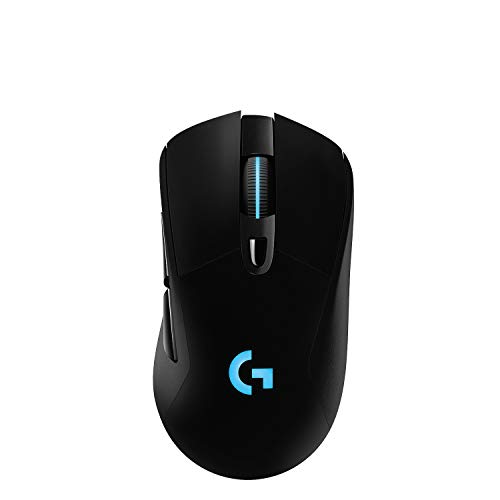
This guide breaks down what actually matters for competitive play — from DPI and polling rate to wireless performance and ergonomics — so you can make a confident choice without overspending on marketing features. Whether you prefer a proven wireless workhorse like the Logitech G305 Lightspeed or a budget-friendly wired option such as the Redragon M612, the same fundamentals apply.
Our top picks



As an Amazon Associate we earn from qualifying purchases at no extra cost to you.
⚡ Save on Your Next PC — Amazon Prime
Prime members get fast free shipping on the systems above, plus early access to Prime Day & Black Friday PC deals. New members get a 30-day free trial.
Watch: How to Choose a Gaming Mouse for Competitive Play — Video Review
1. Sensor and DPI: What Actually Matters for Competitive Aim
Modern competitive mice use flawless optical sensors with no acceleration, smoothing, or angle snapping. The key specs to check are real-world accuracy and DPI flexibility, not the maximum DPI number on the box.
- Look for a proven optical sensor: Models like the Logitech G305 Lightspeed use Logitech’s HERO sensor, while the Redragon M810 PRO uses a 10000 DPI optical sensor. Both offer 1:1 tracking. Prioritize sensors known for consistent tracking at low and mid DPI.
- Use the right DPI range: Most pros play between 400 and 800 DPI with an in-game sensitivity that gives 25-45 cm per 360-degree turn. A mouse that offers clean DPI steps of 100 (e.g., 400, 800, 1600) is more useful than one that advertises 26000 DPI.
- IPS and acceleration: Aim for at least 250-400 IPS and 30-50G acceleration. This ensures the sensor never spins out during fast flicks, even at low sensitivity.
2. Weight, Shape, and Grip Style
Weight and shape affect aim stability, fatigue, and control more than any RGB feature. In competitive play, there is no single best weight — only what fits your grip and sensitivity.
- Weight targets: Ultralight mice (55-65g) favor fingertip and aggressive claw grippers who rely on fast micro-adjustments. Mid-weight mice (75-95g) like the Logitech G305 Lightspeed (approx. 99g with AA battery) provide more planted control for palm grip and low-sensitivity arm aiming.
- Shape over brand: Palm grip needs a longer (122-128mm), higher hump to support the hand. Claw grip benefits from a mid-length body with a pronounced rear hump. Fingertip excels with shorter, flatter, and narrower shells. If possible, measure your hand length and compare it to the mouse dimensions before buying.
- Try before you commit: The Redragon M612 offers a larger ergonomic shape with thumb rest and remappable side buttons, which suits palm and hybrid claw users on a wired budget. The Redragon M810 PRO keeps a similar ergonomic profile but cuts the cord for wireless flexibility.
3. Wireless vs. Wired: Latency, Reliability, and Convenience
In 2026, top wireless mice match wired latency, but not all wireless implementations are equal. Your choice should balance latency, weight, and maintenance.
- Latency: Competitive-grade wireless using a 2.4 GHz dongle (like Lightspeed on the Logitech G305 Lightspeed in Black, White, or Blue) delivers sub-1ms to 2ms click latency plus a stable 1000 Hz polling rate — indistinguishable from wired for most players. Bluetooth alone (often 125-250 Hz) is not suitable for competition due to higher latency and jitter.
- Wired advantages: A Wired Gaming Mouse with RGB LED is lighter without a battery, never needs charging, and is typically $15-$35 cheaper. For tournament setups or PCs where you don’t want to manage batteries or dongles, wired is still the most foolproof option. The Redragon M612 is a good example of a no-fuss wired competitor.
- Practical tradeoffs: Wireless removes cable drag and is preferred if you play at very low sensitivity with large arm sweeps. If you choose wireless, look for at least 100+ hours of battery life on a single AA (as with the G305) or a reliable rechargeable system with a low-battery warning.
4. Switches, Polling Rate, and Battery Life
These less visible specs determine click consistency and how often your position is reported to your PC.
- Switches: Mechanical switches rated for 20M-50M clicks are standard. For competitive play, check for low click latency (under 5ms) and minimal double-click issues. Light clicks (55-65gf) help with rapid firing; slightly heavier clicks prevent accidental shots.
- Polling rate: 1000 Hz (1ms report time) is the competitive baseline. Newer 2000-8000 Hz polling exists, but gains are marginal unless you have a 240Hz+ monitor and a CPU that can handle the higher load without causing micro-stutters. For most players in 2026, stable 1000 Hz is ideal.
- Battery strategy: Single-AA designs like the Logitech G305 Lightspeed let you swap a battery in seconds and last up to 250 hours in endurance mode. Rechargeable models like the Redragon M810 PRO save long-term cost but require a charging habit — check whether they support play-while-charging via USB-C.
5. Software and Customization Without the Bloat
Software should help you tune performance, not slow down your system. Competitive players typically set once and then run onboard memory.
- Essential adjustments: You need DPI stages, polling rate, and button remapping. Six to eight programmable buttons are enough; more adds weight and misclicks. The Redragon M612 and M810 PRO both offer remapping keys useful for binding grenades, melee, or push-to-talk.
- Onboard memory: Save your profile to the mouse so you can plug into a tournament PC without reinstalling software. Logitech G HUB and Redragon software both support this, but always test that settings persist after closing the app.
- Feet and cable: PTFE feet (0.8-1.0mm thick) and a flexible paracord-style cable matter more than RGB. If you go with a basic Wired Gaming Mouse for PC/Laptop, consider adding aftermarket PTFE skates for $8-$10 to improve glide.
Tips
- Match mouse size to hand size: hands under 18cm long usually fit small-to-medium mice best; 19cm+ hands need 125mm+ length for palm grip.
- Don’t chase maximum DPI. Set your mouse to 400 or 800 DPI and adjust sensitivity in-game for consistent muscle memory across titles.
- Test grip with your actual posture: sit at your desk, grip the mouse, and lift and recenter quickly. If your ring finger drags or your palm lifts, the shape is wrong.
- Keep one sensitivity for 2 weeks before judging. Constant DPI switching hides whether a mouse truly fits you.
Frequently Asked Questions
Is wireless as fast as wired for competitive gaming in 2026?
Yes, when it uses a dedicated 2.4 GHz dongle at 1000 Hz polling. The Logitech G305 Lightspeed and Redragon M810 PRO both operate on this principle and are tournament-viable. Avoid Bluetooth-only connections for competition and keep the dongle within 30cm of the mouse using an extender if your PC is under the desk.
What DPI and sensitivity do pros use?
Most FPS pros use 400-800 DPI with in-game sensitivity yielding an eDPI of 240-500. For example, 800 DPI x 0.35 in Valorant = 280 eDPI. This balances precise head-level micro-adjustments with manageable 180-degree turns. MOBA players often use slightly higher eDPI for map movement.
Is a lighter mouse always better?
Not necessarily. Lighter mice reduce fatigue and help fast flicks, but very light mice under 60g can feel unstable for low-sensitivity palm players who anchor their aim with their arm. If you play at high sensitivity or use fingertip grip, lighter is generally better. If you play low sensitivity and palm, 85-100g often feels more controlled.
How many buttons do I need for competitive play?
Two main buttons, a clickable scroll wheel, and two side buttons cover 95% of competitive needs. Programmable side buttons are useful for utilities, ping, or DPI clutch. Mice with 7-8 buttons like the Redragon M612 give you flexibility without clutter, while keeping weight and error rate low.
Conclusion
For competitive play, prioritize shape and weight for your grip, a proven sensor with clean 400-800 DPI steps, and stable 1000 Hz wireless or a quality wired connection. Color variants like the Logitech G305 Lightspeed in Black, White, or Blue perform identically — choose by ergonomics and setup aesthetics. Budget wired options like the Redragon M612 and simple Wired Gaming Mouse models are excellent for learning fundamentals, while wireless picks like the Redragon M810 PRO and Logitech G305 add freedom without sacrificing latency when you are ready to cut the cord.





Write Your Review
No reviews yet. Be the first to share your experience!