Key takeaways
- A search for a “pfaff sewing machine” usually means someone has hit the limits of their current setup and wants to know what the top-tier option costs compared to everything else on the market. The problem is specific: PFAFF machines…
A search for a “pfaff sewing machine” usually means someone has hit the limits of their current setup and wants to know what the top-tier option costs compared to everything else on the market. The problem is specific: PFAFF machines carry a reputation for the built-in walking foot and needle feed system, but at their price point you are committing four figures to a single tool. That makes honest comparison essential, because a $369 computerized model can outperform a $1,449 specialty machine for straightforward garment construction and quilting alike.
What separates a good pick from a bad one in this category is not stitch count alone or brand prestige. It is whether the machine solves your actual bottleneck—feed control on slippery fabrics, embroidery capability, workspace size for quilts, or simply reliability under daily use. Below we compared published specifications, current prices, and recurring owner feedback across eight machines that appear alongside PFAFF in buyer research, so you can see exactly where the premium sits and where it does not pay off.
Our top picks





As an Amazon Associate we earn from qualifying purchases at no extra cost to you. Ratings are shown as listed on Amazon.
Quick Picks
| Product | Best For | Price |
|---|---|---|
| PFAFF 620 Ambitious Sewing | Built-in walking foot and needle feed | $1,449 |
| Janome JW8100 | Feature-dense computerized sewing | $369 |
| Brother XM2701 | Budget portable sewing | $149 |
| Brother SE700 | Combined sewing and embroidery | under $600 |
| Brother XR9550 | Quilting with wide stitch library | under $300 |
| Brother CS7000X | Versatile mid-range sewing and quilting | under $300 |
| Singer 4411 Heavy Duty | High-speed straight and zigzag work | under $200 |
| Singer Quantum Stylist 9960 | Computerized variety at a fair price | under $600 |
How We Picked
We narrowed eight machines by four criteria that dominate owner reviews and spec sheets in this category. First, feed mechanism and stitch quality on the fabrics you actually sew—this is where the PFAFF 620 justifies its price and where most budget machines fall short. Second, ease of use for the stated purpose: a machine loaded with 165 stitches means little if threading takes five minutes and tension adjustments are unclear. Third, workspace and expandability, including extension tables and free-arm availability. Fourth, long-term reliability as reflected in multi-year owner complaints and praise across forums and retail reviews.
The 8 Best Pfaff Sewing Machine in 2026: Specs and Prices Compared
PFAFF 620 Ambitious Sewing
The PFAFF 620 is built for sewists who regularly handle layered fabrics, leather, vinyl, or slippery synthetics and need consistent feeding without a separate walking foot attachment. Its integrated IDT system moves the top and bottom layers simultaneously, which owners consistently cite as the reason they cannot go back to a conventional feed dog machine. On the downside, published reviews note that the learning curve is real—buttonhole setup and stitch selection menus are less intuitive than Brother equivalents, and the price is nearly four times what you would spend on a well-equipped computerized model. Skip it if your projects are mostly cotton garments or light quilting; a $300 machine will serve you with similar output quality and far fewer hours of manual reading.
Janome JW8100
The Janome JW8100 targets sewists who want maximum features per dollar and do not need brand-name embroidery. With 100 built-in stitches, seven one-step buttonholes, an included extension table, and twenty-two accessories, it covers garment sewing, quilting, and basic mending without a single upgrade purchase. Owners praise the automatic needle threader and the LCD screen that shows stitch width and length clearly. The main gripe is the hard cover rather than a soft carrying case, which makes it slightly awkward to store in tight spaces. Skip this if you need embroidery or want the smallest possible footprint on your desk or table.
Brother XM2701
The Brother XM2701 is the entry-level workhorse for people who sew occasionally—craft projects, simple hemming, beginner lessons—and need a machine that is light, portable, and easy to set up. Twenty-seven stitches and twelve needle positions cover the basics, and automatic needle threading removes the single biggest frustration new owners report on budget machines. Published reviews highlight the folding carry handle and compact footprint as genuine wins for apartment dwellers. The limitation is speed and power: owners note it struggles with denim layers and does not handle heavy quilting weight gracefully. Skip it if you plan to sew more than a few times a month or work with thick fabric stacks.
Brother SE700
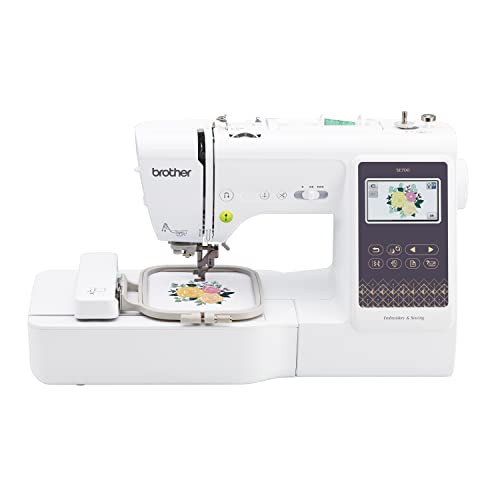
The Brother SE700 is for sewists who want both machine sewing and embroidery in a single footprint, with wireless LAN connectivity for pulling designs directly from online libraries. Owners appreciate the color touchscreen that simplifies design placement and the eight included fonts for monogramming. The published price under $600 positions it as an accessible gateway into embroidery without a dedicated frame and separate machine. The recurring complaint is stitch speed on complex fills—embroidery takes patience, and this machine is not as quick as higher-end embroidery-only models. Skip it if you sew but never embroider; you are paying for capability you will not use.
Brother XR9550
The Brother XR9550 is designed for quilters who want a wide selection of decorative and utility stitches without moving into industrial territory. One hundred sixty-five stitches, including quilting-specific options, and an extended table give you room to maneuver large projects. Owners highlight the drop-feed function for free-motion quilting as a genuine advantage over machines without it. The trade-off, based on multi-year reviews, is that the machine is bulkier than it looks in product photos and the included accessories are functional but not premium-feeling. Skip it if your primary use is garment construction and you want a lighter, more compact option.
Brother CS7000X
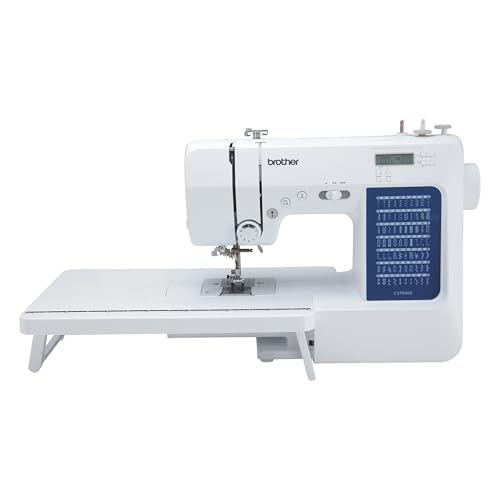
The Brother CS7000X occupies the sweet spot for sewists who want a versatile computerized machine for both quilting and garment work. The LCD display makes stitch settings readable at a glance, and the extended table is a welcome inclusion at this price. Owners frequently mention the automatic needle threader and the variety of presser feet included in the box as the features that justified upgrading from a mechanical model. The limitation is embroidery—this is a sewing and quilting machine only. Skip it if your interest is primarily decorative monogramming or patch-style embroidery; the SE700 serves that need better.
Singer 4411 Heavy Duty
The Singer 4411 is a mechanical, high-speed machine built for straight and zigzag sewing at pace, making it ideal for upholstery, denim, canvas, and other heavy materials where stitch variety matters less than power and reliability. Owners praise the metal internal frame and the ability to push through thick layers without the machine bogging down. The obvious trade-off is no computerized features—no automatic buttonholes, no stitch memory, no LCD guidance. Skip it if you do garment sewing that calls for zigzag, blind hem, or multiple stitch patterns on a daily basis.
Singer Quantum Stylist 9960
The Singer Quantum Stylist 9960 is the computerized option for sewists who want breadth—tons of stitches, multiple buttonhole styles, auto-threading, and a speed slider that lets you match pace to fabric. Owners describe it as a “do almost everything” machine that sits in the middle ground between budget and specialty. The published price under $550 is competitive for the feature set. The recurring criticism is bulk: it is not a machine you move between rooms frequently, and the footprint demands a dedicated station. Skip it if portability or a small workspace are non-negotiable.
Buying Guide
Feed System and Fabric Compatibility
The single most important spec for long-term satisfaction is how the machine feeds fabric. A conventional drop-feed system works fine on woven cotton but slips on knits, vinyl, or multiple layers. PFAFF’s integrated dual feed and machines with a drop-feed mode for free-motion quilting solve specific problems. If you sew diverse fabrics regularly, a dedicated walking foot or integrated system matters more than stitch count.
Workspace Size and Extension Tables
Quilters and garment sewists alike hit a ceiling when the throat space and flat-bed area cannot accommodate their project. Check whether an extension table is included or available as an add-on, and measure the machine’s actual sewing area—not the product photo scale. A machine with a wider table at $300 may serve you better than a compact specialty unit at $1,400.
Computerized Controls vs. Mechanical Simplicity
Computerized machines add automatic threading, stitch memory, and programmable buttonholes, but they also add failure points and learning curves. Mechanical machines with fewer settings are easier to service and often faster to set up for a single stitch type. Match the control system to how often you switch tasks—daily variety suits computerized; repetitive heavy sewing suits mechanical.
Our Verdict
Our top pick is the PFAFF 620 if your work consistently involves difficult fabrics and you need the integrated walking foot as a core feature rather than an accessory. For most buyers, however, the Janome JW8100 delivers the best balance of features, price, and owner satisfaction under $400. Our budget pick is the Brother XM2701 for anyone whose sewing is occasional and whose primary need is reliability without complexity. If embroidery is your goal, the Brother SE700 wins outright—it is the only machine under $600 that combines sewing, embroidery, and wireless design import in a single unit.
FAQ
Is a PFAFF sewing machine worth the premium over Brother or Janome?
Only if you regularly sew layered or slippery fabrics where the integrated dual feed saves you the cost and hassle of a separate walking foot attachment. For general garment and quilting work, a mid-range Brother or Janome produces comparable stitch quality at a fraction of the price.
Can I use a regular sewing machine for quilting?
You can, but results depend on throat space, feed control, and whether the machine offers a drop-feed mode for free-motion stitching. Machines like the Brother XR9550 and CS7000X include extended tables and drop-feed capability specifically to make quilting practical.
What is the difference between a sewing and embroidery machine?
A sewing machine handles straight, zigzag, and utility stitches for construction and finishing. An embroidery machine adds a hoop, programmable X-Y movement, and digital design support to create decorative patterns. Combined units like the Brother SE700 do both but are larger and require separate setup for each task.
How long should a good sewing machine last?
Mechanical machines commonly last fifteen to twenty years with basic maintenance. Computerized models depend on electronic board longevity, but owners report seven to ten years of regular use before service needs increase. The brand’s local service network matters as much as the machine’s build quality.