Key takeaways
- 65-inch 4K OLED panel, 16:9 — approximately 56.7 in wide × 31.9 in tall before the stand
- Google TV with Gemini; Google Assistant voice control; casting from Android and iOS devices
- 120Hz-class native refresh with VRR and ALLM support typical of this class
- HDR support in this class normally covers HDR10 and Dolby Vision
- Four HDMI inputs typical at this size, with 4K/120-class bandwidth on at least some of them
- VESA wall-mount pattern typically 300 × 200 mm at 65 inches; confirm before ordering a bracket
The best 65-inch OLED for most households in 2026 is the LG 65-Inch Class OLED evo AI 4K C6 Series. It is the set that gets the fewest things wrong at once: four HDMI inputs with 4K/120-class bandwidth, support for the major HDR formats including Dolby Vision, a smart platform that does not fight you, and a panel that handles streaming, sports and console gaming equally well. It suits a household that watches a genuine mix of content in a room where curtains exist — not a sun-drenched south-facing wall, and not a dedicated blacked-out theater either. If your budget stops well short of OLED money, the TCL 65T7 gives you 144Hz gaming and a bright QLED panel for a fraction of the outlay. If you want the brightest, punchiest 65-inch OLED on this list, the Samsung S90H is the premium answer.
Top 3 Picks
Best overall: LG 65-Inch OLED evo C6 Series. The C-series formula — bright-enough OLED evo panel, full gaming feature set, webOS, and a price that sits below the flagship tier — remains the safest 65-inch OLED recommendation for a general-purpose room. It is the one to buy if you do not want to think hard about the purchase.
Best budget: TCL 65-Inch T7 Series (65T7). It is not an OLED, and it does not pretend to be. What it does offer is a 144Hz QLED panel with Google TV and a wide app selection at a budget-tier price, which makes it the right answer for a second room, a dorm, or a buyer who simply cannot justify OLED money this year.
Best premium: Samsung 65-Inch S90H Series OLED. Samsung’s OLED line has historically leaned on quantum-dot OLED panel technology for extra color volume and peak brightness, and the S90H carries that forward with a newer generation of Samsung’s AI processor. It is the pick when you want the brightest OLED in the lineup and you are willing to pay for it.
Quick Comparison
Every set below is a 65-inch 4K display. The screen itself measures roughly 56.7 inches wide by 31.9 inches tall before the stand is attached, so plan for about 57 inches of wall width plus clearance. Refresh rates, panel types and smart platforms are the differences that actually change how the TV feels day to day.
| Product | Best for | Panel & refresh | Smart platform | Price tier |
|---|---|---|---|---|
| Sony BRAVIA 6 OLED (K-65A60) | Google TV households, sub-4K upscaling | OLED, 120Hz-class, VRR/ALLM | Google TV with Gemini | Mid-range |
| Roku 65-Inch Pro Series (2026) | Roku loyalists who want OLED | OLED, 120Hz | Roku OS | Mid-range |
| Samsung 65-Inch S90H (2026) | Brightness and gaming punch | OLED (QD-OLED class), 120Hz+, 4 HDMI 2.1-class | Tizen | Premium |
| LG 65-Inch OLED evo C6 (2026) | All-round best pick | OLED evo, 120Hz, 4 HDMI 2.1-class | webOS | Premium |
| Roku 65-Inch Select Series (2026) | Cheapest route to Roku OS at 65″ | QLED, 60Hz-class | Roku OS | Budget |
| Samsung 65-Inch M70H (2026) | Bright-room budget viewing | Mini LED, 60Hz-class | Tizen | Budget |
| Samsung 65-Inch S85H (2026) | OLED on a mid-range budget | OLED, 120Hz-class | Tizen | Mid-range |
| TCL 65-Inch T7 Series (65T7) | Budget gaming at 144Hz | QLED, 144Hz | Google TV | Budget |
| Samsung 65-Inch S90F (2025) | Premium OLED at a year-old price | OLED (QD-OLED class), 120Hz+ | Tizen | Premium |
| INSIGNIA 65-Inch QF Series (NS65-UQFL26) | Lowest-cost 65″ smart TV | LED/QLED, 60Hz-class | Fire TV with Alexa | Budget |
As a general market picture, budget-tier 65-inch sets sit in the low hundreds of dollars, mid-range models in the high hundreds to low four figures, and premium OLEDs above that. The gaps between adjacent tiers are often several hundred dollars, which is why the middle of this list is where most buyers should be shopping.
How We Chose
This roundup is built from published specifications, manufacturer platform documentation and well-established category behavior at 65 inches — not from lab measurement. Selection started with panel technology, because that single choice determines black level, viewing angle, brightness ceiling and burn-in risk more than any other factor. From there we weighed the feature set that actually gets used: HDMI 2.1-class bandwidth and VRR for consoles, the number of usable inputs, HDR format support, and whether the smart platform has the apps people watch. We considered upgrade path, since a 65-inch TV is typically a five-to-eight-year purchase and a set that already supports 4K/120 and modern HDR formats stays useful longer. Finally we weighted price tier, making sure each budget band had at least one honest recommendation rather than a token entry. Sets were grouped by the situation they suit best — bright room, dark room, console gaming, streaming-only household, second room — rather than ranked into a single artificial order. Where a specification is not confirmed by the listing, we describe it by class instead of inventing a number.
1. Sony BRAVIA 6 OLED (K-65A60) – Best for Google TV Households
As an Amazon Associate we earn from qualifying purchases at no extra cost to you.

The Sony BRAVIA 6 OLED is the pick for a household that already lives inside Google’s ecosystem. Google TV with Gemini built in means voice search that understands conversational requests, Chromecast-style casting from phones and laptops, and a home screen that pulls apps together instead of burying them. It also suits people who watch a lot of content that is not native 4K — older cable feeds, 1080p streaming tiers, YouTube uploads, DVDs — because Sony’s reputation in this category rests on processing and upscaling rather than on raw panel brightness. It fits a living room or family room with controllable light: curtains you can close in the afternoon, lamps you can dim at night. It is a less obvious choice for a permanently bright, glass-walled room, where any OLED struggles.
Key specifications at a glance
- 65-inch 4K OLED panel, 16:9 — approximately 56.7 in wide × 31.9 in tall before the stand
- Google TV with Gemini; Google Assistant voice control; casting from Android and iOS devices
- 120Hz-class native refresh with VRR and ALLM support typical of this class
- HDR support in this class normally covers HDR10 and Dolby Vision
- Four HDMI inputs typical at this size, with 4K/120-class bandwidth on at least some of them
- VESA wall-mount pattern typically 300 × 200 mm at 65 inches; confirm before ordering a bracket
The strengths here are software and image handling. Google TV remains the most flexible mainstream platform for people who subscribe to a lot of different services, and Gemini integration makes searching across them faster than typing titles into individual apps. Sony’s processing is the other half of the argument: motion handling on 24fps film content and 60fps sports tends to look composed, and lower-resolution sources are cleaned up more gracefully than on most budget panels. The picture is characteristically OLED — per-pixel dimming, essentially perfect black, and a viewing angle wide enough that a couch spread across the room still sees a consistent image. Where the Sony loses ground is brightness headroom against the premium OLEDs on this list, and price against the mid-range Samsung S85H.
Pros
- Google TV with Gemini is the most capable mainstream smart platform for multi-service households
- Excellent upscaling and motion handling for older or lower-resolution sources
- Wide viewing angles suit a large couch and off-center seating
- Casting and voice control work well across Android and iOS devices
- Strong brand support history for firmware updates
Cons
- Priced above other mid-range OLEDs without a brightness advantage
- Peak HDR highlights trail the premium QD-OLED-class sets
- Google TV’s home screen carries promotional content you will want to declutter
- Not the value pick if gaming is your main use — you are paying for processing
How it compares. Against the Samsung S85H, the Sony trades peak brightness and a slightly lower price for better processing, better upscaling and a friendlier platform for people who use many apps. Against the LG C6, the Sony is the more specialized choice: pick the Sony if Google TV and source processing matter most, pick the LG if you want the broadest all-rounder with the strongest gaming feature set. If your room is bright during the day and you watch a lot of HDR movies, both the LG C6 and the Samsung S90H will serve you better.
2. Roku 65-Inch Pro Series (2026) – Best for Roku Households That Want OLED

The Roku Pro Series 65-inch is aimed at a very specific buyer: someone who has used Roku for years, likes it, and does not want to learn a new interface. Roku OS is the least intrusive of the major smart platforms — the home screen is a grid of apps, the search is genuinely cross-service, and the remote is simple enough that a guest can use it without instructions. Combined with an OLED panel and a 120Hz refresh rate, this is the set for a household that wants OLED picture quality without a platform migration. It also works well as a bedroom or den TV, where the deep blacks of OLED matter more than peak brightness and where the room is naturally dim at night.
Key specifications at a glance
- 65-inch 4K OLED panel, 16:9 — roughly 56.7 in wide × 31.9 in tall before the stand
- 120Hz native refresh, which is the threshold that matters for 4K/120 console output
- Roku OS with the Roku voice remote; private listening through the Roku mobile app
- HDR support in this class typically includes HDR10 and Dolby Vision
- HDMI inputs at this size generally include at least one 4K/120-class port
- VESA pattern commonly 300 × 200 mm at 65 inches
The Pro Series makes its case on two fronts. First, the platform: Roku’s search actually looks across your subscribed services, and the interface stays out of the way in a way that Google TV and Fire TV do not always manage. Second, the panel: OLED gives you per-pixel contrast, so letterboxed films, space documentaries and dark drama series look the way they were graded. The 120Hz refresh is the important spec for anyone with a PlayStation 5 or Xbox Series X, because it is the minimum for smooth 4K/120 gameplay — a 60Hz panel will cap you at half that. What the Pro Series does not offer is the peak brightness of the premium tier or the four-port HDMI 2.1 loadout that the LG C6 and Samsung S90H provide. For a dark room and a streaming-first household, that trade is usually fine.
Pros
- Roku OS is fast, uncluttered and genuinely good at cross-service search
- OLED contrast with a 120Hz panel covers both film and console gaming
- Private listening through the mobile app is useful for late-night viewing
- Simple remote that non-technical household members can pick up immediately
- Mid-range pricing for an OLED with current-generation refresh rates
Cons
- Peak brightness sits below the premium OLEDs, so bright-room HDR is less dramatic
- Gaming feature depth is thinner than LG’s or Samsung’s gaming-oriented menus
- Roku’s app store is smaller than Google TV’s for niche services
- Fewer picture-tuning controls than enthusiasts expect
How it compares. The nearest alternative is the Samsung S85H, the other mid-range OLED here. The Samsung is the better gaming display on paper, with a broader feature set built around console use, while the Roku wins on interface simplicity and price predictability. Against the LG C6, the Roku is the budget-conscious version of the same idea: you give up some brightness and some gaming tooling, and you save meaningfully. If you already own Roku devices and like them, this is the least disruptive way to move up to OLED at 65 inches.
3. Samsung S90H Series OLED (2026) – Best for Bright Rooms and Console Gaming

The Samsung S90H is the premium pick for two kinds of buyer. The first is someone with a bright room — big windows, daytime viewing, a living room that is never truly dark — who still wants OLED’s black levels and is willing to pay for the brightest OLED panel available. The second is a console gamer who wants the deepest gaming feature set on this list: high refresh, VRR across the major formats, low input lag, and enough 4K/120-class HDMI ports to leave a PS5, an Xbox and a soundbar connected at once. It also suits anyone who has already standardized on Samsung’s ecosystem and wants the TV to fit into it.
Key specifications at a glance
- 65-inch 4K OLED panel; Samsung’s S90 line has historically used quantum-dot OLED panel technology for extra color volume
- 120Hz-and-above class refresh with VRR support and an auto low-latency mode
- Four HDMI inputs in this class, with 4K/120-class bandwidth on the majority of them
- Newer generation of Samsung’s NQ4 AI processor for upscaling and scene-by-scene adjustment
- HDR10+ support; Samsung has historically not supported Dolby Vision
- Tizen smart platform with Samsung’s gaming hub and cloud-gaming app support
Brightness is the headline. QD-OLED-class panels push peak highlights harder than the OLED evo and standard OLED sets elsewhere in this roundup, which matters in two places: specular highlights in HDR films, and daytime sports where a dimmer panel looks washed out next to a window. Color volume benefits too — very bright saturated colors hold up better, which is visible in animated films and game HUDs. The gaming package is equally complete: the TV detects a console and switches to game mode automatically, variable refresh rate smooths out frame pacing, and the input lag in game mode is in the low-millisecond range typical of this panel class. Tizen remains a mature platform with broad app coverage, and Samsung’s anti-glare treatment on its premium panels handles reflections better than most glossy OLEDs.
Pros
- Highest peak brightness of the OLEDs in this roundup
- Best gaming feature set here — VRR, ALLM, low lag, multiple 4K/120-class ports
- Strong anti-reflection handling for bright rooms
- Wide viewing angles and excellent off-axis color
- Mature Tizen platform with cloud gaming built in
Cons
- Premium price tier — the most expensive path on this list
- No Dolby Vision support, which matters if you use a Dolby Vision-heavy streaming library
- Samsung’s picture presets need adjustment out of the box
- Overkill if you watch mostly in a dark room at moderate brightness
How it compares. Against the LG C6, the choice is brightness and gaming versus HDR format breadth and platform familiarity. The Samsung wins on peak highlights and on the number of fully loaded HDMI ports; the LG wins on Dolby Vision support and on webOS’s app flexibility. Against the 2025 Samsung S90F, the S90H is the newer processor generation at a higher price — the S90F remains the smarter buy if you can find it at a year-old discount and do not need the latest processing. If your room is dark and your budget is firm, the S85H gets you most of the OLED experience for less.
4. LG 65-Inch OLED evo C6 Series (2026) – Best Overall 65-Inch OLED
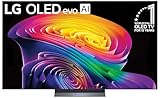
The LG C6 is the default recommendation for a reason: it is the set that suits the widest range of buyers without obvious compromise. It fits a family room that gets some daytime light, a living room used for streaming and sports, and a den where a console lives. It suits people who want Dolby Vision support because their streaming library leans that way, and people who want four fully loaded HDMI inputs so nothing has to be unplugged when a new device arrives. It is also the safest choice for someone who is not sure what they want — the C-series has been the reference point for mid-premium OLEDs for several generations, and the 2026 model continues that.
Key specifications at a glance
- 65-inch 4K OLED evo panel, 16:9 — approximately 56.7 in wide × 31.9 in tall before the stand
- 120Hz native refresh with VRR, ALLM and a dedicated game optimizer menu
- Four HDMI inputs with 4K/120-class bandwidth across the set — the practical maximum at this size
- Dolby Vision and HDR10 support; the C-series has carried Dolby Vision for years
- webOS smart platform with the Magic Remote and broad app coverage
- LG’s Alpha-series AI processor for upscaling and tone mapping
The C6’s advantage is balance. The OLED evo panel is brighter than baseline OLED and closes much of the gap with QD-OLED in real content, while retaining the perfect black levels and near-instant pixel response that make OLED the right choice for dark-room viewing. Four 4K/120-class HDMI ports is the number that matters: a PlayStation 5, an Xbox Series X, a soundbar with eARC and a streaming stick can all stay connected, and you still have a spare. The game optimizer menu is the most complete in the business, with per-genre presets, a real-time VRR readout and a black-frame insertion mode for people who want to trade brightness for motion clarity. webOS has the widest app selection of the manufacturer platforms, and the Magic Remote’s pointer control remains divisive but genuinely fast once learned.
Pros
- Dolby Vision plus HDR10 support covers the widest range of streaming content
- Four 4K/120-class HDMI ports — nothing gets unplugged
- Best-in-class gaming menu with VRR readout and motion controls
- webOS app coverage and a remote that works well for search
- Consistent, well-calibrated picture modes out of the box
Cons
- Premium price tier despite being the mainstream model
- Peak brightness still below the QD-OLED-class Samsung S90H
- Stand design is wide and needs a deep media console
- Motion interpolation defaults are aggressive and need turning off
How it compares. Against the Samsung S90H, the LG gives up some peak brightness and gains Dolby Vision, a fourth fully loaded HDMI port and a deeper gaming menu — for most buyers that is the better trade. Against the Samsung S85H, the LG costs more but delivers a brighter panel and the full gaming feature set, which is worth the gap if a console is part of your setup. Against the Sony BRAVIA 6, the LG is the more general-purpose set and the Sony is the more specialized one for Google TV and upscaling. If you want one answer and no further research, this is it.
5. Roku 65-Inch Select Series (2026) – Best Budget Route to Roku OS

The Roku Select Series 65-inch is for the buyer who wants a big screen, a familiar interface and the lowest sensible outlay. It is a QLED panel rather than OLED, which is the honest trade at this price: you get better brightness than OLED at the same size, but black levels are limited by the backlight rather than by per-pixel control. It suits a bright bedroom, a playroom, a rental apartment or a secondary living space where the TV is on all day and nobody is grading the picture. It is also a reasonable choice for a household that mostly watches news, sports and streaming sitcoms, where deep blacks and HDR highlight detail matter far less than a bright, legible picture.
Key specifications at a glance
- 65-inch 4K QLED panel, 16:9 — roughly 56.7 in wide × 31.9 in tall before the stand
- 60Hz-class native refresh; this is the main limitation for console gaming
- Roku OS with the Roku voice remote and cross-service search
- HDR10 support typical of this tier; Dolby Vision is not guaranteed at budget prices
- HDMI inputs are standard 4K/60-class rather than 4K/120
- Budget-tier build: plastic chassis, basic stand, no advanced anti-glare coating
The Select Series wins on value and interface. Roku OS is genuinely the easiest major platform to live with, and at 65 inches this is one of the least expensive ways to get it on a large screen. QLED’s quantum-dot layer gives you more color volume than a plain LED panel, so bright HDR content still looks saturated rather than flat. Brightness is the other advantage over the OLEDs here — for daytime viewing in a room with windows, a bright QLED can look better than a dim OLED that is fighting reflections. What you give up is real: black levels are grey rather than black, blooming around bright objects on dark backgrounds is visible, viewing angles are narrower so off-center seats lose contrast, and the 60Hz-class refresh caps console output at 4K/60. None of that matters if the TV is playing background content all day.
Pros
- Budget price tier with a genuine 65-inch screen
- Roku OS is simple, fast and easy for guests and children
- Higher brightness than OLED for daytime viewing
- QLED color layer keeps bright content saturated
- Low risk purchase for a secondary room
Cons
- No per-pixel dimming — black levels and contrast trail OLED badly
- 60Hz-class panel is a real limit for PS5 and Xbox Series X owners
- Narrower viewing angles; off-axis seats look washed out
- Basic HDR performance with limited highlight detail
How it compares. Against the Samsung M70H, the two are close in tier. The Samsung uses Mini LED backlighting with local dimming zones, which generally controls blooming better, while the Roku offers the simpler platform and often a lower price. Against the TCL T7, the TCL is the better gaming choice by a wide margin thanks to its 144Hz panel — if a console is involved, spend the extra and take the TCL. Against the Samsung S85H, the Select Series is a different category entirely: if you can stretch to OLED money, the picture difference is not subtle.
6. Samsung M70H Series Mini LED (2026) – Best Budget Pick for Bright Rooms

The Samsung M70H is the budget option for a room that gets a lot of light. Mini LED backlighting with local dimming zones produces a brighter image than any OLED at this price, and it handles reflections and daylight better as a result. It suits a sunroom, a kitchen-adjacent family room, a bright apartment with limited curtain control, or any space where the TV is on during the day. It also suits a Samsung household that wants Tizen and the same remote and menu structure across multiple TVs. It is a poor fit for a dark-room movie enthusiast, because local dimming — however many zones the panel has — cannot match per-pixel control.
Key specifications at a glance
- 65-inch 4K Mini LED panel with local dimming zones, 16:9
- 60Hz-class native refresh typical of this tier
- Tizen smart platform with Samsung’s app store and voice control
- HDR10+ support; Samsung has historically not offered Dolby Vision
- Standard 4K/60-class HDMI inputs
- Budget-tier chassis and stand; check the VESA pattern before buying a mount
The M70H’s case rests entirely on brightness and price. Mini LED backlights are smaller and more numerous than standard LED backlights, which means the dimming zones are smaller and blooming around bright objects is better controlled than on a conventional LED set. In a bright room that difference is visible: highlights stay punchy, and the picture does not collapse into grey wash the way a dim panel does under strong ambient light. Tizen is a mature, well-supported platform with good app coverage and a straightforward interface. The trade-offs are the same ones that apply to every non-OLED at this price. Black bars in letterboxed films are lit by the backlight, so they are not truly black. Off-axis viewing degrades contrast. And the 60Hz-class panel means a console is capped at 4K/60 with no benefit from 120Hz modes.
Pros
- Brighter than any OLED in this roundup — ideal for daytime, bright-room viewing
- Mini LED local dimming controls blooming better than standard LED
- Budget price tier with a full 65-inch screen
- Tizen platform with broad app support and familiar Samsung menus
- Good option for a multi-Samsung household
Cons
- No per-pixel dimming; black bars and dark scenes are lit rather than black
- 60Hz-class refresh limits console gaming
- Narrower viewing angles than OLED
- No Dolby Vision support
- Modest build quality at this price
How it compares. Against the Roku Select Series, the M70H is the better bright-room TV thanks to local dimming, while the Roku has the simpler interface. Against the TCL T7, the M70H is brighter but slower — the TCL’s 144Hz panel is the deciding factor for anyone with a console. Against the Samsung S85H, the M70H saves money and gains brightness, but gives up OLED contrast entirely. If your room is dark, do not buy this TV; if your room is bright all day, it may outperform an OLED that costs twice as much in the conditions you actually watch in.
7. Samsung S85H Series OLED (2026) – Best Mid-Range OLED Value

The Samsung S85H is the OLED for buyers who want per-pixel contrast but cannot justify premium-tier pricing. It sits below the S90H in Samsung’s OLED range and above the Mini LED and QLED sets, which makes it the natural landing spot for a mid-range budget. It suits a mixed-use living room where streaming, sports and some gaming happen, and it suits buyers who want Samsung’s platform and remote without paying for the brightest panel. It is also a good fit for a moderately lit room — not a blacked-out theater, not a glass box. If your room is dark and your budget is mid-range, this is close to the ideal set.
Key specifications at a glance
- 65-inch 4K OLED panel, 16:9 — approximately 56.7 in wide × 31.9 in tall before the stand
- 120Hz-class native refresh with VRR and auto low-latency mode
- Tizen smart platform with Samsung’s gaming hub and voice control
- HDR10+ support; Dolby Vision has not been part of Samsung’s TV lineup
- HDMI inputs at this tier typically include at least one 4K/120-class port, with fewer fully loaded ports than the S90H
- VESA pattern commonly 300 × 200 mm at 65 inches
What the S85H delivers is the core OLED experience at a sensible price. Contrast is per-pixel, so black is genuinely black and dark scenes hold detail that a backlit panel crushes or washes out. Viewing angles are wide, which matters in a room with seating spread across more than one couch. The 120Hz refresh and VRR support mean it is a legitimate gaming display, not just a movie panel — input lag in game mode is low enough that competitive play is not compromised, even if the feature menu is thinner than LG’s. Where it steps down from the S90H is peak brightness, the number of fully loaded HDMI ports and the overall processing tier. In a dim room those differences are modest; in a bright room they are noticeable.
Pros
- Per-pixel OLED contrast at a mid-range price
- 120Hz-class panel with VRR makes it a genuine gaming option
- Wide viewing angles suit larger rooms with multiple seats
- Tizen platform with Samsung’s cloud gaming hub
- Strong value relative to the premium OLED tier
Cons
- Lower peak brightness than the S90H and the LG C6
- No Dolby Vision support
- Fewer 4K/120-class HDMI ports than the premium models
- Thinner picture-tuning options than LG’s game optimizer
How it compares. Against the Samsung S90H, the S85H is the value play: you lose brightness and some port flexibility and save a meaningful amount. Against the Roku Pro Series, the Samsung has the deeper gaming feature set while the Roku has the simpler platform and often the friendlier price. Against the Sony BRAVIA 6, the Samsung is brighter and more gaming-oriented, while the Sony is better at processing lower-resolution sources. Against the LG C6, the LG is the more complete package if the budget allows — but the S85H is the set that gets you OLED at 65 inches without stretching.
8. TCL T7 Series (65T7) – Best Budget Gaming TV

The TCL T7 is the budget pick for anyone who owns a current-generation console. Its 144Hz panel is a higher refresh rate than most of the OLEDs on this list, and at a budget price that combination is unusual. It suits a teenager’s room, a game room, a first apartment, or a second TV where gaming happens more than movie watching. It also suits a Google TV household that wants the platform without Sony or premium-tier pricing. It is not the set to buy for dark-room film watching — QLED is a backlit technology and the contrast ceiling is real — but for bright-room gaming and streaming it is the strongest value here.
Key specifications at a glance
- 65-inch 4K QLED panel, 16:9 — roughly 56.7 in wide × 31.9 in tall before the stand
- 144Hz refresh rate — the highest in this roundup on paper
- Google TV platform with Chromecast-style casting and voice search
- HDR support in this class typically includes HDR10; Dolby Vision availability varies by model year
- HDMI inputs generally include at least one high-bandwidth port for 4K/120-class signals
- Budget-tier build with a basic stand; confirm the VESA pattern for wall mounting
The 144Hz refresh is the headline and it is not marketing fluff. A higher refresh rate reduces motion blur and, with variable refresh rate enabled, smooths frame pacing in games that cannot hold a locked frame rate. On a 65-inch screen at typical seating distance, the difference between 60Hz and 144Hz in a fast first-person shooter or a racing game is immediately visible. Google TV brings the app flexibility and casting that budget Roku and Fire TV sets sometimes lack, and QLED’s quantum-dot layer keeps HDR color vivid. The limitations are the ones inherent to backlit LCD. Local dimming zones are far fewer than on a Mini LED panel of the same price class, so blooming is more visible in dark scenes with bright elements. Black levels are grey. Off-axis contrast drops.
Pros
- 144Hz refresh at a budget price — the best gaming motion handling in this tier
- Google TV with broad app coverage and casting
- Bright QLED panel handles daytime viewing well
- VRR support smooths inconsistent frame rates
- Excellent value for a game room or second TV
Cons
- Backlit panel — black levels and contrast cannot approach OLED
- Visible blooming in high-contrast dark scenes
- Narrower viewing angles than OLED
- Build quality and stand are basic at this price
- Out-of-box picture presets need adjustment
How it compares. Against the Roku Select Series, the TCL is the better gaming TV by a clear margin — 144Hz versus 60Hz-class is the single biggest spec gap in this roundup. Against the Samsung M70H, the TCL is faster and the Samsung is brighter with better local dimming; pick the TCL for gaming, the Samsung for a bright room with no console. Against the Samsung S85H, the TCL is a full tier cheaper but cannot match OLED contrast — if film and dark-room viewing matter, the S85H is worth the stretch.
9. Samsung S90F Series OLED (2025) – Best Premium OLED Value

The Samsung S90F is last year’s premium OLED, and that is exactly why it belongs on this list. It carries the same QD-OLED-class panel technology as the newer S90H, along with the NQ4 AI Gen3 processor, HDR10+ support and Samsung’s Motion Xcelerator processing, but it is a generation older — which typically means a lower price than the current model. It suits a buyer who wants premium OLED brightness and gaming features without paying current-generation prices, and it suits anyone who does not need the latest processor iteration. It is the set to look at if you are comparing the S90F and S90H and wondering whether the newer model is worth the premium.
Key specifications at a glance
- 65-inch 4K OLED panel; Samsung’s S90 line has used quantum-dot OLED panel technology
- 120Hz-and-above class refresh with VRR and auto low-latency mode
- NQ4 AI Gen3 processor with Upscaling Pro for lower-resolution sources
- HDR10+ support; Dolby Vision has not been part of Samsung’s TV lineup
- Motion Xcelerator processing for motion smoothing and clarity
- Four HDMI inputs in this class, with 4K/120-class bandwidth on the majority
The S90F’s appeal is straightforward: it delivers the brightness and color volume that make QD-OLED-class panels stand out, at a price that a year of model turnover has usually softened. The NQ4 AI Gen3 processor handles upscaling competently, which matters if you watch a lot of 1080p content, and Motion Xcelerator keeps fast sports and action readable. Gaming features are essentially the same package as the newer model — VRR, ALLM, low input lag, and enough high-bandwidth ports for multiple consoles. The compromises are the ones that come with buying a previous model year: firmware support will end sooner than on the S90H, and the newest processing improvements are absent. Neither is a problem for most buyers over a five-year horizon, but both are worth knowing.
Pros
- Premium QD-OLED-class brightness at a typically lower price than the current model
- Full gaming feature set — VRR, ALLM, multiple 4K/120-class ports
- NQ4 AI Gen3 processing with strong upscaling for 1080p sources
- Wide viewing angles and excellent color volume
- HDR10+ support for compatible content
Cons
- Previous model year — firmware support window is shorter
- No Dolby Vision support
- Availability becomes unpredictable as stock clears
- Samsung’s default picture modes need adjustment
- No meaningful advantage over the S90H if the prices are close
How it compares. Against the S90H, the S90F is the value calculation: if the price gap is wide, take the S90F; if it is narrow, take the newer processor and longer support window. Against the LG C6, the Samsung is brighter but the LG has Dolby Vision and a deeper gaming menu, so the choice comes down to which HDR ecosystem your library uses. Against the Samsung S85H, the S90F is a clear step up in brightness and port count for a modest premium — it is usually the better buy if you can find it.
10. INSIGNIA QF Series (NS65-UQFL26) – Best for the Lowest Possible Outlay

The INSIGNIA QF Series 65-inch is the entry point: the least expensive way on this list to put a 65-inch 4K screen in a room. It suits a spare bedroom, a garage, a basement workout space, a rental where you do not want to invest, or a first apartment where the TV is a stopgap. It also suits buyers who are already inside the Fire TV ecosystem and want Alexa voice control and Fire TV’s app selection without paying more. It is a QLED panel with an LED backlight, which means it is bright enough for daytime viewing but has none of OLED’s contrast advantages. If you are shopping at this end of the market, you are optimizing for size per dollar, and this set delivers that.
Key specifications at a glance
- 65-inch 4K QLED panel with LED backlighting, 16:9
- 60Hz-class native refresh
- Fire TV smart platform with Alexa voice remote
- HDR10 support typical of this tier
- Standard 4K/60-class HDMI inputs
- Budget-tier chassis, stand and remote; confirm the VESA pattern for wall mounting
At this price the calculus is simple. You get a large, bright 4K picture, a modern smart platform with Alexa built into the remote, and access to the full Fire TV app catalog. QLED’s quantum-dot layer means colors are more saturated than on a basic LED panel, so streaming content does not look flat. For background television, kids’ programming, sports in a bright room and casual streaming, it does the job. The limits are equally simple and worth being honest about: black levels are grey, blooming around bright objects is visible in dark scenes, viewing angles are narrow enough that seats far off-center lose contrast and color, and the 60Hz-class panel means a current console gets no benefit from its 120Hz modes. It is also the least refined set here in build quality and picture processing.
Pros
- Lowest price tier in this roundup for a 65-inch 4K screen
- Fire TV with Alexa voice remote is convenient for Amazon-centric households
- QLED color layer keeps content vivid
- Bright enough for daytime viewing in a lit room
- Low financial commitment for a secondary space
Cons
- No local dimming of consequence — contrast is the weakest here
- 60Hz-class panel rules out high-refresh console gaming
- Narrow viewing angles
- Basic build quality and remote
- Limited picture adjustment options
How it compares. Against the Roku Select Series, the two are in the same tier; the Insignia leans on Fire TV and Alexa while the Roku leans on simplicity and cross-service search. Against the TCL T7, the TCL costs a little more and is dramatically better for gaming thanks to its 144Hz panel. Against the Samsung M70H, the Samsung’s Mini LED local dimming produces better contrast in dark scenes. If this is your main television in a room you care about, stretching to the S85H OLED is the single biggest picture-quality upgrade available on this list.
How to Choose
Start with the room, not the panel
The most common mistake at 65 inches is choosing a panel technology before thinking about where it will live. OLED wins in dark and moderately lit rooms because its per-pixel dimming produces true black. QLED and Mini LED win in bright rooms because their backlights push more light through reflections and ambient glare. If your TV faces a window you cannot cover, an OLED will look dimmer and flatter than a cheaper Mini LED during the day — and no amount of HDR processing fixes that. Write down how much daylight reaches the screen at 3pm on a Saturday. That single answer eliminates half the list.
Brightness and HDR headroom: what the numbers mean
Manufacturers quote peak brightness measured in nits on a small portion of the screen — typically a 10% window — because that is where HDR highlights live. Full-screen brightness is always much lower. As a general picture, mainstream OLEDs in 2026 land somewhere in the mid-hundreds to low four figures of peak nits depending on panel generation, with QD-OLED-class and the brightest OLED evo panels at the top of that band and Mini LED sets capable of higher full-field brightness still. For a dark room, 700 nits of peak highlight is plenty. For a bright room, more headroom genuinely helps. Do not chase the biggest number if your room is dark; you will pay for brightness you never see.
Viewing distance: the 65-inch geometry
A 65-inch 16:9 screen measures about 56.7 inches wide and 31.9 inches tall. That geometry determines everything about placement. At 4K, the pixel density works out to roughly 68 pixels per inch, which is fine at normal seating distances but means you will not resolve extra detail by sitting closer than about 4.5 feet. Practical guidance:
- Cinema-style immersion (about 40° field of view): roughly 6.5 feet from the screen — the sweet spot for film and series.
- Mixed viewing (about 30° field of view): roughly 8.5 to 9 feet — comfortable for news, sports and casual watching.
- Minimum sensible distance: about 4.5 feet, below which you start seeing pixel structure and have to move your head to follow action.
- Maximum useful distance: beyond roughly 10 to 11 feet, a 65-inch screen starts to feel small and you would be better served by a 75-inch set.
If your couch is 12 feet from the wall, a 65-inch TV will feel underwhelming no matter how good the panel is. Measure first.
Gaming features: what to insist on
If a PlayStation 5, Xbox Series X or gaming PC is part of your setup, four specifications matter and everything else is noise. First, a 120Hz-or-higher native refresh — this is the minimum for 4K/120 output. Second, variable refresh rate support across the major formats, which eliminates screen tearing when a game cannot hold a locked frame rate. Third, auto low-latency mode, which switches the TV into game mode when a console powers on so you do not have to hunt through menus. Fourth, enough high-bandwidth HDMI ports. Two 4K/120-class ports means a console and a soundbar; four means two consoles, a soundbar and a spare. On this list, the LG C6 and Samsung S90H/S90F offer the most complete packages, the TCL T7 offers the highest refresh rate at the lowest price, and the budget QLEDs are capped at 4K/60.
OLED, Mini LED or QLED at 65 inches
OLED: per-pixel dimming, perfect black, near-instant pixel response, wide viewing angles, lower full-field brightness, some long-term burn-in risk. Mini LED: bright, good local dimming with many zones, no burn-in risk, visible blooming around bright objects on dark backgrounds, narrower viewing angles. QLED without meaningful local dimming: brightest per dollar, weakest contrast, best for rooms where the TV is on all day. There is no universal winner