
Key takeaways
- Heating pads and infrared mats: provide soothing warmth with well-understood safety guidance.
- Massage chairs or percussion massagers: offer a physical sensation many people find relaxing.
- Foam rollers and stretching: inexpensive, evidence-friendly options for muscle tightness.
- Physical therapy or chiropractic care: professional assessment for ongoing pain.
- Sleep and stress routines: consistent sleep schedules and relaxation exercises address many of the goals people have for PEMF mats.
A PEMF mat suits a general reader who wants a wellness and relaxation routine and is comfortable with the fact that the evidence for health benefits is limited and mixed: pick a consumer mat from a maker that clearly states its pulse frequencies, intensity range and safety information, such as HigherDOSE for a lifestyle-style mat that combines pulsed electromagnetic fields with infrared and crystal elements, or BEMER for a systemized product sold through distributors, and treat any mat as a comfort and relaxation product rather than a treatment. PEMF stands for pulsed electromagnetic field. Researchers study it in clinical settings for specific conditions, and some regulators have cleared certain medical PEMF devices for narrow uses, but consumer mats are generally sold as wellness products, and makers should not be read as promising cures.
Our top picks


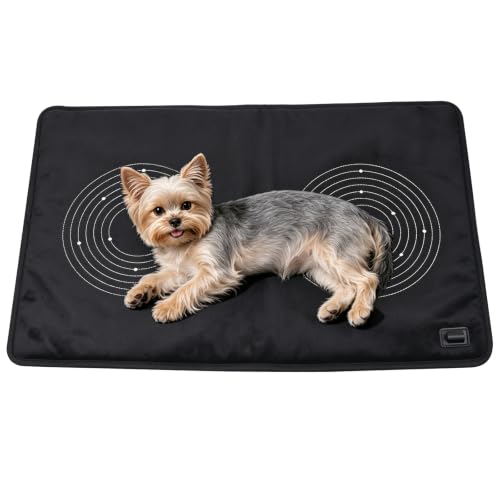

As an Amazon Associate we earn from qualifying purchases at no extra cost to you.
PEMF and Related Mats at a Glance
| Product type | Best for | What the makers state | Limits |
|---|---|---|---|
| HigherDOSE PEMF mat | Wellness-minded buyers who want a mat with a styled design and a guided relaxation routine | The maker describes a mat combining PEMF with infrared heat and natural stones such as amethyst, with preset sessions | Heating components add safety considerations; sold as a wellness item, not a medical device |
| BEMER system | Buyers who want a long-established PEMF brand and have a larger budget | The maker describes a PEMF device with a mat applicator and a control unit that runs timed sessions | Sold through authorized distributors; premium tier; follow the instructions closely |
| Full-body PEMF mats from smaller brands | Buyers who want adjustable intensity and frequency in a larger mat | Makers list adjustable frequency and intensity settings, timers and controllers | Specs vary widely; some claims are not independently supported |
| Infrared and amethyst heated mats (such as Richway Biomat) | Buyers mainly wanting soothing heat | The maker describes far-infrared heat with natural crystals; this is heat therapy, not PEMF | Different technology; heat safety guidance applies |
| Portable PEMF devices (such as Oska Pulse) | Targeted use on one area or travel | The maker describes a small wearable pulsed field device | Not a full-body mat; narrower coverage |
Product names and feature sets change, and some brands are sold under several variations. Rely on the maker’s current specification page rather than third-party summaries.
What PEMF Can and Cannot Tell You
Pulsed electromagnetic fields are studied for areas such as bone healing and certain types of pain and are used in some clinical settings under medical supervision. Systematic reviews of low-intensity consumer PEMF devices report inconsistent findings and, in many cases, low-quality evidence. A mat that feels relaxing is not the same as a treatment, and no mat should replace advice from a doctor. Do not use a PEMF mat to manage a medical condition without clinician guidance, and do not delay care for symptoms such as persistent pain, numbness or swelling.
Several groups are commonly told to avoid PEMF products or to ask a doctor first: people with pacemakers, implanted defibrillators, insulin pumps or other implanted electronic devices, pregnant women, people with epilepsy, and anyone with unexplained symptoms or an active infection. Makers typically list their own contraindications in the manual. Read these carefully and follow them.
What to Look at When Comparing Mats
Stated field strength and frequency
Makers typically list intensity in gauss or microtesla and frequency in hertz. Wide ranges sound impressive, but there is no consensus on which setting suits which purpose. Prefer makers that publish their ranges plainly, and be cautious of unexplained claims such as unusually high strengths without supporting information.
Size and coverage
Full-body mats are about the size of a yoga mat or treatment-table pad. Smaller seat or back pads cost less and fit on a chair. Think about where you will use it: a bed, floor or recliner. A full-body mat needs storage space and a flat area.
Controller and session design
Look for a clear timer, intensity levels and an automatic shut-off. Simple controllers with a few presets are easier to use than complex ones. Check whether the controller is wired or wireless and where the power cable sits relative to the mat.
Heat and safety certifications
Mats that combine PEMF with heat have extra electrical considerations. Only rely on auto shut-off, overheat protection or certifications if the maker states them, and look for listing marks such as UL or ETL where the maker supplies them. Never fold or crumple a powered mat, never use it when damaged, and do not leave it running unattended or while asleep unless the manual explicitly allows that use. If a cord frays or the mat smells hot, stop use and contact the maker. For questions on household wiring or outlets, consult an electrician.
Return policy and warranty
Because wellness effects are subjective, a clear return window and warranty matter. Purchase from authorized sellers, since counterfeit or gray-market devices may lack safety testing and support.
Budget Tiers
| Tier | What to expect | Trade-offs |
|---|---|---|
| Budget | Basic mats or small pads with few settings, often from lesser-known brands | Limited documentation, uncertain safety testing, thinner support |
| Mid-range | Full-length mats with multiple programs and clearer documentation, including some HigherDOSE-type products | More features; evidence of benefit remains limited |
| Premium | Established systems such as BEMER with applicators, controllers and distributor support | High cost; benefits remain individual and not guaranteed |
Pick X If… Decision Table
| Pick this if you… | Choose |
|---|---|
| Want a styled relaxation mat for a home routine | A HigherDOSE-style mat with preset sessions, after reading its safety guidance |
| Prefer an established PEMF brand with distributor support | A BEMER system, if the budget allows |
| Mainly want soothing heat, not PEMF | A far-infrared heated mat such as a Biomat |
| Need a small, targeted device | A portable PEMF device rather than a full mat |
| Have an implanted device or are pregnant | Talk to your doctor first; do not buy until cleared |
| Are looking for treatment of a condition | See a clinician; a consumer mat is not a substitute |
Using a Mat Sensibly
Start with the shortest, lowest session the maker lists, stop if you feel dizzy, uncomfortable or unwell, and keep a note of how you feel to judge whether it is worth keeping. Place the mat on a flat, dry surface and keep liquids away. Keep it away from credit cards, magnetic media and electronic devices if the manual warns of interference. Keep children and pets from lying on or chewing the mat and cables. Store it flat or rolled according to the manual to avoid breaking internal wiring.
Realistic expectations help. Many users report feeling relaxed, and a regular quiet break may itself be beneficial. This is not proof that the magnetic field is responsible. Compare a mat’s cost with simpler options such as stretching, heat packs, a massage or physical therapy guided by a professional.
Alternatives to a PEMF Mat
- Heating pads and infrared mats: provide soothing warmth with well-understood safety guidance.
- Massage chairs or percussion massagers: offer a physical sensation many people find relaxing.
- Foam rollers and stretching: inexpensive, evidence-friendly options for muscle tightness.
- Physical therapy or chiropractic care: professional assessment for ongoing pain.
- Sleep and stress routines: consistent sleep schedules and relaxation exercises address many of the goals people have for PEMF mats.
Common Mistakes
The biggest mistake is believing disease or cure claims. Another is ignoring safety warnings for implants or pregnancy. Some buyers choose by highest advertised intensity, even though more is not shown to be better. Others buy from unauthorized sellers, which can leave them without warranty or safety assurance. Finally, many people use heated mats while asleep despite warnings; follow the manual and use the timer.
Frequently Asked Questions
Do PEMF mats work?
Research on low-intensity consumer PEMF is mixed, and many studies are small. Some people report feeling relaxed, but this does not prove a medical effect. A doctor is the right person to ask about a health concern.
Are PEMF mats safe?
They are generally sold as low-risk wellness products, but they are not suitable for everyone. People with pacemakers or other implants, and pregnant women, are usually told to avoid them. Follow the maker’s manual and ask your doctor if you are unsure.
How long should I use a PEMF mat each day?
Follow the maker’s suggested session lengths, which often begin with short sessions. Increasing the time or intensity does not have proven benefits. Stop if you feel unwell.
What is the difference between PEMF and infrared mats?
PEMF mats generate pulsed magnetic fields, while infrared mats produce radiant heat. Some products combine both. They are different technologies with different evidence and safety considerations.
Can I sleep on a PEMF mat?
Only if the maker explicitly states that overnight or unattended use is intended. Many manuals advise against it, particularly for heated mats. Use timers and follow the safety information.
Can a PEMF mat treat pain or other conditions?
Consumer mats are not approved to treat medical conditions in the way a prescribed treatment is. Persistent pain should be assessed by a doctor. A mat should only be an additional comfort measure, if at all.
FAQ
Do PEMF mats work?
Are PEMF mats safe?
How long should I use a PEMF mat each day?
What is the difference between PEMF and infrared mats?
Can I sleep on a PEMF mat?
Can a PEMF mat treat pain or other conditions?
More from Amazon
Programs that pair well with the guide above. Offers and eligibility are set by Amazon and may change.
Free shipping on eligible items, Prime Video and more. Eligible new members can start with a free trial.
Start a Prime free trialAudiobooks and podcasts to listen to on the go. Eligible new members can start with a free trial.
Try Audible freeAd-free music streaming. Eligible new subscribers can start with a free trial.
Try Music Unlimited freeA free business account with business pricing and bulk-buying tools for work, shop or home office.
Create a business accountAs an Amazon Associate we earn from qualifying purchases.







