Key takeaways
- Travel trailers: measure from the front of the A-frame or propane cover to the rear bumper or ladder. Include the tongue jack only if the cover is designed to include it.
- Fifth wheels: the overhang and front cap shape can make a generic cover fit poorly, so choose a cover made for that rig type.
- Class A motorhomes: windshield and mirror shapes matter. Covers made for this class usually have additional front panels or mirror pockets.
- Class B and C: a Class C cab-over adds height. Choose a cover that lists Class C explicitly rather than guessing from the length range.
- Toy haulers: rear ramps and extra roof equipment can push the real length above the brochure number.
The best RV cover for most owners is a breathable, multi-layer top panel cover from an established maker such as Classic Accessories or ADCO, sized to the exact length range of the rig; budget buyers who park for a short season can use a lighter polyester cover, while anyone storing outdoors year-round in sun, snow or heavy rain should step up to a premium multi-layer cover with reinforced seams and straps. The right pick depends less on brand than on rig type, storage climate and how accurately the cover is sized.
Our top picks

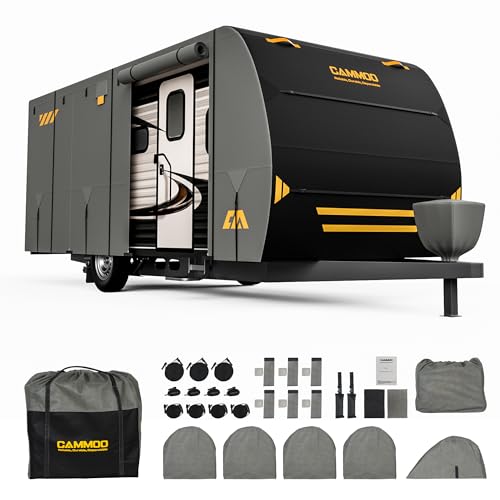

As an Amazon Associate we earn from qualifying purchases at no extra cost to you.
RV Covers at a Glance
| Cover type | Best for | Typical construction (as makers describe it) | Main limits |
|---|---|---|---|
| Classic Accessories PermaPRO / OverDrive line | Year-round outdoor storage of travel trailers, fifth wheels and Class A/C motorhomes | Multi-layer breathable fabric with a stronger top panel, zippered access panels and tie-down straps | Heavier to lift; needs a ladder and a helper |
| ADCO SFS AquaShed / Tyvek-style covers | Owners who want a lighter breathable cover with a long track record | Spun or laminated polypropylene-type fabrics; makers stress breathability and water resistance | Lighter fabrics can wear faster at corners and edges |
| Polyester budget covers | Short seasonal storage, mild climates, garage or carport use | Single-layer or light multi-layer polyester with UV coating | Less tear resistance; some can trap moisture if not breathable |
| Fitted sectional covers (roof only) | Owners who mainly want to protect the roof membrane and seals | Roof-and-upper-sides panel with straps | Does not protect lower sides or tires from sun |
| Tire and wheel covers | Add-on for any outdoor-stored rig | Vinyl or polyester discs with ties | Only protect tire sidewalls, not the body |
What an RV Cover Actually Does
An RV spends most of its life stationary, and the roof takes the worst of it. Ultraviolet light dries out sealants and roof membranes, grit and tree debris scratch the finish, and rain or snow can sit in joints. A good cover cuts the UV and debris load and keeps moisture moving away from the surface. Reviewers who cover the rig consistently describe two failure modes: covers that tear because they flap in wind, and covers that hold humidity against the roof. Both are design problems you can screen for before buying.
A cover is not a substitute for maintenance. Roof seals still need periodic inspection, and the cover itself should be removed and the rig aired out from time to time. The maker’s manual for the RV may also contain guidance on roof care and covers, and it is worth reading before you buy.
Getting the Size Right
Sizing is where most disappointment starts. Covers are normally sold in length ranges rather than exact lengths, and the correct measurement is the full exterior length of the body including the bumper, rear ladder, spare tire, bike rack or anything else that sticks out, not the length printed in the sales brochure. Makers typically also list height and width limits, so measure those as well, including roof air conditioners, vents, satellite domes and antennas.
- Travel trailers: measure from the front of the A-frame or propane cover to the rear bumper or ladder. Include the tongue jack only if the cover is designed to include it.
- Fifth wheels: the overhang and front cap shape can make a generic cover fit poorly, so choose a cover made for that rig type.
- Class A motorhomes: windshield and mirror shapes matter. Covers made for this class usually have additional front panels or mirror pockets.
- Class B and C: a Class C cab-over adds height. Choose a cover that lists Class C explicitly rather than guessing from the length range.
- Toy haulers: rear ramps and extra roof equipment can push the real length above the brochure number.
If you are between two sizes, most owners and reviewers lean toward the size that fits the measured length, because an oversized cover flaps and chafes, while an undersized one pulls on seams and leaves the lower body exposed.
Materials and Layers
Breathability versus waterproofing
A fully waterproof, non-breathable cover can trap condensation. Most major makers therefore describe their covers as water resistant and breathable, and some use a multi-layer top panel with a lighter side panel. Plastic tarps are the cautionary example: they shed water but hold moisture and abrade the finish when they move.
UV resistance
Makers generally add UV inhibitors and some mention UV-resistant coatings. Look for a stated UV treatment on the top panel, which sees the most sun, and recognize that any cover fades and weakens over several seasons.
Seams, zippers and straps
Reinforced seams, elastic hems, buckle straps that run under the rig, and zippered access panels near the entry door make the cover easier to live with. Straps matter in wind. Without them, a cover can lift and abrade the paint and decals.
Budget Tiers
| Tier | What you usually get | Who it suits |
|---|---|---|
| Budget | Lighter polyester, fewer layers, basic straps, often no access zippers | Short storage season, garage or covered parking, mild weather |
| Mid-range | Multi-layer breathable fabric, UV treatment, zippered panels, more straps | Most owners storing outdoors for months each year |
| Premium | Heavier top panel, reinforced seams, extra tie-downs, warranties listed by the maker | Year-round outdoor storage in sun, snow or high wind |
Warranty terms vary by maker and often exclude damage from wind or improper installation. Read the terms for the exact model you are considering.
Installation and Care
- Work with at least two people, and use a stable ladder rated for your weight. Never climb on a wet or icy roof.
- Clean and dry the rig before covering it. Dirt trapped underneath acts like sandpaper.
- Pad sharp corners, roof racks and antenna edges where the cover can snag.
- Fasten every strap and the under-body tie-downs so the cover cannot balloon in the wind.
- Leave vents or access points as the maker describes, and remove the cover periodically to air out the rig.
- Wash the cover only as the maker directs. Many say to use mild soap and air dry, not a dryer.
Safety note: do not cover a hot engine, running generator or any rig with a running heater. Disconnect shore power and follow the RV manual for storage procedures. If your RV has a roof-mounted solar array, confirm in the cover maker’s instructions that the model suits it, and keep wiring clear of strap routes.
Pick X If… Decision Table
| Pick this | If you… |
|---|---|
| Classic Accessories PermaPRO-type multi-layer cover | Store outdoors for most of the year and want a heavier top panel with straps and access zippers |
| ADCO breathable cover | Want a lighter cover that is easier to lift and has a long-standing reputation with owners |
| Budget polyester cover | Park under a carport or in a mild climate for a few months at a time |
| Roof-only cover | Mainly worry about roof membrane and sealant wear, and want something easy to install |
| Custom or made-to-fit cover | Have an unusual rig, extra roof gear or a very tight fit requirement |
Alternatives to a Full Cover
- Covered storage or a carport: the strongest protection, if you have the space and budget. A rig in a covered bay usually needs no cover at all.
- Roof-only cover plus tire covers: a lighter approach that protects the most exposed surfaces.
- Indoor storage: a storage facility with a roof removes weather and UV from the equation.
Common Mistakes
- Buying by brochure length instead of measured length.
- Using a non-breathable tarp for long-term storage.
- Skipping the straps, then dealing with flapping and chafing in the first strong wind.
- Covering a dirty or damp rig, which can leave marks or encourage mildew.
- Forgetting height and roof equipment when choosing the size.
Frequently Asked Questions
Should I cover my RV all year?
If it sits outside for long periods, a breathable cover can reduce UV and debris exposure on the roof and sides. If you use the rig often, a cover can be a chore, and some owners use roof-only protection instead. Always leave the rig clean and dry before covering it.
Are plastic tarps a good substitute?
Reviewers and cover makers generally advise against them for long-term storage. Tarps trap moisture and can abrade finishes when they flap. A cover designed for RVs is built to breathe and has straps and tailored panels.
How do I know which size to buy?
Measure the full exterior length including the bumper, ladder and anything that sticks out, then pick the size range the maker lists for that measurement. Also compare height and width limits, especially for rigs with large roof equipment.
Can a cover damage my RV?
Poor fit, missing straps or a dirty rig can cause scuffing and wear. Padding sharp corners and securing all straps reduces that risk. If you see wear marks, adjust the cover or consult the maker.
How long do RV covers last?
Makers usually list warranty terms rather than guaranteed lifespans, and real life depends on sun, wind and storage conditions. Owners in strong sun often report fading and thinning after several seasons, so plan on replacing the cover eventually.
Do I need a cover if I store in a garage?
A fully enclosed garage generally removes the need for a heavy outdoor cover. A light dust cover may still help, but it is optional, and the main priority is ventilation to avoid trapped moisture.
FAQ
Should I cover my RV all year?
Are plastic tarps a good substitute?
How do I know which size to buy?
Can a cover damage my RV?
How long do RV covers last?
Do I need a cover if I store in a garage?
More from Amazon
Programs that pair well with the guide above. Offers and eligibility are set by Amazon and may change.
Free shipping on eligible items, Prime Video and more. Eligible new members can start with a free trial.
Start a Prime free trialAudiobooks and podcasts to listen to on the go. Eligible new members can start with a free trial.
Try Audible freeAd-free music streaming. Eligible new subscribers can start with a free trial.
Try Music Unlimited freeA free business account with business pricing and bulk-buying tools for work, shop or home office.
Create a business accountAs an Amazon Associate we earn from qualifying purchases.