
Key takeaways
- Powered movement reduces the physical effort of getting in and out, which can help the user and any caregiver.
- Suction cups need a smooth, non-textured tub surface to hold. Textured or slip-resistant floors can prevent a lift from sticking. Check the maker’s guidance on surface compatibility before buying.
- A battery must be kept charged. Most makers describe how many cycles a charge supports, and users should treat that figure as a guide and recharge between baths as directed.
- The lift reduces the water depth available when seated at the lowest position. Some users find the water level lower than expected.
Choose an inflatable or compact portable bath lift if you travel, share a bathroom or have limited storage; choose a fixed, motorized reclining bath lift if you have a standard tub and need reliable daily support getting down to and up from the bath floor. The right answer depends on the person’s mobility, the tub shape, and whether a caregiver is usually present. This guide compares the main types of bath lifts, well-known makers, fit checks, safety notes and trade-offs by budget tier. Anyone with a medical condition should discuss the choice with an occupational therapist or doctor before buying.
Our top picks



As an Amazon Associate we earn from qualifying purchases at no extra cost to you.
Bath Lifts at a Glance
| Type | Best for | Key stated features | Limits |
|---|---|---|---|
| Motorized reclining bath lift (for example Drive Medical Bellavita) | Daily use with a standard tub; people who cannot lower themselves safely | Battery-powered seat with a hand control, suction cups, reclining backrest | Needs a flat tub floor; requires charging; bulky to store |
| Inflatable bath lift (for example Aquatec-style or Mobb-style inflatables) | Occasional use, travel, small bathrooms | Air-filled seat inflated and deflated with a hand pump or battery pack | Needs careful setup; tub shape matters; may offer less lateral support |
| Bath board or transfer bench with a seat | People who can stand and sit but need help getting over the tub wall | Bench spans tub edges; some include a hand shower holder | Does not lower a person to the tub floor |
| Bath seat or bath chair | Those who can sit unaided but need support or a shower position | Fixed or adjustable height legs with suction tips | Not a lift; reduces the usable bathing depth |
What a Bath Lift Does
A bath lift raises and lowers a person within the tub. This is different from a bath chair, which only provides a seat at a set height. For someone who enjoys a soak but cannot manage the descent or ascent safely, a lift can restore independence or reduce the physical strain on a caregiver. Makers typically state a maximum user weight, which commonly falls between roughly 300 and 400 pounds depending on the product, so read the specification sheet for the exact limit on the model you are considering.
Motorized Reclining Bath Lifts
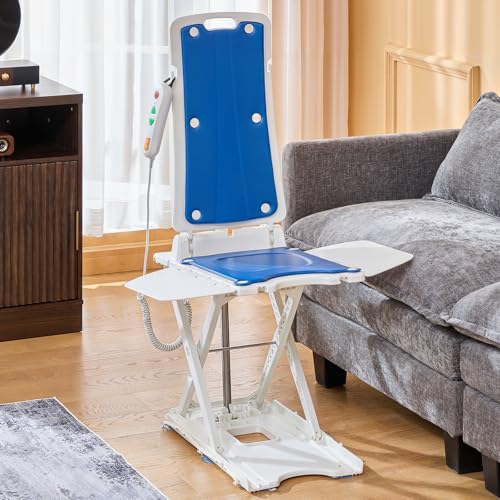
The Drive Medical Bellavita is one of the better-known motorized options and is often cited in buyer guides for its reclining seat and compact folded profile. Other makers, such as Mobb Health Care and Aquatec, also sell battery-powered lifts. Typical stated features across this category include a rechargeable battery, a waterproof hand control, a backrest that reclines for easier positioning, suction cups that grip the tub floor, and a seat that folds flat for storage.
Reviewers highlight several benefits and trade-offs:
- Powered movement reduces the physical effort of getting in and out, which can help the user and any caregiver.
- Suction cups need a smooth, non-textured tub surface to hold. Textured or slip-resistant floors can prevent a lift from sticking. Check the maker’s guidance on surface compatibility before buying.
- A battery must be kept charged. Most makers describe how many cycles a charge supports, and users should treat that figure as a guide and recharge between baths as directed.
- The lift reduces the water depth available when seated at the lowest position. Some users find the water level lower than expected.
Inflatable Bath Lifts
Inflatable bath lifts take a different approach: a seat that fills with air and raises the bather, then deflates to lower them. Aquatec-branded and Mobb-style inflatables appear in many comparison articles. They are lighter and easier to store than rigid motorized lifts, and some can be packed for travel.
The main trade-offs are stability and setup. An inflatable seat can feel less firm than a rigid seat, and it relies on a hand control or battery pack. Tub shape matters: tubs with a sloped back or deep recesses may not work well. Makers list a minimum tub width and a recommended tub length. Occupational therapists often suggest trying a lift in person if possible, because positioning and comfort vary between users.
Bath Boards, Transfer Benches and Seats
If the main difficulty is stepping over the tub wall rather than getting down to the floor, a transfer bench might be a better and simpler solution. The bench sits across the tub with two legs inside and two outside. The user sits on the outside end, slides across and then bathes with a hand-held shower. Drive Medical, Medline, Carex and other medical-supply brands make benches in various widths. Benches avoid batteries and motors, but they do not help someone who wants to soak in a full bath.
A bath seat or chair offers support during a shower or shallow bath. These products are inexpensive, simple and widely available, but they are not lifts. They suit a person who can sit down and stand up unaided and wants a stable surface.
Fit and Compatibility Checks
- Measure the tub floor length and width at the bottom, not the rim. Lifts rest on the floor, and the usable flat area is what counts.
- Look at the tub surface. Smooth porcelain or acrylic usually works with suction cups, while heavily textured anti-slip surfaces may not.
- Check the tub depth and rim height, because a lift can raise the user only so far.
- Confirm the maximum user weight and any stated height range with the maker. Do not exceed the stated limit.
- Think about storage. A lift that folds or deflates may fit in a cabinet, while a rigid lift may need floor space.
- Check for pools and soaking tubs with curved sides, which many lifts do not support.
Safety Notes
Bathing carries a risk of slips and falls. A bath lift is not a substitute for supervision when a person has balance, cognitive or medical concerns. Follow the manual for setup, test the lift empty before each use, and make sure the suction cups grip. Keep the battery charged, do not use a damaged lift, and keep electrical components away from standing water except as the maker states. If you rely on a lift because of a health condition, consult a doctor or occupational therapist about whether it is appropriate and how to use it. Where a lift involves electricity, have a qualified electrician check any outlets used for charging if you have concerns about bathroom wiring.
Cleaning and Care
Rinse the lift after each use, wipe it with mild soap and a soft cloth, and let it dry before storage. Avoid harsh chemicals unless the manual allows them. Inspect suction cups for cracks and replace worn parts through the maker. For inflatable models, check seams and valves for leaks, and store them clean and dry.
Budget Tiers
| Tier | What you typically get | What you give up |
|---|---|---|
| Budget | Bath seats, simple benches, basic inflatable models | No powered lift on the cheapest options; less support |
| Mid-range | Inflatable lifts with hand control, basic motorized lifts | May have fewer recline positions or shorter battery life |
| Premium | Motorized reclining lifts, higher weight limits, more adjustments | Higher cost, heavier and bulkier to store |
Pick X If You Need…
| Pick this | If you need |
|---|---|
| Motorized reclining lift (Drive Medical Bellavita style) | Daily support lowering and raising in a standard tub |
| Inflatable lift | Compact storage, travel or occasional use |
| Transfer bench | Help stepping over the tub wall without a full soak |
| Bath seat or chair | Basic seated support for a user who can lower themselves |
| Walk-in tub or tub conversion | Long-term solution when the tub itself is the barrier |
Alternatives to Consider
- Walk-in tub or tub-to-shower conversion: Costs more and requires installation, but removes the step-over problem entirely.
- Grab bars and non-slip mats: Properly installed grab bars into wall studs can help many people, and they pair well with a bench.
- Home care or occupational therapy assessment: A professional can suggest the right equipment and adjust the bathroom layout.
Frequently Asked Questions
Is a bath lift covered by insurance?
Coverage varies by plan and country, and many insurers treat bath lifts as non-essential. Ask your insurer or a medical supplier whether a prescription from a doctor changes the answer.
Will a bath lift work in any tub?
No. Tub shape, size and surface matter. Makers list compatible tub dimensions and surface types, so compare those against your tub floor before buying.
How long does the battery last?
It depends on the model and the user’s weight. The maker states the number of cycles per charge, and users should recharge after each bath as directed in the manual.
Can a caregiver operate the lift?
Most motorized lifts include a handheld control that either the user or a caregiver can operate. Check that the control is easy to reach and use for the person who will be doing it.
Is an inflatable lift as safe as a motorized one?
Both are designed for bathing when used as directed, but they behave differently. An inflatable seat may feel less rigid, so it suits users with good trunk control. When in doubt, ask an occupational therapist.
How do I clean a bath lift?
Rinse it, wipe it with mild soap and let it dry. Follow the manual for any disinfectant and avoid abrasive cleaners that could damage the fabric or suction cups.
FAQ
Is a bath lift covered by insurance?
Will a bath lift work in any tub?
How long does the battery last?
Can a caregiver operate the lift?
Is an inflatable lift as safe as a motorized one?
How do I clean a bath lift?
More from Amazon
Programs that pair well with the guide above. Offers and eligibility are set by Amazon and may change.
Free shipping on eligible items, Prime Video and more. Eligible new members can start with a free trial.
Start a Prime free trialAudiobooks and podcasts to listen to on the go. Eligible new members can start with a free trial.
Try Audible freeAd-free music streaming. Eligible new subscribers can start with a free trial.
Try Music Unlimited freeA free business account with business pricing and bulk-buying tools for work, shop or home office.
Create a business accountAs an Amazon Associate we earn from qualifying purchases.







