Key takeaways
- 7-foot: Common for bars and family rooms. Easiest to fit.
- 8-foot: The standard home size in many catalogs. A good balance of play and space.
- 9-foot: Tournament size in professional play. Needs a large room, but suits experienced players.
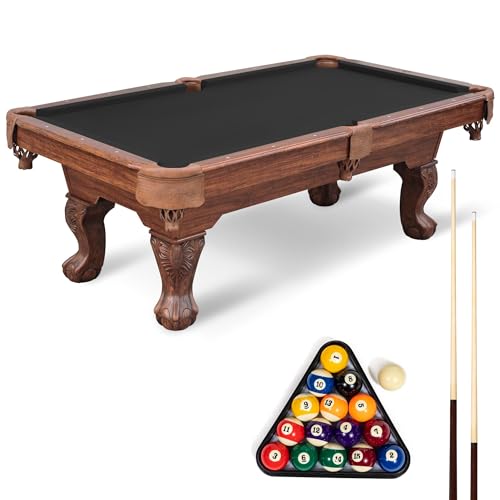
For a dedicated game room, a slate-bed table from a established maker such as Brunswick, Olhausen or Diamond is the most durable choice, while a compact non-slate table from brands like Hathaway, Playcraft or Fat Cat suits families who want a good play surface without the weight and installation cost. The right table is mostly decided by room size, surface material and how seriously you play.
Pool tables are large, heavy and difficult to move, so a wrong choice is expensive. This guide covers the features that matter, how to size the room and what the trade-offs look like by budget tier.
Our top picks


As an Amazon Associate we earn from qualifying purchases at no extra cost to you.
At a Glance
| Table type | Best for | Key points | Limits |
|---|---|---|---|
| Full slate, hardwood frame (Brunswick, Olhausen, Diamond, Connelly) | Serious players, long-term home use | Stable playing surface, professional installation, re-coverable cloth | Very heavy, needs reinforced floor and installer |
| Slate-look or MDF-bed table (Hathaway, Playcraft, Legacy lines) | Families and casual play | Lighter, often sold in boxes with self-assembly | Bed can warp with humidity; less stable than slate |
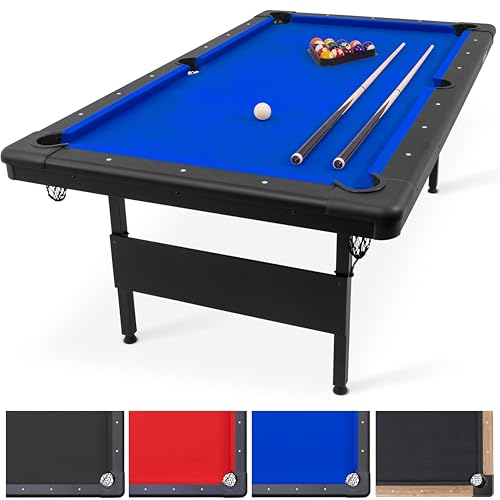
| Folding or convertible table | Small homes, multi-use rooms | Folds or converts to dining top | Compromise on playing quality |
| Compact 6-7 foot table | Basements and apartments | Fits smaller rooms, easier to move | Shorter cue strokes, less realistic play |
| Bar-box coin-operated style | Pubs and clubs | Smaller 7-foot design, rugged | Not usually necessary at home |
Table Size and Room Size
Table sizes are named by the length of the rails, and the playing field is typically half as wide as it is long. A standard rule is that the room should extend at least a cue length plus room to swing on every side of the table. Table makers publish recommended minimum room dimensions for each size, and following those figures is the most reliable approach.
- 7-foot: Common for bars and family rooms. Easiest to fit.
- 8-foot: The standard home size in many catalogs. A good balance of play and space.
- 9-foot: Tournament size in professional play. Needs a large room, but suits experienced players.
Always measure the room, then account for doors, stairs and ceiling height, because installers must carry in heavy slate pieces. Light fixtures, furniture and cue racks also reduce usable space.
Surface and Construction
Slate versus non-slate
Slate is a dense stone that stays flat and does not respond to temperature and humidity swings the way wood composites do. Quality tables typically use three slate pieces laid on a solid frame, and the cloth is stretched over the top. Non-slate tables use engineered wood composites and are lighter and cheaper but can warp over time, particularly in basements. Independent billiards retailers and reviewers consistently describe slate as the standard for serious play.
Frame and legs
Hardwood frames and solid legs resist flex and keep the table level over decades. Look for adjustable leg levelers, since floors are rarely perfectly flat, and check how the legs attach to the frame.
Cushions and cloth
Rubber cushions affect rebound consistency. Cloth comes in several qualities, from entry-level napped felt to worsted wool and blends used on professional tables. Higher quality cloth plays faster and wears better, but it also costs more.
Pockets and rails
Leather or rubber pockets with proper drop pockets keep play consistent. Some entry tables use ball-return systems, which are practical but affect the style of the table.
Installation and Moving
Slate tables are usually installed by trained technicians, since setting slate seams, leveling the bed and stretching cloth are specialized tasks. Many dealers offer installation, and some makers tie warranty coverage to professional assembly. Lighter tables can be assembled at home, but leveling still matters. Floor strength is another factor: a slate table can weigh several hundred pounds, and a structural professional should confirm that upper floors can carry the load.
Budget Tiers
- Budget: Compact and folding tables for casual play, usually non-slate. Play quality varies and these are best for children and occasional games.
- Mid-range: Larger non-slate tables with better cloth and cushions, or entry slate tables from established dealers.
- Premium: Full-slate hardwood tables from makers such as Brunswick, Olhausen, Diamond and Connelly, installed by professionals and designed to last decades.
Accessories You Will Need
Most tables ship with a basic set of balls, cues, chalk and a triangle, but quality varies. Consider a better cue set, a brush for cloth care, a table cover and a wall rack. If the room is also used for other activities, a dining-top conversion can add value without adding a new piece of furniture.
Care and Maintenance
- Brush the cloth in the direction of the grain regularly and vacuum lightly.
- Cover the table when not in use to protect from dust and sunlight.
- Keep humidity stable, especially for non-slate tables.
- Re-level after any shift of the floor or furniture.
- Replace worn cloth, as old cloth slows play and affects accuracy.
Pick X If… Decision Table
| Pick this | If you… |
|---|---|
| Full-slate 8-foot table | Play often, have a dedicated room and want long-term value |
| 9-foot slate table | Are an experienced player with a large room |
| 7-foot non-slate table | Want a family table for casual games in a modest room |
| Folding or convertible table | Share the space with other uses |
| Used slate table | Want slate quality for less and can arrange moving and re-covering |
What Reviewers Commonly Say
Billiards retailers and enthusiast outlets generally advise buyers to put money into the bed, frame and cloth before extras like decorative carving. They also warn that very inexpensive tables often feel unlike a real table because the playing surface is thin and cushions are inconsistent. Treat these as general guidance, and check each maker’s stated specifications for the exact model you are considering.
Alternatives
- Used or refurbished slate table: Often the best value when you can arrange transport and installation.
- Table tennis or air hockey: Better for tight spaces or children.
- Shuffleboard table: A long, narrow game that fits hallways and basements.
Playing Surface Details That Affect Feel
The cloth, cushions and slate all combine to determine how a table plays. Fast cloth lets the ball roll further and rewards precise stroke control, while slower cloth is more forgiving for casual players. Cushion rubber influences how the ball leaves the rail, and consistent rebound across the table is a sign of careful manufacturing. If possible, visit a showroom and roll a few balls across a table before you buy.
Pocket size is another factor. Tighter pockets suit skilled players and make the game harder, while wider pockets keep games moving for families and beginners. Manufacturers list pocket openings in their specifications, and some bar-style tables use smaller pockets than home models.
Leveling and Floors
Even a premium table plays poorly if it is not level. Installers use shims under the legs and check each slate seam. Because floors can shift with seasons, expect to re-level occasionally. Basements with concrete floors tend to be steady, while wooden floors may flex. Using leg pads and keeping heavy furniture away from the table can reduce movement.
Warranty and Dealer Support
Ask what the warranty covers, whether the maker offers installation, and whether a local service technician can handle re-covering and repairs. A table is a decades-long purchase, and a dealer that can service it is worth considering when comparing makers. Also confirm delivery terms for heavy items, including who carries the slate into the room.
Finally, set a realistic total budget that includes delivery, installation, a cue set, a cover and lighting. Buyers often focus on the table price alone and are surprised by the extras, so list every item before you commit and compare complete packages from several dealers.
Frequently Asked Questions
How much room do I need for a pool table?
You need the table footprint plus clearance for a full cue stroke on all sides. Makers publish recommended room dimensions for each table size, and those are the best guide. Measure carefully before ordering.
Is slate really necessary?
For serious play, most billiards experts say yes, because slate stays flat and consistent. For casual family use, a well-made non-slate table can be enough. Climate and floor conditions also play a role.
Can I assemble a pool table myself?
Lightweight tables are designed for do-it-yourself assembly. Slate tables are heavy and need precise leveling, so professional installation is usually advised and may be required for warranty coverage.
Will a pool table damage my floor?
Large tables are heavy and concentrate weight on the legs. On upper floors or older homes, ask a structural professional whether the floor can carry the load. Use leg pads where the maker suggests.
How often should I replace the cloth?
It depends on use and cloth quality. When the cloth looks worn, shiny or torn, or when the balls roll unevenly, it is time to re-cover. Heavy players may do so every few years.
What size table is best for a home?
An 8-foot table is a common choice for dedicated game rooms, while a 7-foot table fits more homes. Choose the largest size that fits your room with proper cue clearance.
FAQ
How much room do I need for a pool table?
Is slate really necessary?
Can I assemble a pool table myself?
Will a pool table damage my floor?
How often should I replace the cloth?
What size table is best for a home?
More from Amazon
Programs that pair well with the guide above. Offers and eligibility are set by Amazon and may change.
Free shipping on eligible items, Prime Video and more. Eligible new members can start with a free trial.
Start a Prime free trialAudiobooks and podcasts to listen to on the go. Eligible new members can start with a free trial.
Try Audible freeAd-free music streaming. Eligible new subscribers can start with a free trial.
Try Music Unlimited freeA free business account with business pricing and bulk-buying tools for work, shop or home office.
Create a business accountAs an Amazon Associate we earn from qualifying purchases.