
Key takeaways
- Gravity feeders: Grain flows down from a hopper into a tray or ports as animals eat. They are simple and cheap, but they release feed continuously and can attract pests.
- Timed (spin) feeders: A motor spins a plate or drops a measured amount at set times. They save feed and can be programmed for dawn and dusk.
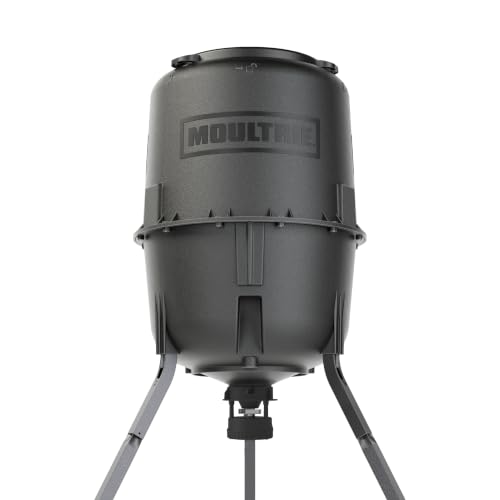
- Tripod feeders: A barrel on legs with a spinner or gravity port, popular for deer at ground level.
- Hanging feeders: A hopper hung from a branch or frame. Easier to place, but animals must reach the spinning plate.
- Directional or trough feeders: Used for pellets and fixed rations, often for deer management programs.
- Small game feeders: Compact feeders or quail and pheasant feeders designed with openings sized for smaller birds.
For most land managers with a few acres, a tripod or hanging timed feeder from a brand such as Moultrie or Wildgame Innovations covers deer and turkey, a gravity or barrel feeder is the low-cost choice for pheasants, quail and other small game, and a solar-powered digital timer is the feature most worth paying extra for. This guide explains the main feeder types, what the makers say about capacity and timers, and the legal and safety points to check before you put one out.
Our top picks



As an Amazon Associate we earn from qualifying purchases at no extra cost to you.
Check the rules first
Feeding wildlife is regulated differently from place to place. Some states and provinces restrict or ban baiting during hunting seasons, limit feeding of deer because of disease concerns, or prohibit feeding bears. Before buying, check your state wildlife agency’s current rules. Nothing in this guide is legal advice, and the rules, not the product, determine what you can do with a feeder.
Types of game feeders
- Gravity feeders: Grain flows down from a hopper into a tray or ports as animals eat. They are simple and cheap, but they release feed continuously and can attract pests.
- Timed (spin) feeders: A motor spins a plate or drops a measured amount at set times. They save feed and can be programmed for dawn and dusk.
- Tripod feeders: A barrel on legs with a spinner or gravity port, popular for deer at ground level.
- Hanging feeders: A hopper hung from a branch or frame. Easier to place, but animals must reach the spinning plate.
- Directional or trough feeders: Used for pellets and fixed rations, often for deer management programs.
- Small game feeders: Compact feeders or quail and pheasant feeders designed with openings sized for smaller birds.
At a glance
| Type or line | Best for | Key stated features | Limits |
|---|---|---|---|
| Moultrie tripod and hanging feeders | Deer and turkey properties | The maker lists digital timers, optional solar panels and steel or plastic barrels in several capacities | Model capacity varies; check lids for raccoon resistance |
| Wildgame Innovations feeders | Budget to mid-range timed feeders | Digital timers, battery operation, tripod and hanging models | Plastic components may wear faster in harsh conditions |
| Texas Hunter feeders | Larger, heavy-duty deer feeders | Steel barrels and tripods; kits that include timers and motors | Heavier and harder to transport |
| American Hunter and Boss Buck | Budget buyers wanting a simple gravity or timer feeder | Drum or barrel designs, with optional timers | Quality and durability vary by tier |
| Wild bird and quail gravity feeders | Pheasant, quail and ground-feeding birds | Hopper over low tray; some are sized for chicks and small game | Feed exposure to weather |
Timers, power and batteries
Digital timers are the most useful upgrade. They let you set feeding times and the number of seconds the motor runs, which reduces waste and can keep animals coming at set windows. Most use a 6-volt battery, and many makers sell solar panels to keep the battery charged. Reviewers commonly advise a feeder with a sealed battery compartment, since moisture damages electronics. Follow the maker’s instructions on battery type and disposal.
Capacity and construction
Barrel feeders come in a range of capacities, with large drums holding hundreds of pounds of corn. Larger capacity means fewer refills but a heavier unit to move. Steel is stronger and more resistant to chewing but can rust; plastic is lighter and does not rust but can crack or be chewed in some conditions. Check lid fit and whether the feeder includes a funnel or a screen under the spin plate to prevent clogging.
Choosing for the animal
Deer feeders typically use a spin plate or broadcast pattern designed for corn or pellets. Turkey feeders may place feed lower and use different seed. Pheasants and quail need openings sized for birds, and in some areas ground-level feed is required. If you want to avoid attracting raccoons, hogs or bears, choose a design with a hanging height and sturdy lids, and consult wildlife authorities if you live in bear country.
Budget tiers
- Budget: Basic gravity barrels or simple hanging feeders with an optional timer kit.
- Mid-range: Complete tripod feeders from Moultrie or Wildgame Innovations with a digital timer included.
- Premium: Heavy-duty steel tripod feeders, large capacity drums, and units with solar charging and protective housings.
Placement, safety and care notes
- Placement: Choose a stable, level location with good visibility and legal clearance from property lines, water and roads, per local regulations.
- Feed storage: Keep feed dry. Wet or moldy grain can be harmful, especially to birds and deer.
- Pests and predators: Use lids, higher positioning or legs with guards to reduce raiding by raccoons and rodents.
- Safety: Heavy barrels can tip. Anchor the legs and follow the maker’s assembly instructions.
- Batteries and solar: Follow the maker’s guidance. Remove batteries during long storage.
Pick X if…
| If you… | Pick |
|---|---|
| Manage deer on a few acres and want convenience | Tripod feeder with a digital timer |
| Have limited ground access | Hanging feeder |
| Want to save feed | Timed spin feeder with a short run time |
| Feed pheasant or quail | Small-game gravity feeder |
| Are on a tight budget | Basic gravity barrel |
| Need low maintenance in remote areas | Solar-powered timer model |
Alternatives
- Food plots: Planting clover, brassicas or grains provides forage without a feeder, subject to local rules.
- Mineral stations: Where legal, some managers use mineral licks instead of feeders.
- Water sources: Water points can attract wildlife and may complement or replace feeding.
Feed choices and storage
Feeders only work as well as the feed in them. Corn is the most common choice for deer and hogs because it is widely available, though wildlife agencies in some regions discourage or restrict certain feeds. Protein pellets, soybeans and mixed seeds are used in managed programs. For game birds, cracked corn, milo and small grains are common. Whatever you use, keep feed dry and sealed until it goes into the hopper, since damp grain can grow mould that is harmful to animals. Ask your local wildlife office which feeds are allowed and which seasons or distances apply.
Maintenance routine
Check a feeder every time you refill it. Clear any clumped feed from the spin plate and funnel, inspect wires and battery terminals for corrosion, and look for chewed seals or cracks. Reviewers who cover hunting gear often mention that the most common failure is a battery that has run down or a motor jammed with wet feed, so a quick routine saves lost days. At the end of the season, empty the barrel, clean it and store the electronics indoors according to the maker’s instructions.
Moving and anchoring feeders
Large steel barrels are awkward to move, so decide on a position before filling. Level the legs, use ground stakes if the maker provides them, and add a guard or brace if animals regularly knock the legs. Hanging feeders should be hung from a branch or frame rated for the weight, and the cable should not be wrapped around a living tree in a way that damages it. Keep the hopper at a height that matches the species and local rules, and consider a trail camera to monitor what visits.
Cost of ownership
The feeder itself is only part of the cost. Feed, replacement batteries, extra funnels and solar panels add up over a season. A timer that limits feed to a few short bursts a day can reduce consumption noticeably compared with a gravity feeder, which is why many buyers consider the timer worth paying for. If a feeder will be left unattended for weeks, a larger barrel and solar charging can reduce trips, while a small hanging feeder is fine for weekend use.
Frequently Asked Questions
Is it legal to use a game feeder?
It depends on where you live and the season. Some places restrict feeding or ban baiting during hunting season, so check your state wildlife agency before buying or placing a feeder.
How much feed does a barrel feeder hold?
Capacities vary widely by model, from about the size of a small bucket to large drums holding hundreds of pounds of corn. Look at the capacity the maker lists and compare it with how often you want to refill.
Do I need a timer?
A timer is not essential but is widely recommended because it limits feed waste and sets a feeding window. Gravity feeders can work without one, though they release feed more continuously.
How do I keep raccoons out?
Choose a feeder with a tight lid and consider hanging it higher or adding legs with guards. No design is completely raccoon-proof, so check and refill lids regularly.
Can solar panels power a feeder?
Yes, many makers sell solar panels that trickle charge the battery. They work best in sunny locations with little tree cover.
What feed should I use?
This depends on the species and the rules where you live. Biologists and state agencies often advise using feed that suits the animal and storing it dry, so consult local wildlife guidance.
FAQ
Is it legal to use a game feeder?
How much feed does a barrel feeder hold?
Do I need a timer?
How do I keep raccoons out?
Can solar panels power a feeder?
What feed should I use?
More from Amazon
Programs that pair well with the guide above. Offers and eligibility are set by Amazon and may change.
Free shipping on eligible items, Prime Video and more. Eligible new members can start with a free trial.
Start a Prime free trialAudiobooks and podcasts to listen to on the go. Eligible new members can start with a free trial.
Try Audible freeAd-free music streaming. Eligible new subscribers can start with a free trial.
Try Music Unlimited freeA free business account with business pricing and bulk-buying tools for work, shop or home office.
Create a business accountAs an Amazon Associate we earn from qualifying purchases.







