
Key takeaways
- Fit and comfort: hearing aids sit in the ear all day. Look at available ear tip sizes, trial periods and return policies.
- Rechargeable or disposable batteries: rechargeable units remove the hassle of tiny batteries. Disposable zinc-air batteries offer a quick swap and may last longer between changes for some models, but need to be bought regularly. The maker lists battery life; actual performance varies with use and streaming.
- App and controls: many OTC devices rely on a smartphone app for setup and adjustments. Confirm phone compatibility.
- Noise handling: directional microphones and noise reduction help in restaurants and group settings, but no device removes all background noise. Reviewers generally say expectations should be realistic.
- Bluetooth streaming: allows calls and media to stream to the aids. Check whether it supports your phone type.
- Support and warranty: some makers include remote support from hearing professionals. Prescription devices come with in-person adjustment visits.
- Water and dust resistance: makers state ratings, usually not full waterproofing. Keep them away from showers and pools unless the manual says otherwise.
- Tinnitus features: some devices offer masking sounds. Persistent tinnitus should be discussed with a doctor.
For adults with self-perceived mild to moderate hearing loss who want a lower-cost route, over-the-counter (OTC) hearing aids from brands such as Sony, Eargo, Lexie and Jabra Enhance are the practical starting point, while people with more complex, severe or asymmetrical hearing loss are better served by prescription-grade devices fitted by an audiologist, from makers such as Phonak, Oticon, Signia, ReSound and Starkey. Apple’s AirPods Pro hearing aid feature suits people with mild to moderate loss who already use the earbuds. This guide is general information and not medical advice; a hearing test comes first.
Our top picks


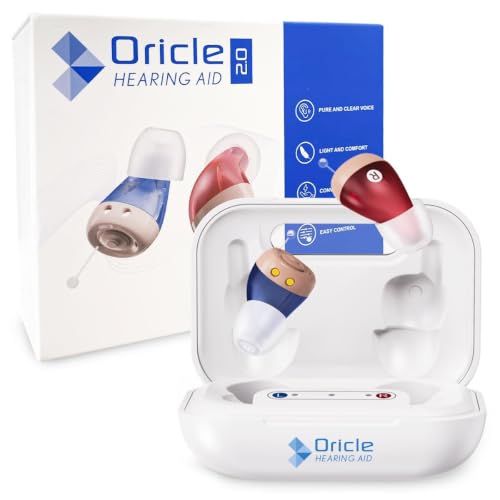

As an Amazon Associate we earn from qualifying purchases at no extra cost to you.
Hearing Aid Options at a Glance
| Type / Brand | Best for | What makers describe | Main limit |
|---|---|---|---|
| Sony OTC hearing aids | Buyers wanting a discreet, brand-name OTC option | Small in-ear designs with a companion app, and a self-fitting process | Intended for adults with perceived mild to moderate loss only |
| Eargo | Buyers wanting near-invisible in-canal devices | Small canal-fit devices, rechargeable, with app and clinician support options | Small size can make handling and cleaning more delicate; lineup changes over time |
| Lexie (Lively-related lines) | Self-fitting OTC with an app-based approach | Behind-the-ear and in-ear models with app-based setup and support | Fit and comfort vary between ears and people |
| Jabra Enhance line | Earbud-style OTC with app control | Earbud-like form with an app-based hearing test and adjustments | Line has changed ownership and models over time, so confirm the current version before buying |
| Apple AirPods Pro hearing aid feature | iPhone users with mild to moderate loss | Apple lists a hearing test and personalized hearing aid settings on supported AirPods Pro | Requires compatible Apple devices and software; not a full replacement for custom-fitted aids in complex cases |
| Prescription (Phonak, Oticon, Signia, ReSound, Starkey, Widex) | Moderate to profound loss, unusual hearing profiles, or users wanting professional fitting | Wide range of styles, programming by an audiologist, advanced features, follow-up care | Higher cost and appointments required |
Feature lists, battery types and models change often. Use the table as a map of categories, and read each maker’s current specification sheet before you buy.
Do You Need OTC or Prescription Hearing Aids?
In the United States, the FDA’s OTC hearing aid category covers adults aged 18 and over with perceived mild to moderate hearing loss. These devices can be bought without a prescription or exam. Prescription-grade devices are fitted and programmed by a hearing professional, and are the normal route for more severe loss, for sudden changes, or for people with ear conditions.
See a doctor or audiologist promptly if you notice sudden hearing loss, hearing loss in only one ear, ringing with dizziness, ear pain, drainage, or a recent head injury. These are not situations for self-fitting devices. A professional hearing test also gives a baseline, shows whether OTC aids are suitable, and rules out earwax or medical causes.
Styles and What They Mean in Daily Use
Behind-the-ear (BTE) and receiver-in-canal (RIC)
These sit behind the ear with a thin tube or wire to a small speaker in the canal. They are common in both prescription and OTC lines, can hold larger batteries, and often offer more power and easier handling than the smallest styles. They are a frequent choice for people with dexterity concerns or higher gain needs.
In-the-ear and in-the-canal
These fit inside the ear and are less visible. Smaller sizes can be harder to handle, and some have less room for batteries and extra microphones. They are well suited to people who value discretion and have the dexterity to insert and clean them.
Earbud-style devices
Earbud-like designs, including some OTC lines and Apple’s feature on AirPods Pro, appeal to users who want a familiar look. Fit, comfort and battery life depend on the model.
What to Compare
- Fit and comfort: hearing aids sit in the ear all day. Look at available ear tip sizes, trial periods and return policies.
- Rechargeable or disposable batteries: rechargeable units remove the hassle of tiny batteries. Disposable zinc-air batteries offer a quick swap and may last longer between changes for some models, but need to be bought regularly. The maker lists battery life; actual performance varies with use and streaming.
- App and controls: many OTC devices rely on a smartphone app for setup and adjustments. Confirm phone compatibility.
- Noise handling: directional microphones and noise reduction help in restaurants and group settings, but no device removes all background noise. Reviewers generally say expectations should be realistic.
- Bluetooth streaming: allows calls and media to stream to the aids. Check whether it supports your phone type.
- Support and warranty: some makers include remote support from hearing professionals. Prescription devices come with in-person adjustment visits.
- Water and dust resistance: makers state ratings, usually not full waterproofing. Keep them away from showers and pools unless the manual says otherwise.
- Tinnitus features: some devices offer masking sounds. Persistent tinnitus should be discussed with a doctor.
Budget Tiers
Budget tier
Lower-priced OTC devices and basic personal sound amplifiers sit here. Note that personal sound amplification products (PSAPs) are not the same as hearing aids and are not designed to treat hearing loss. If your hearing test shows measurable loss, choose a product labeled as a hearing aid.
Mid-range tier
Brand-name OTC hearing aids with app control, rechargeable batteries and some support services fall here. This tier suits adults with mild to moderate loss who are comfortable with self-fitting and want a balance of price and features.
Premium tier
Prescription devices from Phonak, Oticon, Signia, ReSound, Starkey and Widex typically sit in the premium tier, with professional fitting and ongoing care. Higher technology levels add more advanced noise processing and connectivity, and are most useful for people who spend time in noisy social settings.
Pick X If You Want…
| Pick this | If you… |
|---|---|
| Sony or similar brand-name OTC | Have mild to moderate loss and want a discreet, self-fitted device |
| Eargo | Prefer a near-invisible canal style and are comfortable handling small devices |
| Lexie or other app-based OTC | Like app-based setup and remote support |
| AirPods Pro with hearing aid feature | Already use an iPhone and the earbuds and have mild to moderate loss |
| Prescription aids from an audiologist | Have moderate to severe loss, uneven hearing between ears, or need professional programming |
| BTE or RIC style | Want easier handling, longer battery life, or more power |
Getting the Most From a New Hearing Aid
- Start by getting a hearing test, even if you plan to buy OTC, so you know your baseline.
- Use the trial period. Wear the devices in different settings, including quiet rooms, conversation, TV and a busy restaurant.
- Give your brain time to adjust. Many users report that sounds feel unusual at first, and audiologists commonly advise gradual wear.
- Clean the devices regularly following the manual, and replace wax guards or domes as directed.
- Store them in a dry place or case, away from pets and children.
- Keep small parts and batteries away from children and pets, as batteries are a swallowing hazard.
Alternatives
- Hearing-assistive devices: TV streamers, personal amplifiers and captioned phones can complement or substitute for hearing aids in specific situations.
- Cochlear implants or bone-anchored systems: for severe to profound loss where hearing aids do not help enough. These are medical options discussed with an ear, nose and throat specialist.
- Communication strategies: facing the speaker, reducing background noise and using captions can help alongside any device.
Frequently Asked Questions
Are OTC hearing aids as good as prescription ones?
OTC hearing aids are designed for adults with perceived mild to moderate loss and can work well for that group. Prescription devices offer professional fitting, wider adjustment options and are better for complex or more severe loss. Which is better depends on your hearing profile and needs.
Do I need a hearing test before buying OTC hearing aids?
You do not need a prescription, but a hearing test is strongly advisable. It can reveal whether your loss is in the mild to moderate range and can identify medical issues such as wax buildup or sudden changes that need care from a doctor.
Can AirPods Pro replace a hearing aid?
Apple states that the hearing aid feature on supported AirPods Pro is for adults with mild to moderate hearing loss, and it requires compatible devices and software. It can be a convenient option for some users, but it is not designed for severe loss or for people who need custom programming.
How long do hearing aid batteries last?
It depends on the model, the battery type and how much you stream audio. Makers publish estimates for rechargeable runtime per charge and for disposable battery life. Real-world use is often shorter than the figure on the box, particularly with heavy streaming.
How long does it take to get used to hearing aids?
Many people need days to weeks to adjust, and audiologists typically suggest gradually increasing wear time. If sounds remain uncomfortable or you feel pain, contact the maker or a hearing professional.
What should I do if my hearing suddenly worsens?
Seek medical care promptly. Sudden hearing loss, particularly in one ear, can be a medical emergency and should be evaluated by a doctor rather than treated with a new hearing aid.
FAQ
Do You Need OTC or Prescription Hearing Aids?
Are OTC hearing aids as good as prescription ones?
Do I need a hearing test before buying OTC hearing aids?
Can AirPods Pro replace a hearing aid?
How long do hearing aid batteries last?
How long does it take to get used to hearing aids?
What should I do if my hearing suddenly worsens?
More from Amazon
Programs that pair well with the guide above. Offers and eligibility are set by Amazon and may change.
Free shipping on eligible items, Prime Video and more. Eligible new members can start with a free trial.
Start a Prime free trialAudiobooks and podcasts to listen to on the go. Eligible new members can start with a free trial.
Try Audible freeAd-free music streaming. Eligible new subscribers can start with a free trial.
Try Music Unlimited freeA free business account with business pricing and bulk-buying tools for work, shop or home office.
Create a business accountAs an Amazon Associate we earn from qualifying purchases.







