Key takeaways
- Budget: Plastic sets from Rubbermaid and similar brands, plus simple glass jars. They are practical, light and good for pantries.
- Mid-range: OXO POP containers, Anchor Hocking glass sets and quality glass jars with gaskets. They balance seal quality, durability and appearance.
- Premium: Stoneware and ceramic sets from makers such as Le Creuset and artisan brands. They are chosen for looks and long use on display.
The best canister set for most kitchens is an airtight, stackable set in glass or BPA-free plastic that holds flour, sugar and coffee, while those who want a countertop display choose ceramic or stoneware; the right set depends on what you store, how much counter space you have and how important a tight seal is.
Our top picks


As an Amazon Associate we earn from qualifying purchases at no extra cost to you.
What canister sets are for
Canister sets hold dry staples such as flour, sugar, rice, pasta, coffee, tea and snacks. Moving food out of paper and plastic packages into rigid containers keeps the countertop tidy and makes cooking quicker. Airtight versions help keep dry foods from absorbing moisture and odors, though no container extends shelf life indefinitely, and the original packaging dates and storage guidance still apply.
Traditional three- or four-piece sets graduate in size, from a large canister for flour to a small one for tea. Modern sets also include square, stackable and pantry-style containers that save cabinet space.
At a glance: popular options
| Option | Best for | Key points the makers describe | Limits |
|---|---|---|---|
| OXO Good Grips POP containers | Pantry organization and airtight storage | Stackable containers with a push-button seal, in several sizes, sold as sets or single pieces | Plastic can stain with strongly colored foods |
| Rubbermaid Brilliance | Airtight sets with clear visibility | Clear plastic with a latching lid, listed by the maker as leak-resistant and stain-resistant | Not meant for display on the counter like ceramic |
| Anchor Hocking glass canisters | Classic glass look on the counter | Glass bases with lids; some include seals or rubber gaskets | Heavier and breakable; check lid seal type |
| Ball and Kilner glass jars | Rustic, versatile storage | Glass jars with metal or clip-top lids, in many sizes | Seal quality varies by lid style |
| Le Creuset stoneware canisters | Display-quality countertop sets | Stoneware with enamel finish and a matching lid | Higher budget tier; opaque so you cannot see contents |
| Bamboo-lid and stainless sets | Modern or farmhouse kitchens | Glass or steel bodies with wooden or bamboo lids and seals | Check the seal; wood lids need hand washing |
Set sizes, lid types and materials change over time, so read the maker’s current specification before buying.
Material comparison
Glass
Glass does not absorb stains or odors and lets you see contents. It is heavier, can chip or break and may be harder to move around in a busy kitchen. Glass lids are often paired with a silicone gasket, which gives a better seal. If you store dry foods only, glass can last for years, and most glass bodies can be washed in a dishwasher, though lids with gaskets or wood may need hand washing as the maker advises.
Plastic
Plastic canisters are light, shatter-resistant and affordable. Good ones use thick walls and sealing gaskets. Plastic can stain from tomato-based foods and turmeric, and some people dislike its look on display. If you want a plastic set, look for makers that list the plastic as BPA-free and say whether it is dishwasher-safe. Use only for dry foods unless the maker states otherwise.
Ceramic and stoneware
Ceramic sets are designed for display, with glazes in many colors. They protect contents from light, which can matter for coffee and tea. Their weight and breakability are drawbacks, and many have lids that are not airtight. If you want a tight seal, check whether the lid has a gasket and how the maker describes it.
Stainless steel
Steel is durable and blocks light. It may dent and is opaque, so labeling helps. Steel canisters are often used for coffee, tea and sugar, and many styles suit modern kitchens.
Features to compare
Seal type
Airtight lids use a silicone gasket and either a clamp, a twist or a push button. Lids without gaskets simply sit on the opening and keep dust out, but they will not keep moisture or odors away. If you live in a humid area or store hygroscopic foods like sugar and salt, a gasketed lid is useful.
Capacity and shape
Think about what you store. Flour needs a larger canister, often several quarts, while tea and coffee need less. Square and rectangular shapes stack and use shelf space more efficiently than round ones. Wide mouths make scooping easier, and a narrow opening helps with pouring.
Scoop and labeling
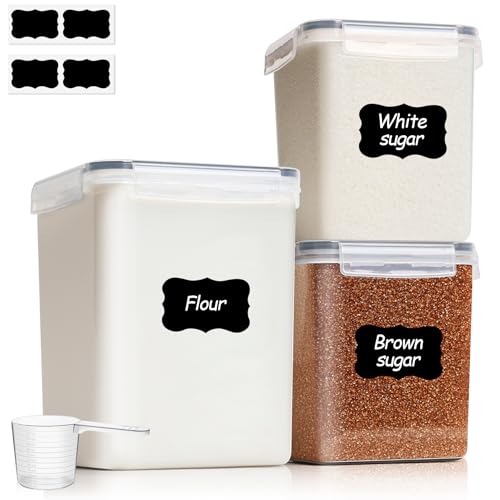
Some sets include scoops, labels or chalkboard stickers. A scoop sized for the canister reduces mess. Labels help prevent mix-ups between similar powders like flour and powdered sugar.
Cleaning and care
Follow the maker’s instructions. Many glass and plastic bodies are dishwasher-safe on the top rack, while lids with gaskets, wood or bamboo often need hand washing. Dry completely before refilling, because trapped moisture can cause clumping and spoilage. Do not store containers with food debris, and empty and wash them between refills.
Budget tiers
- Budget: Plastic sets from Rubbermaid and similar brands, plus simple glass jars. They are practical, light and good for pantries.
- Mid-range: OXO POP containers, Anchor Hocking glass sets and quality glass jars with gaskets. They balance seal quality, durability and appearance.
- Premium: Stoneware and ceramic sets from makers such as Le Creuset and artisan brands. They are chosen for looks and long use on display.
Space and layout notes
Measure the counter and the cabinet before buying. Countertop sets look best when the height fits under wall cabinets with room to lift the lid. Pantry containers are best when they stack and share a common footprint, which helps avoid wasted space. If you have limited counter room, choose stackable or square canisters and keep flour and sugar in the pantry, leaving just coffee and tea out.
Avoid placing canisters next to the stove or in direct sun. Heat and light can degrade some foods, and some plastics are not designed for heat exposure. Keep storage in a cool, dry place as the food maker advises.
Food safety notes
- Use canisters for dry foods unless the maker says they suit other uses.
- Keep the original package label or write down the use-by date, since storage in a canister does not change it.
- Clean and dry containers fully between refills. Do not top up old flour with new flour.
- Discard food that smells off, shows moisture, mold or pests. If you have allergies, label canisters clearly and do not mix foods.
- Check for chips and cracks in glass and ceramic before use.
Pick X if…
| Pick this | If you… |
|---|---|
| OXO POP containers | want stackable, airtight storage with a flexible set of sizes |
| Rubbermaid Brilliance | need clear, airtight containers on a lower budget tier |
| Anchor Hocking glass | prefer a classic glass look and easy cleaning |
| Ball or Kilner jars | like a rustic style and plan to mix sizes |
| Le Creuset stoneware | want an attractive display piece and protect from light |
| Steel canisters | store coffee and tea and want a durable, opaque container |
Alternatives to consider
- Vacuum canisters. Some coffee canisters use a one-way valve or vacuum pump. They suit coffee and certain dry goods, but read the maker’s guidance on what they are intended for.
- Bulk bins and pantry totes. For large households, bigger bins hold bulk flour or rice and refill smaller kitchen canisters.
- Repurposed jars. Clean glass jars with tight lids can work for small items such as spices or tea if you only need a few and do not need a matching look.
Buying checklist
List what you plan to store and how much of each, then choose sizes to match. Check the lid seal type, whether it is dishwasher-safe, how the pieces stack and whether replacement lids are sold. Make sure the height fits under your cabinets and that the opening is wide enough for the scoops you own. If you are choosing a display set, pick a color and material that suit your kitchen, and keep a small label or note of the date each time you refill.
Frequently Asked Questions
Are glass or plastic canisters better?
Glass resists stains and odors and lets you see contents, but it is heavy and breakable. Plastic is light and shatter-resistant but can stain and scratch. Pick by where you will use the set and how you handle your cookware.
Do canisters need to be airtight?
For flour, sugar, rice and cereals, an airtight lid helps keep moisture and pests out, so it is useful. For items like pasta that are less sensitive, a looser lid may be fine. Airtight does not mean food lasts indefinitely, so follow the package date.
Can I put canisters in the dishwasher?
Many glass and plastic bodies are listed as dishwasher-safe, usually top rack. Lids with gaskets, wood or bamboo often need hand washing. Read the maker’s instructions to avoid damage.
What size canister do I need for flour?
A standard bag of flour is often several pounds, so choose the largest canister in the set or a dedicated flour container. The maker lists capacity in quarts, liters or cups, so compare that with the amount you buy.
Is it safe to store coffee in a clear canister?
Coffee is sensitive to light, heat and air. An opaque or tinted canister that is kept in a cool cupboard is generally preferred. If you use clear glass, keep it away from windows and heat.
How do I stop sugar and flour from clumping in canisters?
Make sure the canister is completely dry, use an airtight lid and keep it away from steam and sinks. If clumping continues, move the container to a cooler, drier spot. Do not store damp food and check the container for moisture before refilling.
FAQ
Are glass or plastic canisters better?
Do canisters need to be airtight?
Can I put canisters in the dishwasher?
What size canister do I need for flour?
Is it safe to store coffee in a clear canister?
How do I stop sugar and flour from clumping in canisters?
More from Amazon
Programs that pair well with the guide above. Offers and eligibility are set by Amazon and may change.
Free shipping on eligible items, Prime Video and more. Eligible new members can start with a free trial.
Start a Prime free trialAudiobooks and podcasts to listen to on the go. Eligible new members can start with a free trial.
Try Audible freeAd-free music streaming. Eligible new subscribers can start with a free trial.
Try Music Unlimited freeA free business account with business pricing and bulk-buying tools for work, shop or home office.
Create a business accountAs an Amazon Associate we earn from qualifying purchases.