Key takeaways
- Budget: Basic steel or aluminum frames with a simple brake and fixed-size wheels. Fine for short-term use at home and for smooth floors. Expect fewer adjustment points and less padding.
- Mid-range: Brands such as Drive Medical, Roscoe Medical and Vive Health sit here, usually with better padding, easier height adjustment, a basket option and folding frames.
- Premium: KneeRover-style frames and all-terrain designs offer larger wheels, refined steering and sturdier construction. They suit longer recoveries or active users, but weigh more.
For most people recovering from a below-the-knee foot or ankle injury, a steerable knee scooter from an established medical-equipment brand such as Drive Medical, Roscoe Medical, KneeRover or Vive Health is the practical choice, while a hands-free option like the iWALK suits people who need both hands free and are cleared by their clinician to use it. The right pick depends on your height, the weight rating you need, the surfaces you will roll over, and whether you must fold the unit into a car.
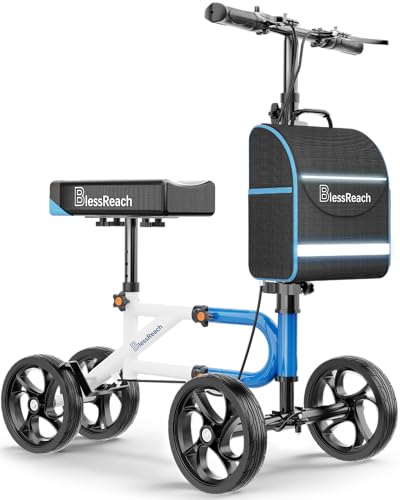
A knee scooter (also called a knee walker) is a wheeled frame with a padded platform that supports the bent knee of the injured leg. You push with the healthy leg and steer with handlebars. It is commonly used after foot or ankle surgery, fractures or Achilles injuries, but whether it is appropriate for you is a decision for your surgeon or physical therapist. Some conditions, balance problems and weight-bearing restrictions rule it out.
Our top picks


As an Amazon Associate we earn from qualifying purchases at no extra cost to you.
At a Glance: Knee Scooter Options
| Model type | Best for | Key traits (as makers describe them) | Limits |
|---|---|---|---|
| Drive Medical steerable knee walker | Everyday indoor and light outdoor use on a budget to mid-range | Adjustable knee platform and handlebar height, brake, foldable frame | Smaller wheels can struggle on rough pavement |
| Roscoe Medical knee scooter | Buyers wanting a basic, widely stocked frame | Padded platform, hand brake, folding design | Check the height range against your leg length |
| KneeRover Economy and Deluxe lines | Users who want a more premium frame and steering feel | Steering and tuning options, larger platform on some versions | Heavier and costlier than entry models |
| Vive Health knee walker | Mid-range buyers who want an accessory-friendly design | Adjustable platform, basket or accessories on some versions | Accessories vary by version |
| All-terrain knee scooter (larger pneumatic wheels) | Gravel, grass, sloped driveways | Larger air-filled wheels, wider stance | Bulkier, harder to fold and carry |
| iWALK hands-free crutch | People who must carry things or use both hands | Strap-on design supporting the lower leg | Needs balance and core strength; clinician approval matters |
What to Check Before You Choose
Fit and height range
The knee platform must sit at a height where your hip and knee are comfortably bent and your healthy foot can push flat on the floor. Makers list a recommended user height range for each model, and some offer tall or small versions. If you are very tall or very short, confirm that the platform and handlebar adjustment cover your measurements before you buy. A scooter that is too low strains the back; one that is too high forces you to tiptoe on the healthy foot.
Weight capacity
Capacity ratings differ widely between models. Many standard units list capacities in the mid-hundreds of pounds, while heavy-duty frames list higher. Always compare the stated rating with your body weight and leave margin, particularly if you will carry bags or a boot. Do not exceed the maker’s limit.
Wheels and surfaces
Small hard wheels glide well on smooth indoor floors and are easy to turn in narrow hallways. Larger pneumatic wheels absorb bumps and handle gravel or cracked sidewalks better but add bulk. Think honestly about where you will spend most of your time. If your recovery is mostly at home and at the office, a standard four-wheel model is usually enough.
Brakes and steering
A hand brake that locks the wheels, and ideally a parking function, matters on slopes and when you need to stand still. Steering is the other safety point: a model with a tight turning radius helps indoors, while a wider wheelbase feels steadier outdoors. Reviewers frequently mention that learning the turning feel takes a short practice period on flat ground.
Padding and comfort
Because the injured leg rests on the platform for long stretches, padding thickness and shape matter. Some buyers add a thicker cushion or a cover. Check that the pad lets your knee rest without pressure on the shin or the surgical area, and follow your clinician’s positioning advice.
Folding and transport
Many frames fold or break down to fit a car trunk. Folded size and weight vary, so if you rely on a small car or a walk-up apartment, look at the maker’s folded dimensions and the unit weight. Lighter aluminum frames are easier to lift but may list lower capacity than steel.
Budget Tiers
- Budget: Basic steel or aluminum frames with a simple brake and fixed-size wheels. Fine for short-term use at home and for smooth floors. Expect fewer adjustment points and less padding.
- Mid-range: Brands such as Drive Medical, Roscoe Medical and Vive Health sit here, usually with better padding, easier height adjustment, a basket option and folding frames.
- Premium: KneeRover-style frames and all-terrain designs offer larger wheels, refined steering and sturdier construction. They suit longer recoveries or active users, but weigh more.
Rental is another route for short recoveries; ask your clinic, a medical supply store or your insurer about options and coverage.
Pick X If …
| If you … | Choose |
|---|---|
| Need a simple, affordable option for home and short trips | Standard Drive Medical or Roscoe Medical steerable knee walker |
| Want better steering feel and a sturdier frame for weeks of use | KneeRover or similar premium frame |
| Want basket or accessory options | Vive Health or a model with a maker-listed basket |
| Live where pavement is rough or sloped | All-terrain model with larger pneumatic wheels |
| Need both hands free and are cleared to use it | iWALK-style hands-free crutch |
| Weigh more than standard ratings allow | Heavy-duty model with a higher stated capacity |
Safety and Care Notes
- Use the scooter only if your surgeon or physical therapist says it fits your injury and weight-bearing status.
- Practice on a flat, clear area before tackling ramps, curbs or stairs. Do not use a knee scooter on stairs.
- Wear a supportive, closed shoe on the healthy foot for grip.
- Tighten height-adjustment knobs and check the brake before each outing, as the maker’s manual describes.
- Keep the wheels clean of hair and debris, and wipe the pad with a damp cloth.
- Avoid wet, icy or loose surfaces unless the model is designed for them.
Alternatives to a Knee Scooter
Crutches
The standard option and often the first one provided. Crutches are compact and work on stairs, but they tire the arms and shoulders and leave no hand free.
Walker or rollator
A standard walker offers stable support for people with balance concerns. Some people use a rollator with a seat for short rests. Neither suits long walking distances with a non-weight-bearing foot as easily as a scooter.
Wheelchair or transport chair
Useful for long outings, airports or periods when you must stay completely off the leg. A transport chair requires a helper to push.
Frequently Asked Questions
How long can I use a knee scooter each day?
That depends on your injury and your clinician’s guidance. Many users take breaks to elevate the leg and avoid pressure on the knee and shin. Ask your care team how long you may use it at a stretch.
Can I use a knee scooter on stairs?
No. Makers warn against it. Plan a route without stairs, or use another aid such as crutches for steps, and ask a helper to carry the scooter.
Will it fit in a car?
Most folding frames fit in a typical trunk or back seat, but folded sizes vary. Check the maker’s folded dimensions against your vehicle. Removing the handlebar or platform on some models makes loading easier.
Is a knee scooter better than crutches?
Many people find a scooter less tiring because the knee, not the arms, carries the load, and it lets them cover distance faster. Crutches handle stairs and tight spaces better. Your surgeon or therapist can say which fits your recovery.
Does insurance cover a knee scooter?
Coverage varies by insurer and plan, and a prescription is often required. Ask your clinic or supplier about coverage, rental and purchase options before buying.
Can I use a knee scooter on the left or right leg?
Most models are designed to work with either leg, since the platform is a flat pad you kneel on. Confirm this in the product description, and note that some padding shapes may suit one side more comfortably.
FAQ
How long can I use a knee scooter each day?
Can I use a knee scooter on stairs?
Will it fit in a car?
Is a knee scooter better than crutches?
Does insurance cover a knee scooter?
Can I use a knee scooter on the left or right leg?
More from Amazon
Programs that pair well with the guide above. Offers and eligibility are set by Amazon and may change.
Free shipping on eligible items, Prime Video and more. Eligible new members can start with a free trial.
Start a Prime free trialAudiobooks and podcasts to listen to on the go. Eligible new members can start with a free trial.
Try Audible freeAd-free music streaming. Eligible new subscribers can start with a free trial.
Try Music Unlimited freeA free business account with business pricing and bulk-buying tools for work, shop or home office.
Create a business accountAs an Amazon Associate we earn from qualifying purchases.