Key takeaways
- Finish: Brushed nickel, matte black, chrome, brass and bronze are common. Match existing faucets and hardware for a cohesive look.
- Shade material: Frosted glass diffuses light and hides bulbs, while clear glass is brighter but more visible.
- Mounting orientation: Some fixtures mount facing up or down. Up-facing creates ambient light, down-facing gives more direct light.
- Bulb count and spacing: More bulbs spread light more evenly.
- Dimmability: Helpful for night use.
- Warranty: Check what the maker offers, especially on LED modules.
For most bathrooms, a three- or four-light bar fixture mounted above the mirror from makers such as Kichler, Hinkley or Progress Lighting gives the most even, flattering light, while a two-light fixture suits narrow mirrors, side sconces suit people who want shadow-free face lighting, and an LED mirror suits those who want built-in illumination. This guide explains how to match fixture type, size, color temperature and bulb options to your bathroom, and what to confirm before installing.
Our top picks


As an Amazon Associate we earn from qualifying purchases at no extra cost to you.
Vanity Lights at a Glance
| Type | Best for | Typical maker-stated traits | Limits |
|---|---|---|---|
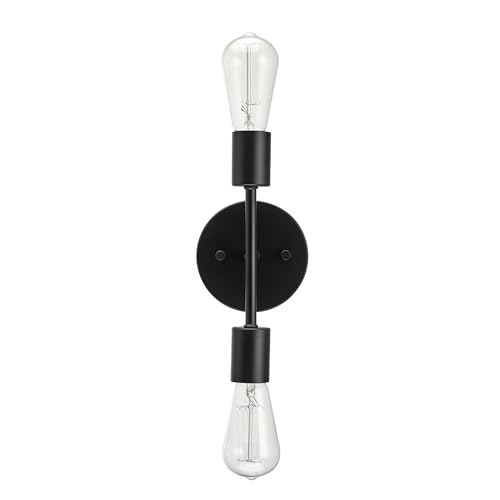
| Multi-light bar above mirror | Standard bathrooms, general-purpose use | Two to five sockets, wide range of finishes | Can cast shadows if mounted too high |
| Side sconces flanking the mirror | Even, shadow-free face lighting | Pairs mounted at eye level | Needs wiring on both sides |
| Integrated LED bar | Modern look, low-profile | Built-in LED, often dimmable | Cannot swap bulbs, whole fixture replaced on failure |
| Backlit or lighted mirror | Makeup, grooming | LED edge or backlight, sometimes with defog | Needs power connection, can be costly |
| Single sconce or small fixture | Powder rooms, narrow spaces | Compact footprint | Limited light output |
| Over-mirror with shade or globes | Traditional or farmhouse style | Glass shades diffuse light | Shades collect dust |
How to Choose
Size relative to the mirror
A common design guideline is to choose a fixture noticeably narrower than the mirror or vanity, so it does not overhang. Many lighting makers suggest a fixture roughly a quarter to a half narrower than the vanity cabinet width, though exact guidance varies. Check the stated dimensions and compare with your mirror and wall space.
Light placement and shadows
Light from above alone can cast shadows under the eyes and nose. Side lighting at roughly eye level reduces shadows and is widely recommended for grooming and makeup. If you can only install one fixture, an over-mirror bar with several bulbs spread evenly gives the best compromise. Mount heights vary by maker, so follow the instructions included with the fixture.
Color temperature and brightness
Color temperature is measured in kelvins. Warmer light looks cozy, while cooler light looks crisper. Many people prefer a neutral to warm-white range for bathrooms. Brightness is measured in lumens, and the maker may state a maximum wattage or lumen output. For a bathroom used for grooming, aim for a total output that is comfortably bright without glare.
Color accuracy
If you apply makeup or judge skin tone, look for bulbs with a high color rendering index, often abbreviated CRI. Some makers list this for integrated LED fixtures. Higher values generally render colors more naturally.
Bulb type and dimming
Fixtures with standard sockets let you choose and replace bulbs easily. Integrated LED fixtures last long but need replacing as a whole. If you want dimming, confirm that the fixture and bulbs are rated as dimmable and that your wall dimmer is compatible. Mismatched dimmers can cause flicker or buzzing.
Safety, Rating and Installation
Bathrooms are damp locations. Check the maker’s stated rating: fixtures near showers or tubs may require a damp or wet rating, depending on local code. Electrical installation should follow local code, and if you are not comfortable working with wiring, hire a licensed electrician. Turn power off at the breaker before installing, and confirm the junction box can support the weight of the fixture. Follow the manufacturer’s manual for mounting orientation, since some fixtures are rated for specific directions.
Features That Matter
- Finish: Brushed nickel, matte black, chrome, brass and bronze are common. Match existing faucets and hardware for a cohesive look.
- Shade material: Frosted glass diffuses light and hides bulbs, while clear glass is brighter but more visible.
- Mounting orientation: Some fixtures mount facing up or down. Up-facing creates ambient light, down-facing gives more direct light.
- Bulb count and spacing: More bulbs spread light more evenly.
- Dimmability: Helpful for night use.
- Warranty: Check what the maker offers, especially on LED modules.
Budget Tiers
Budget
Basic bar fixtures from makers such as Globe Electric and Kira Home cover standard needs with simple finishes and standard sockets. They suit rental updates and quick refreshes, though materials may feel lighter.
Mid-range
Kichler and Progress Lighting offer a wide selection here, with more finish options, better construction and a range of shades. This tier suits most homeowners.
Premium
Hinkley and similar design-focused brands offer more distinctive styling, higher-grade materials and refined finishes. These suit full bathroom renovations where the fixture is a design feature.
Pick X If Decision Table
| Pick this if you … | Choose | Why |
|---|---|---|
| Have a standard bathroom mirror | Three-light bar | Balanced light across the mirror |
| Do makeup or detailed grooming | Side sconces or lighted mirror | Reduces face shadows |
| Have a narrow vanity | Two-light fixture | Fits tight spaces |
| Want a modern low-profile look | Integrated LED bar | Slim, long-lasting |
| Like replaceable bulbs | Standard-socket fixture | Easy to change |
| Want a statement piece | Premium decorative fixture | Design-focused finishes |
Common Mistakes
People often buy a fixture that is too wide or too narrow for the mirror, or mount it too high, which creates shadows. Another frequent error is choosing a cool color temperature that makes skin look harsh, or using non-dimmable bulbs on a dimmer. Others overlook the damp rating for shower-adjacent fixtures, or forget to confirm that the junction box can carry the weight.
Alternatives
- Recessed lighting with a decorative sconce: Adds general light plus accent.
- Plug-in sconces: For renters who cannot hardwire, though cords must meet local rules and stay clear of water.
- Lighted vanity mirror: Combines mirror and lighting in a single unit.
Frequently Asked Questions
How many lights do I need over a bathroom mirror?
Three bulbs suit most standard vanities, two suit narrow ones and four or five suit wide double vanities. The goal is even light across the face, so spacing matters as much as count.
What color temperature is best?
Many people choose a neutral to warm white for natural-looking skin tones. Cooler light can feel harsher, and warmer light feels cozy but may make color judgment harder.
Should the fixture face up or down?
Down-facing gives more direct task light, while up-facing gives softer ambient glow. Check the maker’s manual, as some fixtures are designed for one orientation only.
Can I install a vanity light myself?
If you are comfortable and local rules allow, many do. Turn off the breaker, confirm the junction box and follow the manual. If unsure, hire a licensed electrician.
Do vanity lights need to be damp-rated?
Bathrooms are damp areas, and fixtures near showers or tubs may need a damp or wet rating. Check the maker’s rating and local code.
Are LED fixtures better than bulbs?
Integrated LEDs are efficient and long-lasting but cannot be easily replaced. Standard sockets with LED bulbs offer flexibility, so the choice depends on whether you value a slim design or easy replacement.
FAQ
How many lights do I need over a bathroom mirror?
What color temperature is best?
Should the fixture face up or down?
Can I install a vanity light myself?
Do vanity lights need to be damp-rated?
Are LED fixtures better than bulbs?
More from Amazon
Programs that pair well with the guide above. Offers and eligibility are set by Amazon and may change.
Free shipping on eligible items, Prime Video and more. Eligible new members can start with a free trial.
Start a Prime free trialAudiobooks and podcasts to listen to on the go. Eligible new members can start with a free trial.
Try Audible freeAd-free music streaming. Eligible new subscribers can start with a free trial.
Try Music Unlimited freeA free business account with business pricing and bulk-buying tools for work, shop or home office.
Create a business accountAs an Amazon Associate we earn from qualifying purchases.