
Key takeaways
- Budget: basic FRS pairs for kids and day trips, with limited channels and no weather alerts.
- Mid-range: feature-rich pairs with rechargeables, weather alerts and rugged options such as water resistance.
- Premium: GMRS handhelds, advanced feature radios and rugged business-grade units for frequent or demanding use.
For families, campers and event groups who want radios that work out of the box without a licence process, a Motorola Talkabout or Midland GXT series pair is the usual starting point; for longer range and more power, a GMRS radio such as those from Midland or Radioddity is the next step, provided you hold the licence your country requires; and for rugged, waterproof use around water, a floating model such as the Motorola Talkabout T600 or a similar rated radio is the safer pick.
Our top picks
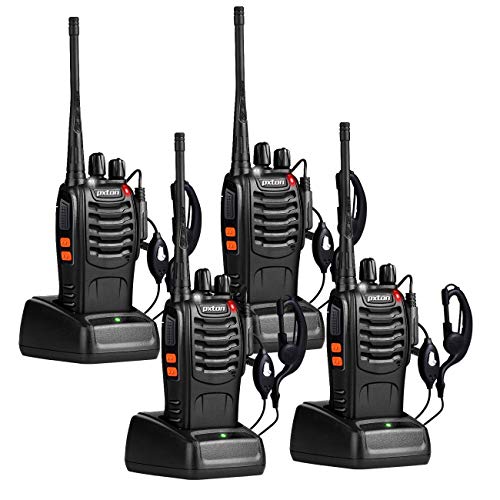


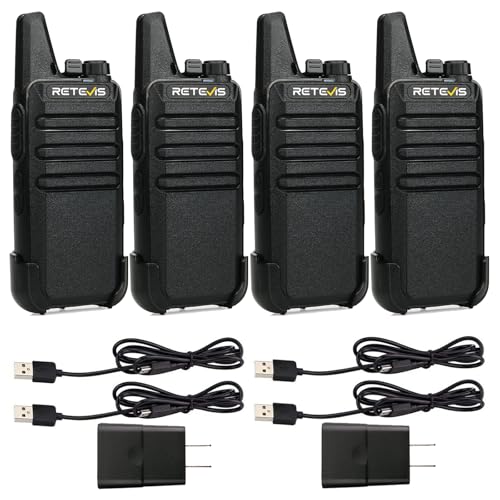
As an Amazon Associate we earn from qualifying purchases at no extra cost to you.
Walkie Talkies at a Glance
| Model or class | Best for | Service type | Limit to know |
|---|---|---|---|
| Motorola Talkabout T200 / T100 series | Kids, day trips, casual family use | FRS (consumer) | Short real-world range in built-up areas |
| Motorola Talkabout T600 | Water and outdoor use | FRS/GMRS channel set, per the maker | Maker range figures are best-case, open terrain |
| Motorola Talkabout T800 | Phone-linked groups that want smartphone integration | Consumer radio with Bluetooth and app features | More features than casual users need |
| Midland GXT1000 series | Longer range, many channels, weather alerts | GMRS channels (licence rules apply) | Check licensing in your country |
| Midland T10 / T51 series | Entry-level pairs on a budget | FRS | Basic features |
| Cobra ACXT series | Value pairs with rechargeable options | FRS/GMRS depending on model | Range and battery depend on the model tier |
| Radioddity GM-30 and other GMRS handhelds | Enthusiasts who want programmable GMRS radios | GMRS | Licence required in the United States |
| Baofeng UV-5R-type dual-band radios | Licensed amateur radio users | Amateur (ham) radio | Not a plug-and-play consumer radio; licence and rules apply |
The Rules Behind the Radios
Most confusion about walkie talkies comes from the service categories rather than the hardware. In the United States, Family Radio Service (FRS) radios are intended for licence-free consumer use with limited power, while General Mobile Radio Service (GMRS) radios can use more power and external antennas but require an FCC licence, which covers a family group and does not require an exam according to the FCC. Many blister-pack radios list both FRS and GMRS channels, and some makers print combined range claims. Other countries use different systems: PMR446 in Europe and equivalents elsewhere. Always read the rules that apply where you live, and use only radios that carry the right certification for your region.
Amateur (ham) handhelds such as many Baofeng models are a different category again. They are sold as capable multi-band radios, but a licence is needed to transmit on amateur bands, and they are not designed for casual use on FRS or GMRS channels. Buyers who are not licensed amateur operators should stay with radios marketed for FRS or GMRS.
Understanding Range Claims
Packaging often advertises distances of twenty miles or more. Makers typically describe these as ideal or maximum figures achieved in open terrain with line of sight, and reviewers consistently say real-world performance is far shorter. Buildings, trees, hills and vehicles all reduce range. In a city, a few blocks to a mile is a common expectation; on open ground or over water, it can be considerably better. Higher power, a longer antenna or a repeater can improve results, but none of those removes the line-of-sight limit. Plan around the realistic range of your location rather than the number on the box.
Picks by Type of Buyer
Motorola Talkabout: simple and widely available
Motorola’s Talkabout line spans basic pairs to feature-heavy models. The maker lists weather channels, a selection of privacy codes and hands-free VOX on many models. The T600, for example, is marketed as waterproof and floating, which suits boating and rainy outdoor use. The T800 adds Bluetooth, which the maker says lets the radio connect to a phone for extended features. Reviewers commonly describe Talkabout radios as easy to set up and a safe default for groups who have not used radios before.
Midland GXT series: more channels and range
Midland’s GXT1000 line is a long-running favorite in roundups. The maker lists a large channel count, weather alerts and rechargeable battery options. Midland’s lower-priced T-series pairs serve buyers who only need basic communication. Because many Midland radios operate on GMRS channels, buyers should check licensing requirements before use.
Cobra: value pairs with practical features
Cobra’s ACXT series covers various price points, with some models offering weather alerts, rechargeable batteries and the ability to share charging cradles. It is a reasonable alternative for budget-conscious families and for recreational users who do not need rugged specifications.
GMRS handhelds for enthusiasts
Radios from brands such as Radioddity target buyers who want programmable channels, repeater access and removable antennas. These radios usually require more setup than a consumer pair, and in the United States, a GMRS licence. Reviewers note that they reward patience with better flexibility and, with the right antenna, extended range.
Rugged and waterproof options
If you spend time around water or in rough weather, look at the ingress protection rating the maker lists, such as IP67, and check whether the radio floats. Rugged business-grade radios from brands such as Motorola Solutions exist but fall into a higher budget tier and typically require licensing arrangements for business use.
Features That Matter
Battery type and runtime
Radios use either AA/AAA batteries, rechargeable battery packs, or both. Rechargeable packs save money over time, and radios that accept standard batteries as a backup are useful when you are away from power. Makers quote run times that are best case; heavy transmit use shortens them.
Weather alerts
Many consumer radios include NOAA weather channels in the United States. This is a helpful extra for outdoor trips, but it is not a replacement for a dedicated emergency radio. Follow official warnings and local guidance during severe weather.
Privacy codes
Privacy codes (sometimes called CTCSS or DCS codes) filter out other users on the same channel so that you only hear your group. They do not encrypt conversations; anyone on the same channel can still listen if their radio does not use filtering.
VOX and hands-free use
Voice-activated transmit lets you talk without pressing a button, which is useful with a headset on a bike or while working. It can be triggered by wind noise, so it is not ideal in loud conditions.
Headset and accessory connectors
Check whether the radio uses a standard two-pin connector so you can buy third-party headsets. Proprietary connectors limit your choices.
Budget Tiers
- Budget: basic FRS pairs for kids and day trips, with limited channels and no weather alerts.
- Mid-range: feature-rich pairs with rechargeables, weather alerts and rugged options such as water resistance.
- Premium: GMRS handhelds, advanced feature radios and rugged business-grade units for frequent or demanding use.
Pick X If…
| Pick this | If you… |
|---|---|
| Motorola Talkabout T200 or similar | need a simple, licence-free pair for kids or casual use |
| Motorola Talkabout T600 | spend time around water or in wet weather |
| Motorola Talkabout T800 | want Bluetooth and phone-linked features |
| Midland GXT1000 | want more channels and longer range, and will check licence rules |
| Cobra ACXT | want value with rechargeable options |
| GMRS handheld (Radioddity and others) | want programmable channels and repeater access, and hold a licence |
Safety and Courtesy
Radios are not a substitute for a charged phone or an emergency plan. Keep emergency calls on appropriate channels and services; consumer channels are not monitored by rescue authorities in most regions. Avoid transmitting near flammable vapours or near blasting operations where radio frequency devices are restricted. Keep the antenna away from your face while transmitting, and follow the maker’s guidance on use and safe distances. Be courteous on shared channels: keep transmissions short, and switch channels if you are interfering with others.
Alternatives
- Smartphone push-to-talk apps: work wherever there is mobile data, but fail without coverage.
- Satellite messengers: useful for backcountry check-ins, though not for real-time voice among a group.
- Mobile CB or vehicle GMRS radios: better range from a vehicle-mounted antenna, with licensing rules to follow.
Frequently Asked Questions
Do I need a licence to use walkie talkies?
It depends on the service and the country. In the United States, FRS radios do not require a licence, while GMRS operation requires an FCC licence. Always check your local regulations before using any radio.
How far can walkie talkies really reach?
Makers quote best-case figures for open terrain. Reviewers report that in cities and wooded areas the usable range is much shorter, often a fraction of a mile to a mile or two. Hills, buildings and weather all reduce the range.
What is the difference between FRS and GMRS?
FRS is a licence-free consumer service with limited power, while GMRS allows higher power and external antennas but requires a licence in the United States. Many radios list both sets of channels. The maker’s manual explains which channels allow which power levels.
Are walkie talkie conversations private?
No. Privacy codes only filter out other users; they do not encrypt. Anyone using the same channel can hear your transmissions unless their radio filters them out.
Can I use a Baofeng or ham radio for family trips?
Amateur radios are meant for licensed operators on amateur bands. They are not the right plug-and-play choice for most families. If you want that route, study for the appropriate amateur licence and follow your national rules.
Are waterproof walkie talkies worth it?
If you boat, kayak or spend time in rain, a radio with a stated ingress rating and floating design is a sensible choice. Check the exact rating in the maker’s specifications, as terms such as water-resistant and waterproof can mean different things.
FAQ
Do I need a licence to use walkie talkies?
How far can walkie talkies really reach?
What is the difference between FRS and GMRS?
Are walkie talkie conversations private?
Can I use a Baofeng or ham radio for family trips?
Are waterproof walkie talkies worth it?
More from Amazon
Programs that pair well with the guide above. Offers and eligibility are set by Amazon and may change.
Free shipping on eligible items, Prime Video and more. Eligible new members can start with a free trial.
Start a Prime free trialAudiobooks and podcasts to listen to on the go. Eligible new members can start with a free trial.
Try Audible freeAd-free music streaming. Eligible new subscribers can start with a free trial.
Try Music Unlimited freeA free business account with business pricing and bulk-buying tools for work, shop or home office.
Create a business accountAs an Amazon Associate we earn from qualifying purchases.







