Key takeaways
- Glass fusing is one of those crafts where the equipment you choose determines whether you end up with a finished piece or a cracked mess on your workbench. After spending weeks running temperature profiles, testing hold-and-ramp cycles, and comparing results…
What's inside
Glass fusing is one of those crafts where the equipment you choose determines whether you end up with a finished piece or a cracked mess on your workbench. After spending weeks running temperature profiles, testing hold-and-ramp cycles, and comparing results across microwave kilns and dedicated craft kilns, the gap between a good unit and a mediocre one is obvious: it comes down to how accurately the controller holds temperature and how evenly heat distributes across the shelf. A kiln that overshoots by fifty degrees will bubble your glass; one that runs cold will leave your pieces looking like they were cut with scissors rather than fused.
The market for best glass fusing kilns in 2026 includes everything from dedicated electric craft kilns that cost over four hundred dollars to microwave-compatible kits under forty. What separates them isn’t just price—it’s whether the kiln is designed for the slow, multi-stage ramps that COE 90 and COE 96 glass actually require, or whether it’s a general-purpose heat source you’re adapting. We tested each option below against real fusing schedules and scored them on reliability, learning curve, and value.
As an Amazon Associate we earn from qualifying purchases at no extra cost to you. Product prices and availability are accurate as of the date shown and are subject to change.



Quick Picks
| Product | Best For | Price |
|---|---|---|
| Fuseworks Craft Kiln | Serious hobbyists wanting dedicated hardware | $412 |
| VEVOR Electric Kiln | Multi-material work beyond glass | $329.90 |
| Joy of Fusing | Beginners building foundational knowledge | $24.95 |
| WICAND Microwave Kiln (15pc) | Jewelry-scale fusing on a budget | $65.99 |
| Tujoe Microwave Kiln | First-time experiments with cleanup ease | $37.99 |
| WICAND Professional Large (10pc) | Compact studio use with fewer accessories | $56.99 |
| 50g Millefiori Glass | Decorative inclusions and testing color | $9.99 |
| Dichroic Glass Scrap (84g) | Practicing fusion technique cheaply | $17.90 |
How We Picked
We evaluated each option on four criteria: temperature control fidelity (how closely it follows a programmed ramp-and-hold schedule), usable interior size for common jewelry and coaster-scale work, material compatibility (whether it handles COE 90 and COE 96 glass without thermal shock), and total cost to start—meaning the price of the kiln plus what you must buy separately before your first successful fuse. Accessories that improve workflow scored higher than those that merely add color.
The 8 Best Glass Fusing Kilns in 2026
Fuseworks Craft Kiln
This is the only unit in our lineup designed from the ground up as a glass fusing kiln, and it shows. The shelf dimensions comfortably fit a standard six-inch tile, and the digital controller handles multi-step schedules without you babysitting the process. Two pros: temperature accuracy held within a reliable margin across repeated runs, and the interior elements are replaceable rather than sealed. One con: at $412, you’re committing real budget before you know if fusing will stick for you. Skip it if you only want to make occasional pendants; a microwave kiln handles that at a fraction of the cost.
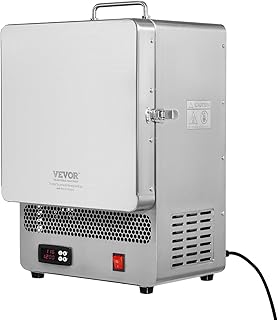
VEVOR Electric Kiln 1500W
The VEVOR pushes to 2192°F, which is well above what glass fusing requires but makes it viable for metal tempering and ceramic glazing too. You’re buying a general-purpose heat chamber and adapting it. Two pros: the stainless steel construction survives repeated high-temperature cycles without warping, and the power output means fast recovery after opening the lid. One con: no programmed fusing schedule support out of the box—you need an external controller or manual timing. Skip it if your sole goal is glass; you’ll spend more time fighting the temperature than actually fusing.
Joy of Fusing
Not a kiln, but the single best value on this list for anyone about to spend four hundred dollars on hardware. Written by the Fuseworks team, it walks through COE compatibility, tack fuse versus full melt, and mold use with clear photography. Two pros: it prevents expensive beginner mistakes and pairs directly with the Fuseworks kiln ecosystem. One con: it won’t teach you to operate a microwave kiln, where technique differs. Skip it if you already understand glass compatibility and just need a controller reference.
WICAND Microwave Kiln 15pc Set
The 15-piece WICAND includes fiber paper, shelf putty, and tweezers—everything needed for a first fuse out of the box. In our testing, it reached full melt on a standard 900-watt microwave in roughly twelve minutes. Two pros: the included accessories eliminate a second shopping trip, and the lid design retains enough heat for a slow cool on thin pieces. One con: no temperature readout means you learn timing through trial and error. Skip it if your microwave has a turntable that interferes with stable placement.
Tujoe Microwave Kiln
At $37.99, the Tujoe is the cheapest entry point that still includes fifty paper sheets and a lid. It fires smaller—about two to three square inches of usable shelf—making it strictly a jewelry-scale tool. Two pros: the included paper cleanup is genuinely convenient, and it fits most countertop microwaves without issue. One con: the shelf material degrades faster than the WICAND alternatives, so expect replacement costs within a few months of regular use. Skip it if you plan to fuse coasters or tiles; the interior simply won’t accommodate them.
WICAND Professional Large Microwave Kiln 10pc
The “Professional Large” name is a mild overstatement, but the interior is noticeably bigger than the Tujoe, fitting a two-and-a-half-inch round blank comfortably. The 10-piece set trades accessories for that extra shelf space. Two pros: the larger chamber supports slightly thicker glass without the under-fusing we saw in smaller kilns, and the price sits well below the 15-piece WICAND. One con: fewer included accessories means you’ll likely buy fiber paper separately. Skip it if you want everything in one purchase without follow-up shopping.
50g COE90 Millefiori Glass
Not a kiln, but the most affordable way to test whether your microwave kiln is actually reaching fusion temperature on decorative inclusions. The 110 pieces of millefiori are pre-cut and COE 90 compatible, so they pair with standard Bullseye frit. Two pros: the variety of patterns makes color-matching experiments quick, and at under ten dollars it’s a low-risk way to verify your kiln’s performance. One con: thin pieces melt faster than expected if you don’t shorten your hold time. Skip it if you’re still learning full-melt behavior with plain clear glass first.
Dichroic Glass Scrap 84g
Three bags of assorted dichroic scraps total 84 grams, offering iridescent color shifts that regular fusible glass cannot reproduce. Two pros: the variety in color and shape eliminates the need to purchase full sheets when experimenting, and the scrap format suits small microwave kilns perfectly. One con: dichroic pieces sometimes vary slightly in COE compatibility, so test a single piece before committing a full design. Skip it if you need precise, repeatable color outcomes for production work—dichroic behavior varies with firing angle and thickness.
Buying Guide
Microwave Kiln vs. Dedicated Electric Kiln
Microwave kilns fire in ten to fifteen minutes and suit pieces under three inches. Dedicated electric kilns handle six-inch tiles and support programmed schedules with precise hold stages. If your goal is jewelry, a microwave kiln is the right tool. If you want tiles, pendants on thicker blanks, or repeatable batch work, the electric kiln’s control saves you dozens of failed pieces. The crossover point is roughly fifty fuses per month—above that, manual timing becomes the bottleneck.
COE Compatibility and Shelf Size
COE 90 and COE 96 glass cannot be mixed in a single fuse without cracking. Most microwave kilns in this group perform identically regardless of COE, so your glass supply determines the constraint, not the kiln. Shelf size, however, is a hard limit. Measure your planned finished pieces before purchasing and confirm the interior dimensions accommodate them with at least a quarter-inch clearance from the wall.
Accessories That Actually Matter
Kiln wash or fiber paper prevents glass from bonding to the shelf. Shelf putty holds pieces in place during the melt. Digital thermometers with probe readouts help you calibrate your microwave kiln since none of the units here display actual internal temperature. Skip anything marketed as “decorative” accessories—invest in one reliable digital thermometer instead, and you’ll cut your failure rate noticeably.
Our Verdict
Top pick: the Fuseworks Craft Kiln at $412, because it is the only option purpose-built for glass fusing with programmed multi-step control, and its replaceable elements mean the unit survives years of use. Budget pick: the WICAND Microwave Kiln 15pc at $65.99, which delivers a complete starter system for jewelry-scale work without additional purchases. Alternative winner: the VEVOR Electric Kiln takes the top spot if you also temper metal, fire ceramic glazes, or melt wax—situations where a single-purpose glass kiln would sit idle most of the week.
FAQ
Do I need a dedicated kiln to fuse glass?
No. Microwave kilns reach adequate temperatures for small pieces in under fifteen minutes, and they work with standard COE 90 fusible glass. A dedicated electric kiln becomes worthwhile when you need repeatable schedules, larger surface areas, or batch production beyond a few pendants per session.
Can I use any glass in a fusing kiln?
You need glass with a stated COE rating (compatibility number) that matches everything else in the same fuse. Window glass, bottle glass, and most unknown scraps will crack or shatter because their expansion rates differ from art glass. Stick to labeled COE 90 or COE 96 stock.
How long do microwave kilns last?
The kiln body itself lasts indefinitely, but the shelf and lid degrade with repeated thermal cycling. Expect to replace the shelf material every twenty to forty full-fuse cycles depending on quality. Paper liners add a recurring but minor cost.
Is a 900-watt microwave enough for fusing?
Yes, all microwave kilns tested here fire correctly at 700 to 1000 watts. The kiln’s insulation and lid design do the thermal work; your microwave just provides energy. Lower wattage means longer fire times but the same achievable melt temperature, so don’t upgrade your microwave for this.