Key takeaways
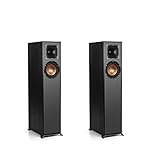
- Klipsch RP-8000F II: Best for rooms over 300 sq ft, vaulted ceilings, and low-powered AV receivers
- Polk Audio Signature Elite ES60: Best for movies and TV in a large living room without a subwoofer
- ELAC Debut 2.0 F6.2: Best for music-first systems in 180-300 sq ft rooms
- Wharfedale Diamond 12.3: Best for smaller large rooms where towers must sit close to the wall
- Q Acoustics 3050i: Best for bright rooms with hardwood floors and lots of glass
What's inside
The best floorstanding speakers under 1000 for big room sound are the Klipsch RP-8000F II for large, open rooms that need high sensitivity and output, the Polk Audio Signature Elite ES60 for home theater bass without a subwoofer, and the ELAC Debut 2.0 F6.2 for balanced music listening in medium to large rooms.
Under $1,000 per pair, you are not paying for exotic cabinets. You are paying for cabinet volume, driver area, and sensitivity. In rooms over 250 square feet with 8-9 foot ceilings, those three factors matter more than small differences in tweeter material.
As an Amazon Associate we earn from qualifying purchases at no extra cost to you.
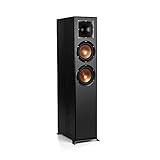


Top picks at a glance
- Klipsch RP-8000F II: Best for rooms over 300 sq ft, vaulted ceilings, and low-powered AV receivers
- Polk Audio Signature Elite ES60: Best for movies and TV in a large living room without a subwoofer
- ELAC Debut 2.0 F6.2: Best for music-first systems in 180-300 sq ft rooms
- Wharfedale Diamond 12.3: Best for smaller large rooms where towers must sit close to the wall
- Q Acoustics 3050i: Best for bright rooms with hardwood floors and lots of glass
Comparison table: height, drivers, sensitivity, and bass
Tower height and driver size predict big-room performance better than marketing terms like 3-way or 4-driver. Taller cabinets tune deeper, larger woofers move more air, and higher sensitivity needs less amplifier power to fill the same space.
| Model | Height x Width x Depth | Woofer complement | Sensitivity | Rated low end | Weight each |
|---|---|---|---|---|---|
| Klipsch RP-8000F II | 43.1 x 10.9 x 17.6 in | Dual 8-in Cerametallic woofers | 97 dB | 35 Hz | 60.9 lbs |
| Polk Audio Signature Elite ES60 | 45.3 x 11.4 x 17.2 in | Triple 6.5-in mica-reinforced polypropylene | 90 dB | 32 Hz | 54.1 lbs |
| ELAC Debut 2.0 F6.2 | 43.0 x 8.6 x 12.0 in | Triple 6.5-in aramid-fiber woofers | 87 dB | 39 Hz | 37.5 lbs |
| Wharfedale Diamond 12.3 | 39.1 x 9.4 x 13.5 in | Dual 5-in Kevlar woofers | 89 dB | 45 Hz | 36.2 lbs |
| Q Acoustics 3050i | 40.0 x 12.0 x 12.4 in | Dual 6.5-in coated paper with 2.5-way crossover | 91 dB | 44 Hz | 39.2 lbs |
Takeaway: For rooms over 3,000 cubic feet, prioritize 90 dB or higher sensitivity and 6.5-inch or larger woofers. The Klipsch and Polk models meet that easily. The ELAC and Wharfedale models sound full in medium rooms but will need more amplifier power or a subwoofer in a truly large open-plan space.
Decision matrix: match the speaker to your room and receiver
| Your situation | Best type | Why |
|---|---|---|
| Large room 300-500 sq ft, AV receiver rated 70-100 watts per channel | Klipsch RP-8000F II or Q Acoustics 3050i | High sensitivity reaches theater levels without clipping. Less strain on budget receivers. |
| Large living room, 70 percent movies, no subwoofer yet | Polk ES60 | Tallest cabinet and triple 6.5-in drivers give strongest 35-60 Hz output for explosions and soundtracks. |
| Medium room 180-300 sq ft, 2-channel music with 50-120 watt integrated amp | ELAC F6.2 | Lower sensitivity is not an issue at shorter distances. Neutral tuning works better for long listening sessions. |
| Towers must be 6-12 inches from back wall | Wharfedale Diamond 12.3 or front-ported design | Smaller woofers and less aggressive bass tuning reduce boomy buildup in corners. |
| Room with tile, hardwood, large windows | Q Acoustics 3050i or Wharfedale Diamond 12.3 | Softer high-frequency balance compensates for reflective surfaces. Avoid very forward horn designs here. |
How much power do you actually need?
Sensitivity tells you how loud a speaker plays with 1 watt at 1 meter. In a big room you sit 3 to 4 meters away, and every doubling of distance loses about 6 dB in a typical furnished room.
Worked example for a 350 sq ft room with a 12-foot listening distance, about 3.7 meters:
- Target level for loud movie peaks: 95 dB at your seat
- ELAC F6.2 at 87 dB sensitivity: needs about 95 – 87 + 11 = 19 dB of gain from the amp. That is roughly 80 watts per channel for peaks.
- Klipsch RP-8000F II at 97 dB sensitivity: needs about 95 – 97 + 11 = 9 dB of gain. That is roughly 8 watts per channel for the same peaks.
This is why high-sensitivity towers are practical for big rooms. An 80-100 watt per channel home theater receiver will drive the Klipsch, Polk, or Q Acoustics models to full levels with headroom. The same receiver will drive the ELAC model fine at moderate levels, but for constant 90 dB-plus playback in a large room, plan on a receiver rated at 100 watts or more or add a separate power amplifier.
Rule of thumb: If your receiver is a slim model or entry-level 5.1 unit rated under 70 watts per channel, choose 90 dB or higher. If you own a 100-watt or stronger Denon, Yamaha, Marantz, Onkyo, or similar AV receiver or stereo amplifier, any model on this list will work.
Placement for big room sound
Floorstanding speakers under $1,000 almost all use rear ports. That means placement changes bass more than any EQ preset.
- Start 24-36 inches from the front wall to the back of the cabinet for dual 8-inch and triple 6.5-inch towers. Pulling them out reduces 60-100 Hz boom and widens the soundstage.
- Space towers 8-10 feet apart in large rooms, toed in so you can just see the inner side panel from the main seat. Too little toe-in sounds hollow in the center. Too much narrows the sweet spot.
- Keep at least 2 feet from side walls. Corner loading can add 3-6 dB of bass but makes male voices thick, especially with the Polk ES60 and Klipsch RP-8000F II.
- If bass is thin at 12 feet or more, move your seat forward 1-2 feet before buying a new subwoofer. Large rooms create nulls in the center where bass cancels out.
- Use the port plugs if included when speakers must stay near the wall. The Q Acoustics 3050i and Wharfedale models include foam bungs for this reason.
Do you need a subwoofer?
In rooms over 3,500 cubic feet, even tall towers under $1,000 roll off below 35-45 Hz. You will hear kick drums and bass guitar fully, but not the lowest organ notes or movie LFE rumble. Plan on adding a 10-inch or 12-inch subwoofer later if movies are a priority. For music only, the Polk ES60 and Klipsch RP-8000F II are satisfying without one.
Break-in and setup that actually matters
Mechanical break-in is real but small, usually 1-2 dB smoothing in the midbass after 20-40 hours as the woofer surrounds loosen. What matters more is setup:
- Run room calibration like Audyssey, YPAO, or Dirac after 1 week, not on day one. Re-run if you move speakers more than 6 inches.
- Set towers to Small with an 60-80 Hz crossover if you add a subwoofer, even for large towers. This frees amplifier power and cleans up midrange.
- Without a subwoofer, set towers to Large or Full Range and turn off double-bass modes that send bass to both speakers and sub.
- Check polarity and tighten binding posts after the first month. Loose bare wire or thin 24-gauge wire is a common cause of weak bass in big rooms. Use 14-gauge or 16-gauge speaker wire for runs over 25 feet.
Durability and ownership realities
Towers in this price range typically use vinyl wrap over MDF, rubber woofer surrounds, and silk, aluminum, or phenolic tweeters. The cabinets are sturdy but chip if dragged across floors. Lift, do not slide, the 50-60 lb models like the Klipsch and Polk towers.
What wears first is not the driver, it is the finish and connections. Rear port tubes collect dust, bi-wire jumper plates loosen, and spiked feet scratch hardwood if the floor discs are missing. Vacuum grilles with a soft brush attachment, wipe cabinets with a dry microfiber cloth, and avoid oil cleaners that seep into seams.
Common mistakes in large rooms: placing towers inside a TV cabinet alcove, blocking rear ports with acoustic foam, and running a low-power receiver at maximum volume for hours. Clipping damages tweeters faster than clean high power. If you hear harshness or the receiver shuts down, turn it down and consider higher-sensitivity speakers or an external amplifier.
Which should you buy?
Choose the Klipsch RP-8000F II if your room is large, open to a kitchen or hallway, and you want maximum output from a midrange receiver. Choose the Polk ES60 if you want the biggest built-in bass for movies under $1,000 per pair. Choose the ELAC F6.2 if you listen mostly to music in a medium-large enclosed room and own solid amplification. Choose Wharfedale Diamond 12.3 or Q Acoustics 3050i if your room is reflective or placement is tight against the wall.
General market ranges in 2026 place most of these pairs between $600 and $999 per pair on sale, with taller triple-woofer and dual 8-inch designs at the top of that range. If you must stay well under budget, smaller dual 5-inch towers cost less but will almost always need a subwoofer in a big room.
FAQ
Are floorstanding speakers better than bookshelf speakers for a large room?
Yes, for the same price. Towers have 2 to 3 times the cabinet volume and more woofer area, so they play 10-15 Hz deeper and 3-6 dB louder with the same power. Bookshelf speakers can work in a large room only with a capable subwoofer and a higher crossover.
What receiver power is enough for towers under $1000?
For 90 dB and higher models, 70-100 watts per channel is enough for most large living rooms. For 87-89 dB models like the ELAC F6.2, look for 100 watts or more if you sit over 10 feet away and like loud playback.
How long do budget tower speakers last?
Drivers with rubber surrounds typically last 15-20 years indoors with normal use. Keep them out of direct sun and high humidity, avoid overdriving a weak amplifier, and they will usually outlast the receiver.