The hardest part of buying a first acoustic guitar is that the thing most likely to make you quit — high action — is invisible in product photos. A cheap dreadnought with the strings sitting 4mm off the twelfth fret will hurt your fretting hand, buzz when you finally press hard enough, and convince you that you have no talent. A guitar half the price with a decent setup will feel forgiving from the first open G chord. That gap has almost nothing to do with the brand badge on the headstock and everything to do with how the neck, nut and saddle were finished before the box was sealed.
So the honest framing for a budget starter guitar is this: you are not buying tone, you are buying playability and a body shape you will actually pick up. Laminate tops are the norm at this price and they are fine — they are stable, they survive dry apartments, and they sound perfectly good through a phone recording. What matters is scale length, nut width, whether the frets are dressed, and whether the bundle includes a tuner so you are not practicing on a guitar that is a semitone flat. This guide is for absolute beginners, returning players on a tight budget, and parents buying a first instrument that has to survive a teenager.
Our top picks


As an Amazon Associate we earn from qualifying purchases at no extra cost to you.
Quick Comparison
| Product | Best For | Standout Feature | Watch Out For |
|---|---|---|---|
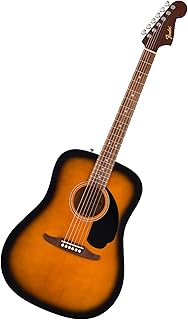
| Fender FA-25 Dreadnought | Best all-round first guitar | Consistent factory setup and real warranty backing | Full dreadnought body is bulky for small players |
| Ashthorpe 38-inch | Younger players and small frames | Shorter 38-inch body is easy to wrap an arm around | Thin projection compared to full-size dreadnoughts |
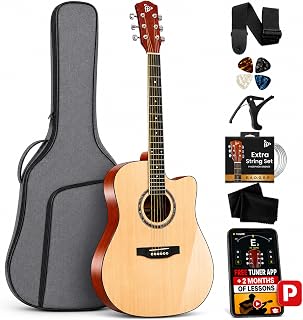
| Donner DAG-1CS Cutaway | Players who want upper-fret access | Cutaway plus a deep accessory bundle | Factory strings are stiff and worth swapping early |
| Moukey 41-inch | Adults who want full-size volume | Chord poster and capo included for practice | Tuners can slip until the strings settle |
| Joymusic JG-38C Kit | Lowest-friction starter package | Everything from picks to gig bag in one box | Lightest build of the group; handle with care |
| Fender Dreadnought Bundle | Self-teachers who want lessons included | Instructional material bundled with the guitar | Bundle accessories are basic, not upgrades |
How to Choose
- Body size before tone: A dreadnought is loud but deep-shouldered. If the player is under about five foot four, a 38-inch body will get held correctly instead of being wrestled with.
- Action and nut width: Aim for roughly 2mm string height at the twelfth fret on the high E. A nut around 43mm suits most hands; wider necks help fingerstyle but stretch small fingers.
- Solid vs laminate top: Laminate is expected at this price and holds up better in dry rooms. Do not pay a premium for a “spruce top” claim unless it clearly says solid.
- What is actually in the bundle: A clip-on tuner, spare strings and a strap earn their keep. Extra picks and a cloth are filler you can ignore when comparing value.
- Budget for a setup: Leave a little money aside for a shop setup or a saddle sand-down. It transforms a cheap guitar far more than any string upgrade will.
Top Picks Reviewed
Best Overall Starter: Fender FA-25 Dreadnought
The FA-25 is the safest recommendation here because the fretwork and neck relief arrive more consistent than the no-name competition. The X-braced dreadnought body gives you the strummy low end beginners expect, and the sunburst finish hides the inevitable pick scratches from a learner’s right hand.
Its limitation is ergonomic rather than sonic: a full dreadnought is a big box, and younger players often end up hunching over it. If the guitar will live with a ten-year-old, size down.
Best for Small Hands: Ashthorpe 38-inch
The 38-inch format shortens both the body and the reach to first position, which matters more than most buyers realise when a child is fighting to hold an F shape. The included gig bag and spare set of strings mean the first broken string is not a week of lost practice.
Expect less bass and less sustain than a full-size instrument. It is a practice guitar, not a performance one, and its voice thins out noticeably when you dig in hard with a heavy pick.
Best Cutaway: Donner DAG-1CS
The cutaway is the reason to pick this one. Once a beginner starts learning melodies rather than open chords, that clear access above the twelfth fret stops being a luxury. The bundle also throws in a capo, which is the single most useful accessory for playing along with recordings.
The strings it ships with are noticeably stiff. Dropping to a light gauge makes the guitar feel like a different, kinder instrument for the price of a coffee.
Best Full-Size Volume: Moukey 41-inch
At 41 inches this is a proper adult-sized guitar with the projection to match, and the printed chord poster is a genuinely sensible inclusion for someone learning without a teacher. Steel strings and a full body give you that unmistakable acoustic thump.
Give the tuners a few days of stretching and retuning. Until the windings settle, you will be reaching for the tuner more often than you would like.
Best Grab-and-Go Kit: Joymusic JG-38C
This is the least stressful purchase on the list: guitar, digital tuner, capo, strap with pick holder, spare strings and a bag, all in one delivery. For a gift, that completeness is worth a lot more than a marginal tonewood upgrade.
The build is light and the finish is thin, so it dents more easily than the Fenders. Treat it as a first instrument to learn on, not an heirloom.
Best Learn-at-Home Bundle: Fender Dreadnought Bundle
Same reliable dreadnought platform, packaged with instructional material and the accessories you would otherwise buy separately. Natural finish shows the grain and stays classic-looking as the player improves.
The bundled extras are functional rather than good — the tuner and strap will eventually get replaced. You are paying for the guitar and the convenience, which is a fair trade.
Frequently Asked Questions
Should a beginner start on nylon or steel strings?
Steel if you want to play pop, folk or rock, because that is the sound you are hearing in your head. Nylon is gentler on fingertips but the wide classical neck is harder for small hands, and the tone will not match the songs most beginners want to learn.
How high should the action be?
Roughly 2mm at the twelfth fret on the treble side and a shade over 2.5mm on the bass side is comfortable. Much higher and barre chords become an endurance test; much lower and open strings start to buzz against the frets.
Do I need a solid top to sound good?
Not for your first year. Solid tops open up and get richer over time, but a laminate top is more stable through humidity swings and no listener will hear the difference in a bedroom recording made on a phone.
How often should I change strings?
When they look dull and stop holding pitch — for most beginners that is every two to three months. New strings restore brightness and, more importantly, improve intonation up the neck so chords stop sounding sour.
Final Thoughts
Buy the guitar that fits the body holding it, insist on a decent setup, and spend the leftover money on light-gauge strings and a clip-on tuner rather than a fancier finish. Every guitar here is capable of taking someone from their first open chord to their first song; the one that gets picked up daily is the one that was comfortable on day one.