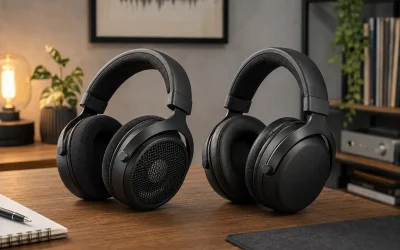
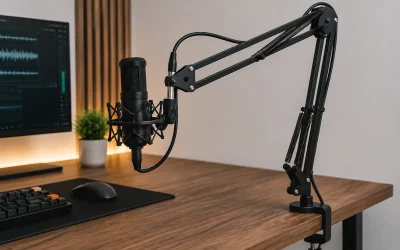
The biggest mistake in building a home studio is spending the whole budget on gear and nothing on the room. A five hundred pound microphone in a bare bedroom with parallel walls and a hard floor will produce a recording with an audible boxy ring that no plugin removes cleanly. A modest microphone in a room with a duvet behind the singer and something absorbent behind the mic will sound noticeably more professional. Acoustics are not an optional refinement; they are the largest single variable in home recording.
Once that is understood, the shopping list becomes clear. You need an interface with a preamp, a microphone suited to your room type, headphones that isolate while tracking, and something to control reflections — a portable booth, a reflection shield, or just soft furnishings arranged deliberately. Bundles make sense here because they guarantee the pieces work together, though they typically bundle entry-level versions of everything. This guide compares complete bundles and the individual acoustic pieces that make the biggest difference.
Our top picks



As an Amazon Associate we earn from qualifying purchases at no extra cost to you.
Quick Comparison
| Product | Best For | Standout Feature | Watch Out For |
|---|---|---|---|
| PreSonus AudioBox Go Creator | Compact all-in-one starting point | Interface, mic and headphones matched together | Single input limits simultaneous recording |
| Studio Mic with Isolation Shield | Vocals in an untreated room | Shield and pop filter supplied with the mic | Shield helps reflections, not outside noise |
| Snap Studio Portable Vocal Booth | Serious reflection control | Heavy sound-absorbing blankets with a frame | Takes real floor space when assembled |
| PreSonus AudioBox USB 96 Bundle | The most complete package | Monitors, mic, shield and software included | Monitors need a treated room to be useful |
| Aokeo Isolation Shield | Adding treatment to existing gear | Dense foam that mounts on most mic stands | Adds weight; check your stand can hold it |
| TONOR TC20 XLR Mic Kit | Podcasting and voiceover | Boom arm, shock mount and pop filter included | Needs an interface with phantom power |
How to Choose
- Treat the room first: Reflections cause more amateur-sounding recordings than any gear limitation. Soft furnishings, a shield or a portable booth deliver the biggest single improvement.
- Count simultaneous inputs: One preamp records one source at a time. Two-person podcasts and live vocal-plus-guitar takes need two, and no software workaround exists.
- Bundles versus separates: Bundles guarantee compatibility and are cheaper overall. Buying separately lets you put money where it matters most for your particular room and voice.
- Isolation shields are not soundproofing: A shield reduces reflections arriving at the microphone. It does nothing about traffic, neighbours or a noisy computer fan.
- Monitors need a room to work in: Studio monitors reveal problems, including your room’s. Without treatment, headphones often give more reliable mix decisions.
Top Picks Reviewed
Best Compact Starter: PreSonus AudioBox Go Creator
A USB-C interface, condenser microphone and headphones chosen to work together removes every compatibility question for someone starting from a bare laptop. Twenty-four bit recording at 96 kilohertz is more than enough resolution for any home project.
It gives you one input. The moment you want to record two people or a vocal and guitar together, you will need a second preamp.
Best Vocal Solution: Studio Mic with Isolation Shield
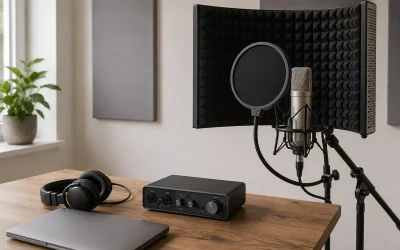
Pairing a condenser microphone with a shield and pop filter addresses the two things that most obviously mark a recording as amateur — room reflections and plosive thumps — in one purchase.
The shield controls reflections arriving from behind and beside the microphone. It will not stop a lawnmower outside or a fridge in the next room.
Best Reflection Control: Snap Studio Portable Vocal Booth
Heavy sound-absorbing blankets on a frame create a genuinely dead space around the singer, which is a far more effective solution than a small foam shield. The included light and mic adapter make it usable rather than theoretical.
It occupies real floor space when assembled. In a small flat, that is the tradeoff you have to weigh against the acoustic benefit.
Most Complete Bundle: PreSonus AudioBox USB 96 Bundle
Interface, condenser microphone, studio monitors, isolation shield and software covers every element of a home studio in a single purchase, which is a legitimate shortcut for someone who does not want to research six categories.
The monitors are the component that depends most on your room. Without treatment they will show you your walls as much as your mix, so headphones may serve you better initially.
Best Add-On Treatment: Aokeo Isolation Shield
High-density absorbent foam that mounts on a standard microphone stand, designed to work with large condensers. If you already own a decent microphone, this is the cheapest meaningful upgrade to your recordings.
It adds significant weight at the top of the stand. Check yours is stable enough, or the whole assembly will tip forward mid-take.
Best Podcast Kit: TONOR TC20 XLR Kit
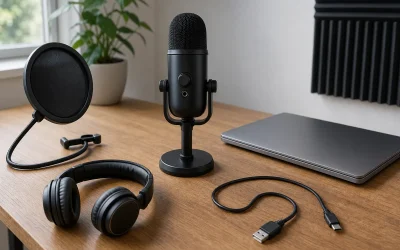
A cardioid condenser with a boom arm, shock mount and pop filter gets the microphone off the desk and away from keyboard thumps, which is the practical difference between a home recording and a broadcast-sounding one.
It is an XLR microphone, so it needs an interface supplying 48 volt phantom power. Budget for that if you are starting from nothing.
Frequently Asked Questions
What should I buy first for a home studio?
An interface, a microphone and closed-back headphones, then something to control reflections. That combination records everything; monitors and extra microphones can wait.
Do isolation shields actually work?
They reduce reflections arriving at the microphone from behind and to the sides, which reduces boxiness. They are not soundproofing and do not stop noise entering the room.
Do I need studio monitors?
Not at first. In an untreated room, monitors reveal the room as much as the mix. Closed-back headphones plus checking on a few other systems is a more reliable starting workflow.
How do I quieten a noisy room cheaply?
Record with soft furnishings around you — a duvet on a stand behind the microphone, a full wardrobe, a rug on a hard floor. Corners and parallel walls cause the worst problems, so avoid recording between them.
Final Thoughts
Buy the interface, microphone and headphones that suit your room and your input count, then spend the remainder on controlling reflections rather than on better electronics. A modest signal chain in a well-behaved space beats expensive gear in a bare room every time, and that is the lesson most home recordists learn far too late.