Ukulele has a reputation for being the easy instrument, and that reputation causes most of the bad purchases. People buy the cheapest thing shaped like a ukulele, discover it will not stay in tune for two consecutive songs, and conclude that ukuleles are toys. What they actually bought was an instrument with plastic friction pegs, a badly cut nut and strings that were never going to settle. A properly built soprano with geared tuners is a genuinely serious instrument that happens to be small and forgiving.
The size question is the other thing worth settling early. Soprano is the traditional and most recognisable voice — bright, plinky, compact, with the tightest fret spacing. Concert is a little longer with more room between frets and slightly more body resonance. Tenor is longer again, favoured by fingerstyle players who want note separation. All three are tuned the same way, so nothing you learn is wasted when you move between them. This guide covers soprano-focused options and explains what actually distinguishes them.
Our top picks




As an Amazon Associate we earn from qualifying purchases at no extra cost to you.
Quick Comparison
| Product | Best For | Standout Feature | Watch Out For |
|---|---|---|---|
| Kala LTP-S Learn-to-Play | Structured self-teaching | Mahogany soprano bundled with a lesson course | Soprano fret spacing is tight for large hands |
| Kala KA-TEAK-S | A warmer, distinctive voice | Teak body giving a fuller midrange | No accessories included in the box |
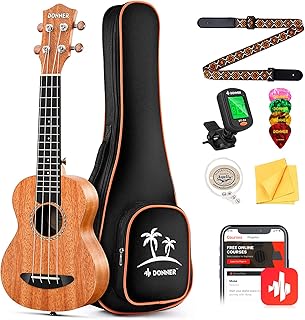
| Donner DUC-1 Concert | Players wanting more finger room | Concert scale with a full accessory bundle | Factory strings need days to settle |
| Kala MK-S Makala Pack | Reliable budget starter | Consistent build quality at entry level | Plain appointments and simple finish |
| Kohala KPP-S | Casual and travel playing | Light, simple soprano that packs easily | Basic tuners drift more than geared ones |
| TOM 21-Inch Sapele Soprano | A first instrument for children | Quality strings fitted from the factory | Small body limits volume and sustain |
How to Choose
- Pick the scale for your hands: Soprano is around 13 inches of scale with tight frets. Concert adds about an inch and noticeably more room. Tenor is longer still and easier for adult fingers.
- Geared tuners over friction pegs: Geared machine heads hold pitch and adjust precisely. Friction pegs slip, and slipping tuners are the main reason beginners give up on ukulele.
- Tonewood changes the voice: Mahogany is warm and balanced, sapele is similar and cheaper, teak is fuller through the mids, and laminate is stable but less resonant.
- Check the string quality: Cheap nylon stretches forever and sounds dull. A uke fitted with decent fluorocarbon or nylgut strings sounds like a different instrument.
- Look at the nut and saddle: Poorly cut nut slots cause buzzing at the first fret and sharp open chords. It is a cheap fix but you should know to check for it.
Top Picks Reviewed
Best for Learning: Kala LTP-S Learn-to-Play
Kala pairs a satin mahogany soprano with an actual structured course, a tuner app and a booklet, which addresses the real problem for a self-teacher: not the instrument, but knowing what to practise next. The mahogany body gives a warm, even voice that flatters simple strummed chords.
Soprano fret spacing is genuinely tight. Adults with large hands will find the upper frets cramped and may prefer stepping up to concert scale.
Most Distinctive Tone: Kala KA-TEAK-S
Teak is unusual in ukulele construction and it shows in the voice — fuller through the midrange and slightly less plinky than standard mahogany, which suits players who find the classic soprano sound too thin.
It ships as an instrument alone. Budget separately for a gig bag, a tuner and a strap if you want them.
Best for Larger Hands: Donner DUC-1 Concert
Stepping up to a 23-inch concert scale buys a meaningful amount of space between frets, which makes chord shapes cleaner for adult fingers, and the mahogany body gives it more body resonance than a soprano.
The strings it ships with take several days of constant retuning before they hold. That is normal for nylon, and swapping to a better set shortens the process considerably.
Best Budget Starter: Kala MK-S Makala Pack
Makala is Kala’s entry line and it is the most consistently well-built budget ukulele you are likely to find. Intonation is generally accurate, the frets are dressed properly, and it holds tune once the strings settle.
The appointments are plain. There is no binding, no decoration and no accessories beyond the basics; the money went into the parts that matter.
Best for Travel: Kohala KPP-S
A light, uncomplicated soprano that is easy to throw in a bag for a holiday or a campfire. Ukulele is the one fretted instrument you can genuinely take anywhere, and this leans into that.
The tuners are basic and drift more than geared machine heads. Expect to retune between songs in changing temperatures.
Best for Children: TOM 21-Inch Sapele Soprano
The standout here is that it comes with proper strings fitted rather than the stiff generic nylon most budget ukes use, which means it sounds musical from the first day rather than after a string change.
A 21-inch soprano body simply cannot move much air. Volume and sustain are limited, which is fine for a child and noticeable to an adult.
Frequently Asked Questions
Which ukulele size should a beginner choose?
Soprano for the classic sound and smallest hands, concert for adults who want more room between frets. Both are tuned identically, so nothing you learn on one has to be relearned on the other.
Why will my new ukulele not stay in tune?
Nylon strings stretch for several days after fitting. Stretch them gently by hand and retune frequently. If it persists after a week, the problem is slipping friction pegs or badly cut nut slots.
What tuning do ukuleles use?
Standard is G-C-E-A. Most sopranos and concerts use a re-entrant high G, which gives the characteristic bright sound. A low G string adds bass range and suits fingerstyle arrangements.
Is ukulele easier than guitar?
Physically, yes — four nylon strings under low tension are kind to fingertips, and many chords need only one or two fingers. Playing it well still takes the same work as any instrument.
Final Thoughts
Buy something with geared tuners and decent strings, then choose the scale that fits your hands rather than the one that looks most traditional. A well-built soprano or concert ukulele with a proper nut and a good set of fluorocarbon strings will stay in tune, sound sweet and cost far less than any other instrument that does the same.