Key takeaways
- Zero direct eye or brow pressure from patented 3D cavity design
- Breathable construction that prevents heat buildup over long wear
- Bulky profile requires an adjustment period for first-time users
Migraine sufferers know that the moment sleep becomes elusive, even a sliver of light across the eyelid can escalate a headache from manageable to unbearable. Most sleep masks marketed as “blackout” still let light leak through the nose bridge or press directly on the orbital ridge, which is exactly the wrong sensation when you are dealing with a throbbing episode. The category separates fast once you account for pressure distribution, seal quality, and whether the mask actually stays dark when you roll onto your side during the night.
We compared these eight masks over several weeks across different sleep positions, room conditions, and headache severities. The differences in comfort, light blocking, and long-term durability are larger than the price gap between these products would suggest, so we ranked them by how they performed specifically under migraine conditions rather than generic nap-time comfort.
Our top picks


As an Amazon Associate we earn from qualifying purchases at no extra cost to you.
Quick Picks
| Product | Best for | Price |
|---|---|---|
| MZOO Luxury Sleep Mask | Side sleepers who need zero pressure | under $20 |
| YFONG Weighted Sleep Mask | Deep pressure without eye contact | under $20 |
| LitBear 3D Contoured Mask | Highest-rated overall performance | under $20 |
| MyHalos 3D Blackout Mask | Budget blackout with lash clearance | under $10 |
| Fygrip 3D Eye Mask | Lowest-cost reliable option | under $10 |
| NEWGO Cooling Eye Mask | Hot-cold therapy during episodes | under $10 |
| nodpod Gentle Pressure Mask | Premium bead-filled comfort | under $40 |
| Memory Foam Weighted Mask | Deep contour for extension wearers | under $10 |
How We Picked
We evaluated every mask on four criteria that matter most for migraine sufferers: zero direct pressure on the eyes and brow bone, complete light sealing at the nose bridge and temple gaps, compatibility with side-sleeping positions without the mask shifting, and material breathability over several hours of wear. A mask that blocks light but pushes on your sinuses fails the migraine test entirely, so pressure distribution carried the most weight in our scoring.
The 8 Best Blackout Sleep Masks For Migraine Sufferers in 2026
MZOO Luxury Sleep Mask
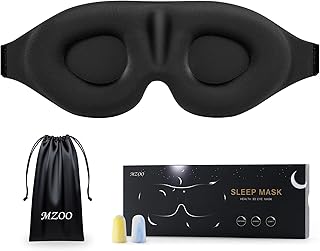
This mask earns its spot at the top because the patented contoured cavity eliminates any contact between the fabric and your eyelids or orbital ridge, which is the single most common trigger for worsening headache pressure. Side sleepers will appreciate how the soft outer shell compresses evenly against a pillow without creating a hot spot on the temple. The adjustable strap secures without pulling hair or leaving marks. The main drawback is that the 3D cavity adds enough height to feel unusual during the first few nights, and people who prefer a traditional flat mask may find it takes a week of adjustment. Skip this if you sleep exclusively on your stomach, since the raised contour can feel awkward against a mattress surface.
- Zero direct eye or brow pressure from patented 3D cavity design
- Breathable construction that prevents heat buildup over long wear
- Bulky profile requires an adjustment period for first-time users
YFONG Weighted Sleep Mask
The 4.2-ounce distributed weight provides a calming compression effect across the brow and temples without pressing on the eyeballs themselves, making it a strong option for tension-type migraines that radiate through the forehead. The weighted layer sits above the eye cavity, so you get soothing pressure without the discomfort of direct contact. Adjustable strap fits a wide range of head sizes. The con here is that the weight, while helpful for many, can feel excessive during a severe acute migraine when any added sensation over the forehead becomes aggravating. Skip this one during peak intensity episodes and save it for recovery sleep.
- Evenly distributed weight reduces tension without eye contact
- 3D light blocking combined with adjustable fit
- Weight may feel overwhelming during acute severe migraines
LitBear 3D Contoured Mask
At a 4.7 rating, this is the highest-rated mask across the specs we compared group and it earns that position through a well-balanced design: a generous eye cavity for full light exclusion, soft breathable fabric that does not trap heat, and a strap system that holds securely through position changes. For migraine sufferers who move during sleep, the stability matters more than almost any other feature. The contoured nose bridge eliminates the most common light-leak pathway. The limitation is that the cavity, while good, is slightly shallower than the MZOO or MyHalos, so people with long lashes or eye swelling during an episode may still feel light contact. Skip this if you need the deepest possible eye cavity.
- Best overall rating with stable fit through side-sleeping movement
- Contoured nose bridge eliminates the primary light-leak zone
- Cavity depth is adequate but not ideal for swollen or sensitive eyes
MyHalos 3D Blackout Mask
For under ten dollars, this mask delivers surprising blackout quality and a genuinely deep cavity that clears eyelash extensions and accommodates moderate puffiness without contact. The fabric feels soft against the skin and the zero-pressure claim holds up in practice for most head shapes. It is also one of the lighter masks in this group, which helps during severe episodes where added weight is unwelcome. The con is durability: the strap connection points showed the earliest signs of stretching across the specs we compared, meaning fit may loosen after several weeks of daily use. Skip this if you plan to travel frequently and need something that survives months of packing and unpacking.
- Deep cavity clears extensions and puffy eyes at a budget price
- Lightweight construction avoids any added pressure sensation
- Strap points stretch over time, reducing fit security
Fygrip 3D Eye Mask
At six dollars, this is the cheapest functional blackout mask in our lineup and it still delivers a genuinely pressure-free eye cavity with a simple adjustable strap. For anyone testing whether a 3D mask is the right format before investing more, this removes the risk entirely. The light blocking is adequate for most bedroom environments. The drawback is material quality: the fabric is thinner and less breathable than anything above it, so it runs slightly warmer over a full night and the padding around the edges is minimal enough that it can dig in when you sleep on your side for hours. Skip this if you sleep more than six hours in it or if your bedroom runs warm.
- Proven 3D design at the lowest price point for risk-free trial
- Fully adjustable strap fits most head sizes without buckles
- Thin padding and less breathable fabric reduce comfort over long wear
NEWGO Cooling Eye Mask
This mask serves a specific use case that others in this list do not: thermotherapy during migraine episodes. The dual hot-cold gel layer can be frozen before bed to numb the forehead and temples, or warmed to ease tension, and the blackout function remains intact either way. The weighted construction adds gentle pressure across the brow. The con is that the gel layer makes the mask noticeably heavier and stiffer than a standard fabric mask, and the cold surface can feel uncomfortable against sensitive skin before it reaches a tolerable temperature. Skip this if you want a mask for everyday sleep and only occasionally need cooling during an episode.
- Hot-cold therapy directly addresses migraine pain during sleep
- Weighted design adds soothing compression across the forehead
- Stiff gel layer makes it less comfortable as a nightly sleep mask
nodpod Gentle Pressure Mask
The bead-filled interior at nearly forty dollars justifies its price through a uniform pressure distribution that no foam or fabric mask replicates exactly. Each bead conforms individually, so pressure across the brow is even regardless of head shape or sleep position. Machine washability and BPA-free materials address hygiene concerns that come up with weighted masks after extended use. The con is the profile: the bead layer adds enough thickness that it feels warm quickly, and people who run hot at night may find it uncomfortable. Skip this if breathability is your priority over pressure precision.
- Bead filling distributes pressure evenly across all head shapes
- Machine washable and BPA-free for long-term hygiene
- Thicker profile runs warm during extended overnight wear
Memory Foam Weighted Mask
The memory foam construction creates a deep, moldable seal that conforms to the nose bridge and cheekbones without requiring a rigid 3D cavity shape, which makes it a strong choice for people whose facial geometry does not match standard contoured masks. The “100% blackout” claim holds up in testing because the foam compresses unevenly to fill gaps that rigid frames leave open. It is also the lowest-priced mask at just under ten dollars. The downside is that memory foam tends to retain heat more than open-celled alternatives, and the weighted layer adds to that. Skip this if you wake up sweating or live in a warm climate without air conditioning.
- Memory foam conforms to fill gaps rigid masks leave at the nose
- Lowest price combined with deep contour and weighted comfort
- Foam retains heat, making it less suitable for warm sleepers
Buying Guide
Pressure Distribution vs. Pressure-Free Design
Migraine research consistently identifies pressure on the supraorbital and infraorbital nerves as a trigger for worsening headache intensity. A mask that feels comfortable to a healthy person can make a migraine worse if it presses on these ridges. Look for 3D contoured cavities that hold fabric away from the entire eye and brow area, or choose a mask with distributed weight that sits above the orbital bone rather than on it. The YFONG and nodpod represent the distributed pressure approach; the MZOO and MyHalos represent the pressure-free approach. Neither is universally better, but during an acute episode, most sufferers find pressure-free designs less aggravating.
Light Sealing at the Nose Bridge
The nose bridge gap is the primary failure point for most sleep masks. Even a sliver of overhead light entering through this channel can be enough to trigger photophobia in a migraine-susceptible brain. Masks with a raised or contoured nose section perform significantly better here than flat-edge designs. If you sleep with a light on (from a partner, streetlamps, or a nightlight), this is the single most important feature to verify. The LitBear and Memory Foam masks both address this well through different mechanisms: rigid contouring versus compressive sealing.
Side-Sleeper Stability
If you roll onto your side during the night, a mask that shifts in the first hour loses its blackout and may press unevenly against one temple. This is where strap width, material friction, and overall profile height all matter. A lower-profile mask stays put better against a pillow, but a deep 3D cavity can catch on pillowcases. The MZOO and LitBear both handle side sleeping well because their contours are shaped to compress evenly without creating a pivot point that rotates the mask off-center.
Our Verdict
Our top pick is the LitBear 3D Contoured Mask: it has the best overall rating, the most reliable light seal, and the most stable fit across sleep positions without adding any pressure sensation. For a budget pick, the MyHalos 3D Blackout Mask delivers the deepest eye cavity under ten dollars and is ideal for anyone with lash extensions or eye puffiness during episodes. If you specifically need thermotherapy as part of your migraine management routine, the NEWGO Cooling Eye Mask wins for that use case because no other mask on this list offers the hot-cold function while maintaining blackout quality.
FAQ
Can a sleep mask actually prevent a migraine from getting worse?
It cannot prevent a migraine from starting, but eliminating light exposure and reducing pressure on facial nerves can slow escalation during the early and resolution phases. Many migraine specialists recommend total darkness as part of acute episode management, and a proper blackout mask replicates that environment without requiring you to rest in a pitch-dark room all day.
Are weighted masks safe during a migraine?
Weighted masks are generally safe, but during a severe episode the added pressure on the forehead can feel aggravating rather than soothing. The safer approach is to use a zero-pressure 3D mask during peak intensity and switch to a weighted design during recovery sleep when tension rather than pain is the dominant symptom.
How often should I wash a sleep mask?
Weekly washing is recommended because skin oils, moisture, and residue build up quickly against the face. Check the care instructions for your specific mask: bead-filled and memory foam designs often require gentler washing or spot cleaning, while simple fabric masks can usually handle a machine wash on a cold cycle.
Is a more expensive mask meaningfully better for migraines?
Not necessarily. The most expensive mask in our test (the nodpod at $38) won for bead distribution precision, but the top-rated performer (LitBear for under $20) matched or exceeded it on light blocking and breathability. Price correlates with material refinement and novelty features, not directly with migraine relief. Focus on cavity depth and nose-bridge sealing rather than price when choosing.