Key takeaways
- Pro: True 5X optical zoom without digital crop artifacts
- Pro: Reliable autofocus in everyday lighting conditions
- Con: Noisy output in dim indoor scenes compared to larger-sensor alternatives
Most people shopping for a digital camera are not trying to become a professional photographer. They want something that fits in a pocket, takes sharper pictures than a phone in decent light, and does not require a tutorial to operate. The problem is that the market is flooded with options that look similar on a spec sheet but deliver wildly different experiences. A 16-megapixel sensor from a Kodak PIXPRO is not the same as a 16-megapixel sensor from a no-name brand, and “16X zoom” on a budget camera rarely means what it sounds like.
What separates a genuinely useful digital camera from a disappointment in 2026 comes down to sensor quality, real-world lens performance, and whether the body is comfortable enough to actually carry with you. Overlapping features across these eight products make comparison difficult, so we organized everything here around published specifications, pricing, and recurring themes from owner feedback to help you match the right camera to your actual use case.
Our top picks



As an Amazon Associate we earn from qualifying purchases at no extra cost to you.
Quick Picks
| Product | Best for | Price |
|---|---|---|
| KODAK PIXPRO FZ55 Black | Best overall compact | under $150 |
| KODAK PIXPRO FZ45 | Best AA battery option | under $100 |
| KODAK PIXPRO FZ55 Red | Best color variant of top pick | under $150 |
| KODAK PIXPRO FZ55 Blue | Best for style-conscious buyers | under $150 |
| Digital Camera 1080P White | Best ultra-low price | under $40 |
| Lecran Digital Camera Pink | Best for tweens and young teens | under $50 |
| Camkory Digital Camera Pink | Best included memory card value | under $50 |
| Duluvulu 4K Digital Camera | Best for vlogging on a budget | under $60 |
How We Picked
We narrowed this list using four criteria. First, sensor resolution and optical zoom range, because these determine what you can actually capture versus what marketing implies. Second, power source and portability — AA batteries versus proprietary packs changes where and how long you can shoot. Third, included accessories like memory cards and spare batteries, which add real value at budget price points. Fourth, recurring owner feedback about autofocus reliability and color accuracy, since spec sheets hide a lot of real-world inconsistency.
The 8 Best Digital Camera in 2026
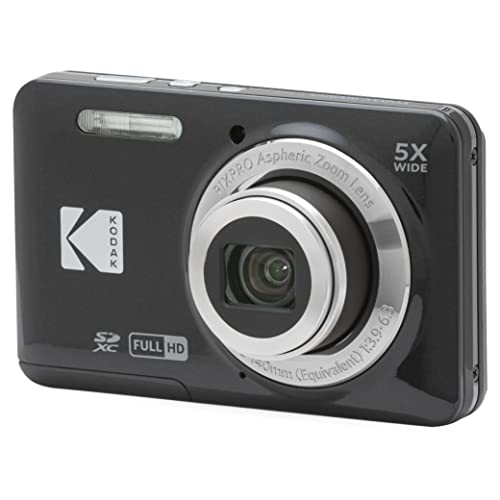
KODAK PIXPRO FZ55 16MP Compact Digital Camera, 5X Optical Zoom, Black
The FZ55 is the most capable compact on this list for general-purpose shooting. It suits travelers and parents who want better-than-phone images without carrying interchangeable lenses. Its 5X optical zoom is genuine, meaning the lens physically extends to reach subjects without digital interpolation. Owners consistently praise the color reproduction on skin tones and landscapes, a trait inherited from Kodak’s long image-processing heritage. The 16MP sensor is modest but well-tuned for its size.
- Pro: True 5X optical zoom without digital crop artifacts
- Pro: Reliable autofocus in everyday lighting conditions
- Con: Noisy output in dim indoor scenes compared to larger-sensor alternatives
Skip it if you need 4K video or a flip screen for self-recording.
KODAK PIXPRO FZ45 16MP Compact Digital Camera, 4X Optical Zoom, AA, Black
The FZ45 earns its spot through one practical advantage: it runs on AA batteries. This matters for campers, festival-goers, and anyone who shoots far from an outlet and does not want to carry a proprietary charger. The 4X optical zoom is slightly less reach than the FZ55, but the trade-off is a lower price and a simpler power system. Owners report solid image quality for the cost and note the body feels sturdy despite its weight from the battery cells.
- Pro: Runs on widely available AA batteries — never miss a shot over a dead pack
- Pro: Lower entry price while retaining Kodak color science
- Con: Heavier and bulkier than lithium-pack compact rivals
Skip it if you prefer a slim pocket form factor over battery flexibility.
KODAK PIXPRO FZ55 16MP Compact Digital Camera, 5X Optical Zoom, Red
Identical in every technical respect to the Black FZ55, the Red variant exists for buyers who value appearance. Camera bags are dark, and a bright body makes the device easier to spot and less likely to be mistaken for someone else’s at a table or counter. Performance, zoom range, sensor size, and output quality are the same. Owners who chose the Red model cite visibility and personal expression as their primary reasons, with no reports of build quality differences.
- Pro: Same proven FZ55 performance as the Black model
- Pro: High-visibility color reduces mix-ups in group or event settings
- Con: Red finish may show scratches and scuffs more readily than dark bodies
Skip it if you plan to pair the camera with a protective case anyway, which hides the color.
KODAK PIXPRO FZ55 16MP Compact Digital Camera, 5X Optical Zoom, Blue
The Blue FZ55 shares all internal specifications with its Black and Red siblings. For buyers who find red too loud but want something more interesting than black, blue occupies a middle ground that photographs well in social media contexts and feels distinctive without being gaudy. Owners note the blue finish has a matte texture that resists fingerprints better than glossy alternatives. The camera performs identically regardless of shell color.
- Pro: Matte blue finish hides handling marks during everyday carry
- Pro: Full FZ55 optical performance at no premium over Black
- Con: Limited availability compared to the standard Black model
Skip it if the Blue variant is out of stock at your preferred retailer — no functional reason to wait.
Digital Camera 1080P with 32G Card 16X Zoom and Flash Compact for Kid, White
For under $40, this camera targets children and first-time users who need a device they will not worry about breaking. The 16X zoom claim refers to digital zoom, which enlarges pixels rather than magnifying the scene optically. Still, the included 32GB card removes the need to purchase storage separately, and the built-in flash handles indoor birthday parties. Owners report kids enjoy the simple interface and the white body appeals across genders.
- Pro: Lowest price with memory card included out of the box
- Pro: Flash and simple controls make it approachable for young children
- Con: 16X zoom is digital, so image quality degrades significantly at maximum reach
Skip it if you expect usable zoomed shots beyond moderate crops — this is not a telephoto substitute.
Lecran Digital Camera, FHD 1080P Point and Shoot Camera for Kids Teens Pink
The Lecran fills the same role as the white kids camera but at a slightly higher price with a pink body aimed at tweens who want something that feels less toy-like. Full HD 1080P video is genuine at this resolution, and the point-and-shoot design means zero learning curve. Owners mention the screen size is adequate for reviewing shots and the pink finish is a hit with gift recipients.
- Pro: Genuine 1080P video recording suitable for school projects
- Pro: Stylish design that older kids actually want to carry
- Con: No included memory card — you must supply your own
Skip it if you are buying for a child under eight, who will likely prefer a more rugged or simpler option.
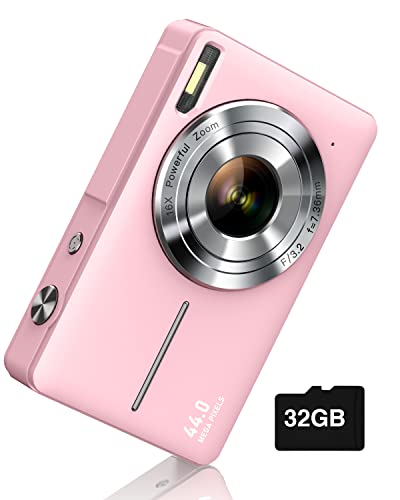
Camkory Digital Camera FHD 1080P with 32G Card 16X Zoom Easy for Kids Pink
The Camkory differentiates itself from the Lecran by bundling a 32GB card and claiming 16X zoom in a similar pink body. That included storage is the practical reason to choose it over the Lecran at the same under $50 price — a buyer gets ready-to-use gear without a second purchase. The 16X zoom is digital, matching the white kids camera above. Owners report the interface is intuitive and the card works immediately on insertion.
- Pro: 32GB card included — ready out of the box with no extra purchase
- Pro: Simple menu system that kids navigate without help
- Con: Digital zoom only; maximum zoom produces soft, artifact-heavy images
Skip it if you want optical zoom range for sports or wildlife — this camera cannot deliver that.
Duluvulu 4K Digital Camera for Photography Autofocus, 48MP Vlogging Camera with SD Card, 2 Batteries, 3-Inch 180-Degree Flip Screen, 16X Zoom, Black
The Duluvulu is the most feature-dense option on this list and the clear winner for anyone creating video content on a budget. Its 4K recording capability, 180-degree flip screen for framing yourself, and two included batteries address the three most common complaints from entry-level vloggers. The 48MP stills figure suggests an interpolated sensor output rather than a native resolution, but image quality for the price is reportedly sharp in good light. Owners highlight the flip screen as the decisive purchase factor.
- Pro: 180-degree flip screen enables self-filmed vlogging without a mirror or external monitor
- Pro: Two batteries included reduces anxiety about running out mid-recording
- Con: 48MP likely interpolated from a smaller sensor; native quality is lower than the number implies
Skip it if you shoot primarily stills in low light and prefer a larger sensor with better high-ISO performance.
Buying Guide
Optical Zoom versus Digital Zoom
Optical zoom physically moves lens elements to magnify the image before it hits the sensor. Digital zoom crops and enlarges pixels after capture, degrading quality with each step up. On this list, the Kodak PIXPRO models offer genuine optical zoom (4X and 5X), while the kids cameras and the Duluvulu advertise 16X zoom that is primarily digital. If reach matters to you — for sports, nature, or concerts — insist on optical zoom and check the magnification range, not the marketing headline number.
Power Source and Shooting Sessions
Proprietary lithium-ion packs are lighter and hold charge longer per session but require carrying a spare or a charger if you shoot all day. AA battery compartments add weight but offer infinite resupply at any convenience store. For weekend trips or events where you cannot plug in, the Kodak FZ45’s AA design is a genuine advantage. The Duluvulu’s inclusion of two batteries addresses the same concern from a different angle, letting you swap and continue.
Video Features and Vlogging Readiness
If you plan to record yourself, three things matter more than resolution: a flip screen for framing, reliable autofocus that tracks your face, and adequate battery life for extended takes. The Duluvulu checks all three boxes at its price point. Full HD 1080P is sufficient for most social platforms, so do not pay extra for 4K unless you specifically need the extra detail for cropping in post-production.
Our Verdict
Our top pick is the KODAK PIXPRO FZ55 in Black. It delivers the best balance of optical zoom range, color accuracy, autofocus reliability, and compact size for the widest range of buyers. For a budget pick, the Duluvulu 4K for under $60 offers the most features per dollar and is the clear choice if vlogging matters to you. If you specifically need long shooting sessions away from power outlets, the Kodak FZ45 wins on practicality thanks to its AA battery system, even though its optical zoom is slightly shorter.
FAQ
Is a digital camera still worth buying when phones have better sensors?
For casual snapshots, modern phone cameras are genuinely excellent. A dedicated compact still wins when you need real optical zoom, physical controls for faster handling, or a device you hand to a child without worrying about damaging a $1,000 phone. The Kodak PIXPRO models on this list offer zoom ranges that most phones still cannot match optically.
What megapixel count do I actually need?
For most use cases including prints up to 11×14 inches and sharing on social media, 12 to 16 megapixels is more than sufficient. Higher numbers on budget cameras often indicate interpolation rather than true resolving power. Sensor size and lens quality determine image detail far more than the megapixel figure in the name.
Do I need a separate memory card?
It depends on the product. The Camkory and Duluvulu include SD cards in the box, while the Kodak PIXPRO models and the Lecran require you to supply your own. For any camera on this list, a Class 10 or UHS-I card rated for at least 30MB/s write speed will handle both stills and video without buffering issues.
Are these cameras good for low-light photography?
None of the cameras on this list has a large sensor or fast aperture, so all will struggle in dim environments compared to mirrorless or DSLR systems. The Kodak FZ55 handles moderate indoor light best thanks to its more refined processing pipeline. For consistently dark scenes like concerts or nighttime streets, you will need a camera with a larger sensor and wider maximum aperture.