Key takeaways
- Real-time Eye AF delivers reliable focus on people and animals at a fraction of full-frame cost
- Compact APS-C body keeps weight down for travel and street shooting
- 4K video with flip screen makes it a capable hybrid option for beginners
Choosing the right sony mirrorless camera means balancing sensor size, autofocus reliability, video capability, and price against how you actually shoot. A content creator recording daily vlogs has different needs than a wildlife photographer tracking fast subjects or a hobbyist upgrading from a smartphone. The line between a great purchase and a regrettable one often comes down to whether you are paying for features you will never use or under-buying on the specs that matter most for your workflow.
Owner feedback and published specs make clear what separates a solid pick from a mediocre one in this lineup. Sensor generation determines dynamic range and low-light performance, autofocus architecture dictates whether you hit the shot or miss it, and lens-mount compatibility locks you into an ecosystem for years. Below we compare eight current options by price, capability, and real-world usability to help you find the best fit.
Our top picks




As an Amazon Associate we earn from qualifying purchases at no extra cost to you.
Quick Picks
| Product | Best for | Price |
|---|---|---|
| Sony Alpha a6400 | Beginners and travel shooters | under $800 |
| Sony Alpha a7 IV with 28-70mm | Hybrid photo and video shooters | $2,198 |
| Sony ZV-E10 | Vloggers and content creators | $798 |
| Sony Alpha 7 IV body only | Full-frame on a tighter budget | $1,998 |
| Sony a7 IV Deluxe Bundle | All-in-one starter packages | $2,268 |
| Sony Alpha a7 V | Professional sports and action | $2,898 |
| Sony Alpha 7 IV Value Bundle | Best overall value in full-frame | $2,198 |
| Sony Alpha a7 III with 28-70mm | Entry into the full-frame system | $1,898 |
How We Picked
We evaluated each camera on four criteria: autofocus performance relative to its price tier, sensor resolution and dynamic range as published by Sony, video feature set including codec options and recording limits, and the practical cost of ownership when factoring in included lenses or bundle extras. Owner feedback on forums and review platforms helped validate which specs translate into meaningful daily advantages versus marketing claims.
The 8 Best Sony Mirrorless Camera in 2026
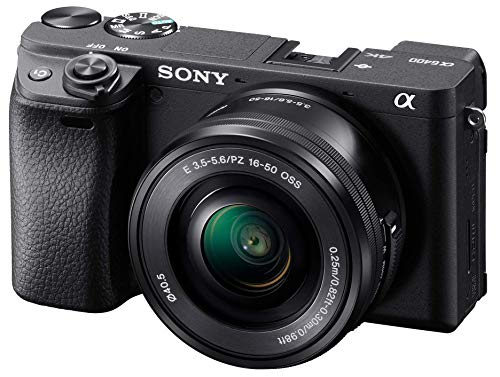
Sony Alpha a6400
- Real-time Eye AF delivers reliable focus on people and animals at a fraction of full-frame cost
- Compact APS-C body keeps weight down for travel and street shooting
- 4K video with flip screen makes it a capable hybrid option for beginners
This is the sony mirrorless camera to recommend when the budget is under $800 and you want a real system with E-mount glass. The 24-megapixel APS-C sensor produces clean files up to moderate ISO, and the 16-50mm kit lens covers everyday focal lengths in a pocketable form factor. Owners praise the eye-tracking autofocus for portraits of moving subjects. The main limitation is the small buffer during rapid bursts, so it is not ideal for sports. Skip it if you need 4K 60fps or a larger viewfinder.
Sony Alpha a7 IV with 28-70mm
- 33-megapixel full-frame sensor offers excellent detail and usable dynamic range at high ISO
- Includes the versatile 28-70mm kit lens, making it ready out of the box
- Strong hybrid photo and video specs with 10-bit color recording
The a7 IV has become the default recommendation for shooters who need one camera that handles portraits, landscapes, and 4K video without compromise. The included 28-70mm lens provides a workable starting range, though many owners upgrade to sharper primes quickly. Published specs confirm a significant resolution jump over the a7 III. The body is comfortable with balanced weight distribution. Skip this bundle if you already own compatible glass and prefer to save by buying the body alone at $1,998.
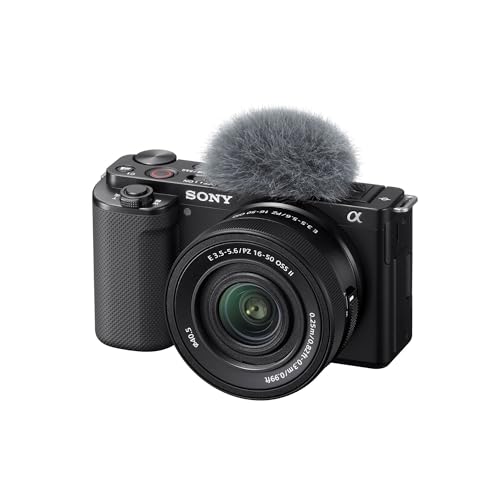
Sony ZV-E10
- Designed specifically for video with a fully articulating screen and product showcase mode
- APS-C sensor delivers strong image quality with background blur from fast E-mount lenses
- Lightest option here, easy to handhold for extended recording sessions
Content creators who prioritize talking-head footage or B-roll will find the ZV-E10 the most focused tool in this group. The dedicated record button, directional microphone, and auto-framing features remove friction from the creative process. Published specs show a 24-megapixel APS-C sensor with 4K oversampled from 6K. Owners report the lack of a viewfinder and in-body stabilization as the primary compromises. Skip it if you still need a capable stills camera for events or print work where the a6400 or a7 IV serve better.
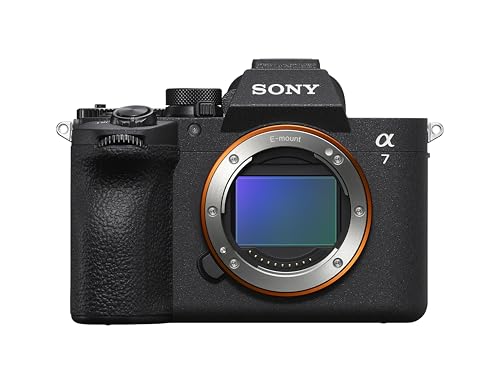
Sony Alpha 7 IV body only
- Same 33-megapixel sensor and processing engine as the bundle version at $200 less
- Frees you to choose exactly the lens that matches your shooting style
- Full E-mount compatibility means access to dozens of native and third-party options
For photographers who already own a favorite zoom or prime, the body-only a7 IV is the rational purchase. You get identical sensor performance, autofocus system, and video capabilities without paying for a kit lens you might never mount. The $200 savings over the bundled version could go toward a higher-grade optic. Owners frequently pair it with the 24-70mm f/2.8 GM II for a premium setup. Skip it if you are starting from zero and need a lens to make the camera functional immediately.
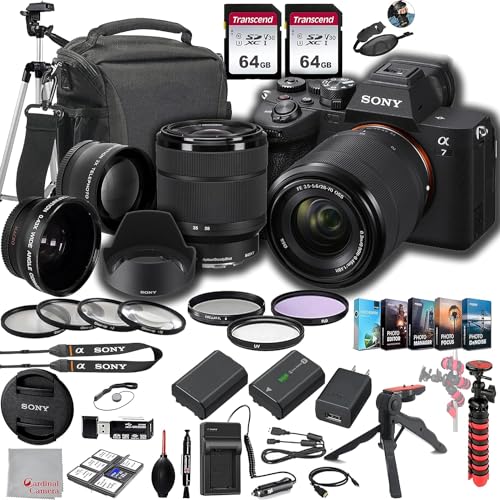
Sony a7 IV Deluxe Bundle
- Includes 128GB memory, 2X and 0.43X wide-angle lenses, case, tripod, filters, hood, spare battery, charger, and software
- Only $70 more than the standard kit, delivering substantial accessory value
- Reduces the need for separate accessory shopping in the first few months
This bundle targets buyers who want a complete shooting system in one purchase. The included teleconverter and wide-angle adapters extend the reach and coverage of the kit lens without requiring new glass. A spare battery and charger eliminate the most common first-week annoyance. The software kit and memory card handle file management and editing out of the gate. Owner feedback suggests the third-party adapters are adequate for casual use but not a replacement for native Sony optics. Skip it if you already own most accessories and just want the camera and lens.
Sony Alpha a7 V
- AI-driven autofocus with 30fps continuous shooting handles erratic subjects with confidence
- Latest-generation full-frame sensor improves dynamic range and readout speed over the a7 IV
- Built for professional workflows that demand reliability under pressure
The a7 V represents the current peak of Sony’s full-frame lineup for speed and intelligence. The AI autofocus system recognizes subjects and maintains lock through occlusions more consistently than the previous generation. At $2,898 body only, it commands a premium over every other option here. Sports, wildlife, and wedding photographers will notice the sustained burst depth and reduced rolling shutter. Hobbyists and casual shooters will find its capabilities exceed their needs. Skip it unless your work genuinely benefits from 30fps bursts and the latest processing pipeline.
Sony Alpha 7 IV Value Bundle
- Same $2,198 price as the standard kit bundle with a 2026-updated 28-70mm zoom lens
- The revised lens kit offers a slightly refreshed coating or build versus earlier iterations
- Provides the best price-to-capability ratio among full-frame options in this comparison
This value bundle lets you step into full-frame without exceeding the $2,200 mark. The included 28-70mm zoom covers a practical wide-to-short-tele range, and the camera’s hybrid features serve both photo and video work. Published specs are identical to the a7 IV elsewhere in this list, so you gain the same 33-megapixel sensor and BIONZ XR processing. Owner reviews of the 2026 lens revision note minor optical improvements. Skip it if you need body-only pricing at $1,998 and already have compatible glass.
Sony Alpha a7 III
- The 24-megapixel sensor still produces excellent files and remains competitive at $1,898 with lens
- Proven reliability and deep third-party lens ecosystem support at entry-level full-frame pricing
- Lower megapixel count makes it lighter to drive for video and less demanding on storage
The a7 III remains a smart buy for photographers entering full-frame who want proven performance without the latest price tag. Owners consistently praise its battery life, dual card slots, and color science. Autofocus is capable though a generation behind the a7 IV and a7 V, particularly for subject tracking. The 24-megapixel resolution is sufficient for most print and web work. Skip it if you need the a7 IV’s improved menu system, 10-bit video, or 33-megapixel detail for cropping.
Buying Guide
APS-C versus full-frame: what actually matters
Sensor size determines your depth-of-field control, low-light ceiling, and total system cost. APS-C bodies like the a6400 and ZV-E10 are smaller and cheaper, and their crop factor extends telephoto reach, which benefits wildlife and sports on a budget. Full-frame options deliver shallower backgrounds, typically better high-ISO performance, and wider-angle coverage with the same lens. If you shoot events, portraits, or landscapes and want room to grow your glass collection, full-frame is the stronger long-term investment. If portability and a low entry price dominate, APS-C gets you 90 percent of the way there.
Autofocus system generation
Sony’s autofocus has evolved across three broad generations in this lineup. The a7 III uses the original hybrid system, which is reliable for static and moderately moving subjects. The a6400, a7 IV, and ZV-E10 add Real-time Eye AF for humans and animals, plus improved tracking that follows subjects across the frame. The a7 V introduces AI-based subject recognition that identifies cars, trains, birds, and insects. Each step narrows the gap between intended focus and what the camera locks onto during decisive moments. Prioritize the generation that matches your subject motion patterns.
Bundled lenses versus buying separately
A kit lens bundle simplifies the first purchase but may lock you into a focal range that does not suit your work. The 28-70mm included with several a7 IV options is a passable starting zoom, yet many owners upgrade within months. Compare the bundle price against the body-only price plus the lens you actually want. In this comparison the body-only a7 IV at $1,998 gives you $200 toward a 35mm or 50mm prime. The Deluxe Bundle at $2,268 adds accessories that individually cost more, making it rational if you truly need them. Calculate before you assume the bundle wins.
Our Verdict
Our top pick is the Sony Alpha a7 IV with the Value Bundle lens kit at $2,198. It delivers 33-megapixel full-frame quality, a modern autofocus system, and 10-bit video in a single purchase that covers most shooting scenarios without immediate upgrades needed.
For the best budget entry, the Sony Alpha a6400 for under $800 offers the strongest autofocus and 4K capability under $800.
Professional sports and wildlife shooters should consider the a7 V at $2,898 if the AI autofocus and 30fps burst are decisive advantages over the a7 IV for their specific subject matter.
FAQ
Can I use the a7 III with newer Sony lenses?
Yes. Every camera in this list shares the Sony E-mount system, so lenses designed for the a7 V work on the a7 III and vice versa. The only practical difference is that older bodies may not support the latest autofocus algorithms as quickly.
Do I need in-body stabilization for video?
Full-frame models from the a7 III onward include 5-axis IBIS, which helps handheld footage. The a6400 and ZV-E10 rely on optical stabilization in compatible lenses or electronic crop in-camera. If you shoot long handheld takes, a body with IBIS reduces post-production work.
Is the ZV-E10 worth it over the a6400 for stills?
The a6400 includes a viewfinder and a longer shutter-life rating, making it more versatile for photography. The ZV-E10 trades those features for video-specific ergonomics. If you shoot primarily photos, the a6400 is the better value at a similar price point.
What memory card format do these cameras require?
All models here accept SD cards, and the a7 IV and a7 V additionally support CFexpress Type A for sustained high-bitrate recording. The Deluxe Bundle includes a 128GB card that covers casual use, though videographers shooting 4K 60fps in 10-bit will want faster cards.