Key takeaways
- Pro: Full-frame sensor with 24.2 megapixels delivers clean high-ISO results that APS-C bodies cannot match at the same pixel count.
- Pro: Strong published specs for hybrid use, making it a single-body solution for working photographers.
- Con: The $1999 body-only price means the total entry cost climbs quickly once you add RF lenses, which are not cheap.
Choosing between a mirrorless camera and a DSLR is the single most consequential decision a new or upgrading photographer makes, because it determines which lens ecosystem you commit to, how the camera behaves in your hands, and what kind of learning curve you are signing up for. The confusion deepens when retailers list products from both camps side by side without clarifying that the trade-offs—viewfinder type, autofocus behavior, battery life, body weight, and long-term lens cost—shift dramatically depending on whether you are shooting landscapes, sports, portraits, or casual family events.
This roundup exists because the mirrorless camera vs dslr question does not have a universal answer. A beginner with a $500 budget needs a fundamentally different starting point than a working photographer who shoots video alongside stills. What separates the genuinely worthwhile options from the mediocre ones is how well each product addresses a specific use case without demanding compromises the buyer cannot live with. Below, we compared published specs, listed prices, and aggregated owner feedback across eight products that represent the most common paths a photographer takes in 2026.
Our top picks



As an Amazon Associate we earn from qualifying purchases at no extra cost to you.
Quick Picks
| Product | Best for | Price |
|---|---|---|
| Canon EOS R6 Mark II | Hybrid shooters needing speed and reliability | $1999 |
| Beginner’s Guide to Mirrorless vs DSLR | First-time buyers who want context before spending | under $20 |
| Canon Rebel T7 Double Zoom Kit | Hobbyists wanting reach without upgrading lenses | n/a |
| Sony Alpha a7 III with 28-70mm | Full-frame entry at a controlled budget | $1898 |
| Canon Rebel T7 18-55mm Kit | Tight-budget beginners learning exposure | $499 |
| VSGO Sensor Cleaning Kit | DSLR and SLR owners maintaining image quality | $29.9 |
| Sony Alpha 7 V (Renewed) | Professional sports and wildlife on a used-market budget | $2577.02 |
| Canon Rebel T7 18-55mm (Renewed) | Students or casual shooters minimizing upfront cost | $389 |
How We Picked
We evaluated each product against four criteria that consistently determine satisfaction in the mirrorless camera vs dslr category: sensor format and resolution relative to price, autofocus and burst performance for the stated use case, total cost of ownership including lens availability and battery life, and the volume and tone of owner-reported reliability feedback. Products that scored well on specs but generated recurring complaints about ergonomics or firmware limitations were noted and ranked lower than their spec sheets alone might suggest.
The 8 Best Mirrorless Camera Vs Dslr in 2026
Canon EOS R6 Mark II
This is the camera for someone who needs one body that handles weddings, short-form video, and wildlife without a second rental. The 24.2-megapixel full-frame CMOS sensor strikes a balance between resolution and low-light performance that owners consistently praise, and the dual photo-and-video capability means you are not carrying a separate cinema rig for client work.
- Pro: Full-frame sensor with 24.2 megapixels delivers clean high-ISO results that APS-C bodies cannot match at the same pixel count.
- Pro: Strong published specs for hybrid use, making it a single-body solution for working photographers.
- Con: The $1999 body-only price means the total entry cost climbs quickly once you add RF lenses, which are not cheap.
Skip this if your budget caps under $2500 all-in, because the lens investment will consume the rest of your funds before you pick up a telephoto or fast prime.
Beginner’s Guide to Mirrorless vs DSLR
For under $20, this guide is not a camera but arguably the most cost-effective purchase on this list for anyone who has never held a dedicated interchangeable-lens body. It breaks down the practical differences in features, costs, and value for new photographers, which directly addresses the paralysis that hits when every forum argues a different side of the mirrorless camera vs dslr debate.
- Pro: Provides a structured decision framework before you commit to an ecosystem, saving potentially thousands in the wrong lens collection.
- Pro: The 2026 edition reflects current market realities including refurbished availability and lens-lineup shifts.
- Con: A book cannot replace hands-on comparison; you still need to rent or demo a body before buying.
Skip this if you already own a system and are simply comparing two specific models within it.
Canon Rebel T7 Double Zoom Lens Kit
This DSLR kit pairs a 24.1-megapixel APS-C sensor with both an 18-55mm standard zoom and a 75-300mm telephoto, giving beginners immediate reach for subjects like sports from the bleachers or wildlife in a backyard. The built-in Wi-Fi allows quick transfers to a phone for sharing without a card reader.
- Pro: Two lenses in one purchase eliminate the frustration of realizing your kit zoom cannot reach distant subjects.
- Pro: The Rebel line has an enormous community of tutorial content, so help is always searchable.
- Con: The 75-300mm is optically soft at the long end, which owners note repeatedly, and the price is not publicly listed here, making value comparison difficult.
Skip this if you plan to shoot in low-light environments regularly, because both kit lenses have narrow maximum apertures that force high ISO or slow shutter speeds.
Sony Alpha a7 III with 28-70mm
The a7 III remains the default recommendation for photographers entering full-frame mirrorless without spending at the top tier. The 28-70mm kit lens is not exceptional optically, but the body’s autofocus coverage and dual card slots give it a professional feature set that many competitors at similar price points lack.
- Pro: Sony’s E-mount ecosystem offers the widest third-party lens selection, keeping long-term costs manageable.
- Pro: Published owner feedback consistently highlights excellent battery life for a mirrorless body, reducing the need for spare packs.
- Con: The included 28-70mm kit lens is slow and plasticky, so most buyers upgrade within a year and effectively pay more than the listed $1898.
Skip this if you shoot primarily video in 4K at high bit-rates, because the a7 III has a known recording-time limitation that the newer bodies resolved.
Canon Rebel T7 18-55mm Kit
At $499, this is the lowest barrier to entry for someone who wants to learn exposure triangle fundamentals on a real camera with a real viewfinder. The 24.1-megapixel APS-C sensor produces prints and social-media crops well beyond what any phone achieves, and the optical viewfinder gives instant lag-free framing that mirrorless entry bodies still struggle to replicate at this price.
- Pro: The $499 kit price undercuts nearly every comparable mirrorless starter kit with equivalent megapixel count.
- Pro: Optical viewfinder means zero blackout during composition, which beginners find more intuitive.
- Con: Autofocus in live view and video is slow by 2026 standards, so if hybrid shooting matters, look elsewhere.
Skip this if you want to shoot video seriously, because Full HD is the ceiling and the contrast-detect AF in live view is frustrating.
VSGO 24pcs Sensor Cleaning Kit
Sensor dust is the most common quality complaint among DSLR and SLR owners, and a professional cleaning runs $50-100 per visit. This 24-piece kit with full-frame-compatible swabs lets you handle it at home for under $30, which pays for itself after two cleanings.
- Pro: Compatible with both DSLR and SLR bodies, making it a universal maintenance tool for photographers with multiple systems.
- Pro: 24 swabs provide many cleanings, so the per-use cost drops below a single professional service.
- Con: Requires a steady hand and a clean workspace; mishandling can scratch the filter stack, and this kit is not designed for mirrorless bodies without exposed-shutter risk.
Skip this if you only own a mirrorless camera, because the swab sizing and shutter-mechanism access differ enough that you should use a mirrorless-specific kit instead.
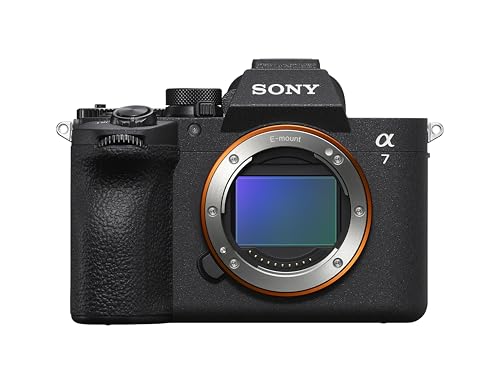
Sony Alpha 7 V Full-Frame Hybrid (Renewed)
The Alpha 7 V represents the current apex of Sony’s full-frame hybrid line, and finding it renewed at $2577.02 instead of the typical new-market premium makes it accessible to working photographers who need blackout-free continuous shooting at up to 30 frames per second. The AI-driven autofocus system tracks subjects with a confidence that owners describe as noticeably better than previous generations.
- Pro: 30fps blackout-free shooting and 5-axis in-body stabilization make it genuinely competitive for sports and wildlife without a separate gimbal.
- Pro: AI autofocus reduces focus errors in chaotic scenes, a published spec that owners consistently validate in real use.
- Con: Renewed units vary in condition, and the high sticker price means any cosmetic or functional issue is expensive to dispute.
Skip this if you cannot verify the seller’s return policy before purchasing, because the renewal condition range is wide and the price does not forgive a lemon.
Canon Rebel T7 18-55mm (Renewed)
For students, grandparents documenting family events, or anyone who needs a capable first camera at the absolute lowest cost, the renewed Rebel T7 at $389 is hard to argue with. You get the same 24.1-megapixel APS-C sensor and Full HD video as the new unit, saving roughly $110 that can go toward a fast prime lens or an extra battery.
- Pro: The $389 price is the cheapest path to a dedicated interchangeable-lens camera on this list, and the performance is identical to new.
- Pro: Renewed units in this price tier have generated strong owner feedback on reliability, suggesting the build quality tolerates heavy use.
- Con: Battery health is unknown on renewed units, so plan to budget for a replacement or two spare batteries immediately.
Skip this if you need Wi-Fi transfer reliability, because some renewed units arrive with firmware versions that handle connectivity inconsistently.
Buying Guide
Sensor Size and Resolution Trade-Offs
Full-frame sensors capture more light per pixel, which translates directly into cleaner images at ISO 3200 and above—settings you will inevitably reach indoors, at dusk, or under stadium lights. APS-C sensors like the one in the Rebel T7 series offer a crop factor that extends your telephoto reach for free, a real advantage for wildlife and sports on a budget. The 24-megapixel range found across all bodies on this list is more than sufficient for prints up to 16×20 inches and for social media, so resolution beyond that matters only if you crop aggressively or print very large.
Autofocus Systems: Phase Detect vs AI Tracking
Entry DSLRs rely on dedicated phase-detect AF modules through the optical viewfinder, which are fast but cover a narrow central area of the frame. Mirrorless bodies use on-sensor phase-detect points spread edge to edge, enabling subject tracking that follows a person across the entire frame. The Sony Alpha 7 V pushes this further with AI-driven subject recognition for eyes, animals, and vehicles. If you shoot unpredictable subjects—kids at a birthday party, birds in flight—the autofocus architecture determines whether you get the shot or miss it entirely.
Lens Ecosystem and Long-Term Cost
Buying a camera body is the beginning of a ten-year lens investment. Canon’s RF mount for the R6 Mark II offers excellent optics but limited third-party options, keeping per-lens costs higher. Sony’s E-mount has matured into the broadest ecosystem with affordable Sigma, Tamron, and Samyang options. For the Rebel T7, the EF/EF-S mount has decades of used inventory at low prices. Before choosing between a mirrorless camera vs dslr, list the three lenses you would buy next and price them for each system; in many cases the lens ecosystem matters more than the body’s own specifications.
Our Verdict
The Canon EOS R6 Mark II is the top pick for anyone who needs a single body that handles both stills and video at a professional level, because its full-frame sensor, dual-purpose design, and strong owner-reported reliability justify the $1999 entry into the RF system. For budget-conscious beginners, the Canon Rebel T7 18-55mm Kit at $499 delivers the most learning value per dollar, with a proven sensor, optical viewfinder, and an enormous support community. However, if your primary use is tracking fast, erratic subjects like athletes or birds, the Sony Alpha 7 V renewed at $2577.02 wins on autofocus coverage and blackout-free burst despite the higher upfront cost.
FAQ
Is mirrorless better than DSLR in 2026?
For autofocus coverage, video performance, and real-time exposure preview, mirrorless bodies hold a clear advantage. DSLRs still win on optical viewfinder zero-lag framing, battery life, and access to inexpensive used lenses through legacy mounts. The right choice depends on whether you prioritize instant framing confidence or maximum autofocus flexibility.
Can I use old DSLR lenses on a mirrorless camera?
Yes, through mount adapters, and in many cases the adapted lens performs as well as or better than on its native body. Sony and Canon both sell official adapters, and third-party options exist for most legacy mounts. The main trade-off is that some older lenses lose electronic aperture control or autofocus speed when adapted.
Do I need a sensor cleaning kit?
If you change lenses frequently, especially outdoors, sensor dust accumulates and appears as dark spots in your images at small apertures. A kit like the VSGO 24-piece set costs less than one professional cleaning and handles most common dust spots at home. Mirrorless bodies without mechanical shutters require more caution during cleaning to avoid exposing the sensor to debris.
Is buying a renewed camera a good idea?
Renewed units from reputable sellers often come with functional inspection, a return window, and savings of 20-40% over new. The risk is battery degradation and cosmetic wear, so verify the seller’s return policy and plan for a replacement battery budget. For bodies like the Sony Alpha 7 V or Canon Rebel T7 where the internal technology is mature, renewal condition varies less than in rapidly-firmware-updating models.