
Coffee makers and espresso machines both brew coffee, but they serve fundamentally different daily rituals. A drip coffee maker prioritizes volume and convenience, brewing 10 to 12 cups at once with minimal hands-on time, while an espresso machine uses 15 to 20 bars of pressure to force hot water through finely ground coffee, producing a concentrated 1 to 2 ounce shot topped with crema. That shot is the foundation for lattes, cappuccinos, flat whites, and Americanos. Understanding how you actually drink coffee day to day is the key to choosing the right system for your kitchen in 2026.
We compared and compared six of the most popular home machines for brew quality, steam performance, workflow, and footprint to make the coffee maker vs. espresso machine decision clearer. Whether you want a dedicated espresso setup to hone your barista skills or a versatile station that handles both drip coffee for guests and espresso for yourself, this roundup breaks down the top performers, who each one is best for, and the trade-offs to expect before you buy.
Our top picks




As an Amazon Associate we earn from qualifying purchases at no extra cost to you.
⚡ Save on Your Next PC — Amazon Prime
Prime members get fast free shipping on the systems above, plus early access to Prime Day & Black Friday PC deals. New members get a 30-day free trial.
Watch: Coffee Maker vs. Espresso Machine: What’s the Difference? — Video Review
How to Choose
- Brewing Purpose: Choose a drip coffee maker if you need high-volume, set-and-forget brewing for multiple people. Choose an espresso machine if you prefer concentrated shots and milk-based drinks that require pressure extraction and a steam wand.
- Pressure and Extraction: Look for at least 15 bars of pump pressure for true espresso extraction, with 20-bar systems offering more consistent crema and better handling of fine grinds. Built-in grinders help dial in freshness and grind size without a separate appliance.
- Milk System: A manual steam wand gives you control for microfoam and latte art, while an automatic milk frother simplifies lattes and cappuccinos at the touch of a button. Consider how often you make milk drinks and how much hands-on control you want.
- Capacity and Footprint: Check water reservoir size and counter space. A compact 1.5L tank suits small kitchens and 1-2 users, while a 3L tank and 12-cup carafe are better for households and entertaining. Measure depth and height carefully if you have low cabinets.
- Ease of Use and Cleaning: Beginners benefit from single-touch controls, removable water tanks, auto-clean cycles, and accessible drip trays. Stainless steel components and detachable brew groups significantly reduce daily maintenance time.
The Best Picks Reviewed
Breville Barista Express BES870XL
The benchmark for serious home espresso, the Breville Barista Express BES870XL integrates a conical burr grinder with dose control directly into a 15-bar espresso system, so you can go from beans to espresso in under a minute. Its low-pressure pre-infusion followed by 9-bar extraction improves flavor balance, while the powerful 360-degree steam wand creates dense microfoam for latte art. With a 67-ounce removable water tank, precise grind size dial, and clean stainless steel build, it is ideal for enthusiasts who want control over every variable without buying a separate grinder.
Chefman CraftBrew Espresso Machine
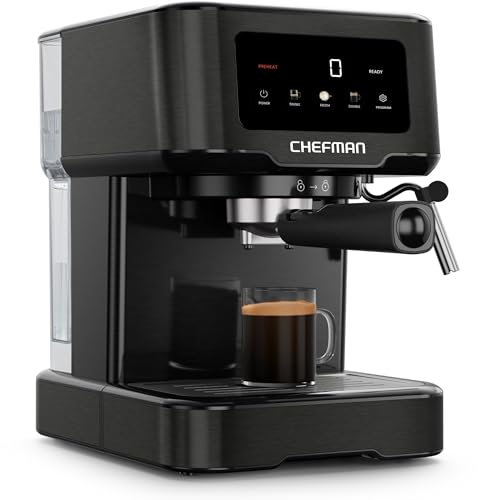
Compact without feeling compromised, the Chefman CraftBrew uses a 15-bar pump and digital temperature control to deliver consistent shots with rich crema. The 1.5L removable water reservoir is easy to fill and clean, and the stainless black finish keeps its footprint minimal at under 12 inches wide. Its manual steam wand heats and textures milk quickly for lattes and cappuccinos, and the intuitive touch controls make it approachable for first-time espresso users who want cafe-quality results without a steep learning curve.
Chefman 8-in-1 Coffee Station Combo
For households that cannot agree on drip versus espresso, the Chefman 8-in-1 Coffee Station solves the debate. It combines a 12-cup drip carafe, a 20-bar espresso pump, and an automatic milk frother in one unit with a large 3L water tank to reduce refills. You can brew drip coffee for the family, pull a shot for yourself, and froth milk for a macchiato without swapping machines. Despite its versatility, the workflow remains simple with one-touch drink selections, making it the most practical choice for busy kitchens and entertaining.
CASABREWS 3700 Essential Espresso Machine
The CASABREWS 3700 Essential brings a stainless steel build and focused espresso performance to a smaller footprint. Its 20-bar pump provides strong, stable pressure for balanced extraction, while the professional steam wand produces silky foam for cappuccinos and flat whites. The compact design fits easily under cabinets, and the removable drip tray accommodates taller mugs. It is a straightforward, durable option for drinkers who want reliable daily espresso and effective milk steaming without complex programming or extra bulk.
Mooye Espresso Machine with Grinder
The Mooye Espresso Machine with Grinder is a compact all-in-one solution for fresh espresso on a tighter space and workflow. The integrated grinder lets you adjust grind size for optimal extraction, paired with a 20-bar pressure system that extracts full-bodied shots. Its built-in steam milk frother textures milk for lattes and cappuccinos, and the medium black chassis keeps the counter footprint modest. Easy-to-use dials and a removable water tank make it a strong choice for beginners who want grinder-to-cup convenience without a separate mill.
Frequently Asked Questions
Can an espresso machine make regular drip coffee?
An espresso machine can make an Americano by adding hot water to a shot, which mimics the strength and volume of drip coffee, but it does not brew a true drip-style carafe. If you regularly serve multiple cups at once, a combo unit like the Chefman 8-in-1 or a separate drip brewer will be more efficient than pulling multiple consecutive shots.
Do I need a built-in grinder?
You do not need one, but grinding fresh is the single biggest upgrade for flavor. Built-in grinders, like those on the Breville Barista Express BES870XL and Mooye Espresso Machine with Grinder, ensure consistent particle size and let you adjust grind settings to control extraction time, which typically should fall between 25 and 30 seconds for a balanced double shot.
Is 15-bar or 20-bar pressure better?
Both can make excellent espresso. The industry standard for extraction is around 9 bars at the brew head; machines rated at 15 or 20 bars have pumps that regulate down to that ideal range. A 20-bar rating often indicates a more powerful pump with headroom for consistent pressure and better steam performance, but grind, dose, and tamp matter more than the maximum number on the box.
How hard is it to clean and maintain an espresso machine?
Daily care takes about 2 to 3 minutes: purge the steam wand, rinse the portafilter, and empty the drip tray. Weekly backflushing and descaling every 2 to 3 months keep pressure and temperature stable. Models with removable 1.5L to 3L water reservoirs, detachable drip trays, and auto-clean functions, like the Chefman models, significantly reduce maintenance time.
Final Thoughts
If you want to perfect cafe-quality espresso and milk texture at home, the Breville Barista Express BES870XL remains the most capable and rewarding choice in 2026. For households that need both drip and espresso without adding two appliances, the Chefman 8-in-1 Coffee Station Combo is the most versatile. On a compact footprint, the Chefman CraftBrew delivers an excellent balance of ease, size, and shot quality for everyday latte and cappuccino drinkers.




Write Your Review
No reviews yet. Be the first to share your experience!