
Key takeaways
Best coffee and espresso maker combo machines promise two appliances in one body, and the good ones deliver, provided you check three things first: real pump pressure, carafe capacity and how much counter the unit swallows. This roundup compares seven dual machines on those numbers and on what each one gives up.
As an Amazon Associate we earn from qualifying purchases.
By Daniel Foster
🛒 Best Price Today on Amazon
Prime members get fast, free shipping on everything above, plus member-only deals. New members get a 30-day free trial — cancel anytime.
What a Dual Machine Has to Get Right
The best coffee and espresso maker combo solves a specific household problem: one person wants a mug of drip coffee, another wants a latte, and there is room for exactly one appliance. Getting that right means neither side feeling like an afterthought.
Brew Type, Capacity and Pump Pressure: The Deciding Numbers
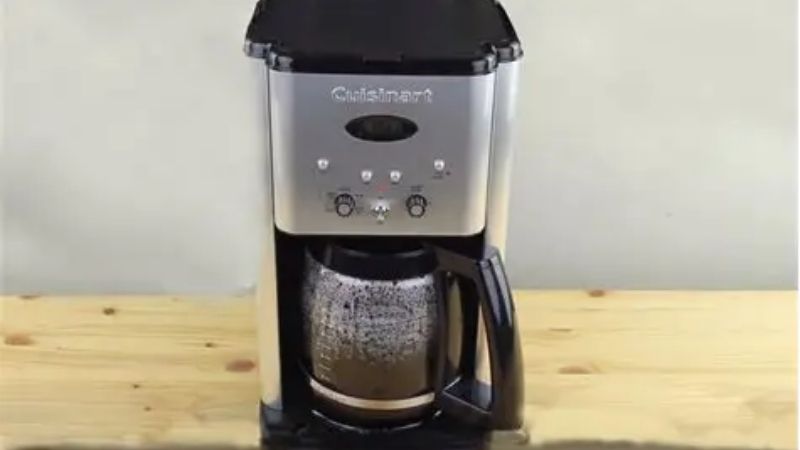
Three specifications sort every best coffee and espresso maker combo: brew type on each side (drip carafe, single-serve or capsule), capacity in cups or ounces, and pump pressure in bar for the espresso side. Espresso is properly extracted around 9 bar, and machines advertising 15 to 20 bar simply have headroom before the pressure valve.
Drip side capacity typically runs 10 to 12 cups (50 to 60 oz / 1.5 to 1.8 L), while single-serve sides pour 6 to 14 oz (177 to 415 mL). Brew temperature on the coffee side should sit between 195 and 205 degrees F (90 to 96 C) for proper extraction.
Footprint is the third number and it is not negotiable. These machines run 11 to 15 in (28 to 38 cm) wide and can reach 15 in (38 cm) tall with the lid open, which is more than many kitchens have under a wall cabinet.
Space and Fit: Counter, Cabinet and Cup Clearance
Measure three clearances: width on the counter, height to the underside of the cabinet with the reservoir lid raised, and the gap between the espresso spout and the drip tray, usually 3 to 5 in (8 to 13 cm) for a standard cup.
Rear clearance matters too. Many combos have a reservoir at the back that hinges upward, so a machine pushed flush against a backsplash may need pulling forward for every refill, which becomes a daily annoyance rather than a one-time inconvenience.
Milk System: Steam Wand or Automatic Frother
A manual steam wand offers control and the ability to texture milk properly, at the cost of a learning curve and wiping the wand after every use. Automatic frothers push a button and produce consistent, slightly airier foam.
Automatic carafe frothers add parts to clean and can develop souring if the milk path is not rinsed. Whichever system a machine uses, milk residue is the leading cause of smells and blockages in combo units.
Running Costs and Cleaning Load
Two brew paths mean two maintenance routines. Drip sides need descaling every one to three months, espresso sides need group cleaning and backflushing where supported, and pod-based sides carry capsule costs that dwarf the price of ground coffee.
Check whether the espresso side accepts a reusable portafilter basket or requires proprietary pods, since that decision sets your cost per drink for the life of the machine. Prices vary, so compare current figures rather than older quotes.
Best Coffee and Espresso Maker Combo Picks: Seven Machines
The list spans genuine pump espresso combos and capsule-based dual machines. Specifications are manufacturer-stated and combined with recurring patterns in long-term owner feedback rather than our own bench testing.
De’Longhi All-in-One COM532M
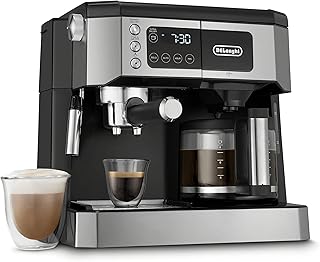
A 10-cup drip carafe alongside a 15-bar pump espresso side with a manual milk frother, in a single stainless body. Both sides run from separate water reservoirs, so brewing coffee does not empty the espresso tank.
It is wide, near 15 in (38 cm), and the espresso side uses pressurized baskets that flatter coarse grinds but limit what an experienced user can dial in. Cleaning two brew paths takes real time.
De’Longhi BCO430 Combination Espresso and Drip
The long-running combo: a 10-cup glass carafe, a 15-bar espresso side accepting ground coffee or ESE pods, and a swivel steam wand for milk. Controls are mechanical rather than digital.
The glass carafe cools quickly compared with thermal alternatives, and the espresso side is best treated as a source of strong coffee for milk drinks rather than cafe-grade shots.
Ninja Espresso and Coffee Barista System
Combines a drip carafe side with a pressurized espresso side and a built-in frother, plus over-ice and specialty settings for iced lattes. Cup sizes span single cups to a full carafe.
It is bulky and has many removable parts, and the espresso is closer to strong concentrate than traditional extraction. As a one-machine solution for a mixed household, it covers a lot of ground.
Ninja DualBrew Pro Specialty
Handles pods and grounds on the single-serve side plus a 12-cup carafe, with a specialty concentrate setting for milk drinks and a fold-away frother arm.
It does not make true espresso; the specialty setting produces a concentrated brew. If you specifically want pressure-extracted shots, this is the wrong machine, but for lattes made with strong coffee it works well.
Nespresso Vertuo Next
A capsule machine that genuinely covers both formats, brewing espresso through to a 14 oz (414 mL) mug depending on capsule, with barcode-controlled volume and spin extraction.
The system is closed, so only Vertuo capsules work and there is no reusable option. Running cost is the highest here per drink, in exchange for the smallest footprint and zero technique required.
Keurig K-Cafe Special Edition
A K-Cup brewer with a shot setting that produces concentrated coffee for milk drinks, plus a dishwasher-safe automatic milk frother and cup sizes from 6 to 12 oz (177 to 355 mL).
The shot function is not espresso and the machine is tall, near 15 in (38 cm). Capsule spending is the main long-term cost, though a reusable filter reduces it if the model supports one.
Cuisinart Coffee Center Barista Bar
Combines a carafe side with single-serve brewing plus cold brew and iced settings, aimed at households wanting variety rather than pressure-extracted espresso.
It is one of the widest units here and its espresso-style output is concentrate rather than a true shot. The upside is genuine flexibility across hot, iced and cold brew from one appliance.
| Machine | Coffee side | Espresso side | Milk system | Main trade-off |
|---|---|---|---|---|
| De’Longhi COM532M | 10-cup carafe | 15-bar pump | Manual frother | Wide footprint |
| De’Longhi BCO430 | 10-cup glass carafe | 15-bar, grounds or ESE | Steam wand | Carafe cools fast |
| Ninja Barista System | Carafe + single cup | Pressurized espresso | Built-in frother | Many parts |
| Ninja DualBrew Pro | 12-cup + pods/grounds | Concentrate only | Fold-away frother | Not true espresso |
| Nespresso Vertuo Next | Up to 14 oz capsule | Capsule espresso | Optional Aeroccino | Closed capsule system |
| Keurig K-Cafe | 6-12 oz K-Cup | Shot setting, not espresso | Automatic frother | Capsule cost |
| Cuisinart Barista Bar | Carafe + single serve | Concentrate, iced, cold brew | Frother included | Very wide |
Prices move regularly on Amazon across all of these, so confirm the current listing at purchase rather than relying on a figure quoted in any review.
Ownership, Maintenance and Buying Timing
A best coffee and espresso maker combo fails in more places than a single-purpose brewer simply because there is more to go wrong. A short routine prevents most of it.
Where Combo Machines Break Down
Scale is the leading cause of complaints at the 6 to 12 month mark, showing up as weak pressure on the espresso side and slow, lukewarm drip. Descale on schedule, more often in hard-water areas, and use filtered water where possible.
The second failure point is the milk system: souring in automatic frother carafes and blocked steam wand tips. Purge the wand after each use and rinse frother parts immediately rather than at the end of the day.
Managing Two Coffee Habits
Grind size is the practical tension in a combo household. Drip wants a medium grind and espresso wants fine, so either keep two bags of pre-ground coffee or add a grinder with a repeatable setting to switch between them.
Pressurized baskets, common on combo machines, tolerate a slightly coarse grind and produce crema mechanically. That forgiveness is a feature for beginners and a ceiling for anyone who later wants to dial in extraction seriously.
When These Machines Get Discounted
Combo machines are a strong gift item, so they cluster in fourth-quarter promotions. Amazon runs Prime Big Deal Days in early October, with Black Friday and Cyber Monday in late November as the deeper window for kitchen electrics.
Bundles including a frothing pitcher or starter capsules appear in that period, though value varies and no specific discount can be promised. If a machine fits your counter now, waiting mainly costs you coffee.
Frequently Asked Questions
The questions that come up most often about dual machines.
Do combo machines make real espresso?
The best coffee and espresso maker combo models with 9 bar or more at the basket do, within the limits of pressurized filters. Machines advertising a shot or concentrate setting produce strong coffee, which works in milk drinks but is not espresso.
Is one machine better than two separate appliances?
Only for space. Two dedicated appliances almost always outperform a combo on both sides; a best coffee and espresso maker combo wins when counter space or budget allows only one unit.
What grind should I buy?
Medium for the drip side, fine for the espresso side. A single medium grind used in both will produce weak, sour espresso.
How often should I descale?
Every one to three months depending on water hardness, or whenever brew time lengthens noticeably. Both brew paths need the treatment, not just the espresso side.
See More:
- Best low price dash cam
- Projector screens at Best Buy
- Best buy projector screens
- Best projector for games
- Best projector for gaming
Choosing Your Dual Machine
The best coffee and espresso maker combo for your kitchen depends on which side you use more. Daily espresso drinkers should prioritize a real pump and steam wand, as on the De’Longhi models, while households that mostly brew mugs are better served by the Ninja or Cuisinart flexibility.
Measure the counter width and cabinet height, decide between capsules and grounds before you buy, and commit to descaling on schedule. A combo machine kept clean lasts years; one left scaled disappoints on both sides at once.
Our top picks




As an Amazon Associate we earn from qualifying purchases at no extra cost to you. Ratings are shown as listed on Amazon.






Write Your Review
No reviews yet. Be the first to share your experience!