
Best low price dash cam shopping is mostly a question of which corner the maker cut: the sensor, the heat tolerance, or the mounting hardware. This guide compares seven affordable models on resolution, power buffer design, field of view and install effort, so a low bid does not turn into a camera that quits during its first hot summer.
As an Amazon Associate we earn from qualifying purchases.
Our top picks


As an Amazon Associate we earn from qualifying purchases at no extra cost to you.
By Daniel Foster
What Separates a Cheap Dash Cam From a Bad One
Every best low price dash cam contender looks similar in listing photos, but three specifications sort the usable ones from the ones that stop recording after a few months. Get these right and a modest camera will hold up; get them wrong and no amount of marketing copy will help. Start here before you compare brands.
Channels, Resolution and Heat Tolerance: The Numbers That Decide It
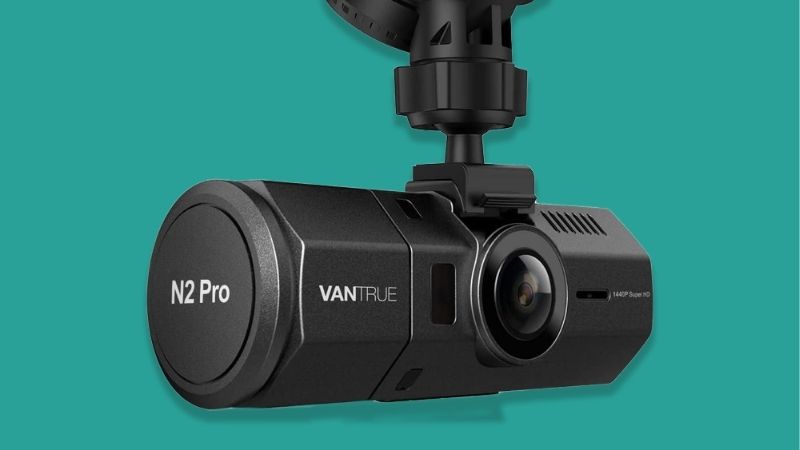
Channel count comes first. A single front channel covers the collision most drivers worry about, while front-plus-rear adds the rear-end hit and costs roughly a third more in both money and installation time. Three-channel systems that add a cabin view are mainly a rideshare tool, not a general commuter purchase.
Resolution matters less than the sensor behind it. A 1080p camera on a current Sony STARVIS sensor often reads plates at night better than a 4K unit on a cheaper chip, because plate capture depends on low-light sensitivity and exposure control rather than raw pixel count. Field of view sits in the 140 to 170 degree range; wider looks impressive but stretches detail at the edges.
Heat tolerance is the specification budget shoppers skip. A supercapacitor unit survives a parked car in July far better than a lithium battery unit, because the capacitor exists only to close the last file safely rather than to store power. If you park outdoors in a hot climate, treat capacitor construction as non-negotiable.
Space and Fit: Where the Camera Actually Sits
Measure the space behind your rearview mirror before you order. Wedge-shaped bodies tuck flat against the glass and disappear from the driver view; cylindrical designs with rotating lenses sit lower and can clip the top of tall drivers sight lines. Cars with a large rain sensor housing or an advanced driver assistance camera lose several usable inches.
Mount type follows from that. Adhesive mounts hold better in heat than suction cups but require a heat gun or fishing line to remove cleanly. Suction cups are the renter and company car answer, though they release on cold mornings and need reseating. Check whether the mount holds the GPS module, because replacing that later is not always possible.
Power and Installation: Lighter Socket, Hardwire or OBD
The cheapest install is the bundled 12V cable tucked along the headliner and down the A-pillar. It takes about twenty minutes with a plastic trim tool and leaves the camera off whenever the car is off, which is fine if you only want driving footage and no parked surveillance.
Parking mode changes the job. It needs constant power, which means either a hardwire kit spliced into the fuse box with a low-voltage cutoff, or an OBD-II adapter that plugs in without cutting anything. Budget for the kit separately, since most affordable cameras ship without one and a dealer install adds meaningful labour cost.
Seven Affordable Dash Cams Worth Comparing
The best low price dash cam contenders below span discreet single-channel units, dual-channel kits and one truly minimal option. Every entry lists a genuine drawback, because at this tier something is always traded away. Specifications are manufacturer figures combined with long-term owner reports, not lab measurements taken by this site.
1. Viofo A119 Mini 2 — The Enthusiast Value Pick
Viofo pairs a 2560 x 1600 sensor with supercapacitor power and built-in GPS in a body small enough to hide behind most mirrors. The 140 degree lens is narrower than the discount norm, which concentrates pixels where plates actually appear rather than spreading them across the door pillars.
The trade-off is the interface. There is no screen, so framing and settings run through a phone app that is functional rather than polished, and firmware updates are a manual card-copy process. Buyers who want to tap through menus on the windshield will find this frustrating.
2. Garmin Dash Cam Mini 2 — The Truly Invisible One
Roughly the size of a car key fob, the Mini 2 records 1080p across a 140 degree view and vanishes behind the mirror completely. Garmin voice control lets you save a clip without reaching for the unit, and the app pairing is the most reliable in this price band by a wide margin.
It uses an internal battery rather than a capacitor, so hot-climate owners should hardwire it and avoid leaving it baking in a closed car. There is also no rear channel option, which makes it a poor fit if rear-end coverage is the reason you are shopping.
3. Vantrue E1 — Small Body, Full Feature Set
The E1 records at 2592 x 1944 through a 160 degree lens, includes GPS and voice commands, and still fits a compact circular housing. Supercapacitor power and a wide operating temperature range make it a sensible choice for drivers in Arizona or Texas summers.
Menu depth is the weakness. Vantrue exposes a lot of settings, and the default parking mode configuration drains cards quickly until you tune motion sensitivity. Expect an evening of adjustment before it behaves the way you want.
4. Rexing V1 Gen 3 — The Discreet Wedge
Rexing built its reputation on a flat wedge body that sits tight to the glass. The Gen 3 shoots 1080p or 2.7K depending on configuration across a 170 degree lens, with a small screen for framing during install.
Wide-angle distortion is real here: objects at the frame edge stretch noticeably, and plate legibility falls off outside the centre third. Build quality is adequate rather than premium, and the supplied mount adhesive benefits from replacement after a season of heat cycles.
5. Redtiger F7N — Dual Channel Without the Premium Price
For drivers who want front and rear coverage in one box, the F7N pairs a 4K front camera with a 1080p rear unit and includes the rear cable in the package. Wi-Fi transfer and GPS are built in, and the mounting hardware fits most sedans without extra parts.
Running the rear cable is the real cost, taking an hour or more through the headliner and tailgate boot on a hatchback. Night footage from the rear channel is usable for context but rarely sharp enough to read plates at distance.
6. Nextbase 222 — The Simple, Serviceable Option
Nextbase keeps this one deliberately basic: 1080p at 30fps, a 140 degree lens, and the Click and Go magnetic mount that lets you pull the camera off in two seconds when parking in a rough area. That mount is the reason to buy it.
There is no GPS and no Wi-Fi at this tier, so speed and location data are absent from clips and files transfer by card. Buyers who want evidence-grade metadata for an insurance claim should step up a model.
7. AZDOME M17 — The Bare-Minimum Dual Kit
The M17 exists for drivers who want two channels at the lowest possible outlay. It records 1080p front and rear, mounts easily, and works without any app or account. For a second family car or a teenager driver, that simplicity has value.
Low-light performance is the compromise, with visible noise and slow exposure recovery when leaving a tunnel or a lit garage. Treat it as a record of what happened rather than a tool for identifying a vehicle that fled.
| Model | Front resolution | Power buffer | Field of view | Suits |
|---|---|---|---|---|
| Viofo A119 Mini 2 | 2560 x 1600 | Supercapacitor | 140 degrees | Night plate capture |
| Garmin Dash Cam Mini 2 | 1920 x 1080 | Internal battery | 140 degrees | Maximum discretion |
| Vantrue E1 | 2592 x 1944 | Supercapacitor | 160 degrees | Hot-climate parking |
| Rexing V1 Gen 3 | 1080p / 2.7K | Supercapacitor | 170 degrees | Flat windshield fit |
| Redtiger F7N | 4K front, 1080p rear | Supercapacitor | 170 degrees | Two-channel budget |
| Nextbase 222 | 1920 x 1080 | Internal battery | 140 degrees | Quick-release mount |
| AZDOME M17 | 1920 x 1080 | Internal battery | 150 degrees | Lowest-cost dual |
Prices in this category move constantly, so check the current figure at the moment of purchase rather than relying on any published number.
Durability, Upkeep and the Cost After Checkout
A dash cam is a device that lives in the harshest environment in the house: a sealed car in direct sun. Understanding what fails, and on what schedule, is more useful than any specification sheet when you are deciding how much to spend.
What Usually Fails First
Memory cards fail before cameras do. Loop recording rewrites the same cells thousands of times, and a standard consumer card degrades within months under that load. High-endurance cards rated for continuous video cost more up front and are the single best reliability upgrade available.
After cards, the ranking is predictable: adhesive mounts release in heat, internal batteries swell and lose the ability to close files, and lens housings cloud from ultraviolet exposure. Capacitor-based units skip the second failure entirely, which is why they dominate any list of the best low price dash cam options for hot regions.
Cards, Formatting and Monthly Maintenance
Format the card in the camera itself, not on a computer, and repeat that roughly once a month. It clears the file table corruption that accumulates during loop recording and prevents the silent failure where a camera appears to run but writes nothing usable.
Check the actual footage every few weeks. Play back a recent file, confirm the timestamp is right and confirm audio and GPS data are attached if your model supports them. A camera nobody verifies is an insurance policy nobody paid for.
Warranty Terms and When Prices Actually Move
Read the warranty as three separate items: the body, the mount and the card. Bodies usually carry a one-year term, mounts are treated as consumables, and bundled cards are frequently excluded. Brands that sell replacement mounts and cables individually are worth a premium, because a broken suction arm should not retire a working camera.
On timing, electronics of this type see their deepest reductions during Prime Big Deal Days in early October and again through Black Friday and Cyber Monday at the end of November. If your purchase is not urgent, those two windows are the ones worth waiting for, though the size of any reduction varies by model and year.
Frequently Asked Questions
These are the questions that come up most often from drivers comparing the best low price dash cam options, answered without the marketing gloss.
Does a cheap camera actually help with an insurance claim?
Yes, provided the footage shows the sequence of events clearly and carries a correct timestamp. Insurers care about what happened and when, and a 1080p file with an accurate clock usually satisfies that. GPS speed data strengthens the case but is not required for most claims.
Do I need 4K resolution?
Not usually. Sensor quality and exposure handling determine whether a plate is legible at night, and many 4K budget cameras use weaker sensors than good 1080p models. Storage demand also rises sharply, shortening how much history the card retains before overwriting. Among the best low price dash cam options, a strong 1080p sensor is usually the safer bet.
Will parking mode drain my car battery?
A proper hardwire kit includes a low-voltage cutoff that stops recording before the battery reaches a level that prevents starting. Without that cutoff, extended parking surveillance on an older battery is a genuine risk, particularly in cold weather.
Is a rear camera worth the extra installation work?
If you drive in stop-and-go traffic regularly, yes, since rear-end collisions are common and disputed liability is exactly what footage resolves. For rural or low-traffic driving, a single well-chosen front channel usually delivers better value than a mediocre pair.
See More:
- Projector screens at Best Buy
- Best buy projector screens
- Best projector for games
- Best projector for gaming
Final Thoughts on the Best Low Price Dash Cam
Choosing the best low price dash cam comes down to matching three things to your situation: the number of channels you truly need, a power buffer that survives your climate, and a mount that fits the space behind your mirror. Everything else on a spec sheet is secondary to those three decisions.
Before ordering any best low price dash cam candidate, measure the clearance behind your rearview mirror and check whether your parking situation calls for a hardwire kit. Budget separately for a high-endurance memory card, verify the footage every few weeks, and the cheapest camera on the list will still be recording when you need it.




Write Your Review
No reviews yet. Be the first to share your experience!