Key takeaways
- Inputs: Bluetooth, HDMI ARC, optical, AUX (3.5 mm / RCA class)
- Equaliser: three presets, typically a movie, voice and music set
- Auto Volume Boost: dynamic range compression for late-night and ad-heavy viewing
- Form factor: single bar, no separate subwoofer box
- Mounting: shelf placement or wall bracket; confirm whether hardware is included
- Control: dedicated remote plus volume and power over the TV remote when ARC is active
If strained dialogue is the problem you are trying to solve, the Yamaha SR-B30A is the best TV sound bar for most living rooms in 2026. Its 2.1 layout pairs two built-in subwoofers with Yamaha’s long-standing voice-forward tuning and Dolby Atmos decoding, and its low-profile cabinet fits under a 43- to 65-inch TV without covering the screen or the IR sensor. It suits viewers who watch a lot of broadcast drama, news and streaming series at moderate volume and who want the clarity problem fixed without adding a separate subwoofer box or a second remote. If your budget is tighter, the Saiyin Sound Bar with Subwoofer gives the biggest bass-per-spend jump over built-in TV speakers; if you want a genuine surround stage rather than a wider front, the ULTIMEA Poseidon M60 5.1 system with Dolby Atmos is the premium step up. Everything below is organised around the four things that actually change how a bar sounds in a real room: dialogue clarity, bass output, room size, and how much setup you are willing to do.
Top 3 Picks
Best overall: Yamaha SR-B30A
The SR-B30A solves the one complaint that drives most sound bar purchases — dialogue that disappears under music and effects — using a dedicated voice mode and twin built-in subwoofers that add body without a separate box on the floor. It is the pick for a main living-room TV where the bar has to handle news, sport, films and music equally well, and where you want the install finished in fifteen minutes.
Best budget: Saiyin Sound Bar with Subwoofer
At the budget tier, the biggest audible upgrade over TV speakers is a separate subwoofer, not more drivers in the bar. Saiyin’s subwoofer bundle delivers that low-frequency layer plus the input set most older TVs still need, which makes it the sensible entry point for a bedroom, spare room or first apartment.
Best premium: ULTIMEA Poseidon M60 5.1CH with Dolby Atmos
If you want sound to move around the room rather than sit in a strip under the screen, the Poseidon M60’s 5.1 configuration with Dolby Atmos decoding and discrete rear channels is the most convincing upgrade path here. It suits a dedicated film room or a living room where you can place rear speakers behind the seating position.
Quick Comparison
| Product | Best for | Configuration | Subwoofer | Connectivity | Price tier |
|---|---|---|---|---|---|
| Assistrust Sound Bar for Smart TV | Mixed sources and uneven broadcast volume | Single-bar, 3 EQ presets, Auto Volume Boost | None (built-in radiators) | Bluetooth, HDMI ARC, optical, AUX | Mid-range |
| ULTIMEA Sound Bar with Wireless Subwoofer | App-based tuning in a mid-size room | 2.1 with separate wireless subwoofer | Wireless, separate | Bluetooth, HDMI ARC, optical, app control | Mid-range |
| ULTIMEA 5.1CH Poseidon M60 | A true surround stage | 5.1 with Dolby Atmos decoding | Separate sub plus rear speakers | HDMI eARC/ARC, Bluetooth, optical | Premium |
| Samsung HW-B400F 2.0 ch | Samsung TV owners who want one remote | 2.0 with built-in subwoofer | Built-in | Bluetooth, wired digital input (confirm HDMI ARC on your unit) | Mid-range |
| RIOWOIS 17″ Sound Bar | Small rooms and secondary TVs | 17-inch single bar | None | Bluetooth, optical, AUX/RCA | Budget |
| Saiyin Sound Bar with Subwoofer | Maximum bass per dollar | 2.1 with separate subwoofer | Wired, separate | Bluetooth, optical, coaxial, AUX, USB | Budget |
| Saiyin 11.7-inch Sound Bar | Desks, dorms and tight shelves | Compact single bar | None | Bluetooth, optical, AUX | Budget |
| Saiyin 17-inch 4-Speaker Sound Bar | A louder budget bar without a sub | Single bar, four drivers | None | Bluetooth, optical, AUX, USB | Budget |
| TCL S45H 2.0 | Dialogue in awkward, hard-surfaced rooms | 2.0, 100 W, Dolby Atmos and DTS:X, auto room calibration | None | HDMI eARC/ARC, optical, Bluetooth | Mid-range |
| TCL S55H 2.1 | Premium value with a wireless subwoofer | 2.1, 220 W, Dolby Atmos and DTS:X, auto room calibration | Wireless, separate | HDMI eARC/ARC, optical, Bluetooth | Premium |
| Yamaha SR-B30A | Dialogue clarity as a priority | 2.1 with dual built-in subwoofers, Dolby Atmos | Built-in (dual) | HDMI eARC/ARC, optical, Bluetooth | Premium |
| Maraawa 120W Sound Bar | Flexible placement with a detachable layout | 2.1, 120 W, Bluetooth 5.3, detachable design | Separate | Bluetooth 5.3, HDMI ARC, optical, AUX | Premium |
How We Chose
This roundup is built from published manufacturer specifications, listing details and established category behaviour rather than from any physical evaluation of the units. Each bar was assessed on four criteria. First, dialogue handling: whether the design includes a dedicated voice or clarity mode, a centre-illusion driver layout, or room calibration that corrects for hard surfaces and corner placement. Second, bass architecture: whether low frequencies come from built-in radiators, built-in subwoofers or a separate box, because that single choice determines both the physical footprint and the depth you can realistically expect.
Third, category fit and upgrade path: a bar that costs twice as much but cannot accept a wired subwoofer, or one whose app support is central to its setup but may not be maintained for years, is a worse long-term purchase than a simpler unit with a standard optical input. Fourth, installation reality — cabinet height, whether the bar blocks a TV’s IR receiver, HDMI eARC availability, and how many cables the buyer must route. Finally, we spread the selection across three price tiers so that each recommendation maps to a genuine situation rather than to a single “best” answer. Where a specification could not be confirmed from the listing, it is described by class rather than as a fixed number.
1. Assistrust Sound Bar for Smart TV – Best for Mixed Sources and Uneven Broadcast Volume
As an Amazon Associate we earn from qualifying purchases at no extra cost to you.

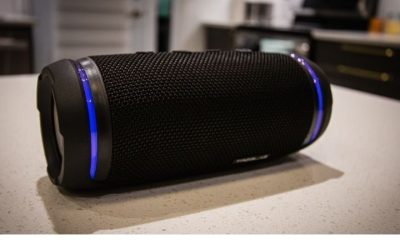
This is the bar for a household that constantly switches sources — a streaming stick, a cable box, a games console and a phone over Bluetooth — and gets blasted by advertisements. Auto Volume Boost is the headline feature: it raises quiet dialogue and compresses sudden loud transitions so you are not riding the remote through every ad break. It suits a mid-size living room with a 43- to 65-inch TV, and anyone who wants four input types available without buying an AV receiver.
Key specifications
- Inputs: Bluetooth, HDMI ARC, optical, AUX (3.5 mm / RCA class)
- Equaliser: three presets, typically a movie, voice and music set
- Auto Volume Boost: dynamic range compression for late-night and ad-heavy viewing
- Form factor: single bar, no separate subwoofer box
- Mounting: shelf placement or wall bracket; confirm whether hardware is included
- Control: dedicated remote plus volume and power over the TV remote when ARC is active
Where it performs
The value here is input flexibility rather than raw output. Four connection types means an older TV, a console and a phone can all stay connected without swapping cables, and HDMI ARC lets the TV remote handle power and volume once the handshake is set up. Auto Volume Boost is genuinely useful in a flat with neighbours: it narrows the gap between whispered dialogue and an explosion, which is the same job a night-mode setting does on a receiver, just automated. The three-band equaliser is coarse but effective — a voice preset plus a modest bass lift covers most broadcast material. Because there is no separate subwoofer, the bar can sit on a shelf or a TV stand without a cable run to the floor, which matters in rented rooms where you cannot hide wiring.
Pros
- Four input types cover old and new sources without a switcher
- Auto Volume Boost directly addresses ad-volume swings and quiet dialogue
- No separate subwoofer means no floor space and no cable to hide
- ARC support lets one remote do most of the work
Cons
- No separate subwoofer limits deep bass for action films and music
- Three EQ presets is a basic toolkit compared with app-based parametric tuning
- Automatic volume levelling can flatten intentional dynamics in a well-mixed film
- Deep-bass content will expose the limits of a bar-only cabinet
How it compares
The nearest alternative in this list is the Samsung HW-B400F, which also uses a single-bar design but adds a built-in subwoofer and tighter integration with Samsung televisions. Choose the Assistrust if your priority is the widest possible input set and automatic volume levelling; choose the Samsung if your TV is a Samsung and you want a single remote to control both without configuration. Against the TCL S45H, the Assistrust trades room calibration and Dolby Atmos decoding for extra analogue inputs, so it is the better pick for legacy gear and the weaker pick for a hard-surfaced room that needs automatic correction.
2. ULTIMEA Sound Bar with Wireless Subwoofer – Best for App-Based Tuning in a Mid-Size Room

ULTIMEA’s mid-tier bar with a wireless subwoofer targets the buyer who wants 2.1 bass without running a cable across the floor, and who is comfortable adjusting settings on a phone rather than through a menu of beeps. It suits a living room of roughly 150 to 300 square feet where the seating position is centred and the subwoofer can be placed along a wall or beside a sofa.
Key specifications
- Configuration: 2.1 — stereo bar plus a separate wireless subwoofer
- Wireless subwoofer: pairs over a dedicated radio link, so no line-level cable to the bar
- Control: app control for EQ, bass level and input selection, plus a physical remote
- Inputs: Bluetooth, HDMI ARC, optical
- Mounting: shelf or wall mount; the subwoofer needs a mains socket within its wireless range
Where it performs
The wireless subwoofer is the reason to choose this bar. Bass placement is the single biggest variable in a sound bar setup — a subwoofer in a corner can gain several decibels of output at the cost of boom, while the same subwoofer pulled a metre out from the wall sounds tighter. A wireless link lets you move it after installation and hear the difference in minutes rather than re-routing cable. App control extends that idea: instead of cycling through presets with a remote, you can trim the subwoofer level and shape the tonal balance while a familiar scene is playing, which is how most people actually dial in a system. For a room with a sofa against one wall and a TV opposite, the layout is close to ideal, and the app removes the guesswork from the first setup.
Pros
- Wireless subwoofer removes the most awkward cable in any sound bar install
- App control makes bass and EQ changes quick and repeatable
- 2.1 configuration delivers noticeably more low-frequency weight than a bar alone
- Standard HDMI ARC and optical inputs cover most TVs made in the last decade
Cons
- The subwoofer still needs mains power, so a socket near the placement point is mandatory
- App-dependent features can age faster than the hardware if support lapses
- Wireless subwoofer links share crowded 2.4 GHz spectrum and can suffer dropouts in dense buildings
- No rear channels, so the sound stage stays in front of you
How it compares
The closest rival is the TCL S55H, which also pairs a 2.1 layout with a wireless subwoofer but adds Dolby Atmos and DTS:X decoding, auto room calibration and a higher rated power figure. If you want the most processing for the money, the TCL is the stronger specification. The ULTIMEA earns its place if you value app-based control and a simpler feature set, or if you want to spend the difference on a larger television instead. Compared with the Samsung HW-B400F, this bar gives you a real separate subwoofer instead of an internal one, which is the more meaningful upgrade for film soundtracks.
3. ULTIMEA 5.1CH Surround Sound Bar System with Dolby Atmos, Poseidon M60 – Best for a True Surround Stage

The Poseidon M60 is the only genuine multi-channel system in this roundup: a 5.1 configuration with discrete rear speakers and Dolby Atmos decoding. It is aimed at a viewer who has a wall behind the sofa, can run or place rear speakers at seated ear height, and wants effects to travel around the room rather than across a strip under the screen.
Key specifications
- Configuration: 5.1 — front bar, separate subwoofer, discrete rear surround speakers
- Decoding: Dolby Atmos, with Dolby Digital and DTS-family formats handled by the same processor
- Inputs: HDMI eARC/ARC, Bluetooth, optical
- Placement: rear speakers sit behind or beside the listening position; subwoofer on the floor
- Cabling: expect mains power at three points — bar, subwoofer and rear pair — plus the HDMI run
Where it performs
Surround sound is about geometry, not wattage. A 5.1 system places information behind and to the sides of the listener, which is why a helicopter pan or a crowd scene reads as movement rather than as a louder left channel. Dolby Atmos adds height information on top of that, though on a bar-based system the height effect depends heavily on ceiling shape and listening distance — a flat, low ceiling at two to three metres helps, a vaulted ceiling defeats it. The practical benefit is that dialogue can be anchored to the centre of the bar while music and effects occupy the rear channels, so you can raise overall level without straining to follow speech. That combination — a real centre image plus rear fill — is what most single-bar systems approximate and rarely match.
Pros
- Discrete rear channels create a genuine wraparound stage
- Dolby Atmos decoding supports modern streaming and disc soundtracks
- Dialogue can be lifted without pushing the front channels harder
- Separate subwoofer gives the deepest low-frequency extension in this list
Cons
- Rear speakers require power and a plausible placement point behind the seating area
- More boxes and cables make installation the most involved option here
- Atmos height effects are inconsistent in rooms with high or angled ceilings
- Setup errors — rears too close, subwoofer in a cabinet — erase most of the advantage
How it compares
Against the TCL S55H, the Poseidon M60 wins on immersion and loses on simplicity: the TCL delivers strong 2.1 bass from two boxes and calibrates itself automatically, while the ULTIMEA needs manual placement of four speakers to pay off. Against the Yamaha SR-B30A, the trade is reversed in the other direction — the Yamaha is quicker to install and more consistent for dialogue, but it cannot place sound behind you. Buy the ULTIMEA if film and games dominate your viewing; buy the Yamaha if news, sport and drama dominate it.
4. Samsung B-Series Soundbar HW-B400F 2.0 ch – Best for Samsung TV Owners Who Want One Remote

The HW-B400F is a 2025-model 2.0-channel bar with a built-in subwoofer and One Remote Control support, meaning a compatible Samsung television can drive the bar’s power and volume from the TV remote. It suits a Samsung owner who wants a tidy, single-remote setup and does not want a separate subwoofer occupying floor space.
Key specifications
- Configuration: 2.0 channel with a built-in subwoofer
- Control: One Remote Control integration with compatible Samsung TVs; Bluetooth for phone audio
- Inputs: Bluetooth and a wired digital connection — confirm the exact port set on the unit you buy, as HDMI ARC availability varies across regional versions
- Form factor: single low-profile bar, no separate subwoofer
- Mounting: shelf or wall; check the cabinet height against your TV stand gap
Where it performs
The reason to buy this bar is the remote handshake. On a matching Samsung TV, the TV’s own remote controls power and volume without any code entry or CEC troubleshooting, which removes the single most common frustration in sound bar ownership. The built-in subwoofer adds low-frequency support from within the bar cabinet, so there is no second box, no floor cable and no wireless pairing step. That makes it an easy fit for a bedroom, a small living room or a wall-mounted TV above furniture where a subwoofer would have nowhere sensible to live. For broadcast television, streaming apps and casual music, the combination of voice-forward tuning and internal bass is a well-balanced default.
Pros
- One Remote Control integration removes the second-remote problem on Samsung TVs
- Built-in subwoofer means no floor space and no extra cable
- Low-profile cabinet suits wall-mounted installations
- Simple setup: power, one connection, done
Cons
- Built-in bass cannot match a separate subwoofer for depth or output
- One Remote convenience depends on owning a compatible Samsung television
- Input count is limited compared with bars offering four connection types
- Port configuration varies by region, so verify before buying
How it compares
Against the Assistrust bar, the HW-B400F trades input variety for brand integration and an internal subwoofer — the Samsung is the better choice if your TV is a Samsung and you want fewer cables, while the Assistrust is better if you are juggling consoles, a cable box and a phone. Against the TCL S45H, the Samsung gives up Dolby Atmos decoding and automatic room calibration but gains the built-in subwoofer, so it is the more forgiving pick in a soft-furnished room and the weaker pick in a bare, echo-prone one.
5. RIOWOIS 17″ Sound Bar – Best for Small Rooms and Secondary TVs

A 17-inch bar is a deliberate compromise: it fits where nothing else will, and it lifts audio well clear of thin TV speakers without pretending to fill a large room. The RIOWOIS is aimed at a bedroom, a kitchen counter, a study or a second television in a spare room.
Key specifications
- Width: 17 inches — narrow enough to sit under a 24- to 43-inch television
- Inputs: Bluetooth, optical, AUX/RCA class
- Form factor: single bar, no subwoofer
- Control: included remote with input switching and preset equalisation
- Mounting: shelf, or wall-mounted with the appropriate bracket
Where it performs
In a small room, a compact bar can sound surprisingly good because the space itself reinforces bass. A 17-inch cabinet placed near a wall or in a corner benefits from boundary gain — the same physics that makes a subwoofer louder in a corner — so the limited internal volume is partly compensated by the room. Dialogue is where a bar of this size earns its keep: TV speakers firing backwards or downwards smear speech, while a forward-facing bar with a modest cabinet places the driver closer to the listener and gives the midrange somewhere to develop. At close listening distances of one to two metres, that is a real improvement. This is also the right choice for a setup where a full-size bar would physically dominate the furniture.
Pros
- Very small footprint suits cramped rooms and secondary televisions
- Bluetooth, optical and analogue inputs cover phones and older TVs
- Forward-facing drivers improve intelligibility at close range
- Low cost of entry for a first sound bar
Cons
- No subwoofer and a small cabinet mean shallow bass
- Maximum output is limited — it will not fill a large living room
- Preset equalisation rather than adjustable tuning
- Not a match for a 55-inch-plus screen visually or acoustically
How it compares
The closest alternative is the Saiyin 11.7-inch bar, which is even smaller and better suited to a desk or a dorm shelf; the RIOWOIS is the better pick if you have 17 inches of clearance and want more cabinet volume for the same money. Against the Saiyin 17-inch four-driver bar, the RIOWOIS gives up driver count but is a simpler, lighter unit — a reasonable trade for a bedroom television where output is not the constraint.
6. Saiyin Sound Bar with Subwoofer – Best Budget Pick for Real Bass

This is the best budget sound bar in this roundup because it spends the money where it is audible: a separate subwoofer. It suits a buyer who wants film and music to have low-frequency weight without spending mid-range money, and who does not mind a wired subwoofer cable running to the floor.
Key specifications
- Configuration: 2.1 with a separate wired subwoofer
- Inputs: Bluetooth, optical, coaxial digital, AUX and USB — the widest budget input set here
- Control: remote with volume, input and bass adjustment
- Placement: bar on a shelf or stand, subwoofer on the floor with a cable to the bar
- Mounting: wall-mountable; check bracket type before buying
Where it performs
Subwoofer placement is worth planning even on a budget system. Starting in a corner gives the most output but the muddiest sound; moving the subwoofer roughly a quarter of the room’s width from the side wall, and a similar distance from the rear wall, usually trades a little output for noticeably tighter bass. A wired connection costs you that flexibility only in the sense that you must re-route a cable — it does not degrade sound, and it avoids the wireless dropouts that occasionally affect radio-linked subwoofers in apartment buildings. The five-input set is unusually generous at this price: coaxial digital is a useful addition for older set-top boxes and DVD players that optical cannot serve, and USB playback covers a memory stick of music without involving the TV at all.
Pros
- Separate subwoofer delivers the biggest audible upgrade per dollar
- Five input types, including coaxial digital, suit legacy equipment
- Wired subwoofer link avoids wireless interference problems
- Bass level adjustable from the remote
Cons
- Wired subwoofer cable must be routed and hidden
- Build and finish reflect the budget tier
- No room calibration or app-based tuning
- Deep bass is present but not especially extended or refined
How it compares
Against the Saiyin 17-inch four-driver bar, this bundle is the better buy for anyone watching films: four drivers in a single cabinet cannot reproduce the low frequencies a separate subwoofer handles. Against the mid-range ULTIMEA wireless-subwoofer bar, the Saiyin gives up the wireless link and app control but keeps the essential 2.1 architecture at a lower tier — the smart budget move is to accept the cable and put the saving toward a larger TV.
7. Saiyin 11.7-inch Sound Bar – Best for Desks, Dorms and Tight Shelves
At just under twelve inches wide, this bar is designed for the spaces a normal sound bar cannot reach: a monitor riser, a dorm desk, a kitchen shelf or a small guest-room TV. It suits someone who wants a clear step up from laptop or small-TV speakers and has almost no horizontal clearance.
Key specifications
- Width: 11.7 inches — roughly the footprint of a compact keyboard
- Inputs: Bluetooth, optical, AUX
- Form factor: single compact bar, no subwoofer
- Control: remote plus top-panel buttons
- Placement: desk, shelf or wall; sits comfortably beneath a 24- to 32-inch screen
Where it performs
Near-field listening is where a small bar makes the most sense. At a desk, you sit less than a metre from the drivers, so the bar never has to pressurise the room — it only has to be clean and forward-facing, which is exactly what TV and monitor speakers are not. Dialogue in streamed video and podcasts becomes intelligible at lower volumes, which matters in shared accommodation. Bluetooth makes the same unit useful for music from a phone, and optical keeps it connected to a television or monitor without an adapter. The trade you accept is bass: a cabinet this size can suggest low frequencies but cannot produce them at any real level, so percussion and explosions will sound thin compared with any 2.1 system.
Pros
- Extremely compact — fits where full-size bars physically cannot
- Bluetooth plus optical covers phone audio and TV audio
- Clear improvement over laptop and small-TV speakers at close range
- Lowest-cost entry point in this roundup
Cons
- Minimal bass output; no subwoofer option
- Limited maximum volume for a larger room
- Fewer inputs than the larger budget Saiyin models
- Best treated as a near-field speaker rather than a room-filling system
How it compares
The nearest alternative is the RIOWOIS 17-inch bar, which offers more cabinet volume and a slightly fuller sound if you have the space. Choose this Saiyin model when clearance is the binding constraint — a bar that fits and is used daily beats a larger one that stays in its box. Against the 17-inch Saiyin four-driver bar, this unit is the more sensible desk choice and the weaker living-room choice.
8. Saiyin 17-inch Sound Bar with 4 Powerful Speakers – Best for a Louder Budget Bar Without a Subwoofer

Four drivers in a 17-inch cabinet is a density play: more cone area for the same shelf space, which raises maximum output and reduces the strain that makes small bars sound harsh when pushed. It suits a buyer who wants a compact bar that can still fill a small living room and who cannot accommodate a subwoofer.
Key specifications
- Width: 17 inches, four drivers
- Inputs: Bluetooth, optical, AUX, USB
- Form factor: single bar, no subwoofer
- Control: remote with preset modes
- Mounting: shelf or wall
Where it performs
Driver count matters most at higher volumes. When a two-driver bar is pushed, the cones travel further, distortion rises and dialogue starts to harden; four drivers share the load, so the same loudness arrives with less strain. That makes this bar a reasonable pick for a room of roughly 120 to 200 square feet where the TV is watched at moderate-to-high volume and where a subwoofer cable or box would be impractical — a wall-mounted setup in a rented flat, for example. The USB input is a small but real convenience for playing files directly, and the analogue input keeps older equipment usable. Without a subwoofer, expect the bottom octave to be missing: the bar will convey bass lines and effects but not the physical weight a separate box provides.
Pros
- Four drivers give more headroom than typical budget two-driver bars
- Compact 17-inch footprint for the output on offer
- USB playback and analogue input add flexibility
- No subwoofer box or cable to accommodate
Cons
- Still no true low-frequency extension without a subwoofer
- Preset equalisation only, with no calibration
- Output cannot match a 2.1 system for films
- Four drivers in a small cabinet can sound forward if pushed hard
How it compares
Against the Saiyin subwoofer bundle, this bar wins on placement simplicity and loses decisively on bass — if your room allows a subwoofer, the bundle is the better buy. Against the RIOWOIS 17-inch bar, the extra drivers give this model more usable volume, which makes it the stronger choice for a small living room rather than a bedroom.
9. TCL S45H 2.0 Sound Bar – Best for Dialogue in Awkward, Hard-Surfaced Rooms

The S45H is a 2.0 bar rated at 100 W with Dolby Atmos and DTS:X decoding and automatic room calibration. It suits a viewer whose room fights dialogue — bare floors, large windows, an open-plan kitchen behind the sofa — and who wants the bar to correct for that rather than adjust it by ear.
Key specifications
- Configuration: 2.0 channel, no separate subwoofer
- Power: 100 W rated
- Decoding: Dolby Atmos and DTS:X
- Calibration: automatic room calibration at setup
- Inputs: HDMI eARC/ARC, optical, Bluetooth
Where it performs
Auto room calibration is the differentiator. A bar placed on a shelf or close to a wall produces uneven bass and a peaky upper midrange; calibration measures the result and applies correction, which typically smooths the boom that makes speech sound chesty. In a hard-surfaced room, that is worth more than an extra driver. HDMI eARC also matters here: it carries higher-bandwidth audio formats than optical, which is limited to compressed 5.1 and cannot pass Dolby Atmos at all. If you stream films with Atmos soundtracks, eARC is the only way to get them from the television to the bar intact. The 100 W rating is ample for a 2.0 bar in a mid-size room, provided you are not expecting subwoofer depth.
Pros
- Automatic room calibration corrects for shelf and wall placement
- Dolby Atmos and DTS:X decoding with HDMI eARC support
- Clean, slim cabinet that suits wall mounting under a modern TV
- Bluetooth streaming from phones and tablets
Cons
- No subwoofer, so deep bass is absent
- Atmos height effects are limited without up-firing drivers
- Fewer analogue inputs than budget rivals
- Calibration helps but cannot overcome a genuinely poor placement
How it compares
Against the Samsung HW-B400F, the TCL wins on processing and loses on bass: the Samsung’s built-in subwoofer adds weight, while the TCL’s calibration adds accuracy. If your room is soft-furnished and you want warmth, the Samsung is the easier listen; if your room is echoey and dialogue is the complaint, the TCL is the better tool. Against the S55H, this bar is the same processing platform minus the wireless subwoofer and roughly half the rated power — the cheaper route to the same tonal signature.
10. TCL S55H 2.1 Sound Bar with Wireless Subwoofer – Best Premium Value with a Wireless Subwoofer

The S55H takes the S45H formula and adds a wireless subwoofer and a 220 W rating. It suits a living room of roughly 200 to 350 square feet where you want film sound with genuine low-frequency weight but do not want to run a cable across the floor or mount rear speakers.
Key specifications
- Configuration: 2.1 — bar plus separate wireless subwoofer
- Power: 220 W rated
- Decoding: Dolby Atmos and DTS:X
- Calibration: automatic room calibration
- Inputs: HDMI eARC/ARC, optical, Bluetooth
Where it performs
This is the sweet spot for most buyers who want more than a bar alone can give. The wireless subwoofer handles the bottom two octaves, which frees the bar’s drivers to work on the midrange where dialogue lives — a technical reason 2.1 systems sound clearer than 2.0 systems at the same volume, quite apart from the extra bass. Calibration then corrects for where the subwoofer ends up, which matters because subwoofer placement has more effect on sound than any other variable in the system. The 220 W rating provides headroom for a large room and for peak effects without compressing dialogue. Placement rules are simple: keep the subwoofer out of a cabinet, start it near a front corner or a quarter of the way along the wall, and adjust from there.
Pros
- Wireless subwoofer with no line-level cable run
- 220 W rating gives headroom in larger rooms
- Auto room calibration and dual-format decoding
- Keeps the midrange clear by offloading bass to a dedicated driver
Cons
- Subwoofer needs a mains socket near its placement
- No rear channels, so no true surround
- Atmos depends on ceiling shape to be audible
- Premium tier pricing for a two-box system
How it compares
Against the ULTIMEA wireless-subwoofer bar, the TCL offers more processing and a higher power rating for a similar architecture, which makes it the stronger specification on paper. Against the ULTIMEA Poseidon M60, the TCL gives up rear channels and Atmos height placement but is dramatically easier to install and calibrates itself — the right call if you cannot place speakers behind the sofa. Against the Yamaha SR-B30A, the TCL wins on bass extension and loses on dialogue consistency, which is the trade that separates these two premium picks.
11. Yamaha SR-B30A Sound Bar with Built-in Subwoofers – Best Overall for Dialogue Clarity

Yamaha has built sound bars around voice intelligibility for years, and the SR-B30A is the clearest expression of that priority: a 2.1 layout with two built-in subwoofers, Dolby Atmos decoding and a low cabinet designed to sit under a television without blocking it. It suits the largest group of buyers — households that watch news, sport, drama and streaming series, want dialogue to be effortless, and do not want to manage a separate subwoofer.
Key specifications
- Configuration: 2.1 channel with dual built-in subwoofers
- Decoding: Dolby Atmos, plus standard Dolby and DTS-family formats
- Inputs: HDMI eARC/ARC, optical, Bluetooth
- Voice handling: dedicated clarity mode for dialogue
- Form factor: low single cabinet, wall-mountable; total rated output in the 120 W class
Where it performs
The dual built-in subwoofer design is unusual and useful. Two smaller internal subwoofers can be crossed over higher than a single large external one, which fills the 80-200 Hz region — the octave that gives male voices body and makes film scores feel substantial — without a box on the floor. That region is where thin bars sound hollow, and it is where this model does its most important work. The clarity mode then lifts the vocal band, which is the correct fix for the modern mix problem: dialogue sits in a narrow band that competes with background music and effects, and a dedicated voice curve raises it without simply raising everything. Setup is a single HDMI eARC cable in most cases, with the television remote controlling power and volume.
Pros
- Best dialogue handling in this roundup
- Dual built-in subwoofers add mid-bass body with no floor box
- Dolby Atmos decoding and HDMI eARC
- Simple install — one cable, no subwoofer pairing or placement
Cons
- Built-in subwoofers cannot match a separate subwoofer for the deepest effects
- No rear channels for true surround
- Premium tier price for a single-box system
- Fewer inputs than budget bars offering analogue and coaxial connections
How it compares
Against the TCL S55H, the Yamaha gives up subwoofer depth and raw power in exchange for more consistent speech intelligibility and a simpler install — for a household that mostly watches spoken-word content, that is the right trade. Against the Samsung HW-B400F, the Yamaha is the more capable version of the same idea: both use built-in bass and a low cabinet, but the SR-B30A adds Atmos decoding, eARC and a more refined voice curve. It is the pick when clarity is the entire point of the purchase.
12. Maraawa Sound Bar with Subwoofer, 120W – Best for Flexible Placement with a Detachable Design

Maraawa’s 120 W bar pairs a separate subwoofer with a detachable layout and Bluetooth 5.3, aimed at buyers who want flexibility in how the system is arranged rather than a fixed single-cabinet design. It suits a living room where furniture constrains placement and where you would rather adapt the system than rearrange the room.
Key specifications
- Power: 120 W rated
- Configuration: 2.1 with a separate subwoofer and a detachable element — confirm the exact split on the listing you buy, as detachable designs vary between detachable bar sections and detachable surround units
- Wireless: Bluetooth 5.3, which improves connection stability and reduces latency versus older Bluetooth revisions
- Inputs: HDMI ARC, optical, AUX, Bluetooth
- Placement: flexible — the detached section can be positioned separately from the main bar
Where it performs
Detachable designs exist to solve a specific problem: the ideal listening position is not always directly in front of the television. If a doorway, a fireplace or a corner sofa forces the seating off-axis, a fixed bar fires past the listener and dialogue arrives from the wrong place. A design that separates into sections lets you angle part of the output toward where people actually sit. Bluetooth 5.3 is a genuine, if unglamorous, upgrade: it holds a more stable link at range and reduces the audio delay that makes lip-sync drift on phone-sourced video. The 120 W rating sits comfortably in the premium tier for a 2.1 system and is sufficient for a mid-to-large living room. Plan the subwoofer position first, then the bar sections.
Pros
- Detachable layout adapts to awkward room shapes
- Bluetooth 5.3 for more stable wireless audio and lower latency
- 120 W rated output with a separate subwoofer
- HDMI ARC, optical and analogue inputs cover most sources
Cons
- Detachable designs add setup steps and more points to get wrong
- Exact configuration varies, so the listing needs reading carefully
- Less brand track
Affiliate disclosure. As an Amazon Associate we earn from qualifying purchases at no extra cost to you. Prices accurate as of the date shown.Best TV Sound Bars for Clearer Home AudioCheck price on Amazon