
Best espresso and coffee maker searches usually come from a household split down the middle: one person wants a mug of filter coffee, another wants a flat white. The question is whether one combination machine serves both, or whether two smaller machines do it better.
As an Amazon Associate we earn from qualifying purchases.
Our top picks



As an Amazon Associate we earn from qualifying purchases at no extra cost to you.
By Daniel Foster
Specifications come from manufacturer documentation and long-term owner feedback rather than lab testing. Prices move constantly, so machines are described as budget, mid-range or premium rather than by figures.
🛒 Best Price Today on Amazon
Prime members get fast, free shipping on everything above, plus member-only deals. New members get a 30-day free trial — cancel anytime.
Start 30-Day Prime Free Trial →See Today’s Amazon DealsWhat a Combination Machine Has to Get Right
Espresso and filter coffee want different things from a machine, which is why every best espresso and coffee maker combination compromises somewhere. Four specifications reveal exactly where those compromises land.
Brew Type, Capacity and Counter Footprint
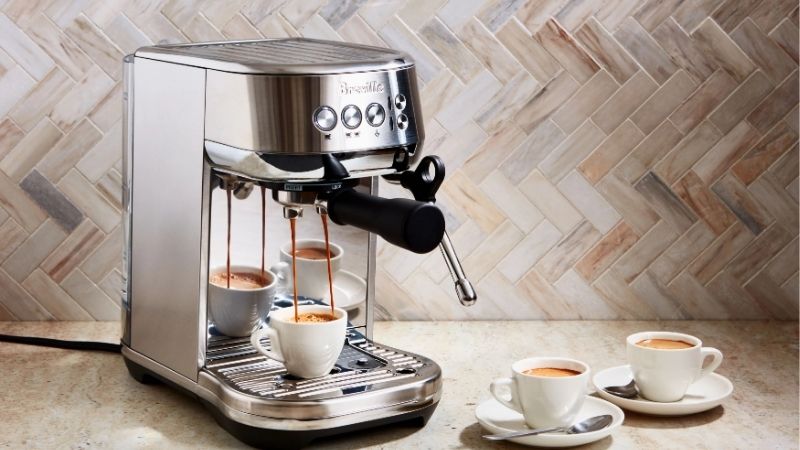
These three are the decisive numbers in any best espresso and coffee maker comparison. Espresso needs roughly 9 bar of pressure and a 1 to 2 oz (30 to 60 mL) output; filter coffee needs water held at 195 to 205 degrees F (90 to 96 C) across a 4 to 6 minute cycle producing 8 to 12 cups.
Combination machines carry both systems in one body, which makes them wide and deep. Expect 12 to 16 in (30 to 40 cm) of width, similar depth, and enough height clearance to lift a water tank lid. Measure the counter and the cabinet above before choosing anything in this category.
Pressure, Temperature Stability and Portafilter Size
Nine bar is the standard for espresso, and machines advertising 15 or 19 bar are quoting pump maximums rather than brew pressure. What matters more is temperature stability across consecutive shots, which cheaper thermoblock systems struggle with.
Portafilter diameter of 58 mm matches commercial accessories and tampers; smaller 51 or 54 mm baskets are common at the entry level and limit accessory choice. Pressurised baskets flatter a coarse grind and cap quality, so check whether non-pressurised baskets are included or available.
The Grinder Problem
The grinder decides more than the machine does. Espresso is more sensitive to grind consistency than any other brewing method, and the grinder matters more than the machine. A capable espresso machine fed by a blade grinder produces worse coffee than a modest machine fed by a decent burr grinder.
Machines with built-in grinders solve the counter space problem and usually compromise on burr quality. Budget for a separate grinder if espresso is the priority; if filter coffee is the priority, a built-in grinder is a genuine convenience with fewer consequences.
Milk, Cleaning and Daily Effort
Milk work and cleaning are where households quietly give up. A steam wand needs purging before and after use and wiping immediately, or milk dries inside it. Automatic frothers reduce that to rinsing a jug, at the cost of texture control that matters if you care about latte art.
Combination machines double the cleaning routine: a filter basket and carafe plus a group head and portafilter. Be realistic about whether your household will do both daily, since a neglected group head is the fastest route to bitter espresso.
Six Options: Combinations and Separates
The best espresso and coffee maker answer is not always one machine, so three combination units and three specialists are compared below. Each entry lists a genuine drawback, because both routes cost something.
| Model | Type | Grinder | Best for |
|---|---|---|---|
| De’Longhi All-in-One COM532M | Combination | None | Both drinks, one footprint |
| Ninja Espresso and Coffee Barista System | Combination | None | Value combination |
| Ninja Luxe Cafe Premier | Combination | Built in | All in one body |
| Breville Barista Express | Espresso specialist | Built in burr | Espresso quality |
| Gaggia Classic Evo Pro | Espresso specialist | None | Upgradeable espresso |
| De’Longhi Dedica Arte | Espresso specialist | None | Narrow counters |
De’Longhi All-in-One COM532M: Both Sides in One Body
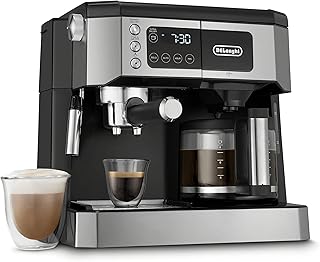
Combines a 10-cup drip brewer with a pump espresso system and a manual frother, sharing a single water supply and one counter position. For a household that wants both drinks without two appliances, it is the tidiest answer here.
Espresso from the pressurised basket is closer to strong coffee than cafe espresso, and the drip side does not hold brew temperature as consistently as a certified machine. It is a compromise on both counts, which is the nature of the format.
Ninja Espresso and Coffee Barista System: Value Combination
Brews drip coffee by the cup or carafe and pulls espresso-style shots, with a fold-away frother and multiple brew styles. It is the least expensive way to cover both drinks from one machine.
The espresso side uses proprietary baskets rather than standard portafilter sizes, so accessory choice is limited. Anyone who progresses in espresso will outgrow it, and there are more parts to clean than on either specialist alternative.
Ninja Luxe Cafe Premier: Grinder Included
Adds a built-in burr grinder to the combination format, with guided assistance for dialling in shots and options for drip, espresso and cold brew. Having grinder, brewer and espresso in one body genuinely saves counter space.
The built-in grinder is adequate rather than excellent, which caps espresso quality, and the machine is large and expensive. Concentrating three functions in one unit also means a single failure takes all three away.
Breville Barista Express: Espresso Done Properly
An integrated conical burr grinder, 54 mm portafilter, temperature control and a manual steam wand, which is the standard recommendation for someone learning espresso seriously. It produces genuinely good shots with practice.
It makes no filter coffee at all, so a household wanting both needs a second machine. The grinder, while good, is the component enthusiasts replace first, and the machine occupies substantial counter depth.
Gaggia Classic Evo Pro: The Upgradeable Choice
A 58 mm commercial-size portafilter, a metal body and a design that accepts a wide range of aftermarket parts, which is why it remains a long-term favourite. It rewards a good grinder and improves as you learn.
There is no built-in grinder, no display and no automation, so the learning curve is real and the total cost includes a grinder. Temperature stability also benefits from aftermarket modification, which is a hobby rather than a purchase.
De’Longhi Dedica Arte: Espresso on a Narrow Counter
Around 6 in (15 cm) wide with a manual steam wand and quick heat-up, aimed at kitchens where an espresso machine has to squeeze into a gap. It includes both pressurised and non-pressurised baskets in some versions.
The small boiler means temperature drifts across consecutive shots, and the tiny water tank needs frequent refilling. It is a starter machine that a committed espresso drinker will replace within a few years.
Descaling, Cleaning and Total Cost
Three ownership realities decide whether a best espresso and coffee maker setup stays enjoyable or becomes a chore by spring.
Scale Attacks Espresso Machines Fastest
Espresso systems have narrow passages, so calcium reduces flow sooner than in a drip machine. Descaling every one to three months is realistic in hard water, and manufacturers usually specify intervals by water hardness rather than time alone.
Filtered water slows the process considerably and is the cheapest life extension available. Combination machines need both systems descaled, which is one more reason to be honest about the maintenance you will actually do.
Group Head, Baskets and Milk Systems
Coffee oils build in the group head and portafilter and turn rancid within days, producing bitterness people blame on beans. Backflushing where supported, plus rinsing the basket after every shot, prevents it.
Steam wands must be purged and wiped immediately after use, since dried milk inside the tip is difficult to remove and can block it permanently. Automatic frothers need their tubes rinsed daily for the same reason.
Two Machines Versus One, and Timing
Two specialists usually cost more in money and counter space but produce better results on both sides and fail independently. A combination machine saves space and money and compromises both drinks, which suits households where espresso is occasional rather than daily.
Kitchen electrics follow the electronics discount calendar, with the Amazon deal event in early October and the Black Friday to Cyber Monday window in late November drawing the most attention, since coffee machines sell heavily as gifts. Prices move constantly, so verify at purchase.
Frequently Asked Questions
Three questions come up in nearly every message from readers weighing a best espresso and coffee maker combination against two separate machines.
Is 15 bar better than 9 bar?
No. Nine bar at the puck is the target, and higher figures describe pump maximums before pressure drops through the system. Treat bar ratings as marketing rather than a quality indicator.
Do I really need a separate grinder?
For espresso, a burr grinder with fine adjustment matters more than the machine itself. For filter coffee, a modest grinder is enough. If budget forces a choice, spend on the grinder before upgrading the espresso machine.
Will a combination machine make cafe-quality espresso?
Not usually. Pressurised baskets and shared heating systems limit what is achievable, though the results are perfectly pleasant with milk. If unaided espresso quality is the goal, a specialist machine and a grinder is the honest route.
See More:
- Best low price dash cam
- Projector screens at Best Buy
- Best buy projector screens
- Best projector for games
- Best projector for gaming
Final Thoughts on Covering Both Drinks
A best espresso and coffee maker decision comes down to how often espresso is actually made. Daily espresso drinkers are better served by a specialist machine plus a separate filter brewer; occasional espresso alongside daily filter coffee suits a combination unit well.
Measure the counter and the cabinet clearance before ordering, and budget for a grinder if espresso matters. Whichever best espresso and coffee maker route you take, descale on schedule and rinse the group head daily, since both affect the cup more than the price of the machine.
Write Your Review
No reviews yet. Be the first to share your experience!