Key takeaways
What's inside
Refrigerator water filter shopping comes down to fit and certification, since the filter must match your fridge model and reduce what it claims, so this refrigerator water filter guide ranks picks by both. Below are six OEM and aftermarket options with honest drawbacks, weighed on fit, certification, and life.
As an Amazon Associate we earn from qualifying purchases at no extra cost to you. Product prices and availability are accurate as of the date shown and are subject to change.


As an Amazon Associate we earn from qualifying purchases.
By Daniel Foster
OEM Or Aftermarket, And Why Fit Matters
Fridge filters split into original-equipment (OEM) filters from your appliance brand and cheaper aftermarket versions, and the first rule is fit: the wrong filter leaks or will not seat. Sorting compatibility, certification, and filter life first keeps a refrigerator water filter grounded in a unit that fits your model and reduces what it promises, not just one that snaps in.
Fridge Filter Decision Numbers
The deciding factors are compatibility with your exact fridge model or filter part number, the NSF/ANSI certification (Standard 42 for chlorine and taste, 53 for lead and cysts on qualifying filters), the filter life (commonly around six months), and what the filter reduces beyond chlorine.
Then match the part number, since fridge filters are model-specific and a close-looking filter may not seat or seal, causing leaks or bypass. OEM filters guarantee fit and usually carry certifications, while aftermarket filters cost less but vary in fit and in whether their certifications are genuine.
Confirm the certification for aftermarket filters specifically, since claims vary, and note the replacement interval, often about six months or a set gallon count. Factor the ongoing cost, since OEM filters cost more per unit while aftermarket ones save money if they genuinely fit and reduce what they claim. The right refrigerator water filter fits your exact model and carries the certification you actually need.
Placement, Space, And Fit
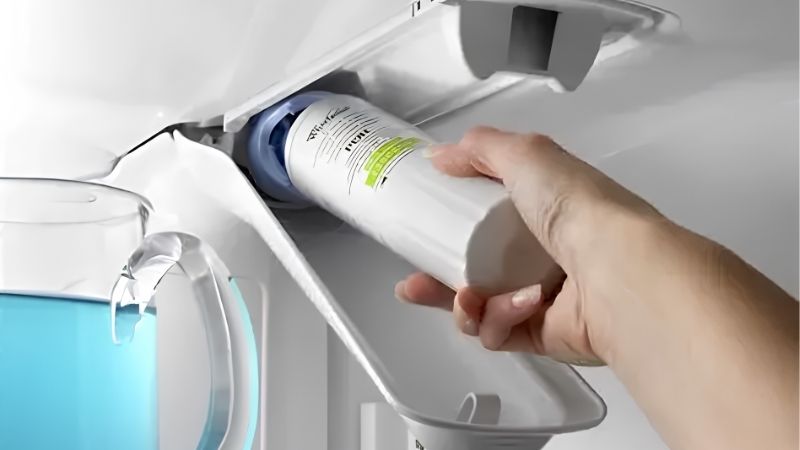
Replacement is usually simple, twisting out the old filter and seating the new one in the grille, base, or interior housing, but the fit must be exact. Find your fridge model and current filter part number before buying, since the same brand uses many filter types across models and years.
After installing, flush the new filter per the instructions to clear carbon fines and air, and reset the filter indicator if your fridge has one. A poorly seated filter can leak or let water bypass unfiltered, so confirm it clicks or locks fully and check for drips over the first day.
For aftermarket filters, confirm the listed compatibility includes your exact model, since “fits most” claims can mislead. Keep the model and part number recorded for reordering, and change the filter on schedule so ice and water stay clean and flow does not drop as the filter clogs. Recording your model and part number makes reordering quick and prevents an accidental mismatch.
Fit, Certification, And Filter Life
Fit is non-negotiable, since a filter that does not seat properly leaks or bypasses, delivering unfiltered water while looking installed. Verify compatibility by fridge model and filter part number, and prefer filters that explicitly list your model rather than vague universal claims that may not seal correctly.
Certification determines what the filter reduces, so look for NSF/ANSI listings, especially Standard 53 if you want lead or cyst reduction rather than just taste. OEM filters usually carry certifications, while aftermarket certifications vary, so confirm the specific listing rather than trusting a general purity claim.
Filter life is typically around six months or a gallon count, after which flow drops and reduction fades, so change on schedule. Factor the per-filter cost over a year, since aftermarket savings only hold if the filter genuinely fits and is certified, and a cheap filter that bypasses is no bargain. A filter that seats poorly bypasses water unfiltered, so fit is worth as much as any reduction claim.
Top Fridge Filter Picks
These six span OEM filters and reputable aftermarket options, so this refrigerator water filter guide can match fit and certification to your appliance. Each entry names a real drawback, because the right filter depends on your exact fridge model and whether you prioritize guaranteed OEM fit or aftermarket savings. Reading each drawback closely helps you weigh guaranteed OEM fit against genuine aftermarket value.
| Pick | Type | Notable | Best for |
|---|---|---|---|
| EveryDrop (Whirlpool) | OEM | Guaranteed fit | Whirlpool-family fridges |
| Samsung genuine | OEM | Guaranteed fit | Samsung fridges |
| LG genuine (LT) | OEM | Guaranteed fit | LG fridges |
| GE genuine (XWF/RPWFE) | OEM | Guaranteed fit | GE fridges |
| Waterdrop aftermarket | Aftermarket | Certified lines | Value with certification |
| AquaCrest/GlacialPure | Aftermarket | Budget | Lowest cost |
EveryDrop For Whirlpool-Family Fridges
EveryDrop is the OEM filter brand for Whirlpool-family fridges, including many Maytag, KitchenAid, and Amana models, guaranteeing fit and carrying certifications on the relevant filters. For those brands, it removes any fit uncertainty and covers common reduction needs.
The drawback is a higher per-filter cost than aftermarket options, and you must still match the specific EveryDrop number to your model. Certification scope varies by filter, so confirm whether the one you need is certified for lead or just taste.
For Whirlpool-family fridges, EveryDrop is the safe pick in this guide. Match the exact EveryDrop number to your model, confirm the certification scope you need, and change it on schedule, treating the guaranteed fit as worth the premium over uncertain aftermarket compatibility. Matching the exact EveryDrop number to your model is the one step that guarantees a clean seal.
Samsung Genuine For Samsung Fridges
Samsung’s genuine filters guarantee fit and carry certifications on the relevant models, delivering reliable ice and water reduction for Samsung refrigerators. For Samsung owners who want certainty of fit and seal, the OEM route avoids leak and bypass risk.
The drawback is the higher OEM price, and Samsung uses several filter types across models, so the exact match matters. Confirm the certification scope for the specific filter, since not every model’s filter is certified beyond taste and chlorine.
For Samsung fridges, genuine filters are the reliable pick here. Identify the correct filter for your model, confirm its certification scope, and change on schedule, choosing OEM when guaranteed fit and seal outweigh the savings of an aftermarket alternative. For Samsung owners, the certainty of a genuine seal is often worth paying more than a copy.
LG Genuine For LG Fridges
LG’s genuine LT-series filters guarantee fit and carry certifications on the relevant models, providing dependable reduction for LG refrigerators. For LG owners, the OEM filter removes fit uncertainty and covers common ice and water reduction needs.
The drawback is the OEM price premium, and LG’s filter series vary by model, so matching the exact LT number is essential. Confirm the certification scope, since coverage differs between filters, and some address taste while others add lead reduction.
For LG fridges, genuine LT filters are the safe pick in this guide. Match the exact LT number, confirm the certification you need, and replace on schedule, choosing OEM when guaranteed fit and reliable sealing matter more than the lower cost of aftermarket filters.
GE Genuine For GE Fridges
GE’s genuine filters, such as the XWF and RPWFE series, guarantee fit and carry certifications on the relevant models, delivering reliable reduction for GE refrigerators. For GE owners, the OEM route avoids compatibility issues, including electronic-recognition filters some models require.
The drawback is the OEM price and that some GE models use chip-equipped filters that resist aftermarket substitutes. Confirm the exact series for your model and its certification scope, since coverage and compatibility both vary across GE’s lineup.
For GE fridges, genuine filters are the dependable pick here. Match the correct series, including any electronic-recognition requirement, confirm the certification, and change on schedule, choosing OEM when guaranteed fit and function outweigh aftermarket savings on GE appliances.
Waterdrop Aftermarket For Value With Certification
Waterdrop’s aftermarket fridge filters aim to fit popular models at a lower price than OEM, with certified lines on many products. For buyers who want to save over OEM while keeping genuine certification, Waterdrop is among the more reputable aftermarket options.
The drawback is that fit and certification vary by product, so you must confirm your exact model is listed and the specific filter is certified. Aftermarket filters can occasionally seat imperfectly, so check for leaks after installing and flushing.
For value with certification, Waterdrop aftermarket is a strong pick here. Confirm your model is explicitly listed and the filter carries the certification you need, check for leaks after install, and reorder by part number, treating the savings as real only when fit and certification both hold. When both fit and certification check out, a reputable aftermarket filter is a fair way to save.
AquaCrest Or GlacialPure For Lowest Cost
AquaCrest, GlacialPure, and similar aftermarket brands offer the lowest per-filter cost for popular fridge models, appealing to budget-focused buyers. For maximum savings on ice and water filtration, they undercut OEM significantly across common models.
The drawback is the greatest variability in fit and certification, so confirming your exact model and the specific certification is essential, and quality can vary between batches. A cheap filter that seats poorly or is not truly certified can bypass water, undercutting the savings.
For the lowest cost, AquaCrest or GlacialPure fits budget buyers in this guide. Confirm your model is listed and the filter is genuinely certified, check carefully for leaks after install, and change on schedule, accepting more fit and certification variability as the trade for the lowest price. The savings are real only when the filter truly fits and its certification is genuine, not implied.
See More:
- Best eyeshadow blender brush
- Best frozen foods for air fryer
- Best frozen food for air fryer
- Best way to reheat steak in air fryer
- Best air fryer recipes book
Choosing Your Refrigerator Water Filter
The best refrigerator water filter for you starts with fit: OEM filters from EveryDrop, Samsung, LG, or GE guarantee compatibility and usually carry certifications, while aftermarket options from Waterdrop or budget brands save money when they genuinely fit and are certified. Always match by model and part number. Prefer filters that explicitly list your model over vague universal claims that may not seal.
Confirm the certification scope you need, flush the new filter, and change it about every six months so ice and water stay clean and flow holds. Because the six-month replacement rhythm and OEM pricing prompt many to compare options, timing varies, but the goal of this refrigerator water filter guide is a filter that fits your model and is certified for what it claims. Get the fit right, confirm the listing, and clean ice and water follow at a predictable cost.