Key takeaways
Water filter maintenance is what keeps any filter actually working, since a neglected cartridge stops reducing contaminants and can harbor bacteria, so this water filter maintenance guide covers upkeep by type. Below are six filter types with honest drawbacks, weighed on intervals, flushing, sanitizing, and effort.
Our top picks


As an Amazon Associate we earn from qualifying purchases at no extra cost to you.
As an Amazon Associate we earn from qualifying purchases.
By Daniel Foster
Why Maintenance Is Not Optional
Every filter has a finite life, and a spent one quietly stops reducing contaminants while flow drops and bacteria can grow, so upkeep is part of owning any system. Sorting the change interval, flushing, and sanitizing by type first keeps water filter maintenance grounded in what each filter actually needs rather than a vague sense that filters last forever.
Maintenance Decision Numbers
The deciding factors are the change interval (in gallons or months, varying widely by type), the flushing needs (new carbon and RO filters need flushing), any sanitizing (RO tanks and housings benefit from periodic sanitizing), and how you know it is time, from a schedule to an indicator or a taste change. Each of these is easy once you know the rhythm your filter type follows.
Then match the routine to each filter, since a pitcher changes every month or two, an under-sink carbon block lasts longer, an RO membrane lasts years while its pre- and post-filters change more often, and a whole-house tank lasts years. Tracking each by gallons or months prevents overrunning any stage.
Confirm the sanitizing and flushing steps, since RO systems benefit from periodic sanitizing and all new carbon needs flushing to clear fines. Because a spent filter gives a false sense of safety, track usage or use an indicator, and never stretch a filter past its rated life to save money. The right water filter maintenance routine simply matches each filter’s schedule to its type.
Placement, Space, And Fit
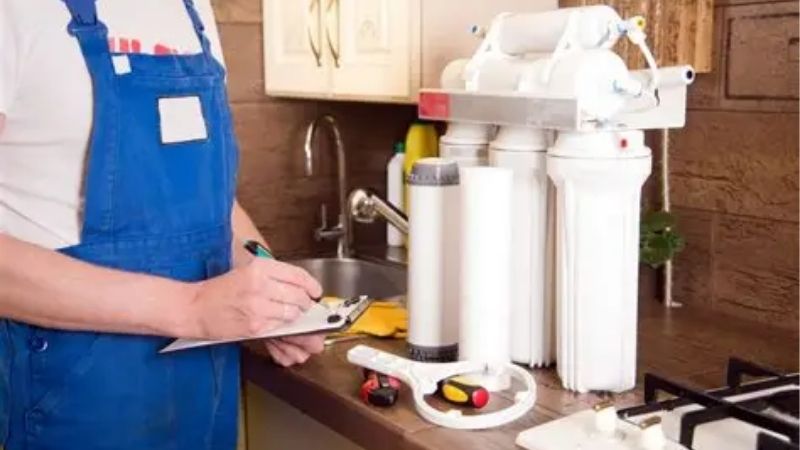
Maintenance access is part of placement, so leave room to reach cartridges, since an under-sink filter or RO needs clearance to open housings with a wrench and a spin-down needs access to its flush valve. Confirm you can service the system without emptying the cabinet, since awkward access makes upkeep more likely to be skipped. A tidy, reachable setup is quietly the biggest help to staying on schedule.
Keep spare cartridges, a membrane if due, and any sanitizing supplies on hand and stored where you will find them, so a change is not delayed for lack of parts. A shutoff valve on the supply makes cartridge changes cleaner, and a nearby drain or bucket helps for flushing and RO sanitizing.
For whole-house systems, leave clearance and a bypass so the home has water during service, and for a garage location, protect equipment from freezing. Record your filter models and part numbers where you keep the spares, so reordering and changes stay quick and the maintenance routine does not stall.
Intervals, Flushing, And Sanitizing
Change intervals vary by type, from a month or two for a pitcher or faucet filter to longer for under-sink carbon blocks, years for an RO membrane and whole-house tanks, and about six months for fridge filters. Track each by gallons or months, and change on schedule since a spent filter loses effectiveness. None of these steps is hard, but each one matters to the result.
Flushing is required for new carbon and RO filters to clear carbon fines and air, and for reusable elements like spin-down screens and some pleated cartridges that are rinsed rather than replaced. Follow the flushing steps for each, since skipping them leaves grit in the water or lets flow stay low.
Sanitizing matters mainly for RO systems, whose tanks and housings benefit from periodic sanitizing to prevent biofilm, especially when changing filters. Gravity systems need element cleaning per the maker’s steps, so match the sanitizing routine to the type, and keep everything within its rated life to keep reductions valid.
Six Filter Types And Their Upkeep
These six span pitchers, faucet mounts, under-sink carbon, RO, whole-house, and gravity systems, so this water filter maintenance guide can match upkeep to your setup. Each entry names a real drawback, because the maintenance a filter needs varies widely, and the right expectation depends on the type you own.
| Type | Typical interval | Extra upkeep | Effort |
|---|---|---|---|
| Pitcher / faucet | ~1-2 months | None | Low, frequent |
| Under-sink carbon | Longer (months) | Flush new filter | Low |
| Reverse osmosis | Membrane years; filters more often | Flush, sanitize | Moderate |
| Whole-house tank | Years (media) | Pre-filter swaps | Low, infrequent |
| Fridge filter | ~6 months | Flush, reset indicator | Low |
| Gravity system | Long element life | Clean elements | Low, manual |
Pitcher And Faucet Filters
Pitchers and faucet mounts need frequent, simple changes, typically every month or two, with no flushing or sanitizing beyond a rinse. For low-effort, no-tools upkeep, they are the easiest to maintain, though the frequency means remembering the schedule matters.
The drawback is that the short interval is easy to forget, and a spent filter stops reducing contaminants while looking fine. Track changes by date or use a filter indicator, and keep spares so a change is never delayed.
For pitchers and faucet filters, upkeep is low but frequent. Keep spare cartridges, change on schedule, and rinse the reservoir, treating the simple routine as the trade for a form that needs changing more often than larger under-sink or whole-house filters. For busy households, a filter indicator is the simplest way to stay on the short schedule.
Under-Sink Carbon Filters
Under-sink carbon blocks last longer than pitchers, needing a cartridge change every several months and a flush of the new filter to clear carbon fines. For a longer interval with modest effort, they balance capacity and upkeep well at the kitchen tap. The longer run between changes is a real convenience over a pitcher.
The drawback is that changing them means opening a housing under the cabinet, often with a wrench, and flushing the new cartridge. Keep clearance, a shutoff valve, and spares so the change stays quick and clean.
For under-sink carbon, upkeep is low overall. Flush each new filter, change on schedule, and keep the housing accessible, treating the longer interval as an advantage over pitchers while accepting the slightly more involved change under the sink. For steady upkeep, a shutoff valve on the supply keeps each change quick and dry.
Reverse Osmosis Systems
RO systems have staged upkeep: pre- and post-filters change more often, the membrane lasts years, and the tank and housings benefit from periodic sanitizing. For thorough removal, RO asks for the most maintenance among common home filters, on a staged schedule. Keeping the stages on a simple chart makes the routine far easier to follow.
The drawback is the multiple stages on different schedules, the flushing of new filters, and the sanitizing that biofilm makes worthwhile. Track each stage separately, and keep spare pre-filters, a membrane when due, and sanitizing supplies on hand.
For RO, upkeep is moderate and staged. Change pre- and post-filters on their schedule, replace the membrane when due, and sanitize the tank and housings periodically, treating the fuller routine as the trade for RO’s broad removal and stored, purified water. For reliable results, a TDS meter helps confirm the membrane is still doing its job.
Whole-House Tank Systems
Whole-house carbon tanks need infrequent service, with media lasting years and only periodic pre-filter swaps to protect the tank. For low-frequency upkeep across the whole home, they are among the least demanding once installed. The rare service is easy to forget precisely because it comes so seldom.
The drawback is that when service is due it involves the main line and a bypass, and any pre-filter needs regular swaps in between. Keep a bypass, spare pre-filters, and clearance, and note the multi-year media schedule so it is not forgotten.
For whole-house tanks, upkeep is low but infrequent. Swap the pre-filter as needed, service the media on its multi-year schedule, and use the bypass during service, treating the rare but larger service as the trade for whole-home treatment with long intervals. For peace of mind, noting the install date keeps the multi-year service from slipping.
Fridge Filters
Refrigerator filters change about every six months, with a flush of the new filter and a reset of the indicator if the fridge has one. For simple, scheduled upkeep, they are easy, provided you match the exact model and part number.
The drawback is that flow drops and taste returns if you overrun the interval, and the wrong filter can leak or bypass. Record the part number, change on schedule, and flush and check for leaks after installing.
For fridge filters, upkeep is low. Match the exact filter, change about every six months, flush the new one, and reset the indicator, treating the fixed schedule as simple while confirming fit each time to keep ice and water clean.
Gravity Systems
Gravity systems have long-lived elements but need periodic cleaning per the maker’s steps, and eventual element replacement. For manual, low-frequency upkeep with no power, they are simple, though the elements do require occasional attention. The elements reward a gentle scrub far more than they reward neglect.
The drawback is that ceramic elements need scrubbing and all elements eventually replace, plus the reservoir benefits from cleaning. Follow the maker’s cleaning steps, keep spare elements, and clean the chambers to prevent buildup.
For gravity systems, upkeep is low and manual. Clean the elements as directed, replace them when due, and keep the chambers clean, treating the occasional element care as the trade for powerless, high-capacity filtration during outages and off-grid use. For long life, gentle element cleaning is all most gravity systems ask between replacements.
See More:
- Best eyeshadow blender brush
- Best frozen foods for air fryer
- Best frozen food for air fryer
- Best way to reheat steak in air fryer
- Best air fryer recipes book
Keeping Up With Water Filter Maintenance
Good water filter maintenance means matching upkeep to your type: frequent simple changes for pitchers and faucet filters, longer intervals with a flush for under-sink carbon, staged changes and sanitizing for RO, rare media service for whole-house tanks, six-month fridge filters, and element cleaning for gravity systems. Track each by gallons or months.
Keep spares on hand, flush new carbon and RO filters, sanitize RO periodically, and never overrun a filter’s rated life. Because a spent filter quietly stops working and can harbor bacteria, staying on schedule is what protects your water, and the goal of this water filter maintenance guide is a routine matched to whatever filter type you own.