Water filter buying guide help matters because the right filter depends on your water, your goals, and your space, not the biggest claim, so this water filter buying guide walks the whole decision. Below are six filter types with honest drawbacks, weighed on what they reduce, certification, form, and budget.
Our top picks
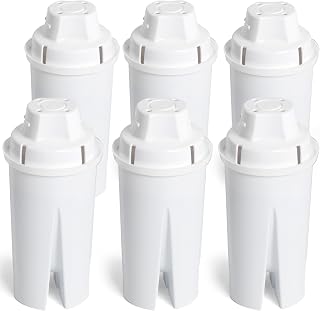
 GE XWFE™ Refrigerator Water Filter
- Set Name: GE French-Door Refrigerators
- Material Type: Plastic
- Compatible Refrigerator Models: GE GNE27JGMWW
Certified to reduce lead, PFOA/PFOS, and 50-plus impurities
No tools or water shutoff needed for installation
Subscribe & Save option automates filter replacement timing
Only fits select GE, Café, and Monogram refrigerator models
Needs replacing about every six months



As an Amazon Associate we earn from qualifying purchases at no extra cost to you.
As an Amazon Associate we earn from qualifying purchases.
By Daniel Foster
Start With Your Water, Not The Product
The best filter is the one matched to your water and goals, so the process starts with a test and a clear aim, not with the flashiest product claim. Sorting what your water contains, which NSF/ANSI standards address it, and the form and budget first keeps a water filter buying guide grounded in your actual needs rather than marketing about purity.

Buying Guide Decision Numbers
The deciding factors are what your water contains (from a test or your utility’s report), the NSF/ANSI certification that addresses it (Standard 42 for taste and chlorine, 53 for health contaminants like lead, 58 for RO, 401 for emerging contaminants), the form factor and install, and your budget for both upfront and ongoing filter costs. Both figures matter, since the cheaper system is not always cheaper over time.
Then test first, since a test or your annual water quality report tells you whether you face chlorine, lead, hardness, or specifics, so you buy the right certification rather than guessing. Match the standard to your concern, since a taste filter is not a lead filter, and verify the listing rather than trusting the box.
Confirm the form and budget, since a pitcher suits renters and drinking water while whole-house treats everything at higher cost, and factor the ongoing filter expense, not just the upfront price. Because the right filter depends on your water, the test and certification come before the form and brand. The right water filter buying guide answer always starts from your water test, then the standard.
Placement, Space, And Fit
Form and placement follow your situation, so choose based on space and whether you rent: pitchers and faucet mounts need no install, under-sink filters need cabinet room, whole-house systems need a main-line install, and RO adds a drain and dedicated faucet. Match the form to your space and permanence.
Confirm the fit before buying, since a countertop diverter needs a compatible faucet, an under-sink filter needs cabinet clearance, and a whole-house system needs main-line access and a bypass. Measure the space and check connections, since the right certification in the wrong form for your home is no help.
For renters, favor no-install or DIY-friendly forms, while homeowners can consider under-sink or whole-house systems. Keep filters accessible so replacement stays easy, and remember the form is a matter of space and budget once the certification for your concern is settled, so let the standard lead and the form follow.
Testing, Standards, And Budget
Testing is the foundation, since a home test or your utility’s report reveals what to target, from chlorine and hardness to lead or specific contaminants. Start here so you buy a filter certified for your actual concern, rather than a broad system you do not need or a taste filter that misses lead.
Standards translate your concern into a purchase, since NSF/ANSI 42 covers taste and chlorine, 53 covers health contaminants like lead, 58 covers RO, and 401 covers emerging contaminants. Verify the listing in a certifier’s database rather than trusting packaging, and match the standard to what your test showed.
Budget covers both the upfront price and the ongoing filter cost, since a cheap system with frequent changes can cost more over a year than a pricier one with long intervals. Factor both, and match the form to your budget once the certification and your water concern are clear, so the choice fits your wallet as well as your water.
Six Filter Types To Choose Between
These six span pitchers to whole-house systems, so this water filter buying guide can match a type to your water, space, and budget. Each entry names a real drawback, because the right filter depends on what your test shows and whether you want simple drinking-water treatment or whole-home reduction. Reading each drawback helps you match a water filter buying guide type to your water and space.
| Type | Reduces | Install | Best for |
|---|---|---|---|
| Pitcher / faucet | Taste, some lead (certified) | None / DIY | Renters, budget |
| Under-sink carbon | Chlorine, taste, select | DIY-friendly | Kitchen tap |
| Reverse osmosis | Broad dissolved solids | DIY or pro | Fuller removal |
| Whole-house carbon | Chlorine, taste (all taps) | Pro (usually) | Whole-home taste |
| Water softener | Hardness (not a filter) | Pro | Hard water |
| Well multi-stage | Sediment, iron, bacteria | Pro | Private wells |
Pitcher And Faucet Filters
Pitchers and faucet mounts are the cheapest, no-install way to improve drinking water, reducing chlorine and taste and, on certified models, lead. For renters and budget buyers wanting better drinking water, they are the simplest starting point.
The drawback is modest capacity, frequent filter changes, and a reduction list narrower than under-sink or RO. Confirm the certification for your concern, since a taste-only model does not reduce lead like a certified one.
For renters and budgets, pitchers and faucet filters lead this guide. Verify the certification, track filter changes, and treat them as drinking-water solutions, choosing them when cheap, no-install improvement matters more than whole-home reach or the broad removal of RO. For a budget start, a certified pitcher covers drinking water without any install at all.
Under-Sink Carbon Filters
Under-sink carbon filters reduce chlorine, taste, and select contaminants at the kitchen tap while keeping high flow and minerals, with a longer life than pitchers. For dechlorinated drinking water without RO’s complexity, they are a strong point-of-use choice.
The drawback is proprietary cartridges and their cost, a DIY-ish install, and reduction that stops short of RO’s full range. Confirm the certification for your concerns, and plan the cold-line connection and any dedicated faucet.
For the kitchen tap, under-sink carbon is a strong pick here. Verify the certification, plan the install, and stock cartridges, choosing it when high flow and retained minerals matter more than the fuller demineralization of an RO system for your drinking water. For the kitchen tap, high flow with minerals is the everyday advantage of carbon here.
Reverse Osmosis Systems
RO systems reduce the broadest range of dissolved solids, delivering very clean water at a dedicated faucet, ideal when your test shows contaminants carbon cannot handle. For fuller removal, RO is the most thorough point-of-use option.
The drawback is a drain, wastewater, slower flow, mineral removal unless remineralized, and a more involved install. Confirm the certification for your contaminants, and factor the membrane and filter cost.
For fuller removal, RO is the thorough pick here. Plan the drain and dedicated faucet, verify the certification, and add remineralization for taste, choosing RO when your test calls for the broad removal only reverse osmosis provides, rather than the simplicity of carbon. For tough contaminants, RO is the answer your test points to when carbon falls short.
Whole-House Carbon Systems
Whole-house carbon systems dechlorinate every tap and shower at the point of entry, reducing chlorine, chloramine with catalytic media, and taste across the home. For whole-home taste and dechlorination, they treat everything rather than one tap.
The drawback is a higher cost, a plumber for most installs, and that they dechlorinate rather than softening or removing dissolved solids. Confirm your disinfectant and the certification, and add stages only as your test warrants.
For whole-home taste, whole-house carbon is a capable pick here. Confirm your disinfectant, plan the main-line install, and size the flow, choosing it when dechlorinating every fixture matters more than the point-of-use broad removal of an RO system. For whole-home taste, one system at the point of entry treats every fixture at once.
Water Softeners
A water softener is not a filter but removes hardness, so include it when your test shows hard water causing scale, either salt-based for true softening or salt-free for scale control. For hard water, it addresses a problem filters do not.
The drawback is that it softens rather than filtering, so it pairs with a filter for contaminants, and salt-based units add salt, brine, and a sodium trace. Confirm your hardness in gpg, and size and sequence it with any filtration.
For hard water, a softener is the right pick here. Test your hardness, choose salt-based or salt-free, and pair it with filtration for contaminants, choosing it when scale, not contaminant reduction, is the problem, since a softener and a filter do different jobs. For hard water, pairing a softener with a filter covers both scale and contaminants.
Well Multi-Stage Systems
Well multi-stage systems chain sediment, iron, carbon, and often UV stages to match a private well’s specific problems, built from a water test. For unregulated well water, they are the responsible way to address whatever the test reveals.
The drawback is the cost, install, and maintenance of multiple stages, and the need for a certified test to size them correctly. Confirm each stage matches your test, since paying for stages your well does not need inflates the cost.
For private wells, a multi-stage system is the essential pick here. Start from a certified test, size and sequence only the stages your water needs, and budget for each, choosing it when a well’s specific problems, from iron to bacteria, require targeted treatment beyond a single filter. For a private well, the stages you add should always follow the test, not a package.
See More:
- Best eyeshadow blender brush
- Best frozen foods for air fryer
- Best frozen food for air fryer
- Best way to reheat steak in air fryer
- Best air fryer recipes book
Making Your Water Filter Choice
A good water filter buying guide points you back to your water: test first, match the NSF/ANSI standard to your concern, then choose the form, pitchers or faucet mounts for renters and budgets, under-sink carbon or RO for the tap, whole-house carbon for every fixture, a softener for hardness, and a multi-stage system for wells. Verify the certification, not the claim.
Match the form to your space and permanence, and budget for both upfront and ongoing filter costs. Because the right filter depends entirely on what your water contains and where you want it treated, testing first is the smart step, and the goal of this water filter buying guide is a filter matched to your water, home, and budget rather than a one-size answer.