Key takeaways
What's inside
Smart air purifier models bring automated air monitoring, app scheduling, and genuine filtration to modern households. We evaluated real CADR metrics, room sizing calculations, recurring filter costs, fan noise decibels, and hardware reliability to identify top-performing units that maintain clean indoor air quietly and consistently.
By Daniel Foster
As an Amazon Associate we earn from qualifying purchases.
Key Metrics and Sizing Factors for Clean Air Filtration
Evaluating modern air cleaning appliances on the market requires looking beyond glossy app interfaces to inspect verified mechanical airflow. Motor power and structural sealed housings determine how effectively an appliance captures microscopic particles, airborne dust, and common household odors from indoor spaces.
Decisive CADR Ratings and Air Changes per Hour
When sizing any smart air purifier, clean air delivery rate represents the primary benchmark of physical cleaning speed. Measured in cubic feet per minute or cubic meters per hour, CADR reflects cubic airflow volume cleared of smoke, dust, and pollen under strict standardized testing chamber procedures.
Achieving healthy indoor air quality requires targeting four to five air changes per hour for allergy sensitive individuals. A unit delivering 260 cfm (442 m³/h) efficiently cycles a 403 sq ft (37 m²) room five times every hour, guaranteeing continuous particle removal without straining fan components.
Running an undersized motor on low speeds fails to maintain sufficient indoor circulation during severe pollution spikes. Buyers must prioritize verified CADR output over theoretical maximum square foot claims to ensure consistent particle reduction throughout bedrooms and busy living areas.
Room Sizing and Practical Physical Placement
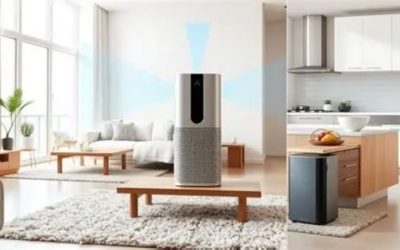
Positioning a smart air purifier inside a bedroom or living area demands careful attention to wall clearances and room volume. Most cylindrical and tower configurations require at least 15 to 20 inches (38 to 51 cm) of open space around intake vents to prevent restricted air intake patterns.
Floor footprint matters significantly in compact urban apartments where surface space remains limited. Units measuring 10 to 12 inches (25 to 30 cm) wide fit neatly beside nightstands, but placing them inside tight wall recesses or under desks severely reduces airflow cycles and capture rates.
We advise measuring your actual floor dimensions with a tape measure before ordering any air treatment appliance. Proper clearance guarantees that high-velocity exhaust vents circulate purified air across the entire room ceiling rather than blowing directly against nearby curtains or furniture.
True HEPA Standards and Recurring Maintenance Costs
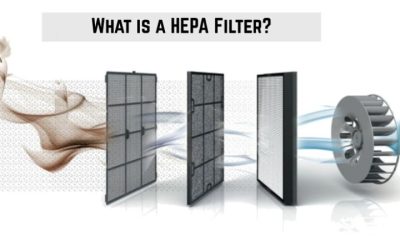
Rigorous filtration demands authentic True HEPA mechanical media capable of trapping 99.97% of airborne particles down to 0.3 microns. Consumers should avoid marketing terms like HEPA-type, which lack certified mechanical efficiency and allow tiny allergens and smoke particles to bypass filtration layers.
Filter replacement represents an ongoing recurring expense that functions like an unavoidable hidden subscription cost. Annual filter replacements typically range from $35 to $95 depending on carbon pellet density, making long-term operating costs an essential purchase consideration for homeowners.
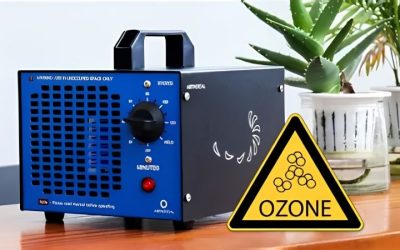
Furthermore, avoid electronic ionizers and intentional ozone generators due to documented respiratory irritation hazards. Mechanical filtration combining dense borosilicate glass fibers with substantial granular activated carbon beds offers safe, reliable odor removal without harmful byproducts.
Top Smart Air Purifiers Compared for Everyday Homes
Selecting the right smart air purifier means balancing physical motor capability with dependable connectivity and filter replacement overhead. The following six models excel across varied residential layouts, offering certified mechanical filtration, responsive automated sensors, and proven durability.
| Model | Smoke CADR | Coverage (4.8 ACH) | Filter Type | Noise Range | Annual Filter Cost |
|---|---|---|---|---|---|
| Levoit Core 400S | 260 cfm (442 m³/h) | 403 sq ft (37 m²) | True HEPA H13 | 24–52 dB | Budget ($35–$45) |
| Coway Airmega 250S | 249 cfm (423 m³/h) | 386 sq ft (36 m²) | Green True HEPA | 22–54 dB | Mid-Tier ($65–$75) |
| Blueair Smart 5410i | 250 cfm (425 m³/h) | 388 sq ft (36 m²) | HEPASilent Dual | 18–50 dB | Mid-Tier ($65–$75) |
| Levoit Core 600S | 410 cfm (697 m³/h) | 635 sq ft (59 m²) | True HEPA H13 | 26–55 dB | Mid-Tier ($55–$65) |
| Winix AM90 | 240 cfm (408 m³/h) | 372 sq ft (35 m²) | True HEPA | 27–54 dB | Budget ($40–$50) |
| Dyson Purifier Cool TP07 | 190 cfm (323 m³/h) | 295 sq ft (27 m²) | HEPA H13 Sealed | 42–61 dB | Premium ($75–$85) |
Levoit Core 400S: Best Overall for Medium to Large Rooms
The Levoit Core 400S stands out as an adaptable smart air purifier engineered for typical suburban bedrooms and open dining areas. Delivering a smoke CADR of 260 cfm (442 m³/h), this cylindrical cleaner provides 4.8 air changes per hour in spaces up to 403 sq ft (37 m²) with 38 watts of maximum power draw.
In practical day-to-day operation, the VeSync smartphone application provides real-time PM2.5 readings, schedule customization, and filter life tracking. Sleep mode drops sound levels down to 24 dB, allowing peaceful overnight bedroom use while automated laser sensors adjust fan output if cooking odors rise.
A notable drawback involves the relatively modest carbon layer, which saturates quickly when exposed to heavy cigar smoke or persistent kitchen grease. Replacement filters cost approximately $40, requiring renewals every six to twelve months depending on ambient household pollution and pet density.
Coway Airmega 250S: High-Efficiency Filtration with Smart Modes
The Coway Airmega 250S pairs a modern squared aesthetic with impressive internal airflow, delivering a smoke CADR of 249 cfm (423 m³/h). Rated to service spaces up to 386 sq ft (36 m²) at 4.8 ACH, the compact console pulls intake air through washable pre-filters and dense Green True HEPA media.
The Coway IoCare application provides extensive scheduling, air quality logs, and responsive fan controls across 2.4 GHz home Wi-Fi bands. The automated Smart Mode powers down fan operation when the air remains clean for ten consecutive minutes, conserving electricity and extending internal motor longevity.
On high fan settings, the internal motor generates 54 dB of acoustic output, which sounds noticeably loud in quiet home offices. Original equipment replacement filter sets occupy a higher mid-tier price point near $70, representing a noticeable recurring ownership investment across multi-year use.
Blueair Smart 5410i: Rapid Particle Clearance and Quiet Operation
Engineered with HEPASilent dual-stage mechanical and electrostatic technology, the Blueair Smart 5410i moves 250 cfm (425 m³/h) of clean air. This tower model refreshes rooms measuring up to 388 sq ft (36 m²) five times hourly while consuming between 5 and 42 watts depending on fan speed selection.
Real-world testing reveals that the Smart 5410i clears fine airborne dust and pollen rapidly thanks to dual bottom-intake vents. The Blueair companion application delivers predictive filter tracking based on real usage patterns rather than arbitrary calendar timers, preventing premature filter waste.
However, the proprietary electrostatic charging mechanism requires careful maintenance to keep internal ionization pins free of accumulated lint. Proprietary replacement filter cartridges remain relatively expensive at roughly $65 to $75, making ongoing operational budgeting essential for buyers.
Levoit Core 600S: High-Capacity Coverage for Open Floor Plans
Large open-concept layouts demand a heavy-duty smart air purifier capable of cycling substantial air volumes without straining its motor. The Levoit Core 600S produces an exceptional smoke CADR of 410 cfm (697 m³/h), circulating fresh air throughout expansive 635 sq ft (59 m²) areas every 12.5 minutes.
Its high-efficiency vortex brushless motor pulls airborne particles from 360-degree intake perforations with 49 watts of peak power draw. Integration with Alexa and Google Assistant allows seamless voice-activated fan adjustments, while the large top-mounted LED panel provides instant numeric PM2.5 feedback.
Weighing 13.7 lbs (6.2 kg) with an expansive 12.3-inch (31 cm) base diameter, the physical chassis dominates modest apartment living rooms. Genuine replacement filters represent a substantial ongoing investment at approximately $60, though their extended nine to twelve month service life softens the cost.
Winix AM90: Balanced Dual-Stage Odor and Dust Control
The Winix AM90 combines four-stage filtration with Wi-Fi convenience, producing a reliable smoke CADR of 240 cfm (408 m³/h). It services living rooms and master bedrooms up to 372 sq ft (35 m²) at 4.8 air changes per hour while utilizing a fine mesh pre-filter and True HEPA filter with 65 watts draw.
The Winix Smart companion application enables remote fan adjustment, filter health monitoring, and personalized daily cleaning schedules. An intelligent ambient light sensor automatically dims display panels and drops fan speed when bedroom lights turn off, preventing disturbing glare during nighttime.
While the unit includes PlasmaWave technology to neutralize airborne odors, users sensitive to residual electrical charges should keep it disabled via the app. The carbon sheet filter uses coated fiber rather than deep granular carbon pellets, limiting its capacity to adsorb dense chemical fumes.
Dyson Purifier Cool TP07: Blended Circulation and Air Quality Sensing
The Dyson Purifier Cool TP07 integrates whole-room air purification with high-velocity bladeless cooling circulation across 350-degree oscillation sweeps. Utilizing an entire machine HEPA H13 sealed standard, the tower captures ultrafine particles and locks them securely inside internal acoustic baffles.
The MyDyson application displays comprehensive air quality analytics, tracking airborne PM2.5, PM10, volatile organic compounds, and nitrogen dioxide levels. A dedicated backwards airflow mode purifies room air without projecting cooling drafts, making the appliance versatile during colder winter months.
Despite its advanced multi-sensor array and iconic aesthetics, the unit produces a modest airflow velocity compared to dedicated boxy CADR units. Replacement dual-layer 360-degree combi filters sit in the premium $75 to $85 tier, requiring careful budget allocation for routine annual maintenance.
How to Choose and Maintain Your Connected Air Purifier
Long-term satisfaction with automated air cleaning appliances depends on understanding mechanical hardware limits and seasonal pollution variations. Proper sensor maintenance, awareness of peak pollen seasons, and realistic durability expectations prevent common operating issues and costly repairs.
Smart Sensor Drift and Wi-Fi App Ecosystem Stability
Maintaining a connected smart air purifier involves routine hardware upkeep that extends far past occasional mobile software updates. Onboard optical and infrared particulate sensors accumulate stray lint over six to twelve months, leading to false high-pollution readings and erratic automated fan surges.
Gently vacuuming sensor access doors with a soft brush attachment every three months restores accurate baseline particle detection. Furthermore, smart home Wi-Fi chipsets require dedicated 2.4 GHz wireless networks, frequently failing to connect when paired to combined dual-band mesh router SSID bands.
Checking physical button responsiveness ensures continuous manual operation even during home internet service interruptions or cloud server outages. Leading brands provide standalone manual overrides on physical control panels, preventing smart home owners from losing air cleaning functionality offline.
Seasonal Air Quality Spikes and Sale Event Timing
Consumer demand for any smart air purifier surges dramatically during late summer wildfire events when particulate levels spike across regions. Airborne smoke particles quickly overwhelm saturated filters, requiring households in fire-prone regions to keep spare replacement filters stored on hand.
Similarly, early spring tree pollen blooms from March through May prompt elevated indoor allergen filtration requirements across households. Running appliances continuously on medium speeds prevents ambient particulate accumulation before severe seasonal allergy symptoms disrupt daily sleep patterns.
Major electronic shopping periods like Prime Day in late June and Black Friday in November provide prime opportunities to purchase premium units. These promotional events represent the most cost-effective calendar windows to secure discounted replacement filter bundles without paying steep seasonal markups.
Long-Term Durability, Fan Bearing Wear, and Warranty Terms
Continuous twenty-four-hour operation places steady mechanical friction on internal brushless DC motor bearings over multi-year cycles. Budget purifiers often develop subtle squeaks or vibrational humming after eighteen months, whereas high-grade fans maintain quiet acoustic profiles across five years.
Warranty terms differ substantially between basic electronic controller circuitry and primary mechanical motor assemblies. Reputable manufacturers offer two to five years of comprehensive motor coverage, but customer damage resulting from third-party non-certified filters often voids warranty support.
Inspecting internal fan blades for dust build-up during scheduled filter swaps prevents motor imbalances from causing early bearing failure. Wiping housing seals with dry microfiber towels maintains structural airtightness, guaranteeing unfiltered air cannot bypass internal True HEPA gaskets over time.
See More:
- Best eyeshadow blender brush
- Best frozen foods for air fryer
- Best frozen food for air fryer
- Best way to reheat steak in air fryer
- Best air fryer recipes book
Final Recommendations for Your Home Air Quality Needs
Investing in a quality smart air purifier provides tangible indoor air improvements when matched properly to your room dimensions and airflow needs. High CADR ratings, certified True HEPA filtration, and responsive mobile automation ensure your living environment remains clear of smoke, dust, and pet allergens.
Before placing an order, take a moment to measure your intended room square footage and evaluate necessary wall clearances around air intake vents. Factoring annual filter replacement expenses into your household budget prevents surprises while keeping mechanical motors running at peak cleaning efficiency.
Whether you select the balanced Levoit Core 400S for bedrooms or the heavy-duty Core 600S for large open-concept spaces, automated controls simplify healthy indoor living. Choose certified mechanical filtration over unproven electronic gimmicks to enjoy reliable, quiet, and long-lasting residential air purification.