Air purifier maintenance dictates how effectively your unit traps allergens over years of continuous runtime. Neglecting routine upkeep degrades clean air delivery and strains mechanical fan motors. Our guide evaluates top appliances engineered for straightforward servicing to protect indoor air quality without high costs.
As an Amazon Associate we earn from qualifying purchases.
By Daniel Foster
Essential Performance Metrics for Low-Maintenance Air Purifiers
Approaching air purifier maintenance with clear technical standards prevents premature hardware breakdown. Understanding mechanical resistance and airflow efficiency helps buyers pick machines that run quietly for years. The following criteria highlight the primary benchmarks determining how easily an air cleaner is serviced.
Deciding Category Metrics: CADR and Room Sizing Thresholds
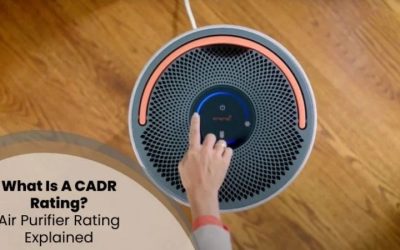
Clean Air Delivery Rate, or CADR, measures volume output across smoke, dust, and pollen in cubic feet per minute (cfm). Demanding spaces require at least 200 cfm (340 m³/h) to maintain 4.8 air changes per hour (ACH). Proper sizing ensures the motor avoids constant maximum speeds, cutting down mechanical wear.
Selecting an undersized motor demands ongoing air purifier maintenance because clogged pleats choke airflow quickly. True HEPA standards guarantee 99.97% capture of particles down to 0.3 microns, which creates static pressure resistance. Matching room square footage with verified CADR prevents rapid filter exhaustion.
Operating an appropriately rated unit at medium fan speeds cuts decibel levels below 35 dB for peaceful sleeping environments. It also lowers electrical consumption below 45 W during prolonged operation. Balanced sizing preserves internal fan bearings while optimizing particle capture across living rooms.
Space and Fit: Placement Clearances and Floor Footprints
Air cleaners require adequate physical space to draw surrounding air without choking intake vents. Maintaining at least 15 inches (38 cm) of clearance from drywall and heavy furniture preserves rated airflow. Shoving an intake directly against a baseboard forces blowers to work harder, accelerating dust buildup.
Compact tower models occupy roughly 1.0 sq ft (0.09 m²) of floor area, making them ideal for cramped apartment bedrooms. Larger box consoles demand up to 2.2 sq ft (0.20 m²), requiring dedicated corners away from foot traffic. Always measure intended floor clearance before purchasing high-capacity appliances.
Keep air intake grilles clear of dangling window curtains and low electrical cords to avert accidental obstruction. Units elevated on nightstands must feature non-slip rubber footing to prevent fall damage during accidental bumps. Strategic room placement minimizes daily grime accumulation on external grilles.
Filter Replacement Lifespans and Long-Term Operating Costs
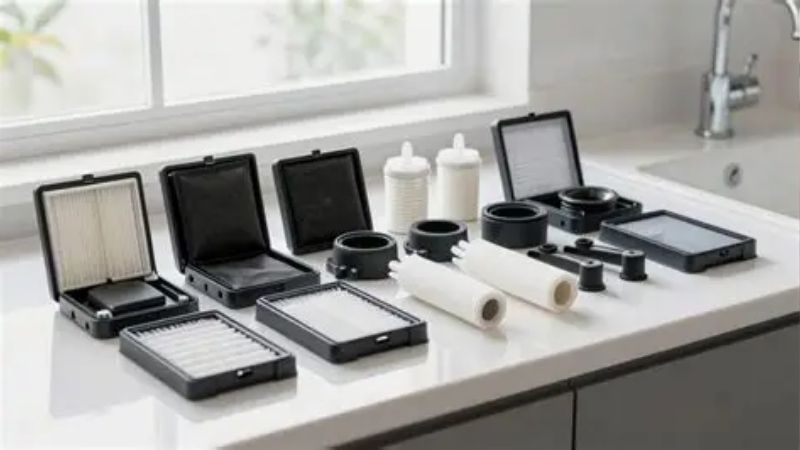
Filter replacements represent an ongoing operational expense that many budget-conscious buyers overlook during selection. Standard composite HEPA drums last between 6 and 12 months depending on ambient indoor air quality. Genuine OEM filter sets typically cost between mid-tier brackets of thirty to eighty dollars per cycle.
Washable mesh pre-filters capture coarse pet hair and lint, shielding delicate interior HEPA fibers from early saturation. Rinsing or vacuuming this outer layer every two to four weeks extends the primary core lifespan by several months. Bypassing this simple chore forces expensive HEPA replacements far earlier than normal.
Be aware that prices fluctuate, so verify current filter replacement costs on Amazon before finalizing your choice. Investing in units with accessible filter bays prevents clumsy latches from snapping during routine servicing. Low-maintenance designs prioritize tool-free access and intuitive replacement tracks.
Top 6 Air Purifiers Engineered for Simple Maintenance
Our research synthesis identifies appliances that streamline your air purifier maintenance routines through smart mechanics and durable housings. Each selected candidate minimizes downtime while delivering certified particulate capture for modern households. Explore our top recommendations tailored to various room sizes.
Coway AP-1512HH Mighty: Best Overall for Low-Effort Servicing
The Coway AP-1512HH Mighty covers up to 361 sq ft (33.5 m²), featuring a 4-stage filtration system with True HEPA. Its washable mesh screen catches large debris, simplifying routine air purifier maintenance for busy pet owners. An intuitive LED indicator tells you precisely when to vacuum the pre-filter mesh screen.
Delivering a balanced smoke CADR of 233 cfm (396 m³/h), the AP-1512HH operates at a whisper-quiet 24.4 dB on lowest settings. Maximum energy consumption peaks at 77 W with the ionizer engaged, though eco-mode cuts draw during idle periods. The front magnetic cover pulls away effortlessly without requiring any hand tools.
A real drawback involves the fragile plastic clips holding the deodorization carbon filter, which can loosen after years. However, affordable replacement multipacks keep ongoing annual ownership costs within an attractive budget range. Its reliable motor build resists bearing friction across extended continuous runs.
Levoit Core 400S: Best Smart Tracking and Quick Core Changes
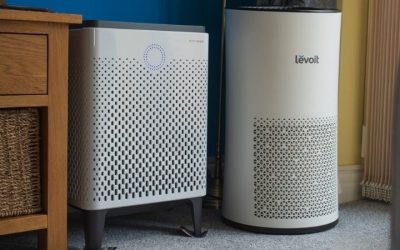
The Levoit Core 400S utilizes a cylindrical 360-degree intake rated for spaces up to 403 sq ft (37.4 m²) at 4.8 ACH. Generating a robust smoke CADR of 260 cfm (442 m³/h), its aerodynamic VortexAir ducts circulate air efficiently. The central H13 True HEPA barrel lifts directly out from a twist-lock bottom baseplate.
Through the companion smartphone app, users monitor actual filter wear percentages calculated from particulate exposure rather than raw timers. This smart tracking prevents premature filter disposal, reducing unnecessary expense over multi-year cycles. Quiet sleep modes operate at an unobtrusive 24 dB sound level.
One noticeable limitation is the proprietary cylindrical filter design, which eliminates third-party alternatives during supply crunches. Maximum fan settings pull 38 W while generating 52 dB of audible rush, which proves loud for light sleepers. Build quality remains solid, anchored by an ETL-certified brushless DC motor.
Winix 5500-2: Best Washable Carbon and Pre-Filter Setup
The Winix 5500-2 cleans rooms up to 360 sq ft (33.4 m²), driven by a capable 232 cfm (394 m³/h) smoke CADR rating. It distinguishes itself with an Advanced Odor Control (AOC) carbon filter featuring washable granular pellets. Users can rinse this stage alongside the mesh pre-filter every three months to refresh pores.
The front-loading cassette assembly allows owners to slide out filter layers in seconds without flipping the console over. Dual smart sensors monitor ambient airborne particles and adjust the multi-speed blower automatically. Sleep mode dampens running noise down to 27.8 dB while extinguishing illuminated display LEDs.
A noted disadvantage is the bulky 15-pound (6.8 kg) chassis footprint, which demands deliberate floor positioning away from tight walls. PlasmaWave technology should be toggled off by sensitive users seeking zero ozone byproducts. Replacement genuine True HEPA cassettes sit in an accessible budget-to-mid range.
Blueair Blue Pure 211+ Auto: Best Tool-Free Exterior Fabric Care
The Blueair Blue Pure 211+ Auto processes expansive rooms up to 540 sq ft (50 m²) with a high 353 cfm (600 m³/h) smoke CADR. Enjoy hands-off air purifier maintenance thanks to its machine-washable fabric pre-filter skirt. Dust collects externally where it can be vacuumed off without opening the main internal chassis.
A single top-mounted push button controls fan speeds and illuminates orange when the massive foldable particle filter needs renewal. The main combination carbon and particle insert folds flat for compact curbside disposal every six months. Sound outputs range from a quiet 23 dB up to 53 dB at maximum fan velocities.
The primary drawback lies in replacement filter pricing, which trends toward the premium bracket on Amazon storefronts. Furthermore, the HEPASilent technology relies on static particle charging, which some purists prefer to avoid. Total operating power peaks at 38 W, making it electrically frugal during daily runs.
Honeywell HPA300: Best Heavy-Duty Multi-Bay Filtration Upkeep
The Honeywell HPA300 represents an industrial-grade workhorse engineered for large open areas reaching 465 sq ft (43.2 m²). Boasting an exceptional 300 cfm (510 m³/h) smoke CADR, it cycles large volumes of air rapidly. Its wide front access door detaches with a simple thumb press, exposing the interior filter cavity.
This machine uses three individual HRF-R1 True HEPA filters alongside an expansive charcoal odor wrap cut to size. Replacing individual components modularly allows users to manage consumable costs rather than discarding unified cartridges. Touch controls include automated shutoff timers and manual filter check reminders.
A clear downside is electrical efficiency, as the AC motor pulls up to 130 W on Turbo speed, increasing electric bills. Operating sound levels reach a loud 60 dB at top output, demanding placement away from office desks. However, its rugged internal housing survives years of rigorous dust extraction without failure.
Medify MA-40: Best Medical-Grade H13 with Quick-Latch Access
The Medify MA-40 provides robust particulate defense for spaces up to 840 sq ft (78 m²) at two air changes per hour. Generating 224 cfm (380 m³/h) smoke CADR, it relies on higher-tier H13 True HEPA capturing 99.9% of particles to 0.1 microns. The sleek tempered glass control interface wipes clean with a microfiber cloth.
Maintenance is simplified through dual-sided intake doors secured by sturdy magnetic tabs that prevent accidental spills. The integrated filter combines pre-filter mesh, H13 HEPA, and composite carbon pellets into a single drop-in cartridge. The system runs up to 3,000 operational hours before prompting filter renewal.
On the negative side, the tempered glass top panel is vulnerable to cracking if struck by falling objects in busy households. Replacement filters lean toward mid-to-premium pricing, meaning multi-packs are recommended during sale events. Its brushless motor provides steady reliability across demanding daily operation.
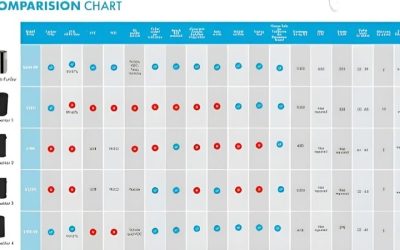
| Model | Coverage Area | Smoke CADR | Noise Level | Filter Lifespan | Filter Cost Tier | Maintenance Access |
|---|---|---|---|---|---|---|
| Coway AP-1512HH | 361 sq ft (33.5 m²) | 233 cfm (396 m³/h) | 24.4 – 53.8 dB | 12 Months | Budget | Front Magnetic Panel |
| Levoit Core 400S | 403 sq ft (37.4 m²) | 260 cfm (442 m³/h) | 24.0 – 52.0 dB | 6 – 12 Months | Mid-Tier | Bottom Twist-Lock |
| Winix 5500-2 | 360 sq ft (33.4 m²) | 232 cfm (394 m³/h) | 27.8 – 54.8 dB | 12 Months | Budget-to-Mid | Front Pull Cassette |
| Blueair Blue Pure 211+ | 540 sq ft (50.0 m²) | 353 cfm (600 m³/h) | 23.0 – 53.0 dB | 6 Months | Premium | Top Push-Button Release |
| Honeywell HPA300 | 465 sq ft (43.2 m²) | 300 cfm (510 m³/h) | 38.0 – 60.0 dB | 12 Months (HEPA) | Mid-Tier | Front Quick-Latch Door |
| Medify MA-40 | 840 sq ft (78.0 m²) | 224 cfm (380 m³/h) | 46.0 – 66.0 dB | 4 – 6 Months | Mid-to-Premium | Dual Magnetic Doors |
Long-Term Ownership and Component Maintenance Routines
Executing proactive air purifier maintenance preserves factory airflow rates and stops mechanical bearing squeal before it starts. Dust settles inside fan assemblies and sensor lenses over months, degrading automatic air quality detection. Adopting the following practices keeps your air purifier running efficiently.
Cleaning Optical Dust Sensors to Prevent Speed Calibration Drift
Modern air purifiers rely on infrared or laser particle sensors to regulate automatic fan velocities in response to room pollution. Over several months, microscopic lint coats the sensor lens, causing false readings that trap the unit on high speeds. Inspecting this intake port every ninety days prevents sensor drift.
Accessing the sensor typically requires opening a small side hatch without unfastening the entire appliance chassis. Gently swab the optical lens using a dry cotton swab or one lightly dipped in 70% isopropyl alcohol. Avoid spraying compressed air directly into the aperture, which can misalign delicate photodiode sensors.
Allow the sensor chamber to air dry completely for ten minutes before reattaching the protective plastic hatch. Regular cleaning ensures the auto-mode controller responds accurately to airborne cooking smoke or sudden pet dander. Maintaining this component extends motor life by avoiding needless high-RPM fan cycles.
Preserving Fan Motor Bearings and Reducing Chassis Vibration
Radial fan blowers gather heavy dust coatings on trailing blade edges when operated in pet-heavy households for years. This uneven weight distribution creates rotational imbalance, generating buzzing vibrations and premature bearing wear. Vacuuming accessible internal blower wheels annually eliminates this mechanical drag.
Unplug the appliance completely from wall electrical outlets before inserting vacuum brush attachments near the fan assembly. Inspect rubber anti-vibration footings on the base, replacing missing pads to dampen resonance against hardwood floors. A level footing stops sympathetic cabinet rattles from disturbing nighttime sleep.
Most residential purifiers utilize permanently sealed motor bearings that never require manual oiling or grease application. If an aging blower begins chirping or grinding, inspect the fan housing for hair strands wrapped around the spindle. Clearing foreign fibers promptly prevents motor overheating and internal fuse trips.
Seasonal Wildfire Smoke Surges and Emergency Filter Swaps
During late summer and autumn wildfire seasons, outdoor particulate spikes rapidly saturate indoor air cleaners across western regions. When heavy smoke odors infiltrate your home, disciplined air purifier maintenance becomes critical for sustaining livable indoor air. Activated carbon stages become saturated quickly under severe smoke.
According to EPA guidance, households should store spare filters before seasonal smoke events elevate local AQI levels. Operating blowers continuously during wildfire emergencies cuts expected filter lifespans from twelve months to three. Inspect HEPA pleats visually; dark gray discoloration signals an immediate swap.
Take advantage of Prime Day or autumn sales events to purchase genuine filter multi-packs at reduced prices before shortages occur. Note that while air cleaners significantly reduce particulate loads, they cannot replace home weatherization or medical asthma treatments. Consult medical professionals for persistent respiratory conditions.
See More:
- Best eyeshadow blender brush
- Best frozen foods for air fryer
- Best frozen food for air fryer
- Best way to reheat steak in air fryer
- Best air fryer recipes book
Final Verdict on Sustained Clean Air and Upkeep
Selecting the right air cleaner balances upfront hardware quality against practical replacement filter expenses over years of service. For most homes, the Coway AP-1512HH Mighty delivers optimal value thanks to its washable pre-filter and durable fan motor. Meanwhile, smart homes benefit from the Levoit Core 400S app monitoring.
Ultimately, committing to structured air purifier maintenance ensures your equipment runs quietly while removing allergens effectively. Clean external pre-filters monthly, swab particle sensors quarterly, and monitor genuine replacement filter pricing on Amazon. Always measure room dimensions to match CADR needs before buying.
Our top picks
 Levoit Air Purifier for Home Pets Hair
- Power Source: Corded Electric
- Control Method: Touch
- Filter Type: 3 in 1 Filtration
Covers up to 1073 square feet on one unit
Operates as quiet as 24 decibels in sleep mode
Captures 99.97 percent of particles down to 0.1 microns
Requires genuine Levoit replacement filters for proper performance
Corded electric design needs a nearby wall outlet
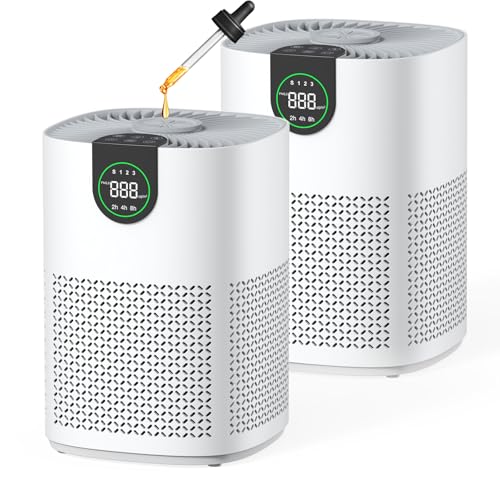 VEWIOR 2 Pack Air Purifiers with Washable
- 【High Valued & Efficiency Air Purifier】- VEWIOR air…
- 【Premium H13 Washable Filter】-The air purifier for bedroom…
- 【Real-Time Air Quality Display & Auto Mode】- The…
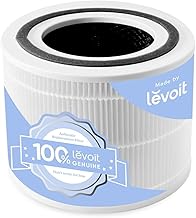


 LEVOIT Smart Air Purifier for Home Large
AHAM-verified performance covers rooms up to 1875 square feet
U-shaped inlet pulls in pet hair and odors efficiently
Designed specifically to filter allergens like pollen and dander
Stands nearly 20 inches tall, needing dedicated floor space
Listing does not specify the exact CADR number

As an Amazon Associate we earn from qualifying purchases at no extra cost to you.