Key takeaways
What's inside
Remove cigarette smoke indoors effectively by capturing both airborne particulate matter and toxic gaseous chemicals. Thin carbon sheets saturate quickly, making substantial pellet beds and certified high CADR metrics mandatory. We examine tested air cleaner mechanics and room sizing to help you choose the right setup.
By Daniel Foster
As an Amazon Associate we earn from qualifying purchases.
Core Filtration Metrics and Technical Buying Criteria
To remove cigarette smoke indoors without wasting money on undersized units, buyers must evaluate airflow mechanics and filtration chemistry. Tobacco smoke combines microscopic solid ash with dangerous volatile organic compounds. Selecting the right setup requires balancing particle capture against gas adsorption.
The Decisive Metric: Smoke CADR, High ACH, and Carbon Bed Depth
When attempting to remove cigarette smoke indoors, standard dust ratings fail to represent true performance under heavy loads. You need a dedicated Smoke Clean Air Delivery Rate of at least 200 cfm (340 m³/h) to process dense plumes before chemical residues cling to walls, drapes, and nearby soft furniture.
Air changes per hour determine how rapidly stale air cycles through the mechanical media. While general dust management functions adequately at 2 ACH, active tobacco contamination demands 4 to 5 ACH. This continuous cycling prevents toxic secondhand aerosols from settling into interior living environments.
Carbon volume serves as the second decisive metric because True HEPA filters cannot trap noxious gaseous vapors. Look for units containing 5 lb to 15 lb (2.3 kg to 6.8 kg) of granular activated carbon. Lightly carbon-dusted mesh filters will saturate and fail within several days of regular indoor smoking.
Room Volume, Airflow Clearance, and Practical Placement Fit
Measuring your room volume is crucial to remove cigarette smoke indoors efficiently without airflow bottlenecks. Always calculate physical dimensions (length by width by ceiling height) before ordering. An air cleaner rated for 400 sq ft (37 m²) cannot clear a 600 sq ft (56 m²) open-plan living room adequately.
Physical footprint and clearance dictate whether an air cleaner functions at its rated airflow specification. Units need at least 15 in to 20 in (38 cm to 51 cm) of open perimeter space. Tucking a large cylindrical cleaner tightly behind armchairs or corner desks restricts intake vents and cuts CADR by half.
Floor-standing models weighing 30 lb to 45 lb (14 kg to 20 kg) require heavy-duty caster wheels for daily mobility. If you plan to move the device between your home office and bedroom, ensure doorways accommodate its width. Tabletop purifiers lack the physical filter mass required for ongoing smoke extraction.
True HEPA vs. Carbon Pellets: Mechanical Trapping vs. Gas Adsorption
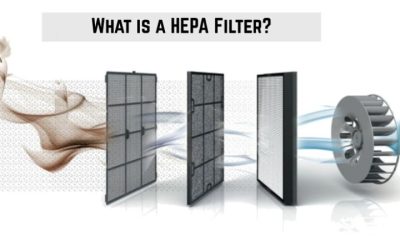
Cigarette emissions exist in two distinct physical phases that require completely separate filtration technologies. Solid particulate matter spans 0.1 to 1.0 micrometers, which certified True HEPA captures at 99.97% efficiency. However, the accompanying gaseous vapor phases flow straight through microfiber paper.
Activated carbon pellets neutralize hazardous volatile organic compounds, benzene, and formaldehyde via physical adsorption. Premium blends incorporate potassium iodide or zeolite to enhance chemical bonding with acidic gases. Without substantial chemical media, an air purifier merely recirculates invisible fumes.
True Operating Costs: Filter Replacements as a Recurring Ownership Expense
Buyers frequently overlook recurring maintenance fees, treating high-end air purifiers as simple one-time hardware purchases. Dense tobacco smoke rapidly deposits tar onto fiber surfaces, shortening rated filter lifespans. Calculating yearly cartridge replacement costs prevents unpleasant financial surprises later.
Standard all-in-one replacement barrel filters typically cost between $60 and $120 each, requiring replacement every 6 months under smoke loads. Specialized heavy carbon drums cost $200 to $350 but endure up to 24 months. Budget for annual operating expenditures equal to roughly 30% of the initial machine retail price.
Comparing the Top Indoor Air Cleaners for Heavy Smoke
Selecting the proper hardware to remove cigarette smoke indoors requires weighing carbon bed weight against fan power and overall chassis build. We examine four industry-leading purifiers across budget, mid-range, and premium tiers. Note that retail pricing fluctuates on Amazon, so verify current figures before ordering.
Austin Air HealthMate Plus: Heavyweight Bed for Dense Gas Removal
The Austin Air HealthMate Plus represents the heavy-duty benchmark for demanding chemical and odor extraction. Its massive filter drum holds 15 lb (6.8 kg) of activated carbon, potassium iodide-impregnated zeolite, and 60 sq ft (5.6 m²) of medical-grade True HEPA media housed inside an all-steel welded enclosure.
In practical residential spaces up to 1,500 sq ft (139 m²), it draws 400 cfm (680 m³/h) on maximum velocity. The deep carbon layer ensures extended contact dwell time, stripping heavy thirdhand smoke compounds. Its centrifugal fan mechanism relies on simple manual rotary dials rather than fragile touchscreen circuits.
The primary operational drawback is its noticeable acoustic footprint, reaching 66 dB on the top setting while consuming 132 W of power. It lacks automated air quality sensors or smartphone connectivity. However, the steel casing and five-year mechanical warranty make it extraordinarily durable under severe duty.
Coway Airmega 400: High CADR Throughput for Expansive Living Rooms
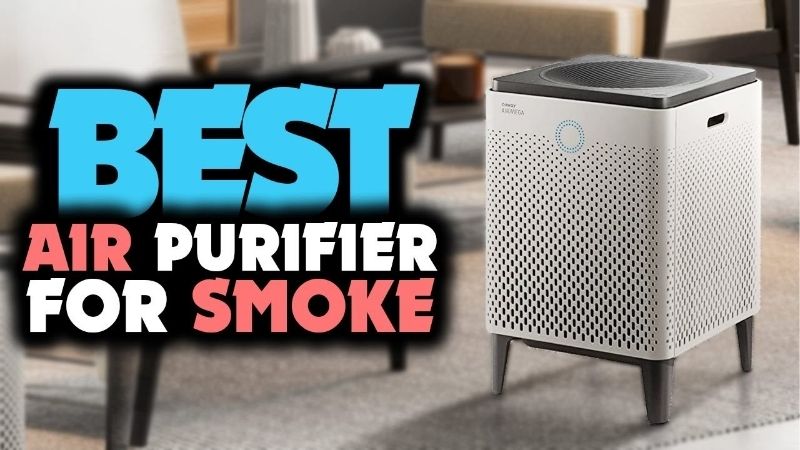
The Coway Airmega 400 utilizes dual-sided suction ports to cycle high air volumes through expansive family rooms. Rated for spaces up to 1,560 sq ft (145 m²) at two air changes hourly, it generates a verified Smoke CADR of 285 cfm (484 m³/h). The dual Max2 filters combine Green True HEPA with activated carbon.
Real-time particle pollution monitoring automatically ramps the variable-speed motor when smoke surges are detected. At lowest speeds, sound output drops to a whisper-quiet 22 dB, making it comfortable for overnight usage. Washable pre-filter mesh panels catch large ash flecks before they reach the costly main media.
On the downside, its carbon stage weighs roughly 2 lb (0.9 kg), which is lighter than dedicated industrial adsorbers. In heavy, multi-smoker households, these carbon layers exhaust within four to six months, requiring filter set replacements. Nevertheless, its high particle CADR delivers rapid visible smoke clearance.
Levoit Core 600S: Budget-Conscious Airflow for Secondary Bedrooms
Renters seeking to remove cigarette smoke indoors in medium spaces often consider balance between cost and throughput. The mid-range Levoit Core 600S delivers a formidable Smoke CADR of 377 cfm (641 m³/h) for rooms up to 635 sq ft (59 m²) at 5 ACH. Its cylindrical 360-degree intake maximizes airflow intake efficiency.
The chief limitation involves thin carbon pellets, which struggle against persistent tobacco gases over time. In continuous smoking environments, the composite filter requires replacement every four months. At 26 dB on Sleep Mode, however, it remains an accessible entry-level choice for secondary bedrooms.
IQAir GC MultiGas: Specialized Granular Canisters for Stubborn Odors
For users battling severe gaseous residues, the Swiss-engineered IQAir GC MultiGas provides clinical chemical filtration. It replaces standard flat pleated filters with four substantial gas-phase cylindrical cartridges holding 12 lb (5.4 kg) of granular activated carbon and alumina impregnated with permanganate.
The system delivers an airflow volume of 300 cfm (510 m³/h), suitable for rooms up to 1,125 sq ft (105 m²). Post-filter microfiber sleeves ensure zero carbon dust escapes into clean living quarters. Its airtight dual-arch chassis guarantees 99% filtration efficiency for ultrafine smoke particles down to 0.003 microns.
Premium performance carries a substantial price tag, placing this unit firmly in the high-tier commercial grade bracket. Replacement canister sets exceed $350, and the unit occupies a sizable floor area measuring 16 by 15 in (41 by 38 cm). When maximum gas adsorption is non-negotiable, it remains unmatched in efficacy.
| Model | Smoke CADR | Room Coverage (5 ACH) | Carbon Weight | Noise Level | Power Consumption | Annual Filter Cost |
|---|---|---|---|---|---|---|
| Austin Air HealthMate Plus | 400 cfm (680 m³/h) | 600 sq ft (56 m²) | 15 lb (6.8 kg) | 50 – 66 dB | 132 W | ~$175 (prorated) |
| Coway Airmega 400 | 285 cfm (484 m³/h) | 425 sq ft (39 m²) | 2.0 lb (0.9 kg) | 22 – 52 dB | 66 W | ~$130 |
| Levoit Core 600S | 377 cfm (641 m³/h) | 565 sq ft (52 m²) | 1.2 lb (0.5 kg) | 26 – 55 dB | 49 W | ~$120 |
| IQAir GC MultiGas | 300 cfm (510 m³/h) | 450 sq ft (42 m²) | 12 lb (5.4 kg) | 25 – 59 dB | 135 W | ~$350 |
Operational Longevity, Failure Modes, and Safe Maintenance
Maintaining equipment intended to remove cigarette smoke indoors demands strict filter schedules and component care. Air cleaners face severe tar build-up, sensor contamination, and fan motor fatigue under smoke loads. Understanding typical failure points ensures your machine maintains high air delivery over years.
Ozone Hazards and Electronic Ionization Dangers to Avoid
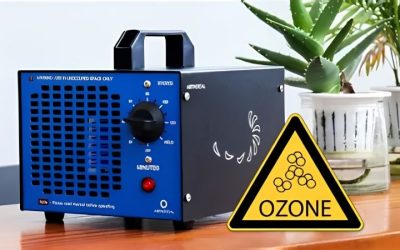
Some manufacturers market standalone ozone generators or aggressive needlepoint ionizers as quick fixes for stubborn tobacco stench. Avoid these devices entirely. Ozone gas is a proven lung irritant that triggers coughing, chest tightness, and airway inflammation even at low atmospheric concentrations.
Furthermore, chemical reactions between ozone molecules and cigarette smoke residues create hazardous secondary pollutants like formaldehyde and ultrafine aerosols. Stick strictly to CARB-certified mechanical True HEPA and carbon systems to guarantee zero toxic ozone emission during occupied operation.
Sensor Drift, Fan Bearing Degradation, and Media Saturation Points
Long-term owner feedback reveals that onboard infrared and laser particle sensors suffer calibration drift after six months of smoke exposure. Sticky yellow tar coats optical sensor lenses, causing units to miscalculate particulate levels. Clean sensor chambers quarterly using dry cotton swabs and low-pressure air.
Mechanical fan assemblies also experience elevated strain as dense filter pores clog with sticky airborne tar and residue. Budget sleeve-bearing motors may develop high-pitched whining or chassis vibration after 12 months. Premium air purifiers with sealed dual-ball bearings offer far superior longevity under load.
A critical warning sign of filter saturation is sour chemical desorption, where an exhausted carbon bed re-releases captured odors back indoors. Once micropores become fully occupied, the carbon cartridge acts as a secondary pollution emitter. Replace chemical media promptly whenever exhaust air smells musty.
Seasonal Demand Shifts and Retail Timing for Air Quality Gear
Consumer demand for indoor air purifiers fluctuates sharply with predictable seasonal drivers. In late summer (August through September), wildfire smoke spikes national AQI levels, depleting warehouse inventory across major retailers and driving replacement filter costs temporarily upward.
Winter presents another critical indoor challenge as cold temperatures force households to keep windows shut tightly. Stagnant indoor conditions trap second-hand tobacco emissions, intensifying odors throughout January and February. Running dedicated high-efficiency filtration prevents toxic indoor gas accumulation.
To secure the best value on premium hardware, align purchasing decisions with major retail sales events. Prime Day in mid-year and Black Friday or Cyber Monday in late November offer reliable opportunities to save on high-CADR units. Stock up on certified replacement filter cartridges during these discount cycles.
See More:
- Best eyeshadow blender brush
- Best frozen foods for air fryer
- Best frozen food for air fryer
- Best way to reheat steak in air fryer
- Best air fryer recipes book
How to Successfully Remove Cigarette Smoke Indoors Long Term
To successfully remove cigarette smoke indoors over continuous use, prioritize verified mechanical media over marketing gimmicks. Combine a certified Smoke CADR matched to 5 ACH with several pounds of granular carbon. Always measure your room dimensions before ordering to ensure adequate airflow clearance.
While high-end air purifiers significantly lower ambient particulate concentrations and irritating odors, they cannot eliminate all health risks associated with indoor smoking. Maintain regular ventilation, wash fabrics frequently, and replace saturated filters on schedule to safeguard your family living environment.