Reduce allergens at home by choosing certified air cleaners tailored to your space. Capturing persistent airborne triggers requires verified CADR output, sealed True HEPA engineering, and strict replacement cycles rather than masking sprays. This guide details the essential technical metrics and reliable units.
By Daniel Foster
As an Amazon Associate we earn from qualifying purchases.
Critical Performance Metrics for Indoor Air Quality
Selecting air cleaning equipment requires focusing on verified mechanical capability. You can invest in effective filtration setups that systematically reduce allergens at home through continuous airflow, mechanical entrapment, and sealed frames that prevent airborne bypass during demanding daily operations.
The Deciding Numbers: Verified CADR and Air Changes
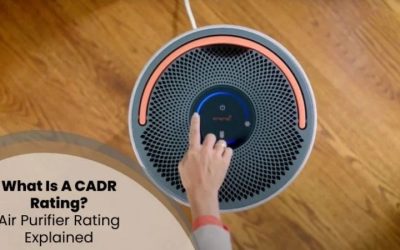
Clean Air Delivery Rate, or CADR, measures cubic feet per minute ($\text{cfm}$) or cubic meters per hour ($\text{m}^3/\text{h}$) of filtered airflow. High-volume exchange rates guarantee the sufficient air turnover required to reduce allergens at home during peak seasons with elevated environmental pollen counts.
Manufacturers frequently advertise broad coverage ratings based on a minimal single air change per hour. However, settling for 1 or 2 $ACH$ allows airborne dander and microscopic spores to stay suspended. Always verify that a model achieves its advertised room square footage at four complete room exchanges.
When calculating mechanical airflow, prioritize smoke CADR ratings first because smoke represents ultrafine particles spanning 0.09 to 1.0 $\mu\text{m}$. A cleaner capable of scrubbing tiny combustion elements will handle coarse plant pollen and household dust mites with exceptional mechanical efficiency.
True HEPA Filtration Standards Versus Marketing Claims
Authentic True HEPA filtration requires testing to capture at least 99.97% of airborne particles down to 0.3 microns ($\mu\text{m}$) in diameter. Vague marketing terms such as HEPA-type or HEPA-like lack standardized mechanical testing and frequently permit smaller irritating dust particulates to slip past.
Physical airtight gaskets represent another pivotal construction detail. Unsealed filter housing leaks dirty bypass air around the edges of the media, venting untreated particles right back into the living space. Seek units featuring closed-cell foam gaskets pressed firmly against the structural framing.
Avoid ionizers and dedicated ozone generators entirely when choosing home appliances. Ozone acts as a lung irritant that damages sensitive airway tissues and triggers respiratory flare-ups according to EPA guidelines. Mechanical fibrous media coupled with dense activated carbon remains the safest standard.
Room Size and Placement: Measuring Footprint and Clearances
Always measure your room square footage ($sq\text{ }ft$ / $m^2$) before selecting any purifier model. Positioning a compact device in an oversized living room starves airflow. Optimal circulation will reduce allergens at home far more reliably than an undersized fan running at loud maximum speeds continuously.
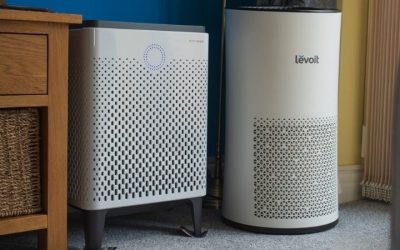
Intake geometry dictates placement within the room. Cylindrical cleaners draw air from a 360-degree perimeter and require at least 12 to 18 inches (30 to 45 $cm$) of open clearance from adjacent drywall. Shoving intake vents flush against interior walls chokes incoming air velocity and degrades filtration.
Vertical floor space and unit weight also influence utility. Compact footprints spanning 8 to 11 inches (20 to 28 $cm$) fit easily on bedroom dressers, while units exceeding 20 pounds (9 $kg$) require dedicated corner placement. Confirm accessible power outlets to prevent dangerous tripping hazard cables.
Top Filtration Appliances to Target Household Triggers
Choosing an appliance requires matching mechanical specifications to room volume and noise limits. The following analysis examines tested machine profiles designed to reduce allergens at home across various room dimensions, highlighting verified airflow data, practical upkeep, and functional limitations.
Levoit Core 400S: Smart Coverage for Midsize Bedrooms
The Levoit Core 400S serves mid-range spaces up to 403 $sq\text{ }ft$ (37.4 $m^2$) at 4.8 air changes per hour, delivering a balanced smoke CADR of 260 $\text{cfm}$ (442 $m^3/h$). Its cylindrical 360-degree True HEPA filter captures dust mites, coarse pet hair, and microscopic spores with high consistency.
On lowest sleep settings, sound output drops to a whisper-quiet 24 $dB$, while full turbo speed generates 52 $dB$ and consumes 38 $W$ of electrical power. The integrated laser particle sensor tracks real-time PM2.5 levels, though the readings can drift over time if the optical lens is not cleaned quarterly.
A noticeable drawback involves its proprietary replacement filters, which require renewing every 6 to 12 months at moderate mid-range ongoing costs. Furthermore, the lightweight activated carbon layer handles light cooking smells but lacks sufficient mass to trap concentrated VOCs or heavy chemical paint fumes.
Coway Airmega AP-1512HH: Reliable Compact Efficiency
The Coway Airmega AP-1512HH Mighty remains a benchmark mid-tier solution, rated for rooms measuring up to 361 $sq\text{ }ft$ (33.5 $m^2$) at 4.8 $ACH$. It produces dependable CADR metrics of 233 $\text{cfm}$ for smoke, 246 $\text{cfm}$ for dust, and 240 $\text{cfm}$ for pollen inside a compact square body.
A washable pre-filter traps coarse pet fur before reaching the True HEPA stage, extending overall filter longevity up to a full year. Operating power ranges from 4.9 $W$ in eco mode to 77 $W$ on speed 3, with acoustic sound profiles spanning 24.4 $dB$ to 53.8 $dB$ when confronting severe dust accumulation.
One real drawback is the built-in ionizing feature. While it can be manually disabled, cautious owners must remember to turn it off completely to avoid unwanted ozone output. Additionally, front panel indicator LEDs shine brightly at night and require adhesive dimming tape for sensitive bedroom sleepers.
Blueair Blue Pure 211+ Max: High-Volume Living Area Filtration
The Blueair Blue Pure 211+ Max provides heavy-duty air turnover across expansive open-concept living spaces up to 635 $sq\text{ }ft$ (59 $m^2$) at 4.8 $ACH$. Its impressive smoke CADR of 410 $\text{cfm}$ (697 $m^3/h$) clears dense particulate loads rapidly, delivering massive volume to reduce allergens at home.
External fabric pre-filters capture visible lint and pet dander, coming in varied colors while protecting internal pleated media. Power consumption peaks at 38 $W$ on high settings with noise levels ranging from 23 $dB$ to 50 $dB$, making it surprisingly quiet considering its expansive volumetric output.
On the downside, its replacement barrel filter represents a higher recurring mid-to-premium annual expenditure. Moreover, the large rectangular frame measures 21.9 inches (55.6 $cm$) tall and weighs 15.6 pounds (7.1 $kg$), consuming noticeable floor footprint in cramped corridors or compact apartments.
Winix 5500-2: Budget Dual-Stage Deodorization
The Winix 5500-2 stands out as an affordable value option for medium rooms up to 360 $sq\text{ }ft$ (33.4 $m^2$) at 4.8 $ACH$. It delivers solid CADR scores of 232 $\text{cfm}$ smoke, 243 $\text{cfm}$ dust, and 246 $\text{cfm}$ pollen, combining an H13 True HEPA filter with washable granular carbon pellets.
Granular carbon pellets absorb volatile pet odors far more effectively than cheap carbon-coated sheets. Sound levels scale from 27.8 $dB$ in quiet mode up to 54.8 $dB$ at turbo speed, while maximum power draws roughly 70 $W$. A built-in light sensor automatically adjusts fan speeds and dims control LEDs.
The primary drawback is its proprietary PlasmaWave technology, which generates electrical charges that some sensitive owners prefer to deactivate via manual buttons. Replacement filter packages remain budget-friendly, but the bulky vertical plastic chassis requires steady floor space away from walls.
Medify MA-40: Heavy-Duty Medical-Grade H13 Flow
The Medify MA-40 utilizes dual-sided H13 True HEPA filters rated to trap 99.9% of microscopic particulates down to 0.1 microns ($\mu\text{m}$). It delivers a high clean air output of 224 $\text{cfm}$ (380 $m^3/h$) smoke CADR, servicing rooms up to 350 $sq\text{ }ft$ (32.5 $m^2$) at 4.8 complete air changes.
Dual air intakes draw room air from both side panels, speeding up whole-room clearing during intense pollen flare-ups. The tempered glass top panel resists scratches and offers clean capacitive touch controls, while the motor draws 68 $W$ on top speed with sound levels moving between 46 $dB$ and 66 $dB$.
However, noise represents a substantial operational limitation, as speed 3 sounds intrusive in quiet bedrooms and study spaces. Furthermore, genuine replacement filter cartridges fall into the premium price tier and require scheduled dual-filter swaps every 4 to 6 months for heavily polluted households.
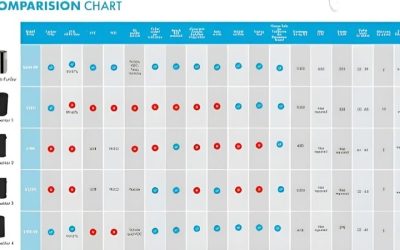
| Model | Smoke CADR | Coverage (4.8 ACH) | Sound Range | Annual Upkeep Tier | Primary Limitation |
|---|---|---|---|---|---|
| Levoit Core 400S | 260 cfm (442 m³/h) | 403 sq ft (37.4 m²) | 24 to 52 dB | Mid-range | Thin carbon sheet layer |
| Coway AP-1512HH | 233 cfm (396 m³/h) | 361 sq ft (33.5 m²) | 24.4 to 53.8 dB | Budget | Optional ionizer feature |
| Blueair 211+ Max | 410 cfm (697 m³/h) | 635 sq ft (59.0 m²) | 23 to 50 dB | Mid to Premium | Large unit footprint |
| Winix 5500-2 | 232 cfm (394 m³/h) | 360 sq ft (33.4 m²) | 27.8 to 54.8 dB | Budget | Bulky vertical housing |
| Medify MA-40 | 224 cfm (380 m³/h) | 350 sq ft (32.5 m²) | 46 to 66 dB | Premium | High noise on max fan |
Ownership Costs, Seasonal Timing, and Long-Term Maintenance
Effective air purification requires understanding ongoing operational realities and recurring expenses. Operating an appliance effectively involves factoring in routine media replacement costs, seasonal environmental spikes, and proactive cleaning schedules to sustain mechanical air cleaning efficiency.
Recurring Filter Replacement Costs and Sensor Drift
Filter replacements represent a recurring operational subscription that buyers must calculate before making a final purchasing decision. Genuine True HEPA filters typically demand replacement every 6 to 12 months, running within budget to mid-range replacement price tiers depending on physical media volume.
Postponing filter swaps causes pleated media to clog with compacted dust, increasing motor resistance and drastically choking air throughput. When static pressure climbs inside a clogged unit, electrical wattage increases while actual particulate filtration rates plummet, degrading overall room air quality.
Optical infrared and laser PM2.5 sensors also suffer from mechanical measurement drift as microscopic lint settles inside internal sensor bays. Blow out the sensor vent cavity every three months using compressed air to maintain accurate automatic fan adjustments and prevent false high-speed cycling loops.
Seasonal Allergy Spikes and Strategic Shopping Windows
Allergen concentrations fluctuate dramatically with regional climate transitions throughout the calendar year. In spring months between March and May, tree and grass pollen reach hazardous peaks, while late summer and early autumn bring ragweed alongside widespread Western wildfire smoke contamination.
Winter brings shut-in conditions where closed doors and windows concentrate dust mites and indoor pet dander. Timing your purchases around major sales events like Prime Day in late June or Black Friday in late November provides an ideal opportunity to secure mid or premium filtration units at reduced prices.
Prices fluctuate across Amazon throughout the year, so check live listings before purchasing. Procuring backup replacement filter cartridges well before spring or wildfire season avoids supply shortages, ensuring that proactive equipment upgrades help reduce allergens at home ahead of heavy spring pollination.
Routine Cleaning Protocols and Fan Motor Durability
Maximizing appliance lifespan requires regular mechanical upkeep of the outer casing and pre-filter components. Vacuum the coarse mesh pre-filter every two to three weeks to remove larger cat hair and dust bunnies before they embed into expensive secondary True HEPA pleats and restrict airflow pathways.
Inspect fan motor bearings and exterior grilles annually for lint accumulation that causes mechanical vibration and motor hum. Premium brushless DC motors deliver superior durability and energy efficiency, sustaining continuous low-speed operation for several years without noticeable acoustic degradation.
Wipe down intake grilles with a dry microfiber towel to stop electrostatic dust clinging to plastic louvers. Never wash True HEPA or carbon layers with water unless the manufacturer documentation explicitly certifies the media as washable, as liquid moisture permanently destroys microscopic fiber matrices.
See More:
- Best eyeshadow blender brush
- Best frozen foods for air fryer
- Best frozen food for air fryer
- Best way to reheat steak in air fryer
- Best air fryer recipes book
Creating a Sustainable Clean Air Routine
Selecting the right air purifier hinges on matching verified CADR figures to your exact room dimensions while prioritizing airtight True HEPA seals. Investing in high-grade equipment provides continuous particle capture, creating a protective indoor barrier against outdoor smog and indoor household dander.
Pairing mechanical air cleaners with regular mattress encasements, hard surface vacuuming, and prompt filter replacements builds a reliable defense system. Consistent maintenance and factual equipment sizing remain coordinated lifestyle habits that reduce allergens at home and sustain stable indoor comfort.
Our top picks
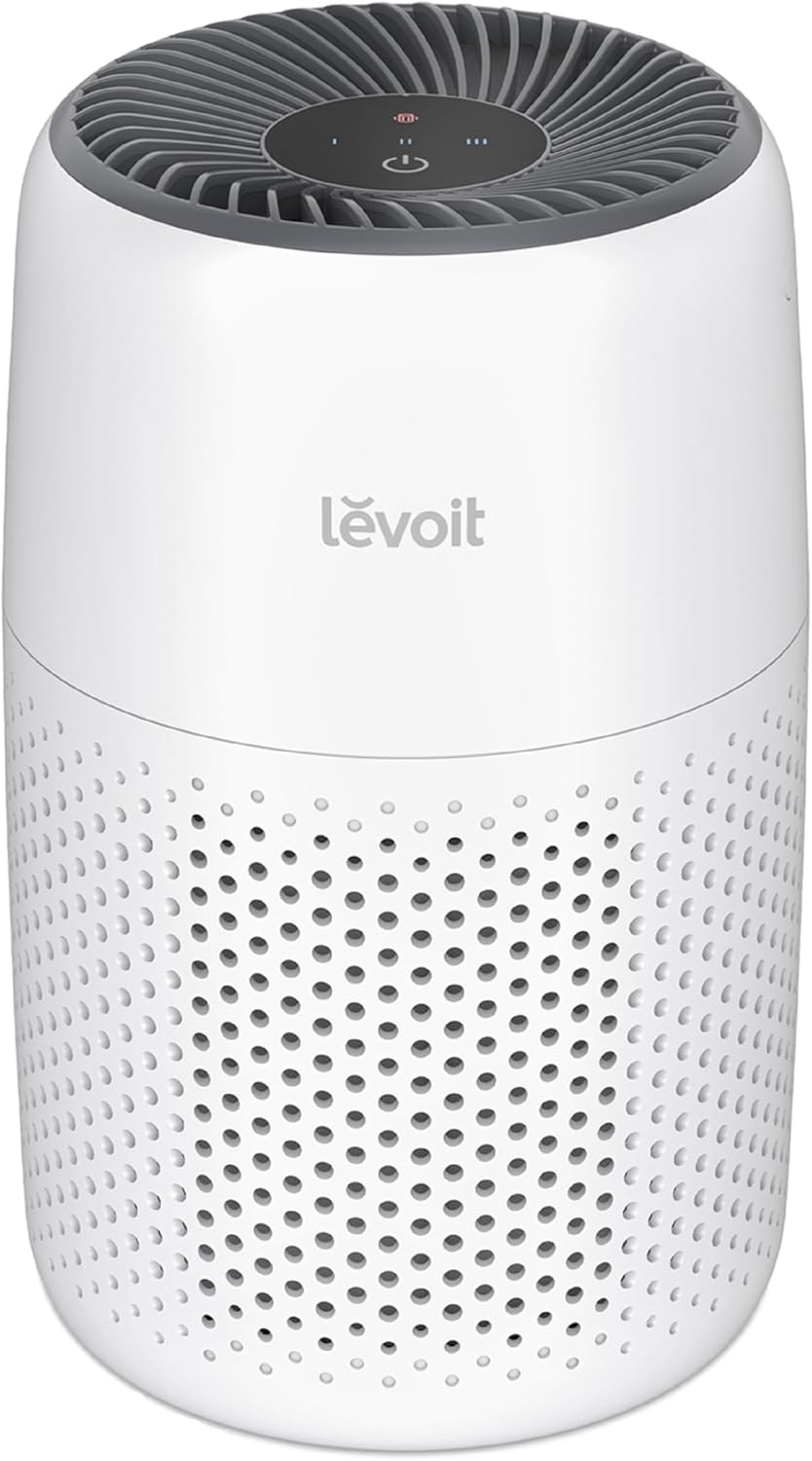
 Levoit Air Purifier for Home Pets Hair
- Power Source: Corded Electric
- Control Method: Touch
- Filter Type: 3 in 1 Filtration
Covers up to 1073 square feet on one unit
Operates as quiet as 24 decibels in sleep mode
Captures 99.97 percent of particles down to 0.1 microns
Requires genuine Levoit replacement filters for proper performance
Corded electric design needs a nearby wall outlet

 VOOPNU Air Purifiers for Home
- Effortless Operation: Simplified control panel with intuitive design…
- Compact Yet Powerful: Covers up to 1,076 ft²…
- 360° Airflow & High Efficiency Filtration: The elegantly…



As an Amazon Associate we earn from qualifying purchases at no extra cost to you.