A HEPA air purifier earns its name only if it uses True HEPA media, which captures 99.97% of particles at 0.3 microns, not the weaker HEPA-type label. This guide explains that difference, ranks seven strong True HEPA picks, and shows how to match CADR and coverage to your room so you buy real filtration.
As an Amazon Associate we earn from qualifying purchases.
By Daniel Foster
Best True HEPA Air Purifier Picks
The picks below all use genuine True HEPA media, so the differences come down to coverage, carbon, and features. Each unit is judged on its rated CADR and the room size it can cycle at a realistic air-change rate, since a great filter still needs the airflow to use it.
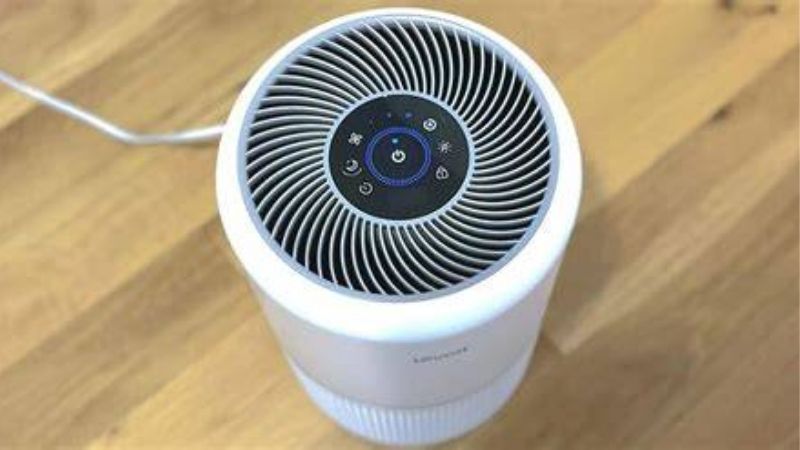
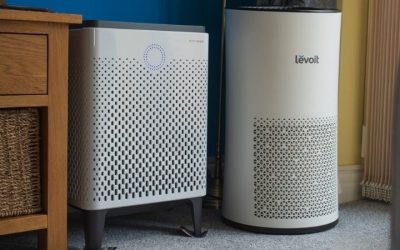
Coway Airmega Mighty — Best Overall
The Coway Mighty uses True HEPA plus carbon and is rated for roughly 361 sq ft (34 m²), with a real sensor and auto mode that adjusts to the air. It is the balanced default: capable, automated, and priced sensibly for most bedrooms and mid-size rooms.
Filter replacement is the ongoing cost, and the indicator light is bright at night. For a well-rounded True HEPA unit that handles everyday dust, pollen, and light odor without fuss, though, it remains the easiest all-purpose recommendation at its tier.
Levoit Core 300 — Best Budget True HEPA
The Core 300 delivers genuine True HEPA in a compact body rated for roughly 219 sq ft (20 m²), ideal for bedrooms and offices. It is quiet on low and inexpensive, which makes it the natural entry point for anyone wanting real filtration on a budget.
It is too small for a large living room, so buyers must respect its coverage. Matched to a real small room, though, it offers True HEPA performance at a price that undercuts almost everything else without dropping to the weaker HEPA-type standard.
Levoit Core 400S — Best Smart True HEPA
The Core 400S adds live PM2.5 and app control to True HEPA, covering up to about 403 sq ft (37 m²). Seeing the actual particle number rise and fall makes the filtration tangible, and scheduling lets it run harder when your air typically gets worse.
Smart features rely on the app and the filter is proprietary. As a data-forward HEPA air purifier, though, it turns clean air into a metric you can track, which appeals to buyers who want proof rather than a vague colored light.
Winix 5500-2 — Best Value With Carbon
The Winix 5500-2 pairs True HEPA with a thick washable carbon pre-filter, rated for roughly 360 sq ft (33 m²), and delivers strong CADR for the price. The carbon layer adds odor control that pure-HEPA units lack, making it a versatile everyday performer.
Its PlasmaWave ionizer can produce trace ozone, so switch it off and rely on the mechanical filtration. With that done it is one of the best-value True HEPA units available, combining particle capture and odor handling in a single affordable package.
Honeywell HPA300 — Best High-Volume True HEPA
The Honeywell HPA300 pushes a lot of air through True HEPA, rated for roughly 465 sq ft (43 m²), with a simple button panel and no app. It is a workhorse for a large room where you want raw airflow through a genuine HEPA filter.
It is loud on high and lacks auto mode, and its pre-filters need frequent replacement. For sheer True HEPA air movement in a big space at a fair price, though, it is hard to beat, especially for buyers who prefer physical controls to smartphones.
Blueair Blue Pure 211+ — Best for Large Rooms
The Blue Pure 211+ covers roughly 540 sq ft (50 m²) with high airflow and a HEPASilent-style filter backed by a washable fabric pre-filter. Its one-button simplicity and quiet operation for the airflow suit large rooms where you want strong turnover without complexity.
There is no sensor or auto mode, and it is bulky. For a large space where you set a speed and let it run, though, its combination of high airflow and low relative noise makes it a standout among simple large-room units.
Alen BreatheSmart 45i — Best Premium True HEPA
The Alen 45i pairs True HEPA with swappable filter options and a color air-quality indicator, backed by a long warranty. It covers medium-to-large bedrooms and reads the room automatically, ramping up when particulates rise, which suits buyers wanting a premium, tailorable unit.
It is expensive and the specialized filters cost more than generic packs. For an owner who wants a filter matched to a specific concern and an appliance built to last, though, the flexibility and warranty justify the premium over the mid-tier field.
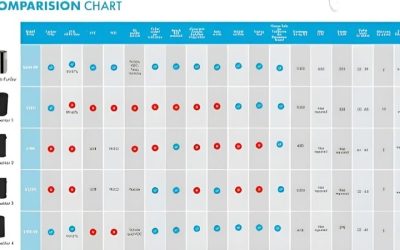
| Model | Rated Coverage | Filter | Best For | Price Tier |
|---|---|---|---|---|
| Coway Mighty | ~361 sq ft / 34 m² | True HEPA + carbon | All-round | Mid |
| Levoit Core 300 | ~219 sq ft / 20 m² | True HEPA | Budget small rooms | Budget |
| Levoit Core 400S | ~403 sq ft / 37 m² | True HEPA + carbon | Smart mid-room | Mid |
| Winix 5500-2 | ~360 sq ft / 33 m² | True HEPA + thick carbon | Value + odor | Budget–Mid |
| Honeywell HPA300 | ~465 sq ft / 43 m² | True HEPA | High volume | Mid |
| Blue Pure 211+ | ~540 sq ft / 50 m² | HEPASilent + carbon | Large rooms | Mid |
| Alen 45i | Medium–large room | Swappable True HEPA | Premium | Premium |
Coverage and CADR are manufacturer ratings; confirm current figures for your model, and note prices change at the time of purchase.
How to Choose a HEPA Air Purifier
Choosing a HEPA air purifier starts with verifying the filter is truly True HEPA, then matching CADR and coverage to your room. Weigh carbon, noise, and filter cost after that, since a real HEPA filter only helps if the unit moves enough air through it for your space.
Decisive Numbers: CADR and Coverage Area
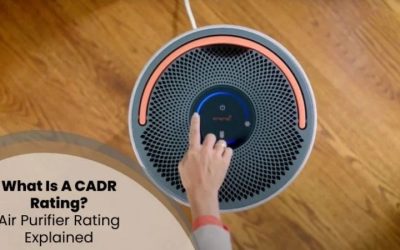
CADR tells you how fast a unit delivers clean air for smoke, dust, and pollen, while coverage assumes a set number of air changes per hour. For meaningful filtration aim for 4-5 ACH, which shrinks the usable coverage below the headline figure printed on the box.
Treat the coverage number as a maximum and size up rather than down, since a unit stretched to its limit turns the air over too slowly to matter. Matching CADR to your room at a realistic ACH is the core calculation behind any effective HEPA air purifier purchase.
Space and Fit: Sizing and Placement
Measure the room in square feet or meters and match it to the rated coverage at a high ACH before you buy. The unit then needs clearance from walls and furniture, since most draw air from the sides or base and exhaust it upward.
Place it where people spend time, not tucked in a corner, so the clean air reaches your breathing zone. A capable purifier underperforms when it is boxed in or badly located, so plan the spot before the unit arrives rather than after.
True HEPA vs HEPA-Type
This is the distinction that defines the category: True HEPA is certified to capture 99.97% of particles at 0.3 microns, while HEPA-type or HEPA-like media is not held to that standard and performs worse. The wording on the box matters more than the price here.
If a listing says HEPA-type, HEPA-style, or 99% at a larger particle size, it is not True HEPA, and for allergens or smoke that gap is significant. Read the spec carefully, because a marketing label is the easiest way for a weaker filter to pass as a real one.
Carbon, Noise, and Filter Cost
Add activated carbon if odors, cooking, or pets are a concern, since HEPA alone does little for smell. Check the decibel rating at the speed you will actually run, especially for a bedroom, since a unit that is quiet on low can be loud on its top setting.
Filters are a recurring cost that behaves like a subscription, so add up a year of replacements and confirm they are easy to buy. A cheap purifier with pricey proprietary filters can cost more over its life than a dearer unit with affordable ones.
Frequently Asked Questions
A few questions come up whenever people shop for HEPA filtration. These short answers cover the practical points that shape a smart choice before you commit to a unit for your home.
What is the difference between True HEPA and HEPA-type?
True HEPA is certified to capture 99.97% of particles at 0.3 microns, while HEPA-type is a marketing label not held to that standard and captures fewer fine particles. For allergens and smoke the difference is significant, so always confirm the listing says True HEPA before buying.
Can I wash and reuse a HEPA filter?
Most True HEPA filters are not washable and lose effectiveness if you rinse them, so they must be replaced on schedule. Only a washable pre-filter is meant to be cleaned; washing the main HEPA damages the media and defeats the purpose of the unit.
How often should I replace a HEPA filter?
Follow the manufacturer’s schedule, typically every six to twelve months, and sooner in smoky or high-pollen conditions when it loads faster. A clogged filter cuts airflow and capture, so timely replacement is essential to keep the unit performing as a real HEPA air purifier.
See More:
- Best eyeshadow blender brush
- Best frozen foods for air fryer
- Best frozen food for air fryer
- Best way to reheat steak in air fryer
- Best air fryer recipes book
Final Word on the HEPA Air Purifier
A genuine HEPA air purifier is defined by True HEPA media, so verify that label first and dismiss anything sold only as HEPA-type. From there, match CADR and coverage to your room at 4-5 air changes per hour, add carbon if odors matter, and price a full year of filters so running cost holds no surprises. Mind the noise for bedrooms, place the unit where you actually breathe, and confirm current specs and price at purchase. Get those basics right and any True HEPA pick above becomes a genuinely effective purifier for your home.
Our top picks


 Levoit Air Purifier for Home Pets Hair
- Power Source: Corded Electric
- Control Method: Touch
- Filter Type: 3 in 1 Filtration
Covers up to 1073 square feet on one unit
Operates as quiet as 24 decibels in sleep mode
Captures 99.97 percent of particles down to 0.1 microns
Requires genuine Levoit replacement filters for proper performance
Corded electric design needs a nearby wall outlet

 VOOPNU Air Purifiers for Home
- Effortless Operation: Simplified control panel with intuitive design…
- Compact Yet Powerful: Covers up to 1,076 ft²…
- 360° Airflow & High Efficiency Filtration: The elegantly…

 MOOKA Air Purifier for Home Bedroom Large
- 𝐇𝐢𝐠𝐡𝐞𝐫 𝐀𝐢𝐫 𝐈𝐧𝐭𝐚𝐤𝐞 & 𝐋𝐚𝐫𝐠𝐞𝐫 𝐂𝐨𝐯𝐞𝐫𝐚𝐠𝐞 𝐟𝐨𝐫 𝐏𝐞𝐭…
- 𝐒𝐦𝐚𝐫𝐭 𝐏𝐌𝟐.𝟓 𝐀𝐐𝐈 𝐃𝐢𝐬𝐩𝐥𝐚𝐲 & 𝐀𝐮𝐭𝐨 𝐌𝐨𝐝𝐞: Built-in…
- 𝐖𝐚𝐬𝐡𝐚𝐛𝐥𝐞 𝐏𝐫𝐞-𝐅𝐢𝐥𝐭𝐞𝐫 & 𝟑-𝐒𝐭𝐚𝐠𝐞 𝐃𝐞𝐬𝐢𝐠𝐧: Equipped with a…
 LEVOIT Smart Air Purifier for Home Large
AHAM-verified performance covers rooms up to 1875 square feet
U-shaped inlet pulls in pet hair and odors efficiently
Designed specifically to filter allergens like pollen and dander
Stands nearly 20 inches tall, needing dedicated floor space
Listing does not specify the exact CADR number
As an Amazon Associate we earn from qualifying purchases at no extra cost to you.