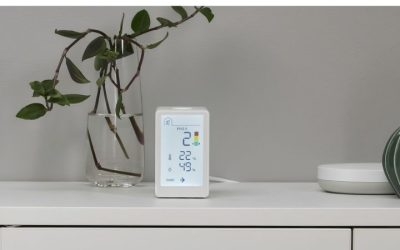
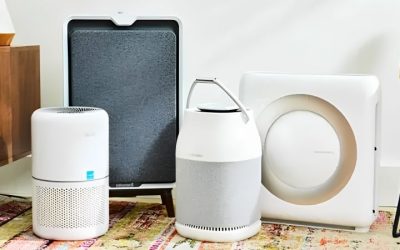
Air quality monitor tools help homeowners detect invisible particulate spikes, carbon dioxide buildup, and chemical vapors before indoor air quality suffers. Our comprehensive guide examines leading consumer sensors across tracking accuracy, long-term stability, and daily usability to help safeguard your home environment.
By Daniel Foster
As an Amazon Associate we earn from qualifying purchases.
Key Factors and Critical Metrics Before You Buy
Selecting a dedicated air quality monitor translates silent gaseous buildup and invisible fine particles into actionable household metrics. Understanding sensor capabilities ensures you do not waste money on hollow indicators or misread drifting baselines across different everyday living areas.
Core Metrics: What Sensors Actually Measure and Calibrate
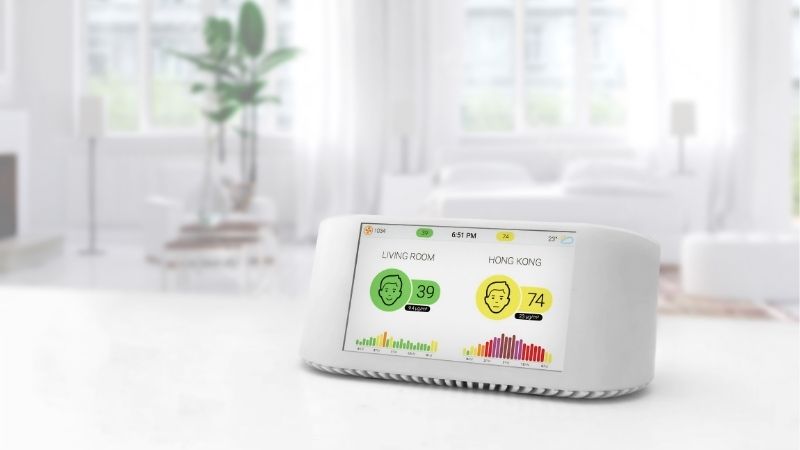
Evaluating and calibrating an air quality monitor requires separating basic optical counters from true laser scattering for particulate matter like PM2.5. Dedicated lasers count individual airborne specks in micrograms per cubic meter (${\mu}\text{g/m}^3$), offering reliable wildfire smoke tracking.
Carbon dioxide tracking demands genuine nondispersive infrared (NDIR) optical sensors rather than estimated volatile calculations (eCO2). True NDIR benches sample chamber absorption directly in parts per million (ppm), identifying stagnant room air where cognitive fatigue and stale breathing air accumulate.
Total volatile organic compounds (TVOC) rely on heated metal-oxide semiconductors to detect solvents, cooking byproducts, and synthetic sprays. These chemical sensors report comparative index spikes rather than laboratory parts-per-billion quotas, requiring automatic background baselines to remain relevant.
Room Placement, Airflow Coverage, and Living Space Fit
Carefully installing an air quality monitor requires positioning the device between 3 to 5 feet (0.9 to 1.5 m) off the floor to match typical human breathing height. Placing hardware too close to an active window, exterior draft, or forced HVAC register skews readouts away from realistic room conditions.
Coverage limits reflect fluid air dynamics because a single compact sensor cannot sample across multiple walled partitions or distant hallways. For standard bedroom areas spanning 200 to 400 sq ft (19 to 37 $\text{m}^2$), one central nightstand or workstation location provides representative sampling.
Kitchen placement demands distinct boundaries because direct oil droplets and high humidity from cooking can permanently foul delicate internal sensor benches. Always measure your physical shelf depth and verify outlet proximity before ordering your indoor sensor to ensure stable, unobstructed air circulation.
Sensor Degradation, Recalibration Cycles, and Operational Lifespan
Consumer hardware longevity hinges on distinct physical sub-components that age at vastly differing rates over years of regular use. Laser particle diodes typically deliver three to five years of operational precision before optical dust coating degrades laser receiver signal clarity and counts.
Electrochemical and metal-oxide sensors undergo unavoidable chemical baseline drift due to ambient temperature shifts and continuous volatile exposure. Devices featuring automatic baseline calibration (ABC) logic require routine exposure to clean outdoor air to refresh their baseline zero point reliably.
Miniature internal sampling fans also pull ambient pet hair and lint into internal exhaust channels over extended continuous service months. Choosing units with removable intake screens or simple passive convection cooling reduces premature mechanical failure across long-term household deployment.
The 6 Best Air Quality Monitors for Residential Use
Thoroughly evaluating every air quality monitor demands assessing real hardware components, app stability, and everyday accuracy against physical indoor triggers. The following six selections represent balanced choices across various room layouts, tracking demands, and overall household investment levels.
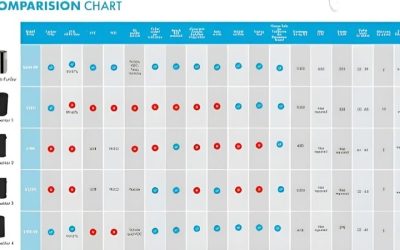
| Model | Key Sensors | Display Type | Power Source | Calibration | Price Tier |
|---|---|---|---|---|---|
| Airthings View Plus | Radon, PM2.5, CO2, VOC, Temp, Humidity, Pressure | 2.9-inch Customizable E-Ink | 6x AA Batteries or USB-C | Automatic Baseline & Radon Decay | Premium |
| Qingping Air Monitor | PM2.5, PM10, CO2, Temp, Humidity | 3.1-inch Retina Touchscreen (IPS) | USB-C (Internal 4h Battery) | Automatic Background NDIR Reset | Mid-Range |
| Temtop LKC-1000S+ 2nd Gen | PM2.5, PM10, HCHO (Formaldehyde), TVOC | Color TFT LCD Screen | Rechargeable 3000 mAh Battery | Manual Fresh-Air Zero Offset | Mid-Range |
| Awair Element | PM2.5, TVOC, CO2, Temp, Humidity | LED Dot-Matrix Display | Continuous Wall Adapter (12V) | Automated Smart Recalibration | Mid-Range |
| Amazon Smart Monitor | PM2.5, VOC, CO, Temp, Humidity | Single Multi-Color LED Indicator | Micro-USB Wall Power | Cloud-Assisted Background Logic | Budget |
| Aranet4 Home | CO2 (Senseair NDIR), Temp, Humidity, Pressure | High-Contrast E-Ink Screen | 2x AA Batteries (Up to 2 Years) | Manual Outdoor & Automatic Baseline | Premium |
Airthings View Plus: Comprehensive Multi-Pollutant Tracking
The Airthings View Plus delivers premium home monitoring by packaging seven distinct sensors including radon, PM2.5, carbon dioxide, TVOC, humidity, temp, and air pressure. Its customizable 2.9-inch e-ink screen displays two priority metrics at a glance while transmitting full historic telemetry via Wi-Fi.
In daily operation, the integrated radon passive diffusion chamber flags subterranean gas seepage that ordinary monitors entirely overlook. Dual power options let you run the device continuously via USB-C or operate untethered for up to two years on six AA batteries using relaxed background sampling rates.
However, this premium tier device comes with noticeable real-world drawbacks including a slow display refresh interval when operating strictly on battery power. Prospective buyers should also note that prices fluctuate on Amazon, making mid-year promotions an opportune time to secure this higher-cost system.
Qingping Air Monitor: Crisp Display and Smart Ecosystem Sync
The Qingping Air Monitor features a vibrant 3.1-inch IPS touchscreen with 326 ppi clarity, presenting real-time PM2.5, PM10, CO2, temperature, and relative humidity. Swiping through clean graphical menus reveals immediate air trends without forcing users to reach for an external smartphone application.
Native Apple HomeKit and Mi Home integration allows smart home enthusiasts to automate air purifiers or motorized windows based on exact particulate thresholds. Built-in laser scattering and an NDIR carbon dioxide bench provide responsive feedback during cooking events or crowded living room gatherings.
A notable drawback centers on its internal lithium battery, which depletes after roughly four hours of cord-free operation due to the power-hungry color screen. The unit functions primarily as a stationary desk piece requiring continuous USB-C power, sitting within a competitive mid-range price bracket.
Temtop LKC-1000S+ 2nd Gen: Dedicated Handheld Particulate Tester
The Temtop LKC-1000S+ 2nd Gen is designed for active diagnostic spot-checking, packing laser PM2.5, PM10, formaldehyde (HCHO), and TVOC sensors into a sturdy shell. Its bright color TFT screen highlights direct histogram charts to visually map pollutant spikes when walking through newly renovated rooms.
Its dedicated electrochemical formaldehyde sensor provides tangible utility for homeowners testing off-gassing from fresh cabinetry, carpets, or composite flooring. A built-in 3000 mAh rechargeable battery enables versatile room-to-room inspections, garages, and attics without searching for wall plugs.
The main drawback lies in its utilitarian interface, which lacks automated smart-home triggers and continuous remote cloud logging seen on modern IoT units. This mid-tier diagnostic instrument is best suited for targeted spot audits rather than passive, hands-off background monitoring across years.
Awair Element: Balanced Aesthetic and Dedicated VOC Tracking
The Awair Element combines residential design aesthetics with precise laser PM2.5 particle counting, TVOC sensing, and genuine NDIR carbon dioxide detection. Its distinctive front timber-look frame houses an unobtrusive LED dot-matrix display that renders overall air scores alongside detailed metrics.
Smart home compatibility extends across Amazon Alexa, Google Assistant, and local automation platforms, making it simple to link with mechanical ventilation fans. The intuitive mobile interface delivers practical prompts and historical graphs to highlight cleaning solvent lingering times indoors.
On the downside, the Awair Element has no internal battery backup, meaning any power disruption completely resets continuous background data collection. It also omits carbon monoxide detection, situating this mid-range investment strictly as an ambient comfort and lifestyle chemical monitor.
Amazon Smart Air Quality Monitor: Affordable Routine Home Automation
The Amazon Smart Air Quality Monitor targets households already invested in the Alexa ecosystem seeking an accessible, budget-tier diagnostic device. It tracks five specific parameters including PM2.5 particulate levels, volatile organic compounds, carbon monoxide, ambient temperature, and humidity.
Setting up custom Alexa routines allows you to trigger compatible smart plug air purifiers or announce air warnings through nearby Echo speakers automatically. Its compact, unobtrusive footprint blends cleanly onto nightstands or office credenzas without creating visual clutter or unwanted glare.
The clear limitation is the total lack of an integrated numerical screen, providing only a single color-changing LED indicator on the front casing. You must check the smartphone application or query voice assistants to view exact numerical figures, though its low price makes it widely accessible.
Aranet4 Home: Portable Precision Carbon Dioxide Specialist
The Aranet4 Home is widely regarded as the gold standard for dedicated carbon dioxide monitoring, utilizing a premium Senseair NDIR optical bench. Accompanied by temperature, relative humidity, and atmospheric pressure sensors, it delivers exceptional reading stability across demanding environments.
Its crisp, high-contrast e-ink display remains easily readable in bright daylight, while power consumption is so low that two AA batteries last years. Offline data logging via Bluetooth stores weeks of readings locally, providing high portability for offices, classrooms, and hotel bedrooms.
The primary trade-off is its specialized focus, as it completely omits PM2.5 laser scattering and TVOC chemical detection capabilities from its design. It sits at a premium price point for a single-gas instrument, but its laboratory-grade NDIR sensor drift resistance justifies the investment.
Long-Term Ownership, Seasonal Hazards, and Maintenance
Maintaining indoor air monitors requires recognizing how changing seasons, household dust accumulation, and sensor wear influence measurement accuracy. Adopting structured maintenance habits prevents erroneous data reporting and safeguards your ongoing investment in residential health hardware.
Wildfire Smoke Surges and Seasonal AQI Ventilation Demands
Summer and early autumn across western regions bring severe wildfire seasons where particulate pollution frequently pushes outdoor AQI past 300. Actively relying on an air quality monitor during wildfire events ensures you verify building envelope seals before opening windows for natural cooling.
Fine combustion particles penetrate standard door weatherstripping, causing sudden spikes in indoor PM2.5 counts that overwhelm passive air circulation. When monitor readings exceed 35 ${\mu}\text{g/m}^3$, pairing sensor data with True HEPA air filtration restores cleaner ambient breathing baselines.
Monitoring seasonal retail promotions like mid-summer Prime Day or late autumn sales events provides an economical opportunity to acquire these sensors. Seasonal spikes in demand often cause sudden inventory shortages, making proactive purchases ahead of fire season a smarter household approach.
Winter Sealing Risks and HVAC Recirculation Blind Spots
During winter months, tightly closed windows and continuous residential furnace cycling trigger rapid carbon dioxide accumulation in occupied spaces. In bedrooms and home offices, sealed doors can push indoor CO2 concentrations beyond 1,200 ppm overnight, contributing to morning grogginess.
Winter heating also warms synthetic building materials, releasing higher concentrations of trapped volatile organic compounds into stagnant air. When your monitor warns of concurrent CO2 and VOC increases, cracking a window for ten minutes provides rapid dilution without collapsing indoor thermal warmth.
Factual environmental tracking empowers informed ventilation habits, though devices do not diagnose or treat chronic respiratory ailments. For clinical concerns regarding asthma or seasonal breathing discomfort, always consult a qualified medical professional for personalized clinical guidance.
Routine Maintenance, Fan Dusting, and Sensor Drift Realities
Maintaining long-term precision requires periodic external cleaning to clear dust fibers from internal intake grills and ventilation vents. Using a clean, dry bulb air blower every three months dislodges particulate buildup without damaging delicate optical mirrors inside laser sampling bays.
Never spray pressurized canned air, cleaning aerosols, or liquid detergents directly into sensor grates as propellants permanently coat optical diodes. Chemical propellants and aggressive solvents dissolve protective coatings on metal-oxide arrays, causing unrecoverable sensor blindness and errors.
Plan for periodic outdoor baseline calibration every few months by placing your device on a covered outdoor porch for thirty minutes. Exposing internal NDIR and TVOC sensors to clean ambient air (approx 420 ppm CO2) allows automated firmware logic to accurately reset base reference points.
See More:
- Best eyeshadow blender brush
- Best frozen foods for air fryer
- Best frozen food for air fryer
- Best way to reheat steak in air fryer
- Best air fryer recipes book
Conclusion: Selecting the Right Device for Your Indoor Air
Ultimately, investing in an air quality monitor gives you the empirical data needed to manage home ventilation, filtration, and humidity effectively. Whether you select an all-in-one tracker like the Airthings View Plus or a dedicated specialist, accurate data transforms your living environment.
Our top picks


As an Amazon Associate we earn from qualifying purchases at no extra cost to you.